We appreciate the support from readers like you at Foxiz. Through your purchases using the links on our site, you empower us with affiliate commissions.
Today in Aviation History: 1909 Wright Military Flyer Becomes the First U.S. Military Airplane
On August 2, 1909, the U.S. Army Signal Corps purchased its first military aircraft—the Wright 1909 Wright Military Flyer—for $30,000. Designated Signal Corps Airplane No. 1, the pioneering machine served as a pilot trainer before retiring in 1911. Today, it is preserved at the Smithsonian National Air and Space Museum, a testament to the dawn of American military aviation.
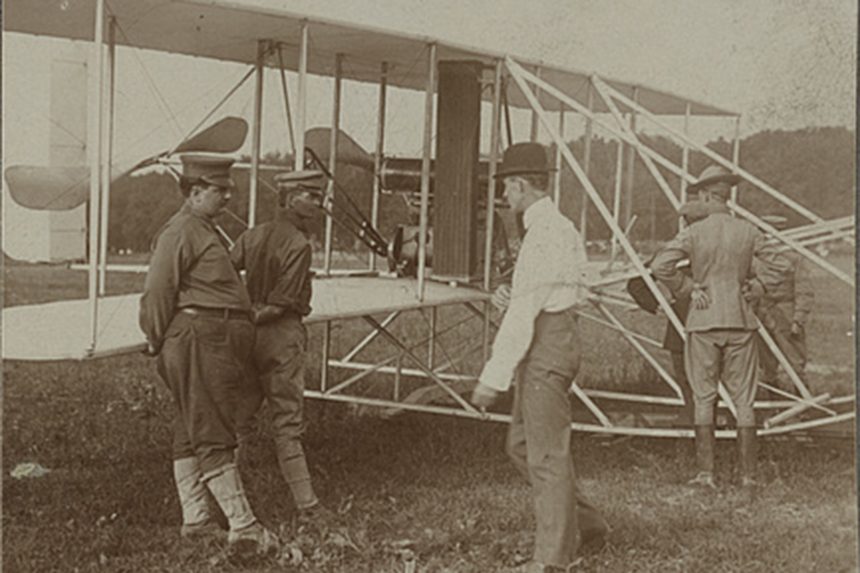
The Wright brothers and some Army Signal Corps soldiers work on the Wright Military Flyer as they test it out at Fort Myer, Virginia, 1909. Photo via Library of Congress
SHARE
On this day in aviation history, 116 years ago (August 2, 1909), the United States government purchased its first military aircraft—the 1909 Wright Military Flyer. The U.S. Army Signal Corps acquired the airplane for $30,000, designating it Signal Corps Airplane No. 1. Initially stationed at Fort Sam Houston in San Antonio, Texas, it served primarily as a pilot trainer. In its brief two years of service, the Military Flyer experienced multiple accidents and rebuilds before being retired from military duty in 1911.
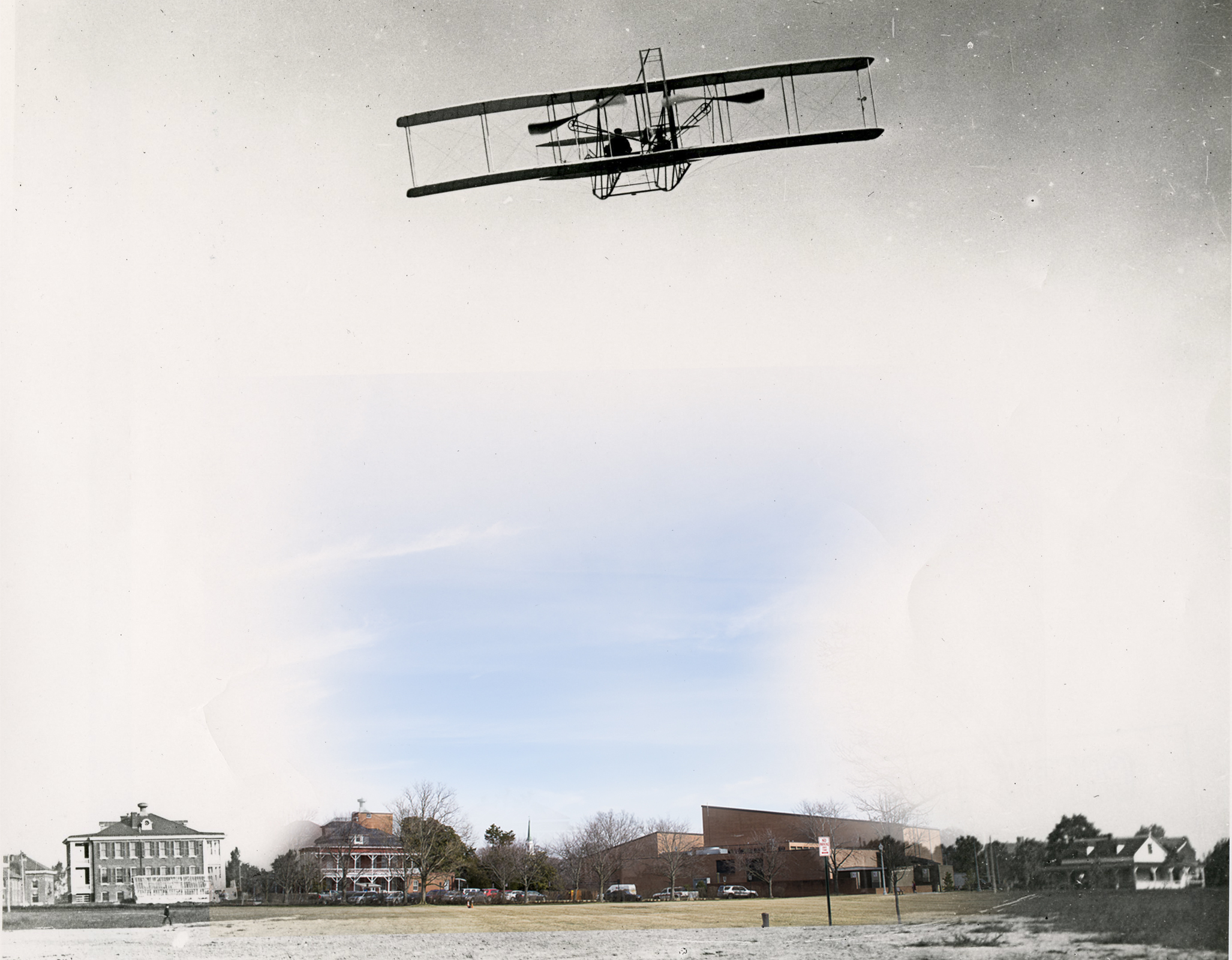
This image, original date and photographer unknown, is of one of the Wright Brothers’ planes being flown over what was then Fort Myer, now the Fort Myer portion of Joint Base Myer-Henderson Hall. It cannot be determined who is piloting the plane in this photograph. The color photograph was taken in a similar location near the edge of Summerall Field and Bldg. 417, March 16. Lt. Thomas Selfridge is credited with being the first military officer to fly a solo flight on May 19, 1908, in Hammondsport, N.Y., according to the First Flight Society’s website. On Sept. 17 of the same year, Selfridge, while test-flying the “Flyer A” with Orville Wright on what was then known as Fort Myer, crashed due to a broken propeller where the Tri-Service parking lot is located today. Selfridge was killed, becoming the first fatality in powered aviation, while Orville Wright was injured and brought to the installation hospital, now known as Bldg. 59, seen in the bottom of the image. Selfridge is buried in Section 3 of Arlington National Cemetery, about one mile from where the accident occurred. His obelisk reads, in part, “Killed in the service of the United States in an aerodrome accident.” (JBM-HH photo illustration by Rachel Larue)
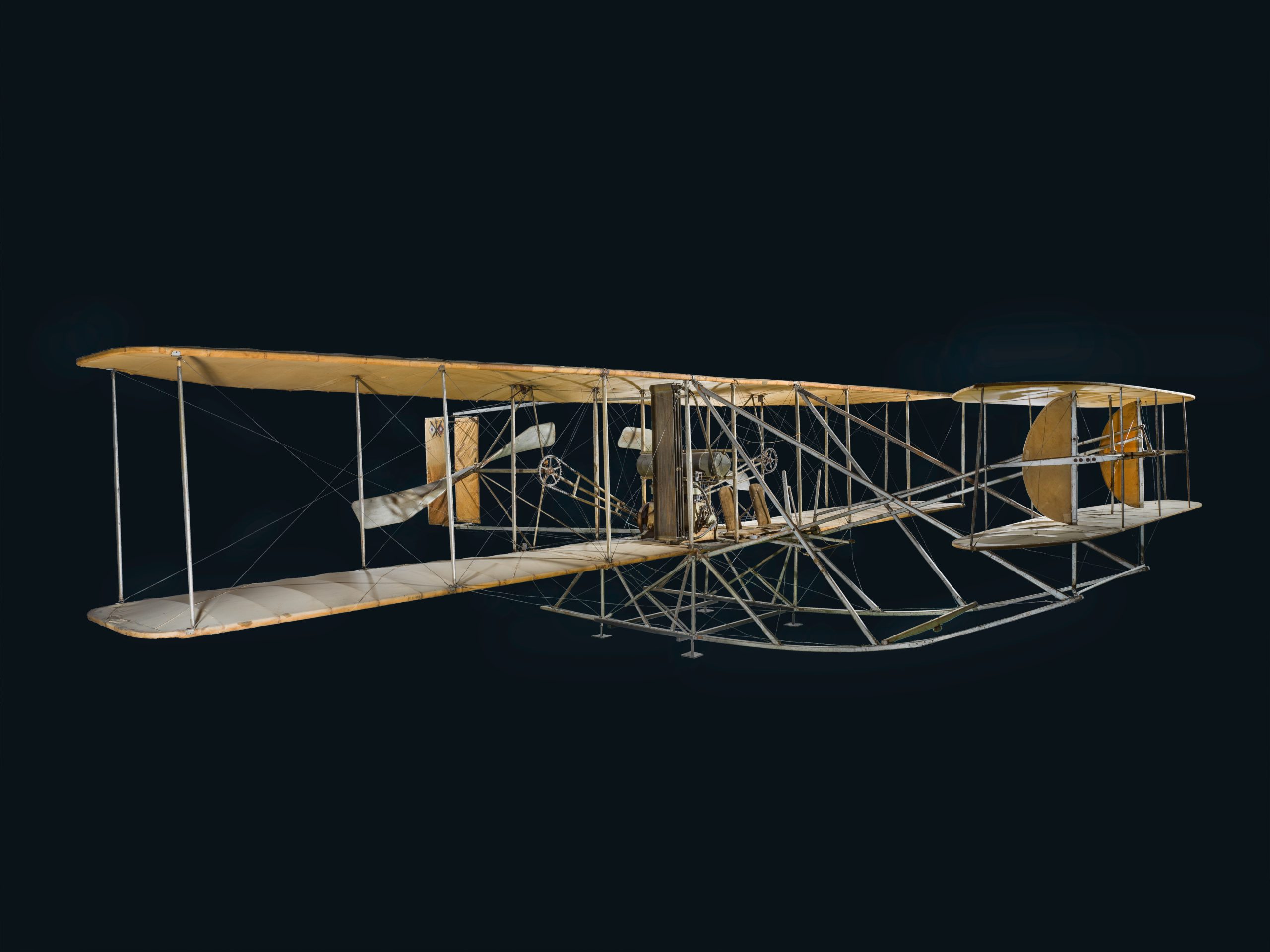
The Wright 1909 Military Flyer was powered by a four-cylinder Wright engine producing 30.6 horsepower, giving it a top speed of 42 mph and a flight endurance of about one hour. The aircraft measured 36 feet 6 inches in wingspan, 28 feet 11 inches in length, and 7 feet 10.5 inches in height, with a weight of just 740 pounds. This one-of-a-kind variant of the Wright Model A—built between 1907 and 1909—featured shorter wings and longer propeller blades than its civilian counterpart, modifications that improved overall speed.
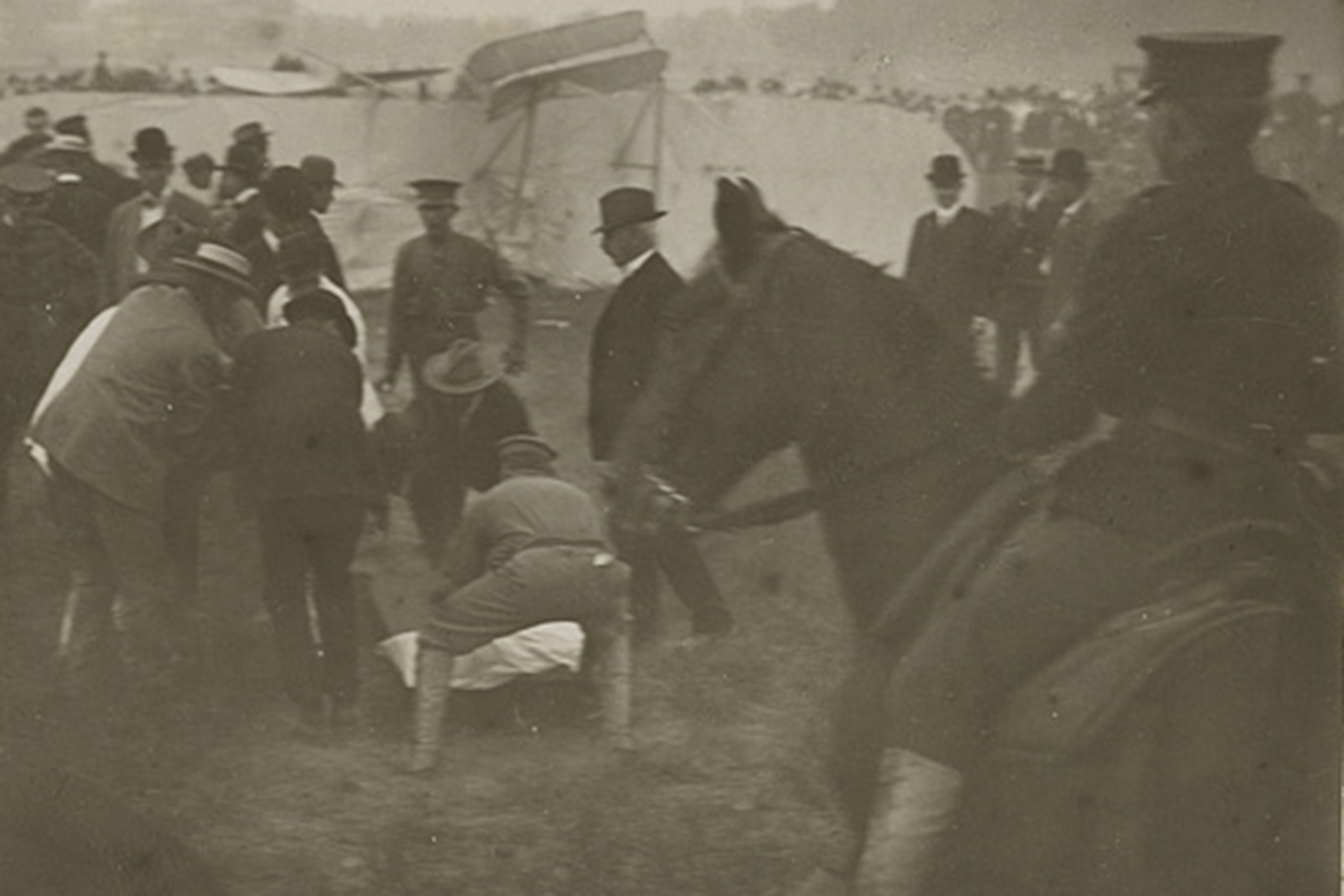
Medical personnel tend to either Orville Wright or his airplane passenger, Army 1st Lt. Thomas Selfridge, after an early version of the Wright Military Flyer crashed at Fort Myer, Va., in August 1908. Selfridge died as a result of the incident. Photo via Library of Congress
Today, the original Signal Corps Airplane No. 1 survives as one of the most important artifacts in American aviation history. It is proudly displayed at the Smithsonian National Air and Space Museum on the National Mall in Washington, D.C. The aircraft stands as a tangible link to the dawn of military aviation, a reminder of how far aerial technology has advanced since the Wright brothers’ pioneering days.
Canard biplane with one 30-to-40-horsepower Wright vertical four-cylinder engine driving two pusher propellers via sprocket-and-chain transmission system. No wheels; skids for landing gear. Natural fabric finish; no sealant or paint of any kind. Photo via Smithsonian National Air and Space Museum
Commercial Pilot, CFI, and Museum Entrepreneur, with a subject focus on WWII Aviation. I am dedicated to building flight experience so I can fly WWII Fighters, such as the P-51 Mustang, for museums and airshows, and in the USAF Heritage Flight. I lead and run the Pennington Flight Memorial, to honor local MIA Tuskegee Airman F/O Leland “Sticky” Pennington.








 Vintage Aviation News