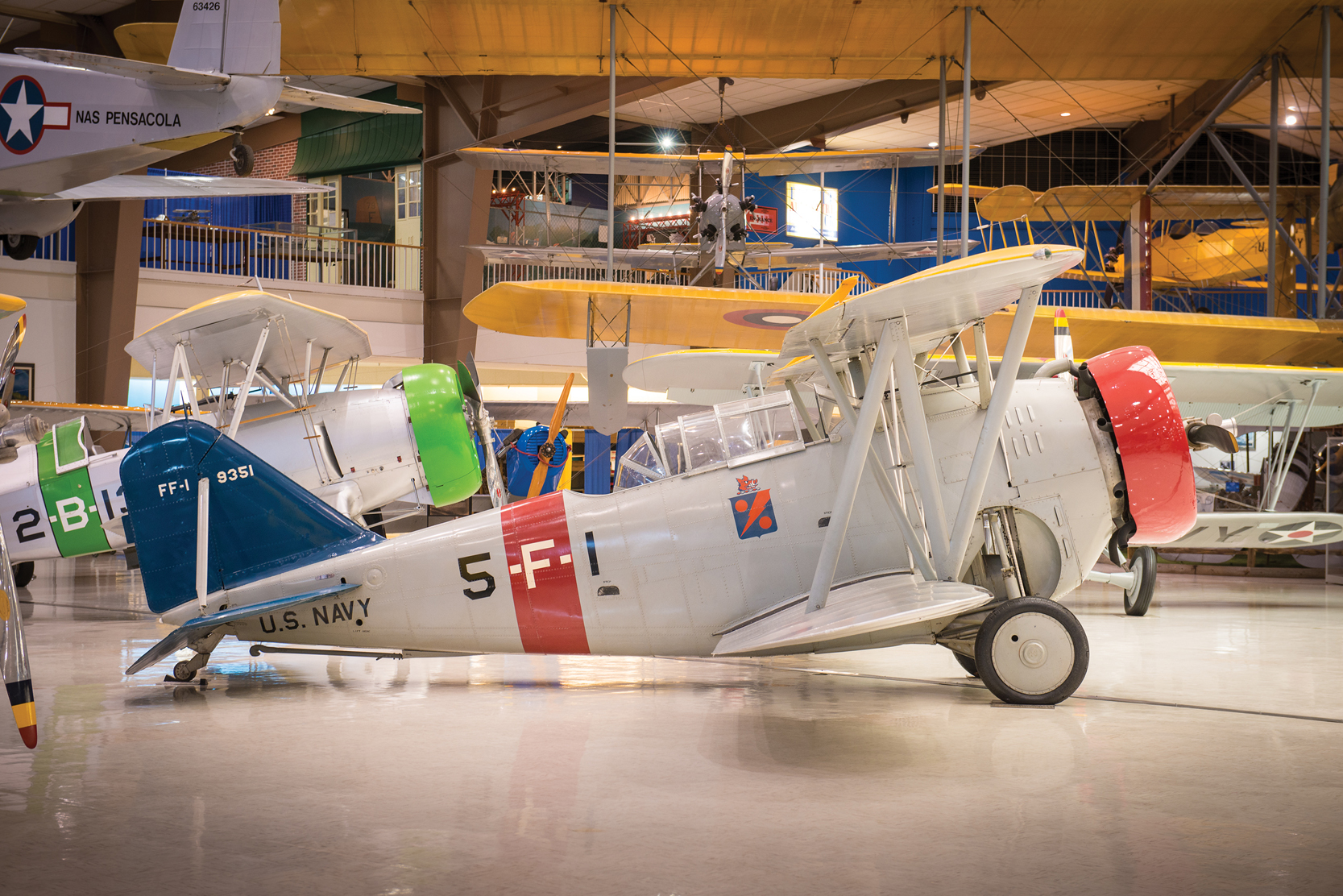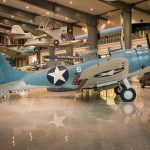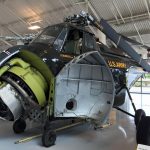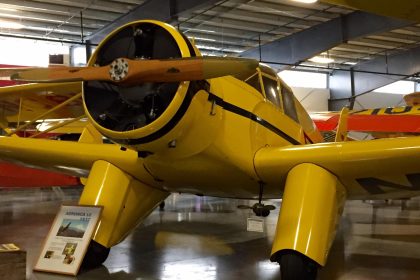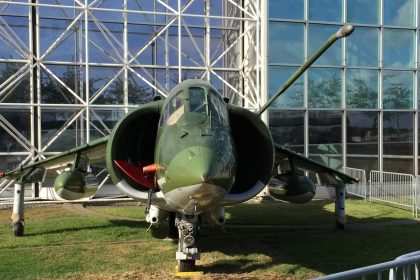


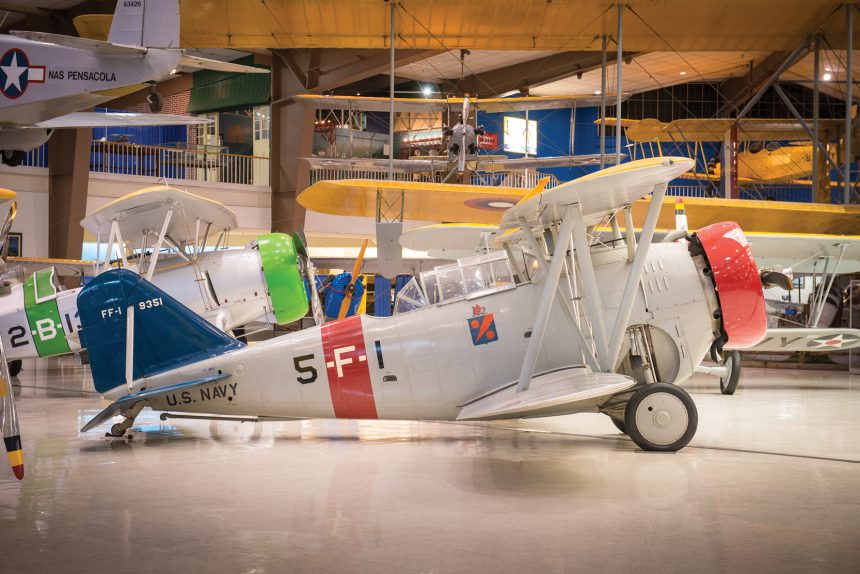

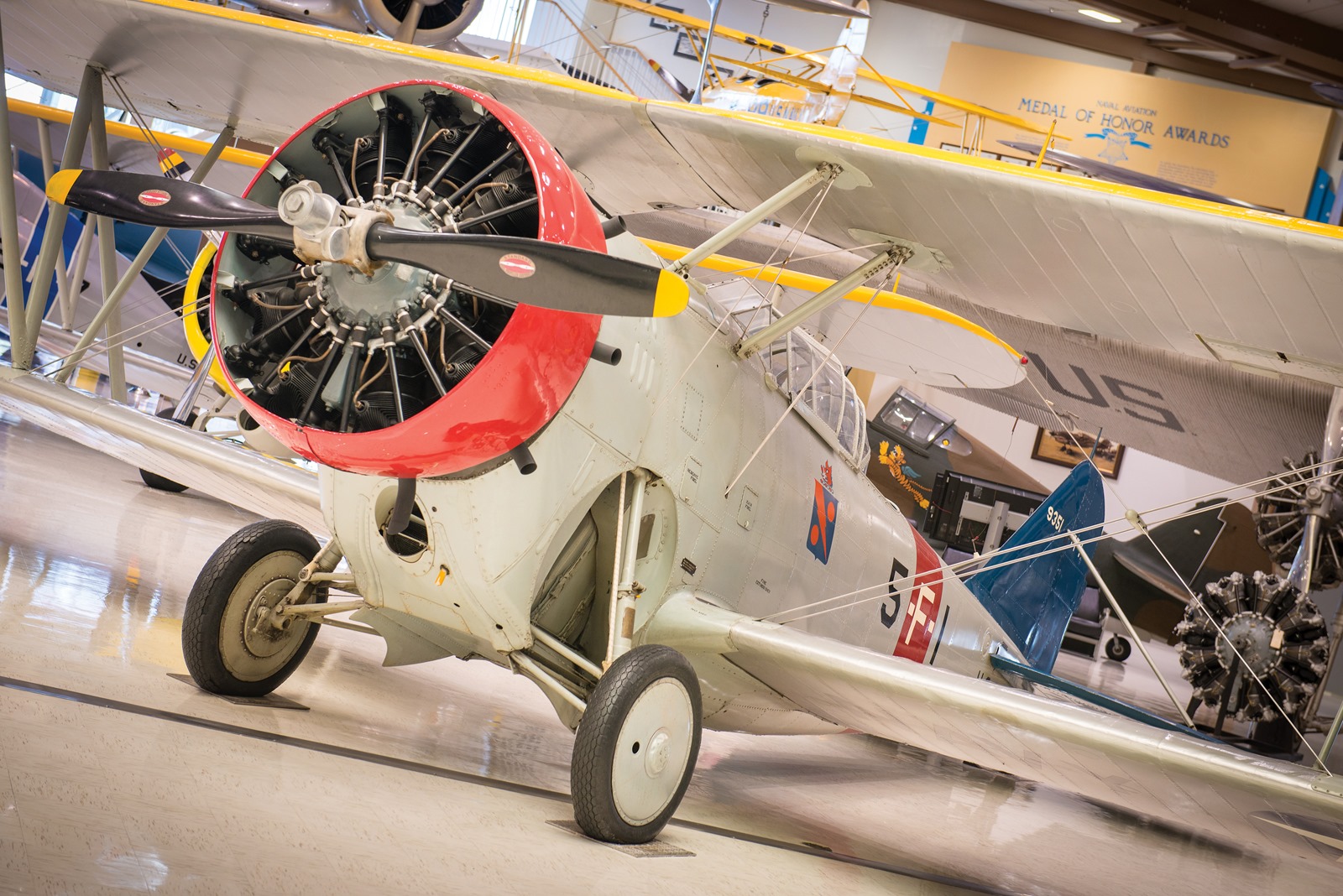
The National Naval Aviation Museum in Pensacola, Florida, is the home of many of the most unique aircraft to have ever flown in the air wings of the United States Navy, as well as aircraft that flew with the United States Marine Corps and the United States Coast Guard. Many of these were built by the Grumman Aerospace Corporation, from the Grumman F3F biplane fighters of the late Interwar period to the F4F Wildcat and F6F Hellcat fighters of WWI and the Korean War-era F9F Panther, all the way to the iconic F-14 Tomcat. Yet inside the museum, one aircraft, more than any of these, has a unique tie to the very start of Grumman’s period of designing airplanes for the US Navy’s needs. This is the Grumman FF-1, a rotund biplane fighter of the 1930s that helped put Grumman on the map, paving the way for the company’s reputation as the Grumman “Iron Works”. Yet the FF-1 on display in Pensacola never once wore the markings of the US Navy, was built not in the United States but in Canada, and the story of how it came to Pensacola is a long and winding one.
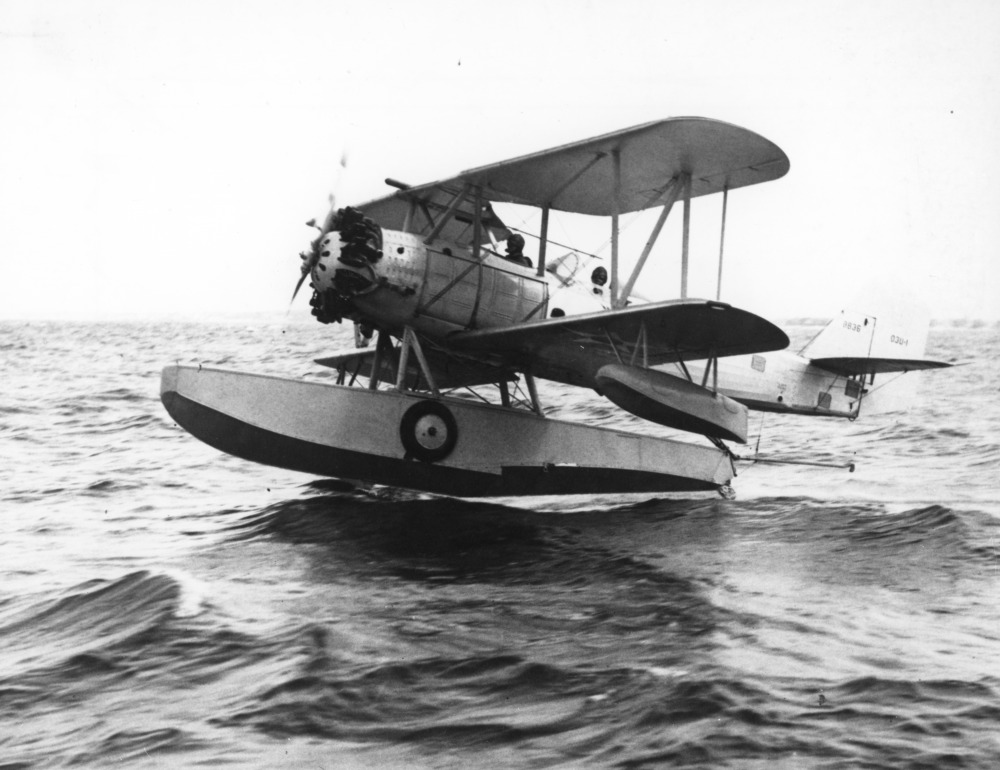
Established by test pilot and aeronautical engineer Leroy Grumman on December 6, 1929, the Grumman Aircraft Engineering Corporation first established its reputation with the US Navy by constructing the Model A and later the Model B metal pontoon floats fitted with retractable landing gear for aircraft such as the Vought O2U and O3U Corsair observation aircraft to make them amphibious. Seeing success with the floats, the US Navy asked Grumman if they could adapt their floats to fighters such as the Boeing F4B and Curtiss F8C. Grumman proposed, instead, to construct an entirely new fighter aircraft for the Navy, which had also been interested in a two-seat fighter aircraft, with a pilot and observer/gunner in a tandem configuration. Grumman and his engineers drew up plans for what was called the Model G-5, with the proposal being tentatively accepted by the Navy on March 29, 1930, before an official contract was awarded almost exactly one year later on March 28, 1931, with the Grumman Model G-5 being ordered as the XFF-1. While construction started in the company’s first factory, a former automotive showroom and garage in the town of Baldwin on New York’s Long Island was too small for their purposes, so the prototype was moved into a hangar at Curtiss Field in Valley Stream, where on December 29, 1931, test pilot William McAvoy took the XFF-1, BuNo A8878, for its maiden flight. After further flight trials, the FF-1 was approved for operational service, with the first airframes entering frontline service in June 1933.
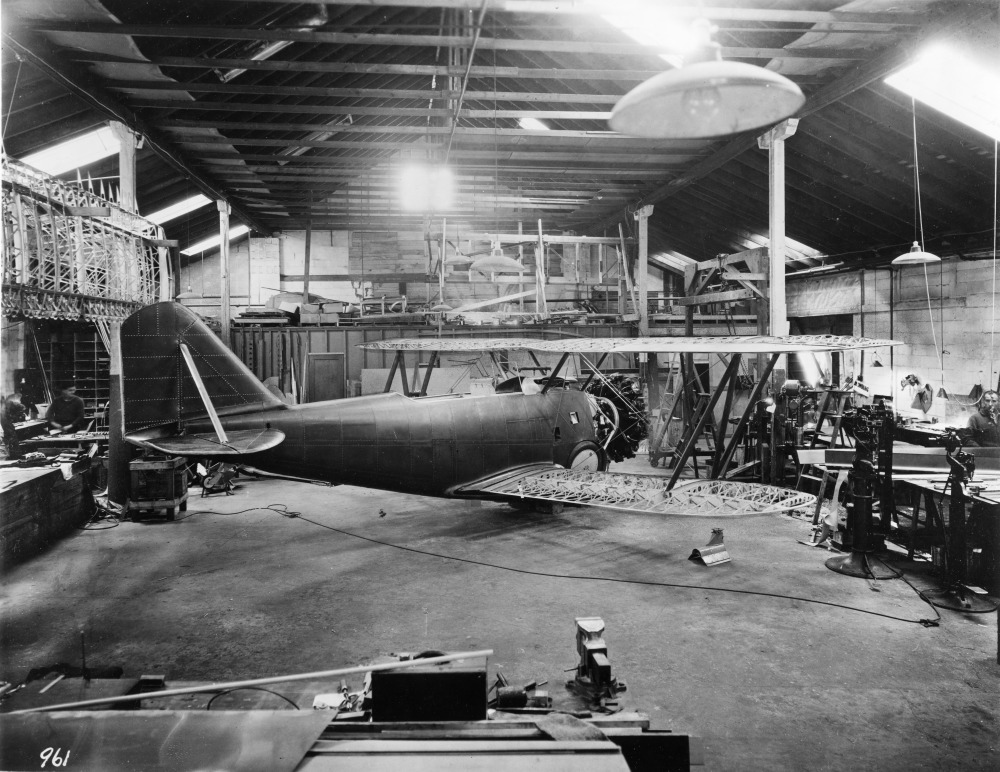
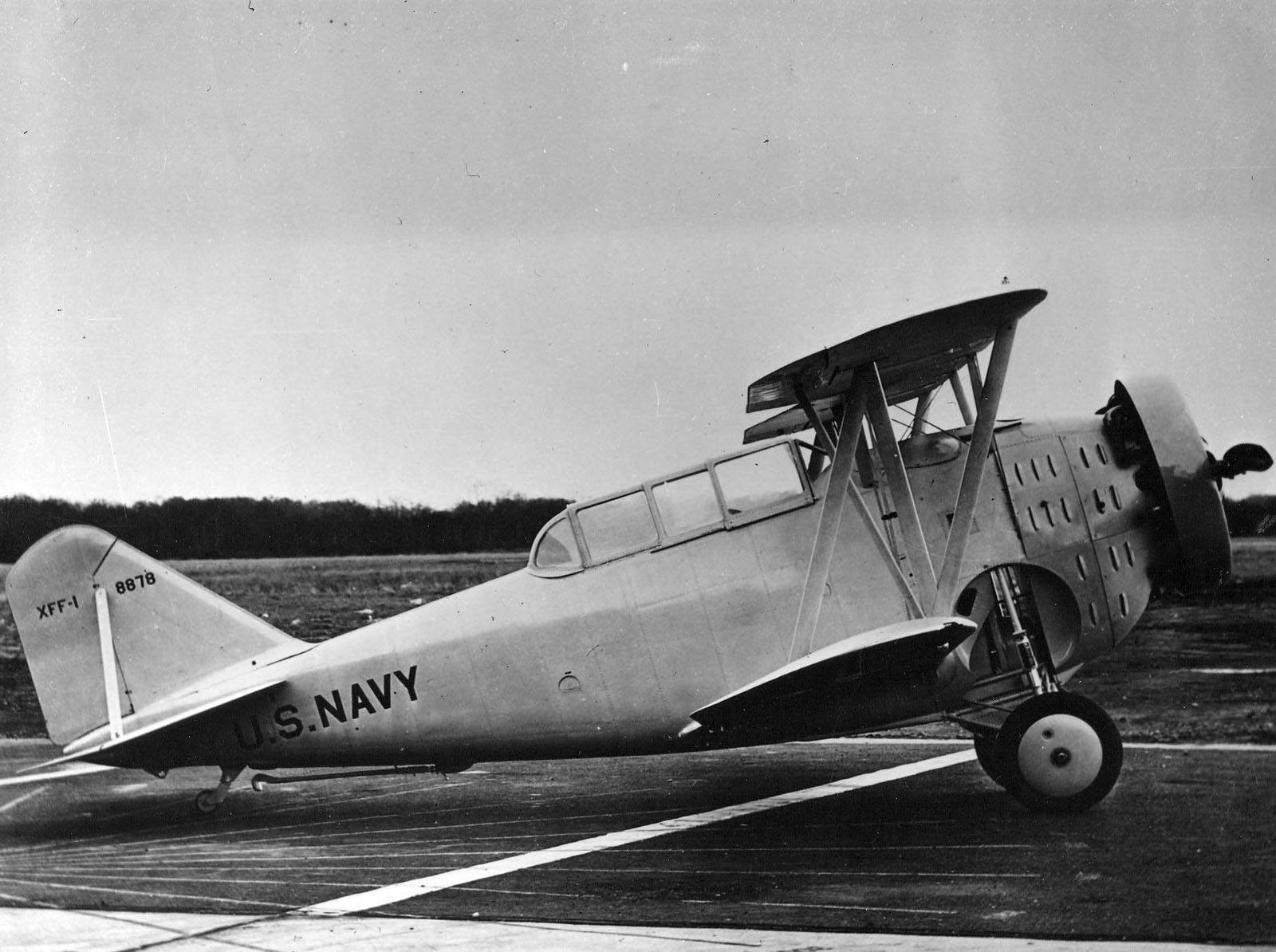
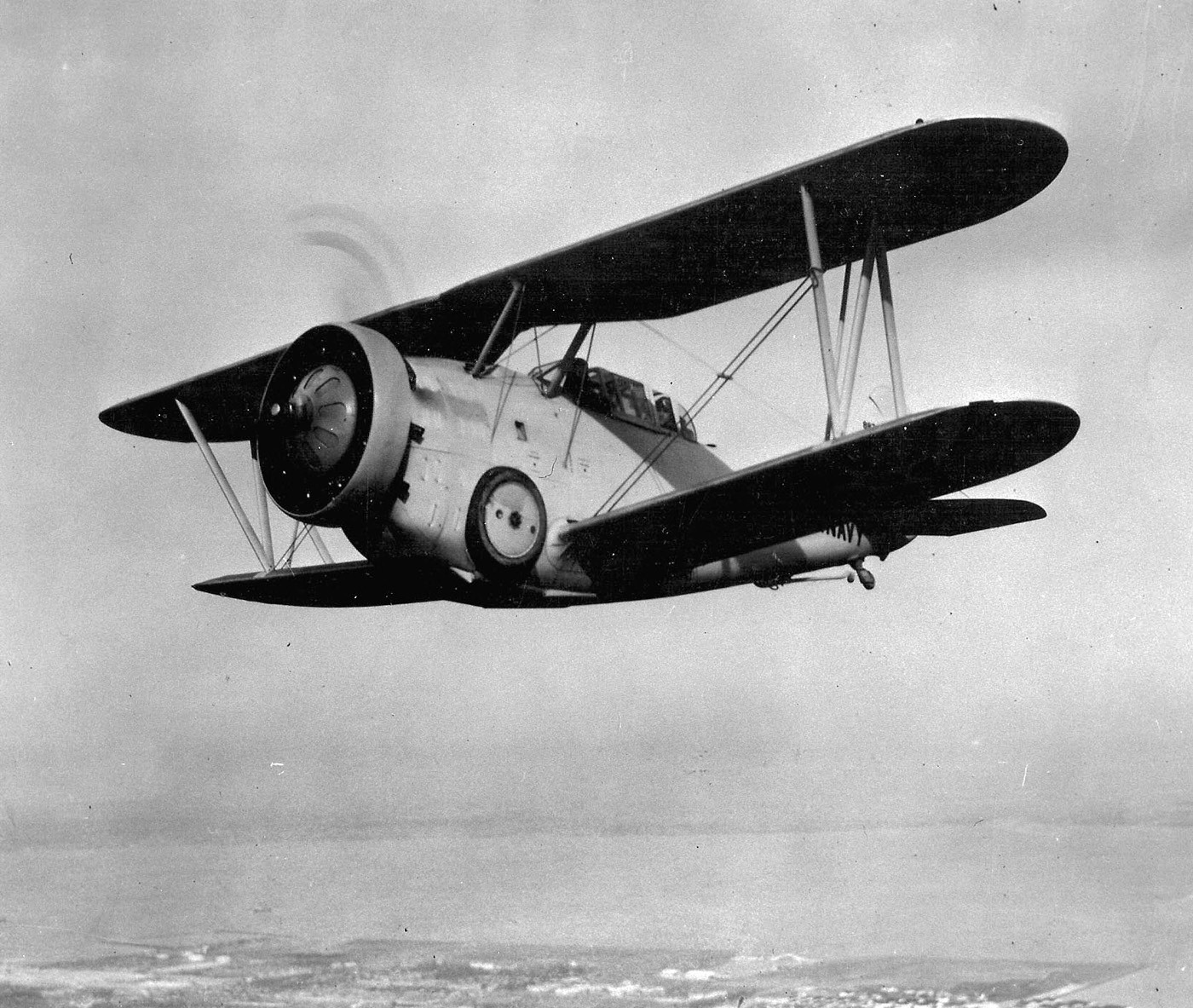
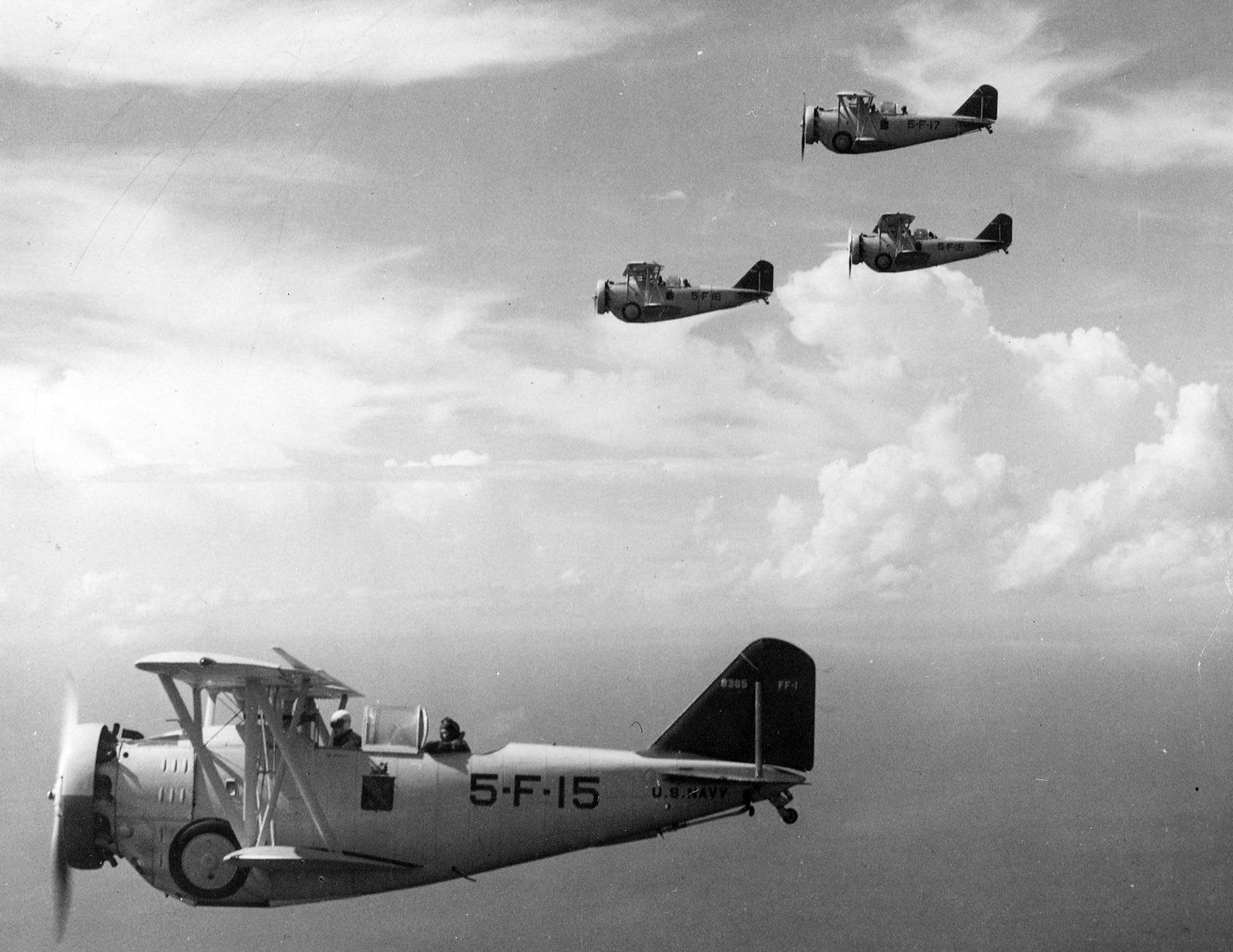
In USN service, the Grumman FF-1 earned the nickname “Fifi” from its flight crews as a play on the aircraft’s designation. The FF-1s primarily saw service both with Naval Air Stations across the United States, and at sea aboard the carrier USS Lexington (CV-2). Armament for the two-seat fighters consisted of two .30 caliber M1919 Browning machine guns mounted in the nose, synchronized to fire through the propeller arc, and either a single .30 caliber machine gun or a single .50 caliber Browning M2 machine gun installed on a flexible mount for the rear gunner/observer. Secondary armament would consist of either two 100 lb. M30 bombs or two 116 lb. Mk4 bombs carried on external racks mounted to the underside of the bottom set of wings.
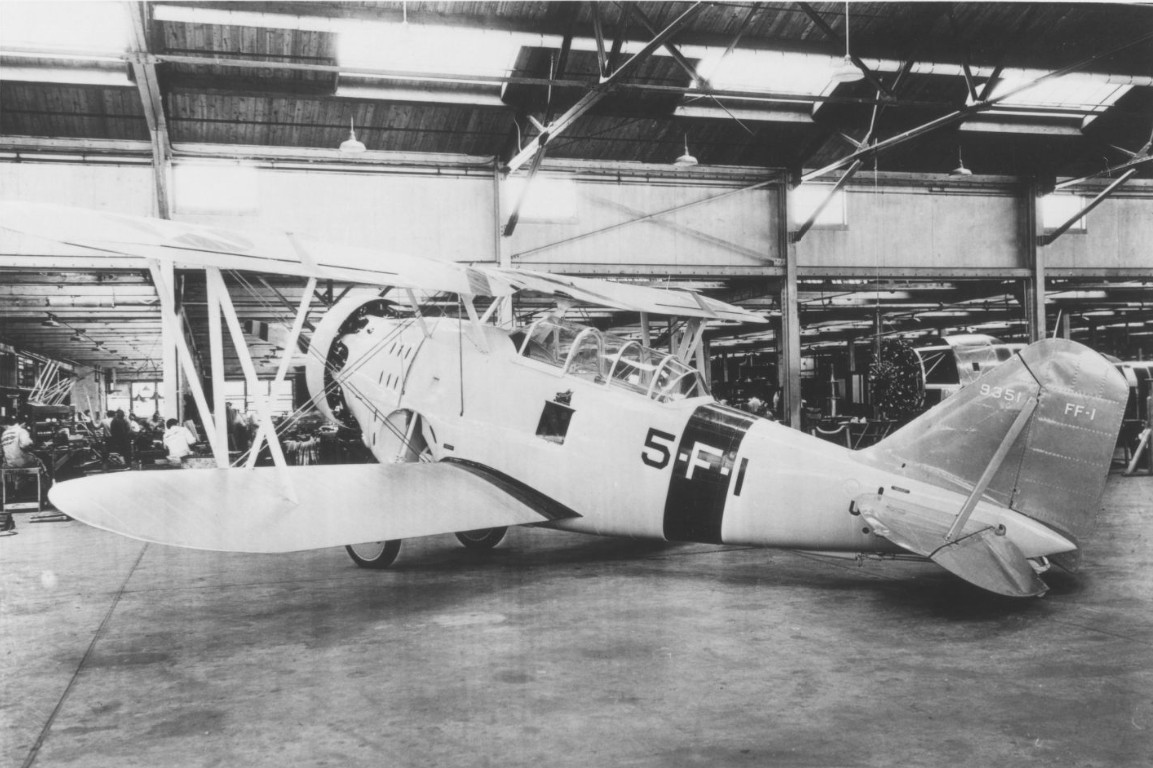
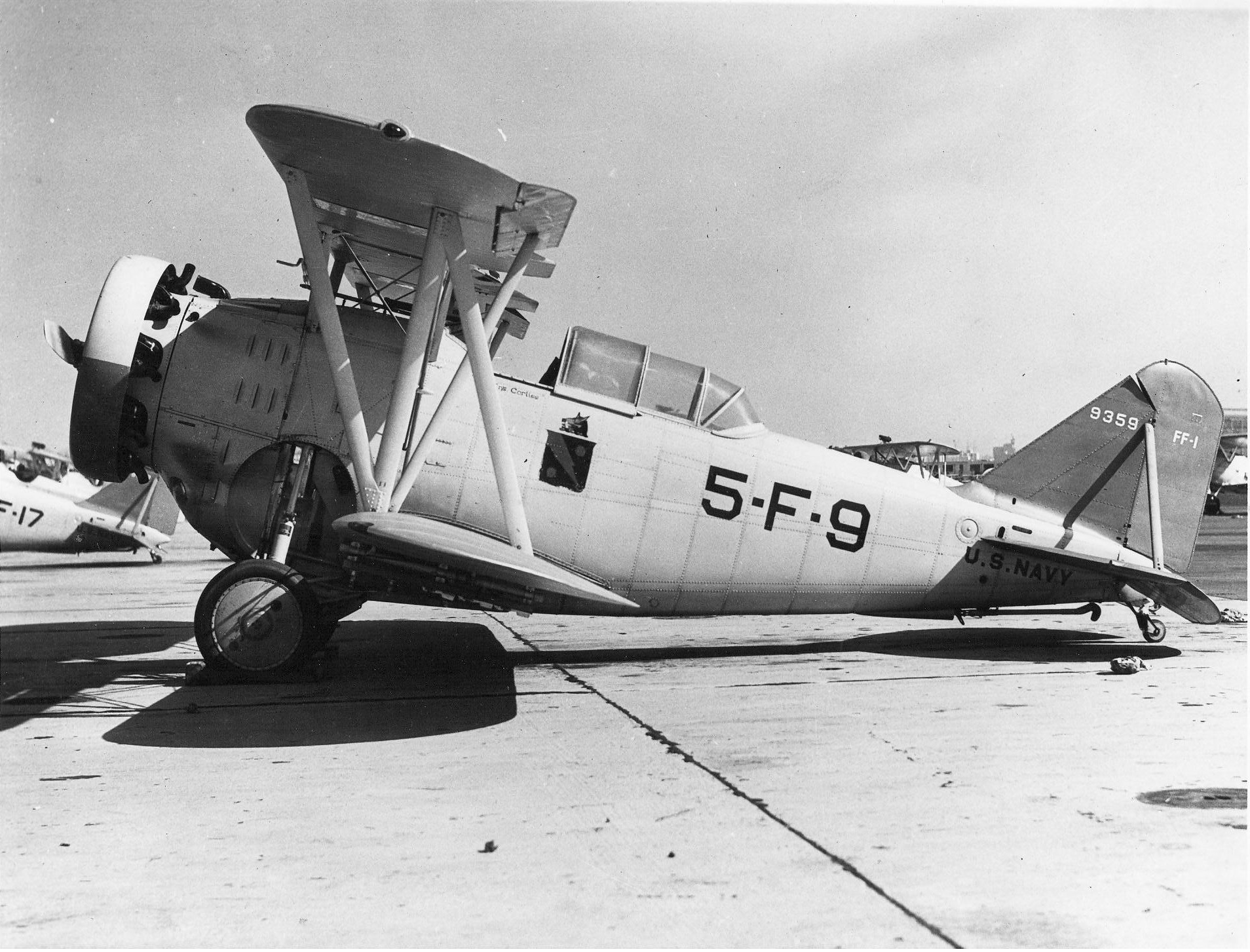
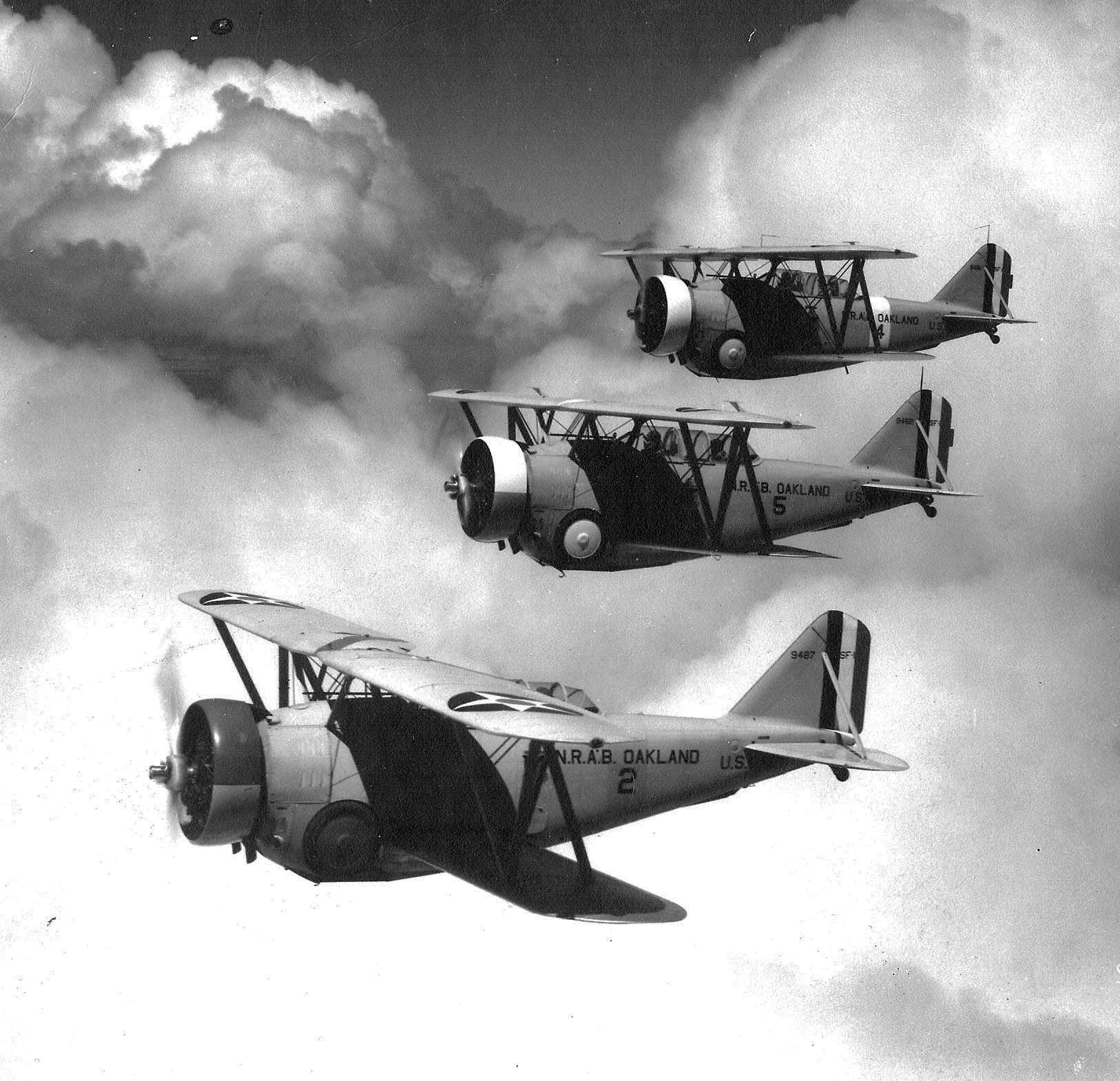
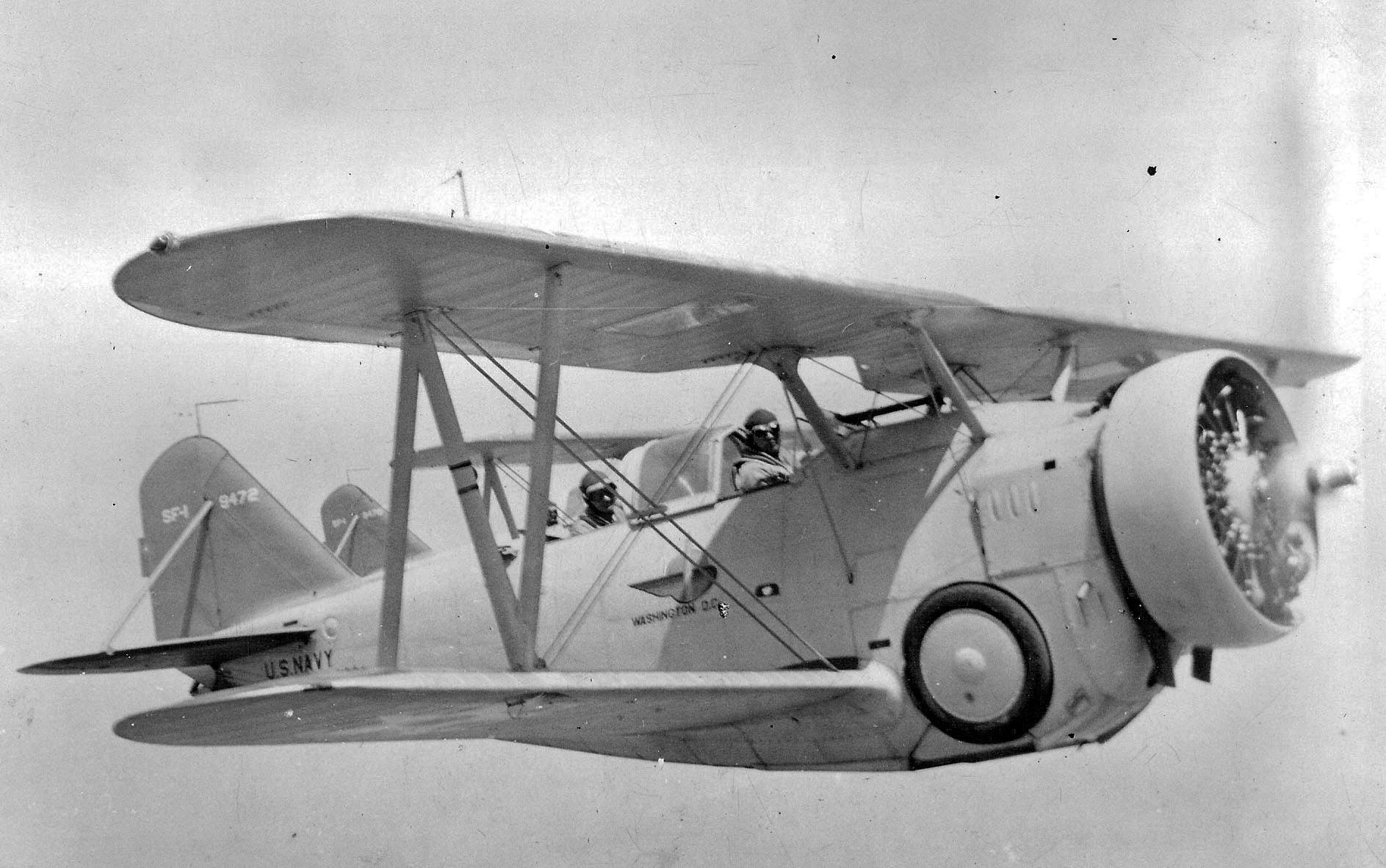
Due to the budget constraints of the Great Depression and the limited size of US naval aviation units at the time, only 27 FF-1s were built, with 25 of these later being modified by the Naval Aircraft Factory of Philadelphia as FF-2 fighter-trainers with dual controls. Additionally, the USN also ordered and received a dedicated scout variant of the Grumman FF-1, the Grumman SF-1, which would have its forward-firing guns removed in favor of extra fuel tanks, and would be adopted, with another 33 airframes being made. While the 1930s were relatively peaceful for the US Navy’s carrier fleet, rapid advancements in engine power and aerodynamics meant that military aircraft could be obsolete almost as soon as they had made their first flights. In the case of the Grumman FF-1, the aircraft was largely replaced from frontline squadrons by single-seat fighters, such as the Grumman F2F and later the F3F. By the late 1930s, the FF-1s, FF-2s, and SF-1s were largely relegated to training and reserve units. The last FF-2s were stricken from the Navy’s inventory on July 31, 1942, followed by the last of the SF-1s on Jun 15, 1943. Despite fading into history, they paved the way for later Grumman fighters that would be at the tip of the spear for the USN’s carrier fighter squadrons.
Additionally, Grumman constructed a civilian demonstrator model of the aircraft, the GG-1, which was first flown on September 28, 1934, and later flown as a corporate aircraft for the company until it was sold to Howard F. Klein on October 1, 1936. Klein ordered extensive modifications to the GG-1, such as replacing its original Pratt & Whitney R-1340 Wasp with a Wright R-1820 Cyclone engine. By June 1936, Grumman had granted permission to issue a production to the Canadian manufacturing firm Canadian Car & Foundry (CC&F), which had been founded in 1909 to build railway cars and rolling stock, decided to get into the business of building military aircraft, starting with building the G-23, an export variant of the FF-1 based on the GG-1. To kickstart production, Grumman supplied CC&F with 52 fuselages while Brewster Aircraft built 70 sets of wings and 66 tail assemblies, and CC&F would establish an assembly and production center in Fort William, Ontario (which was later amalgamated with a few other cities and townships to form Thunder City).
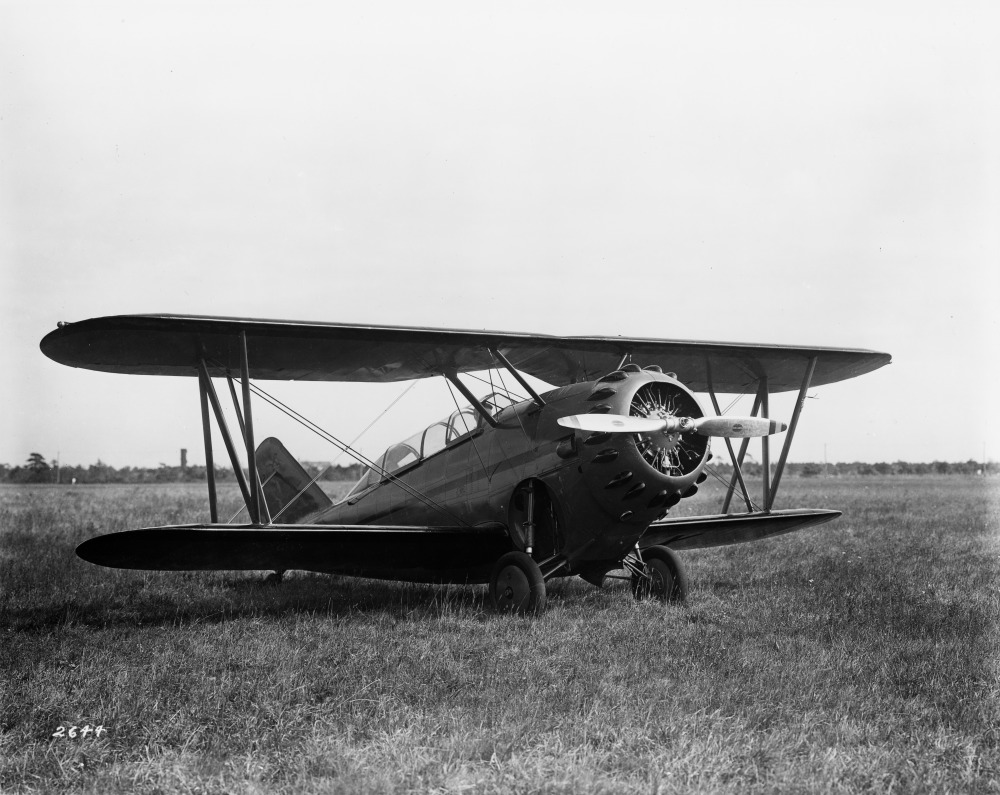
In March of 1937, Howard Klein flew the GG-1 on a sales tour of Latin America on behalf of CC&F to secure export contracts for G-23 fighters. While being demonstrated at Balbuena Field (now Mexico City International Airport), the GG-1 suffered a landing accident when it ran over a mudhole and flipped on its back. While Klein and his passenger, Colonel Gustavo G. Leon Gonzalez, were uninjured, and the aircraft was soon repaired, Klein turned over the flying operations to George Ayde and Marcus A. Goodrich, who flew the aircraft to Guatemala, where they failed to attract any bids, and late to Nicaragua, where they were able to help the Canadian Car & Foundry secure a contract to provide the Nicaraguan Air Force (Fuerza Aerea Nicaragua) two G-23s, and the possibility of securing the GG-1 following its sales tour. On September 12, 1937, Ayde and Goodrich departed the Nicaraguan capital of Managua, bound for San Jose, Costa Rica. Lost in bad weather and low on fuel, the two ditched the aircraft off the coast of Greytown, Nicaragua, and while Ayde and Goodrich were rescued by the Nicaraguan Guardia Nacional, the aircraft was a total loss.
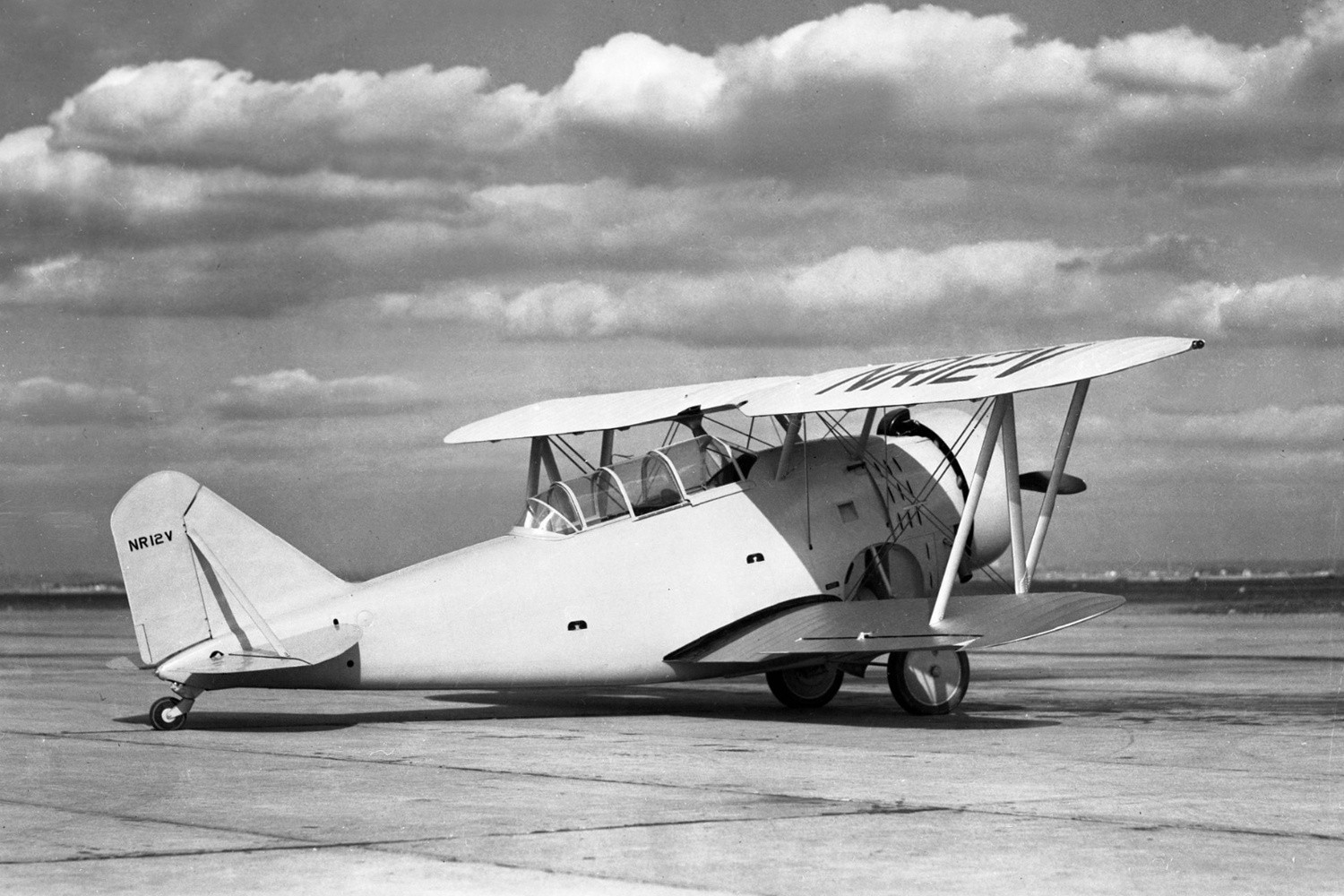
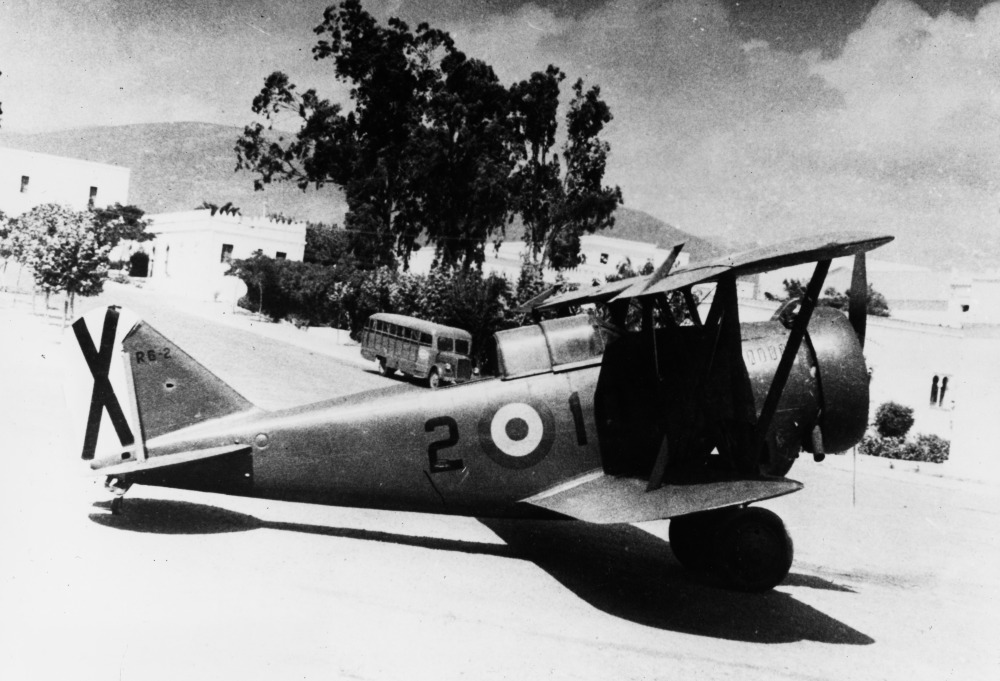
In 1936, agents of the Second Spanish Republic secured a clandestine export order for 40 CC&F G-23s. The secrecy was a rest of international arms embargoes placed on the Spanish government in the midst of the Spanish Civil War, where insurrectionist Nationalist forces under General Francisco Franco were attempting to overthrow the Spanish Republic with the backing of Fascist Italy and Nazi Germany. In order to get around arms embargoes to Spain, the aircraft were shipped from Canada with the cover story that they were intended for the Turkish Air Force. With the contract secured, the G-23s bound for Spain were shipped from Fort William to Montreal, Quebec, to be shipped to Le Havre, France, before being shipped to Republican territory in Spain. However, Spanish Nationalist sympathizers prompted an investigation that blew the cover story of sending the fighters to Turkey. While a shipment of 16 aircraft was confiscated from the Norwegian steamer S.S. Hada County in Montreal, 34 airframes made it to Spain, with Spanish Republican pilots nicknaming the aircraft the Delfin (Dolphin). However, by this point, the Republican forces and their allies in Spain were on the brink of defeat, and on April 1, 1939, Francisco Franco declared victory for his Nationalist forces and would rule Spain as a dictator for nearly 40 years. By the end of the war, 11 GE-23 Delfins were still serviceable, and these would be flown by the postwar Spanish Air Force as the R.6 until the last of them was retired and scrapped by 1954.
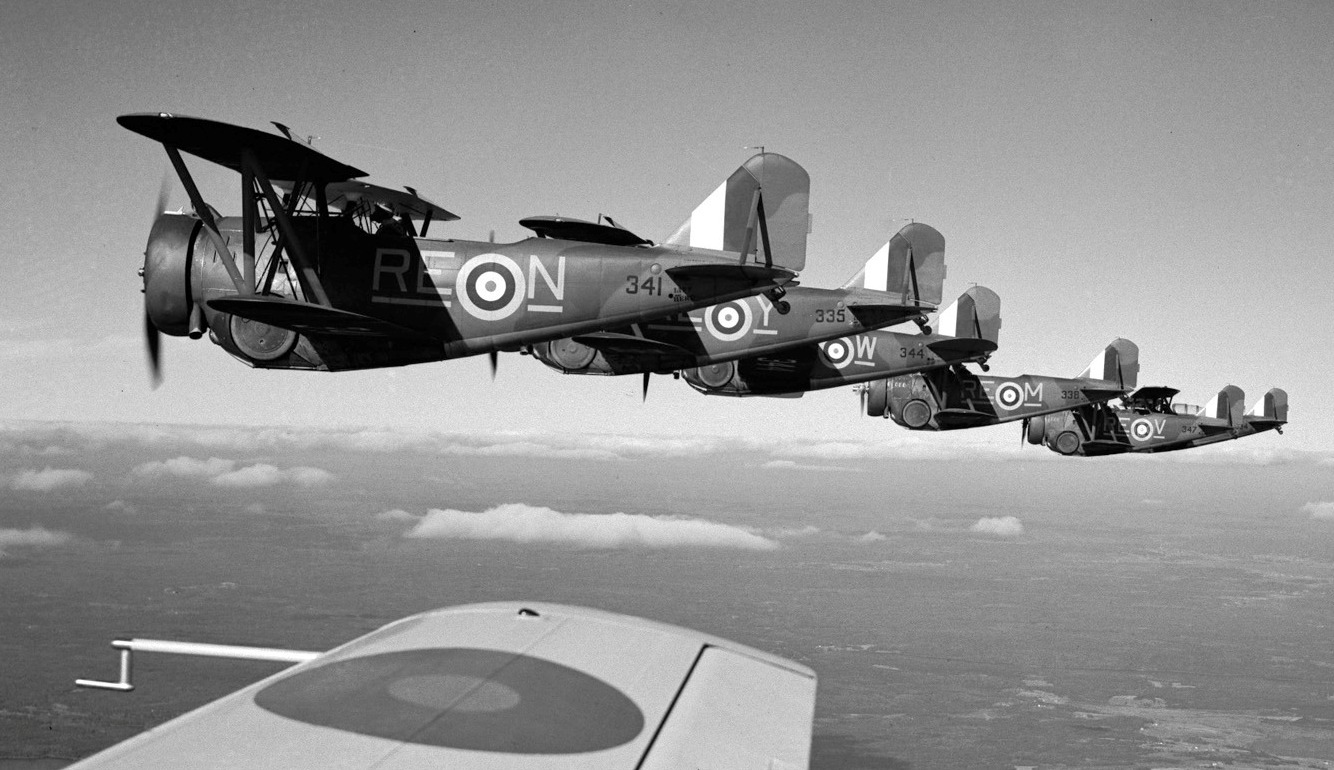
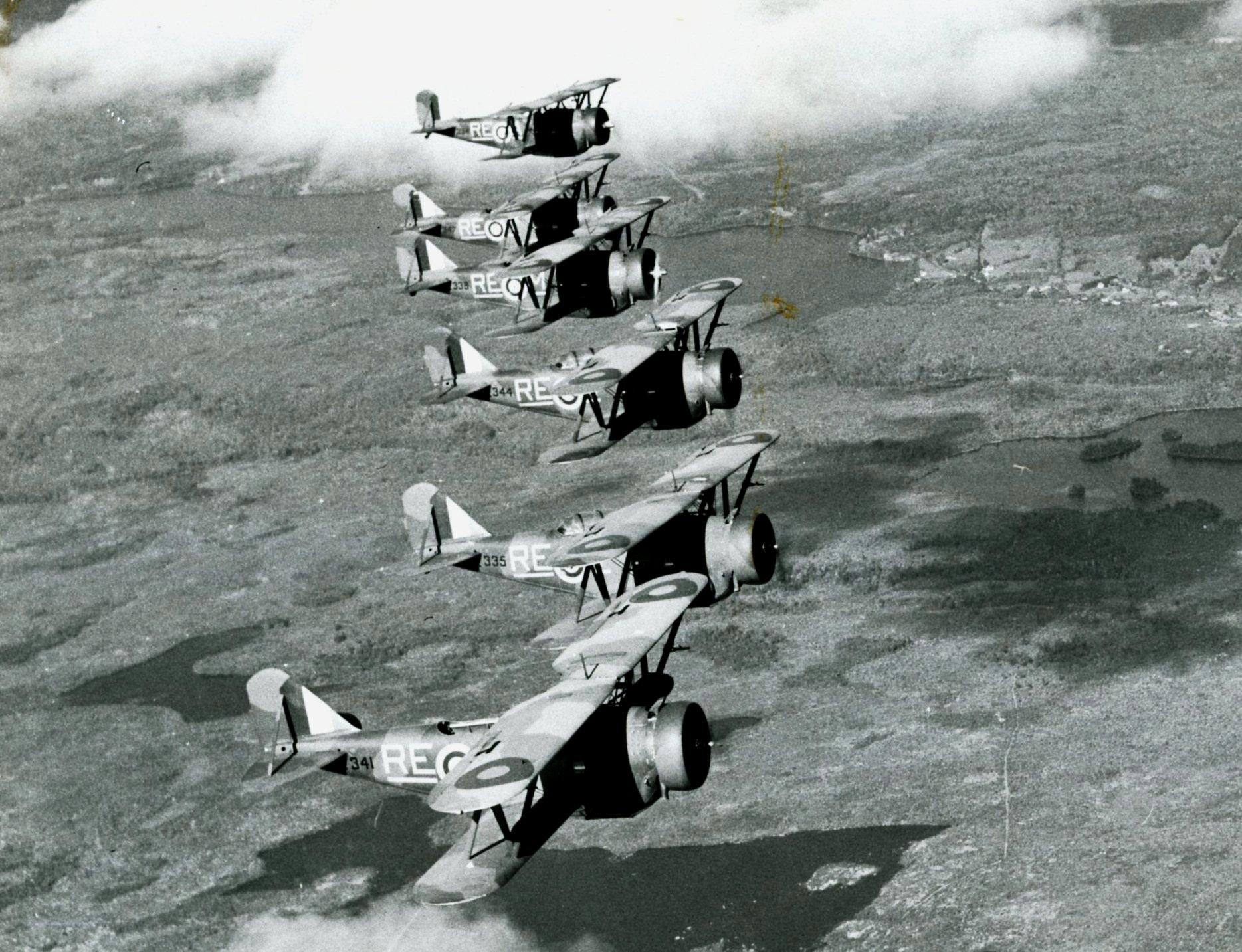
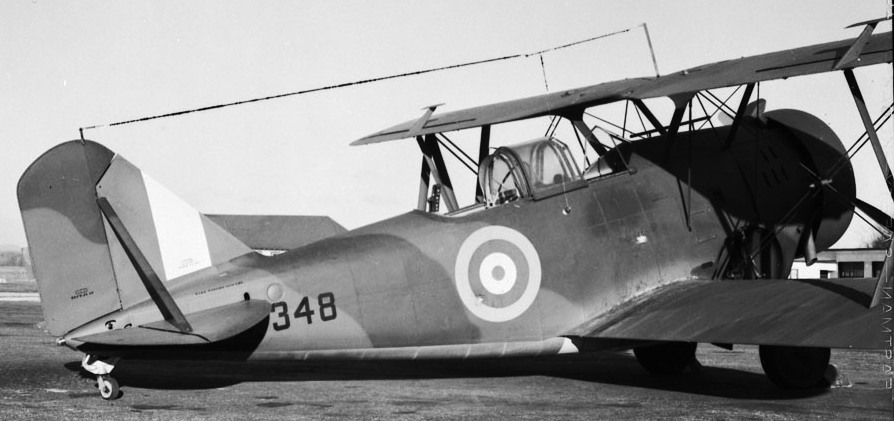
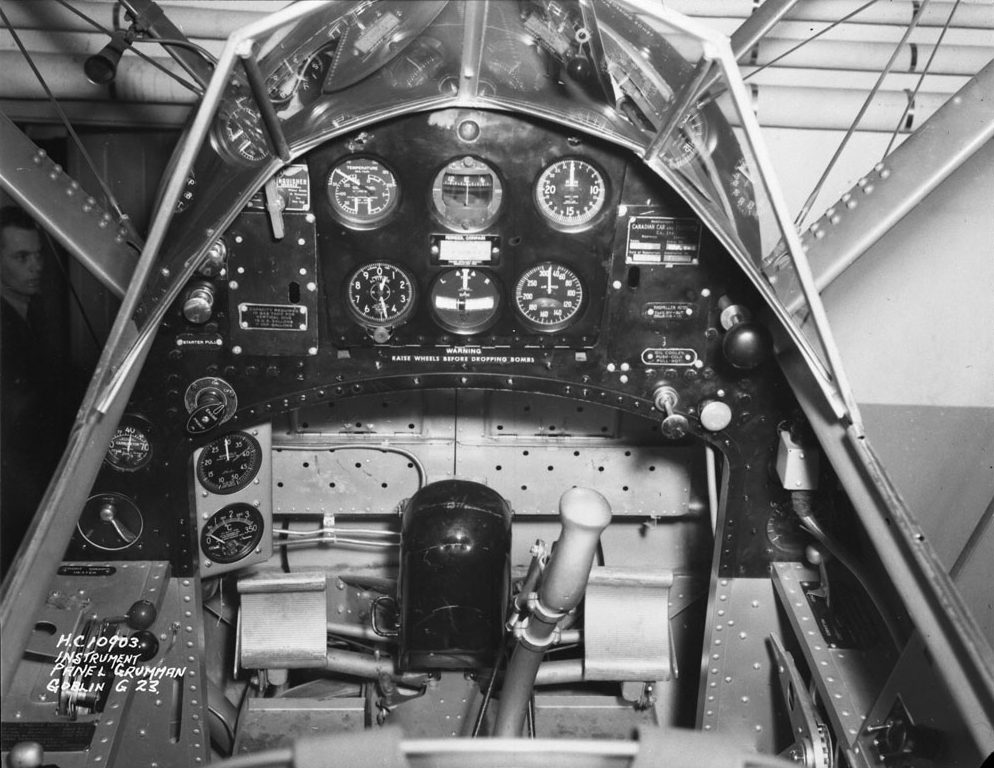
Besides exporting G-23s to Spain, Canadian Car and Foundry sold a single aircraft to Japan in 1938, which was used for technical evaluation but was later discarded by the Japanese. CC&F also attempted to sell the Royal Canadian Air Force on the design, but the aircraft was initially rejected the aircraft as being too slow and outdated to be a fighter, the outbreak of World War II and Canada’s entry on the side of the British Commonwealth on September 3, 1939 would see the RCAF adopt 15 G-23s originally constructed for the Spanish Republicans that had not been shipped out, redesignated the aircraft as the Goblin Mk.I, and accepted into RCAF service in the fall of 1940. While it was widely recognized that the Goblins were obsolete, they were the only fighters available for No. 118 (Fighter) Squadron RCAF, the main Canadian fighter squadron protecting the Atlantic coast. These would hold the line until new aircraft such as Curtiss Kittyhawks from the United States and later Hawker Hurricanes built under license by CC&F could be brought into service. After flying in other RCAF units, the Goblins were eventually transferred to training and maintenance units to serve out the remainder of their brief service lives, with the last CC&F Goblins being decommissioned in 1942.
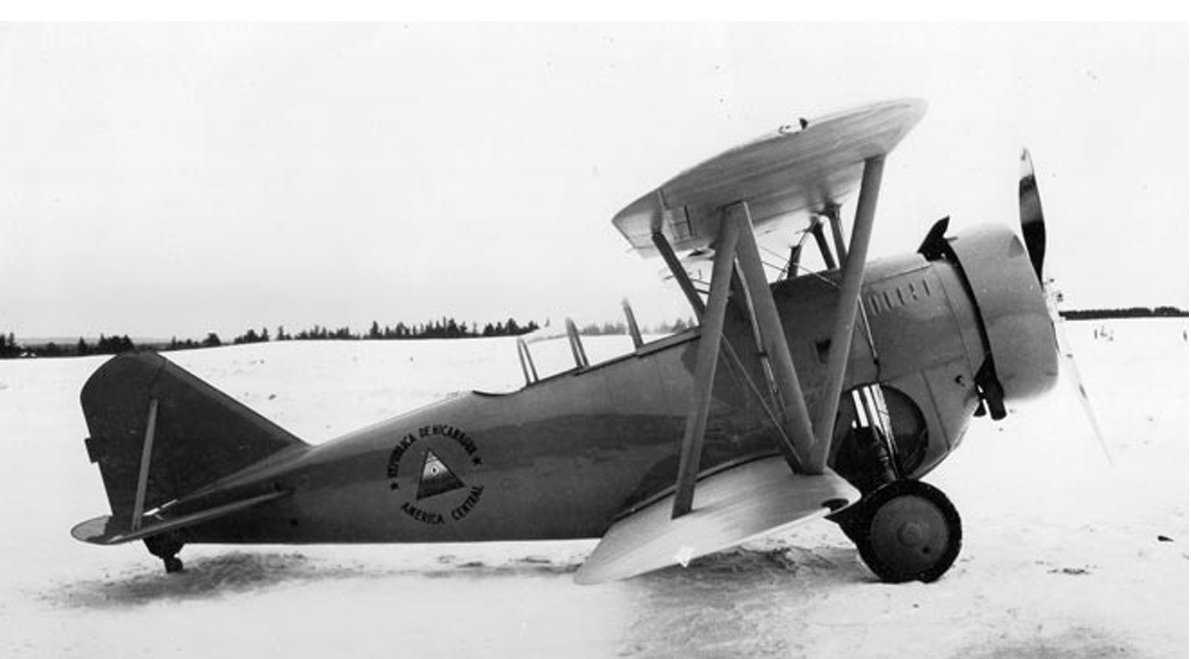
Finally, the Canadian Car and Foundry would also attempt to export the G-23 to Latin America as well. In 1938, the company sold their first assembled G-23, c/n 101, to the Nicaraguan Air Force (Fuerza Aerea Nicaragua). After its test flight on February 12, 1938, the aircraft was delivered to the FAN on March 21, 1938, and was issued the serial number GN3. The aircraft was painted in an overall Light Grey scheme with the Nicaraguan coat of arms painted on the fuselage. On November 21, 1939, just one year into GN3’s service life, the aircraft was badly damaged as a result of a wheels-up landing in Managua, the Nicaraguan capital. The aircraft was being flown by Captain Guillermo Rivas Cuadra on his first flight in the aircraft but being more experienced on aircraft with fixed landing gear, he forgot to use the hand crank to lower the landing gear of G-23 GN3. The damage proved to be beyond repair, and the aircraft would subsequently be written off.
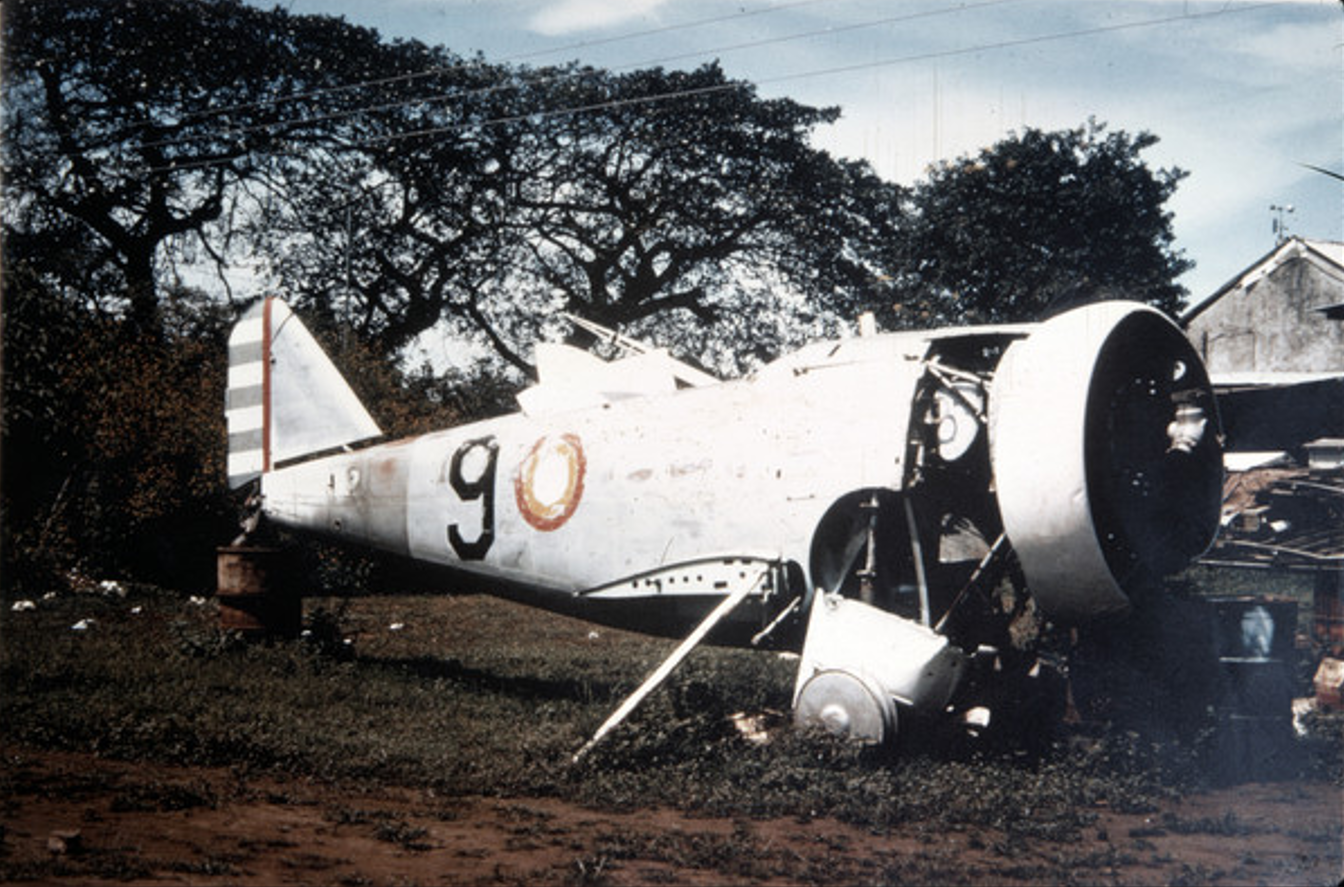
There was, however, one other G-23, c/n 148, that was flown by the Nicaraguan Air Force, and this would be the aircraft now on display in Pensacola. After being manufactured at the CC&F factory, c/n 148 had been one of the G-23s bound for Spain that had been confiscated in Montreal, but was later included as one of the two aircraft Nicaragua agreed to purchase from CC&F. Since the GG-1’s visit to Mexico in 1937, CC&F had been attempting to secure a production license contract with the Mexican government to build as many as 45 G-23s in Mexico for the Fuerza Aerea Mexicana. (FAM) By June 1938, tooling was already being sent from Canada to Mexico, and at some point after September 1938, G-23 c/n 148 was transported to Mexico and reassembled at Balbuena Field, with pilot Sumner B. “Sunny” Morgan, who had previously flown airmail flights in Honduras during the 1920s, flying the aircraft before Mexican President Lazaro Cardenas and Secretary of National Defense and future President of Mexico General Manuel Avila Camacho. G-23 c/n 148 would remain in Mexico for some time before its eventual delivery to Nicaragua in order to be used as a pattern aircraft for engineers to make notes before being their own G-23s. However, no progress on building or acquiring G-23s had been made before the outbreak of World War II in Europe, and with Canada’s subsequent declaration of war on Germany on September 3, 1939, the manufacturing deal between CC&F and Mexico never came to pass. Though it is not entirely clear when exactly c/n 148 left Mexico, the fragmentary records available suggest it was between November 1939 and June 1940 that G-23 c/n 148 was flown to Nicaragua, where it was accepted into the Fuerza Aérea Nicaragüense (FAN) as serial number GN9. During its time in the FAN, GN9 experienced two wheels-up forced landings, with one in 1940 and the other being recorded on March 13, 1942. However, it was repaired on both occasions and returned to service, with the aircraft returning to flight status after its second mishap by May 1943. For over ten years, the aircraft remained in the inventory of the FAN, flying routine training and patrol flights until a lack of spare parts and the age of the airframe resulted in GN9 being stricken from the Nicaraguan Air Force by September 1954. After that, it wound up in a junkyard in the Las Mercedes district of Managua, the capital city of Nicaragua. It was likely that the aircraft would have simply faded away and been scrapped right there, but luckily for aviation historians, fate intervened.
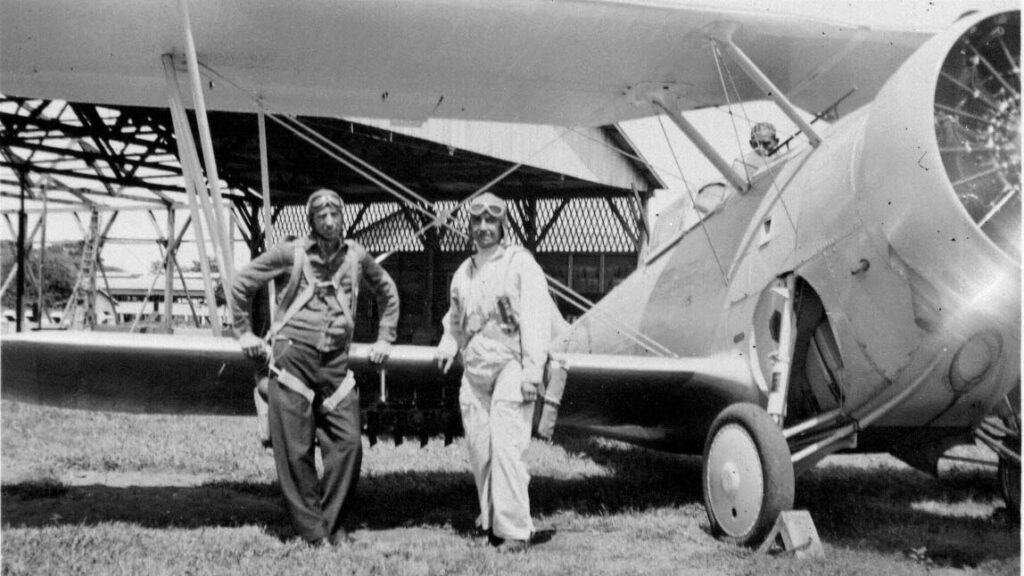
During the late 1950s and early 1960s, an American pilot named J.R. Sirmons, originally from Atoka, Oklahoma, was hired to come down every winter to spray fertilizers on a 4,000-acre banana plantation, but in 1961, Sirmons was in Managua when he saw the remains of GN9 in that junkyard in Las Mercedes. While he did not know exactly what model of airplane he was looking at, he could tell that it was a Grumman airplane from its similarities to other Grumman biplane aircraft of the pre-WWII era. Sirmons would pay the junkyard owner $150 to purchase the aircraft, and he then transported the derelict airframe to Chinandega, some 71 miles away. After purchasing the aircraft, he wrote a letter to Grumman Aircraft, bringing the G-23 to the company’s attention. Grumman responded that while they did not have any spare parts for the FF-1/G-23, they would send an original instruction book, which Sirmons would use to restore the aircraft. Over the course of four years, Sirmons spent some of his time in Chinandega restoring the G-23. He had a set of flying wires custom-made by the firm McWhite Inc. of Kenosha, Wisconsin, which cost $750. After securing the new flying wires, Sirmons had his wife, Norma, and daughter, Diana, sew fabric to the wing frames, which were found to be in almost new condition. When he had purchased the aircraft in Managua, the G-23 was missing its elevators, but with the Grumman FF-1 handbook on hand, he used the measurements listed to rework a set of Stearman elevators to be the aircraft’s new set. Some items had to be fabricated from scratch, with parts of the cockpit frame and the stabilizer support struts being hand-crafted by Sirmons. In the cockpit, the missing glass in the center portion of the canopy frame was replaced by metal, while new flight instruments were installed. Another alteration Sirmons made to the old Canadian-built Grumman was to its engine. The original 750hp Wright R-1820 Cyclone radial engine was found to be worn out and Sirmons did not have the means in Nicaragua to restore the engine. Instead, he installed a 600hp Pratt & Whitney R-1340 Wasp radial engine with a three-blade propeller as an effective substitute. In all, Sirmons spent around $8,000 in cash getting the aircraft ready to fly.
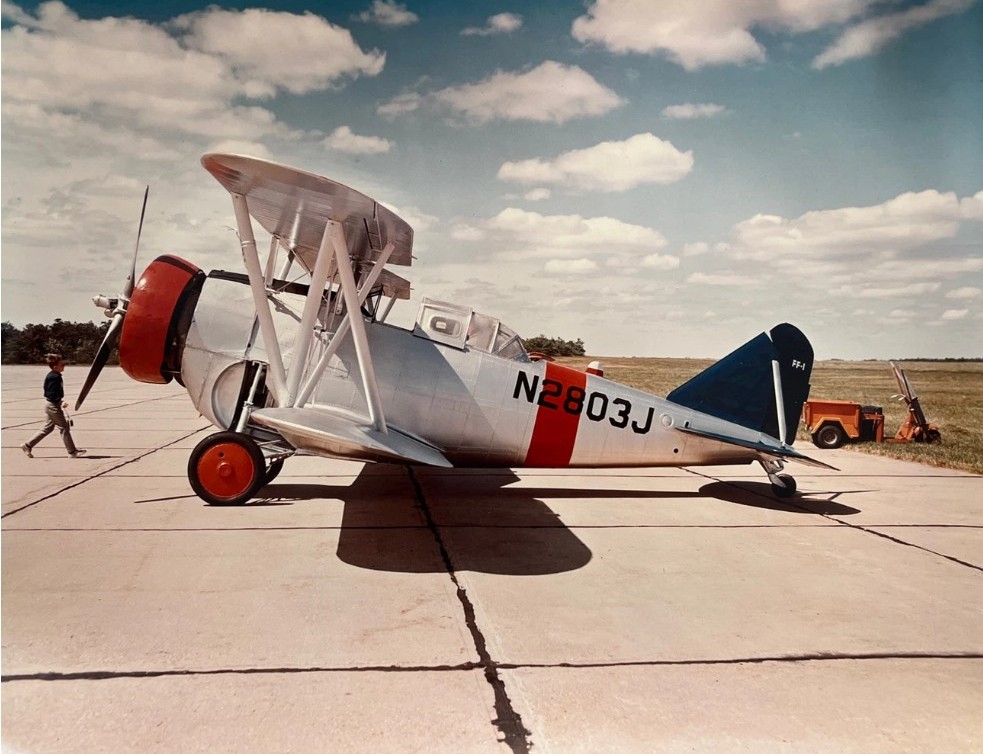
In February 1966, Sirmons took the restored G-23 for a local test flight. Sirmons found the airplane to be “a delight to fly”, and the only issue discovered during the test flight was the need for a minor adjustment to the right on the rudder trim tab. Before he would fly the aircraft back to the United States, though, he would fly the G-23 to Managua to attend the Annual Nicaraguan Armed Forces Day Celebration there. Reportedly, Sirmons got into a heated argument with a junior customs official, and as a result was jailed for a short time before being released and being allowed to fly the aircraft back to the US. Because of the plane’s two prior belly landings, the bushings used to dampen vibrational energy in the landing gear were kinked, and so Sirmons chose to lock the manually cranked landing gear in the down position and apply fairings over the wheel wells to be more aerodynamic. Over the course of three days, Sirmons flew the old aircraft over 2,100 miles north, with refueling stops in El Salvador and Mexico before landing at Brownsville, Texas, then proceeded to Longview, where he would store the aircraft at Gregg County Airport (now East Texas Regional Airport). By this point, Sirmons had obtained a Civil Registration number from the FAA for the aircraft, N-number N2803J. Since the aircraft’s data plate had gone missing, and the only clues to the aircraft’s identity for Sirmons were its faded Nicaraguan Air Force colors, he submitted the serial number of the aircraft as manufacturer’s number 9.
Sirmons would note the CC&F G-23 would cruise at 130 mph with the gear down and the output of the R-1340 engine, that he had a solid feeling with all the controls, and remarked on the aircraft’s stability in flight He did bring up that the old biplane was hard to land in crosswinds, and that visibility while taxiing on the ground was limited, but those were the only things Sirmons would critique about the airplane’s handling. Soon after bringing the aircraft to Longview, Sirmons was invited to fly N2803J to Grumman Aircraft’s headquarters in Bethpage, New York, which he would do on June 9, 1966. Once Sirmons flew the aircraft to Bethpage, Grumman made him an offer to buy the airplane from him. However, Grumman had wanted to assign their own manufacturer’s serial number (MSN) to the aircraft. The company claimed that its production records showed the aircraft’s serial number to be 112. Since Sirmons registered the aircraft with the MSN 9, the FAA required Sirmons to obtain an official bill of sale from the Nicaraguan government to authenticate Grumman’s preferred MSN 112. J.R. Sirmons got a bill of sale from the Nicaraguan government, signed by one Colonel Servalia, Chief of the Nicaraguan Air Force, for the symbolic price of $1.00. Though the bill of sale was completed on September 15, 1966, it was backdated to November 12, 1962. With this official bill of sale from Nicaragua, Grumman decided to simply purchase the aircraft with the original FAA MSN 9, and on September 27, 1966, Grumman bought the last G-23/FF-1 aircraft, with Grumman buying the aircraft for $1.00.
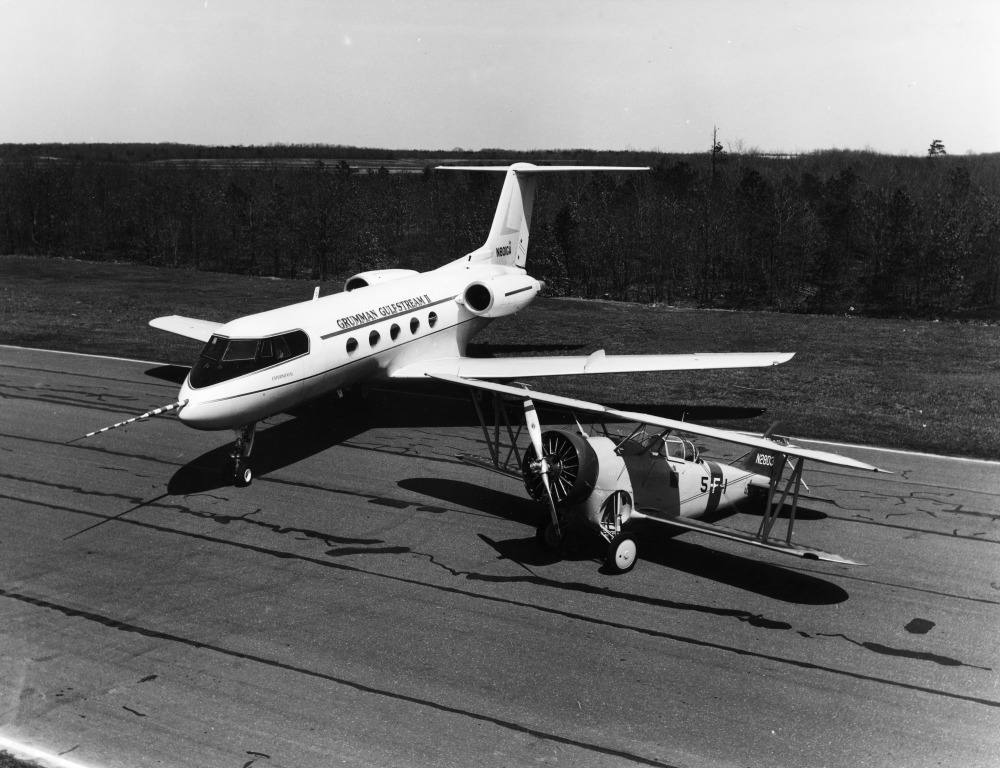
Now that N2803J was at last in Grumman’s possession, the company got to work on giving the aircraft a more thorough restoration with the resources at their disposal. Grumman painted the CC&F G-23 in the markings of FF-1 BuNo 9358, an aircraft assigned to VF-5B, known as the Red Rippers (now VFA-11) stationed aboard the USS Lexington (CV-2) during the 1930s. The aircraft would also have its Pratt & Whitney R-1340 Wasp engine and its three-blade propeller replaced by a Wright R-1820 Cyclone with a two-blade propeller. Grumman would house the aircraft at their headquarters at Grumman Bethpage Airport, but while the aircraft would make some public appearances at airshows on the US East Coast and was displayed in publicity photos with the latest airplanes built by Grumman, such as the Gulfstream II business jet and General Dynamics–Grumman F-111B, the company ultimately planned to donate the old biplane to the National Naval Aviation Museum at Naval Air Station Pensacola, Florida.
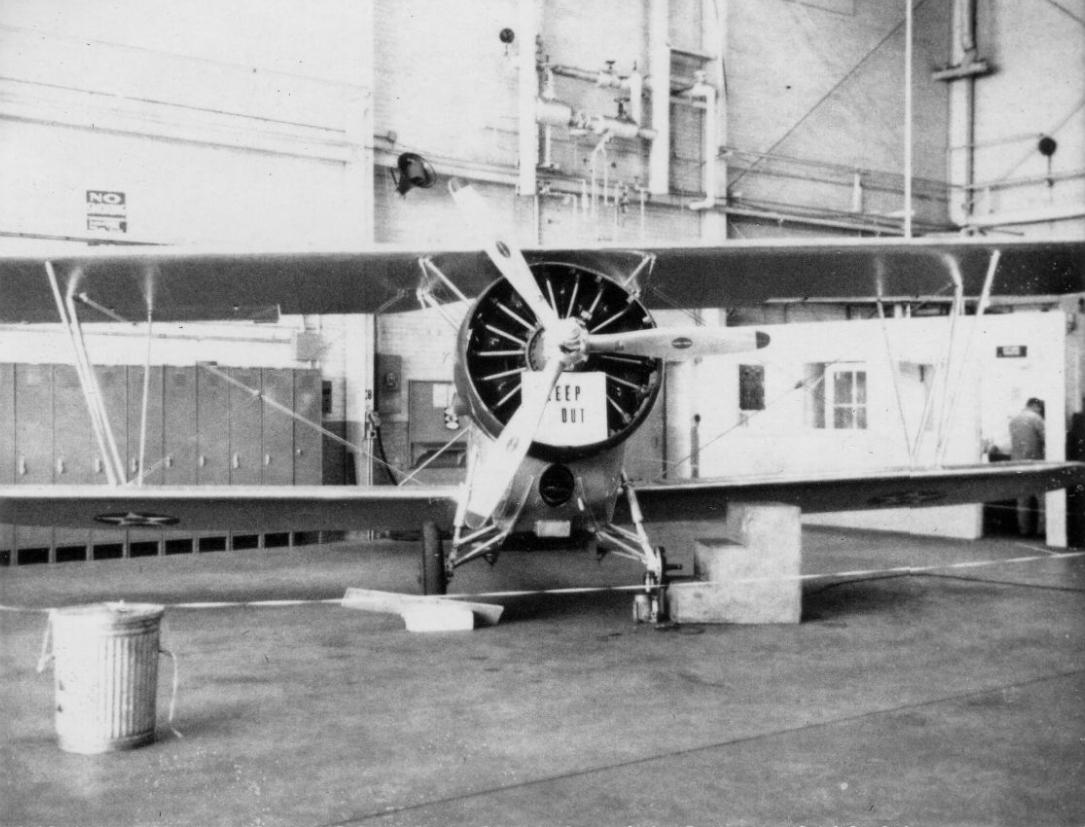
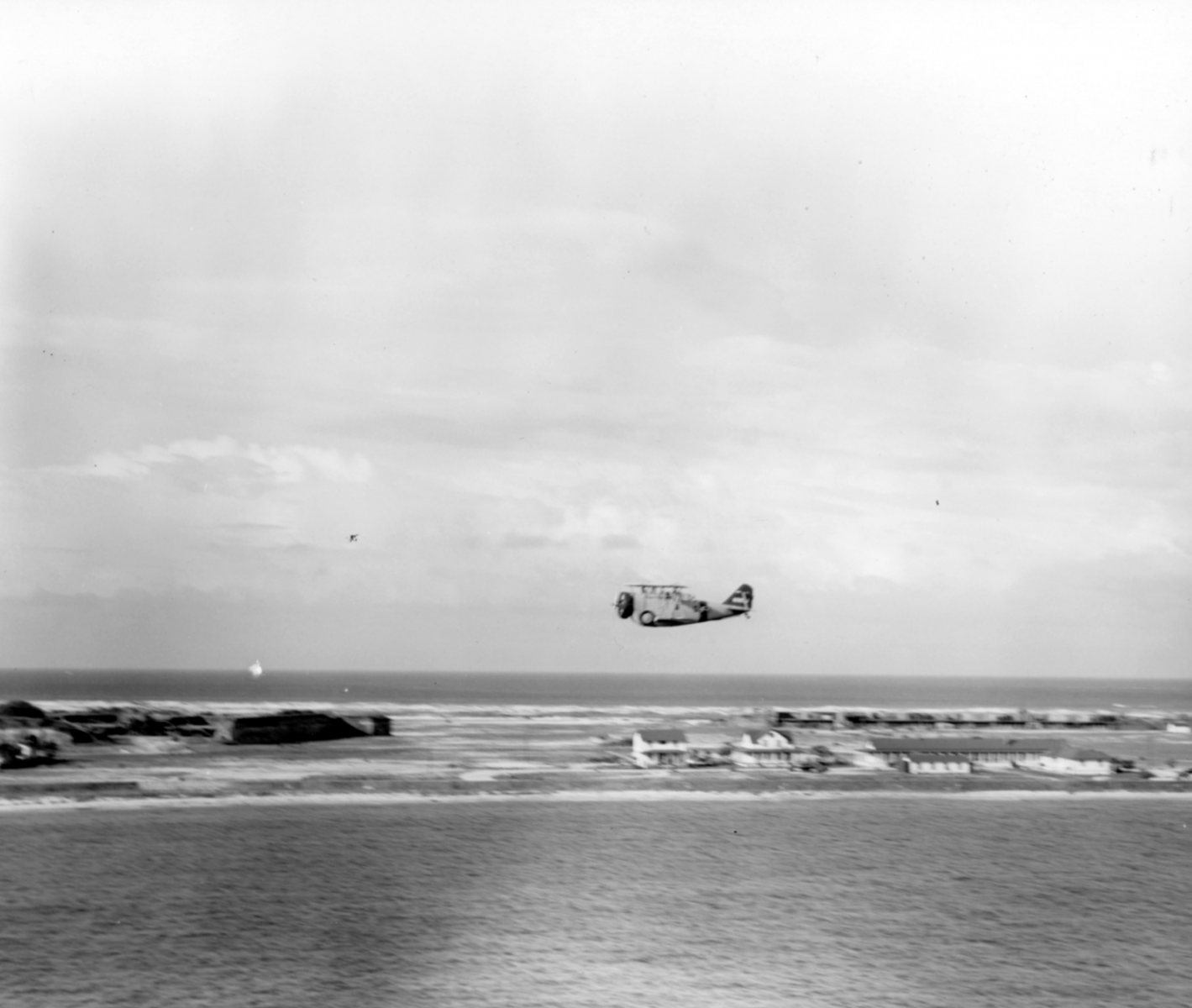
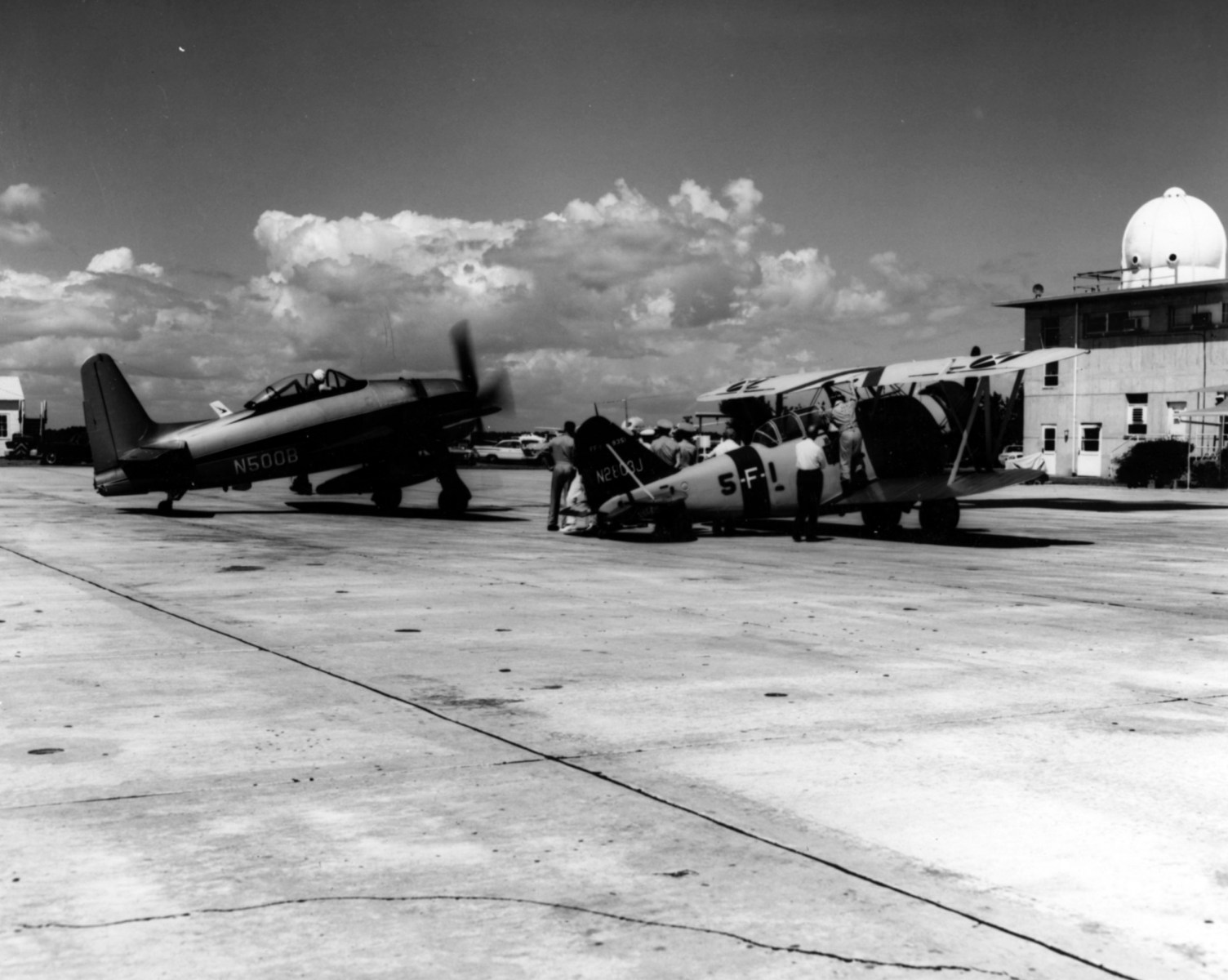
On June 6, 1967, Captain William “Bill” Scarborough, USN (Ret), who had flown combat patrol missions in PBY Catalinas and PV-1 Venturas during WWII, and who was now a senior employee of Grumman, took off in G-23 N2803J from Bethpage, bound for Pensacola. Accompanying him was a civilianized Grumman F8F-2 Bearcat, N500B (formerly BuNo 121731), which was owned by pilot Chester F. Christopher. It was quite fitting that for one special flight, an example of the first Grumman fighter and an example of the last piston engine fighter built by Grumman, albeit a civilian model, should fly together. Three days after leaving Bethpage, Scarborough arrived at Pensacola. After putting on a low-level performance over nearby Santa Rosa Island and over the US Navy training carrier USS Lexington (CVT-16) before landing at Forrest Sherman Field, NAS Pensacola. Shortly after shutting off the engine for the final time, Scarborough climbed out of the cockpit and, on behalf of Grumman Aircraft, officially turned over custody of the aircraft to the US Navy and the Naval Aviation Museum.
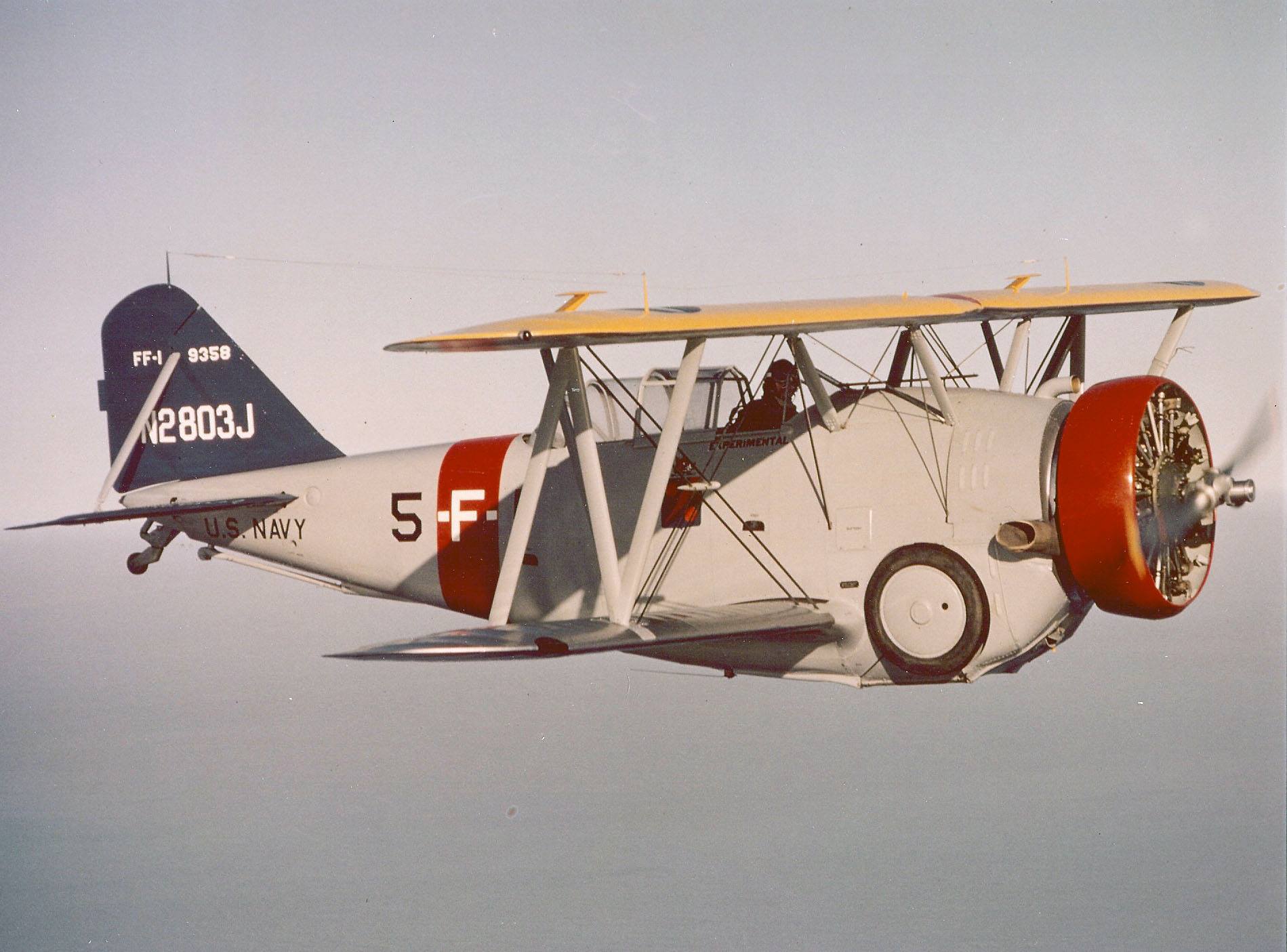
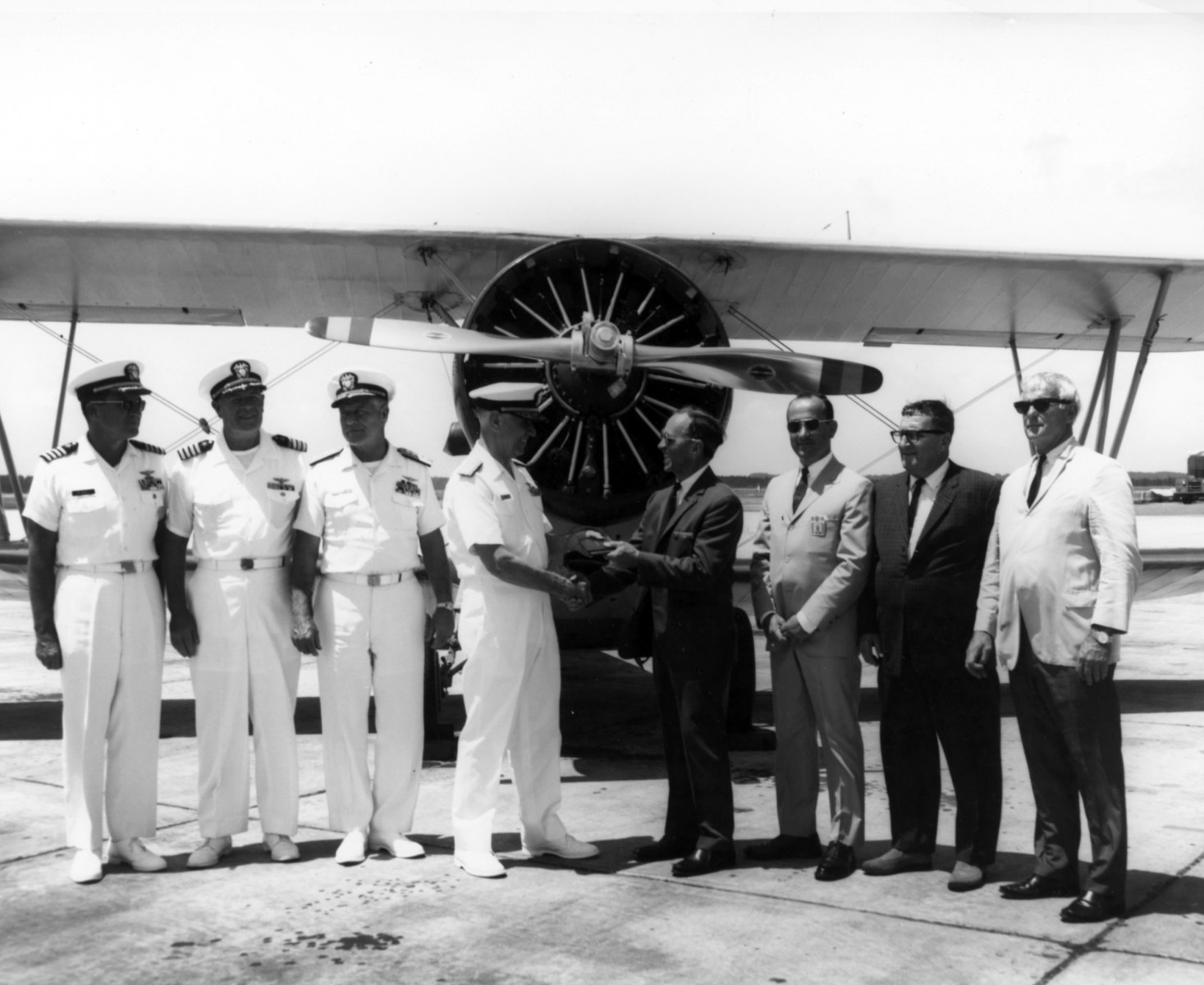
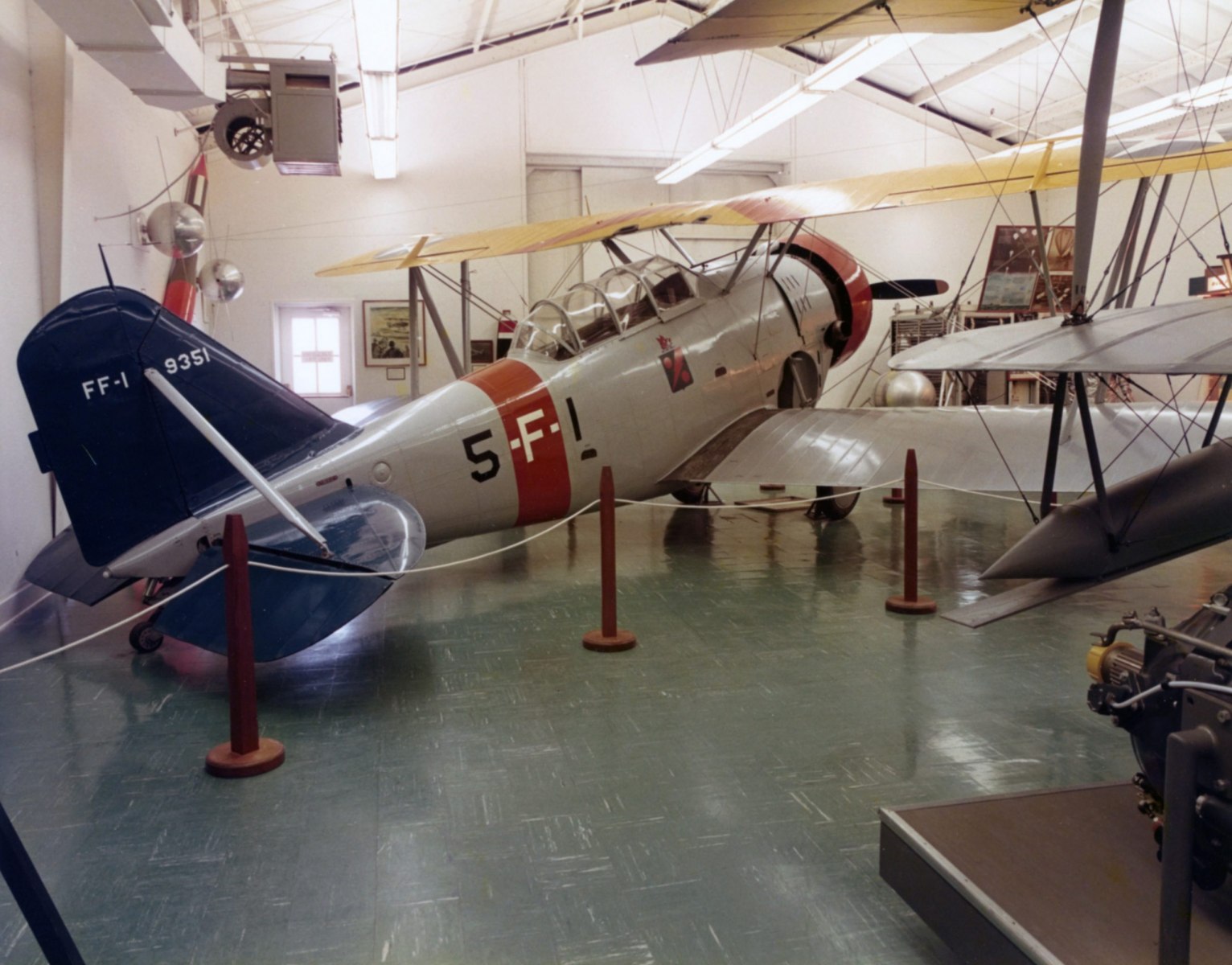
Today, the last remaining example of Grumman’s first airplane, though built in Canada and flown by the Nicaraguan Air Force, remains on display in the National Naval Aviation Museum’s South Wing, now wearing the Bureau Number of 9351, another FF-1 that served with VF-5B. While it may have been constructed by Canadian Car & Foundry, by the happenstance of fate, it is the last remaining aircraft that can represent the very first airplane built by Grumman, and with the company’s merger with Northrop to form Northrop Grumman 1994, this humble biplane is the first link in an unbroken chain of military aircraft that continue to serve the United States and her allies to the present day. For more information, visit the National Naval Aviation Museum’s website HERE.