We appreciate the support from readers like you at Foxiz. Through your purchases using the links on our site, you empower us with affiliate commissions.
Today in Aviation History: First Flight of the Mitsubishi T-2
On July 20, 1971, the Mitsubishi T-2 took to the skies for the first time, marking a milestone in Japanese aviation history. Known as the Supersonic Samurai, the T-2 became Japan’s first domestically designed aircraft to break the sound barrier. Developed in response to the need for a high-performance trainer to match the JASDF’s new generation of supersonic fighters, the T-2 showcased Japan’s growing aerospace capabilities in the postwar era.
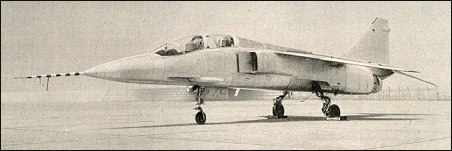
The T-2's configuration was clearly reminiscent of that of the two-seat Jaguar, with the two aircraft having the same overall configuration and some resemblance in details.
SHARE
Fifty-four years ago today, on July 20, 1971, the Mitsubishi T-2 made its maiden flight. Nicknamed the Supersonic Samurai, the T-2 holds the distinction of being the first Japanese-designed aircraft capable of breaking the sound barrier. A sleek, twin-engine jet trainer developed for the Japan Air Self-Defense Force (JASDF), the T-2 marked a major technological milestone for Japan in the post-World War II era.
Mitsubishi T-2 prototype
Following the war and a period of enforced demilitarization, Japan’s aerospace industry faced a long road to recovery. While jet technology rapidly advanced in other countries, Japan’s first indigenous jet trainer—the Fuji T-1—remained a subsonic aircraft. As the JASDF began operating supersonic fighters like the Lockheed F-104J Starfighter and the McDonnell Douglas F-4EJ Phantom II, it became clear that a faster, more advanced trainer was needed to properly prepare its pilots.
Japan explored acquiring aircraft such as the Northrop T-38 Talon and the SEPECAT Jaguar, but those efforts were stymied by licensing costs, export restrictions, and a growing desire for domestic capability. In response, the Japanese government launched the T-X program in the mid-1960s to develop a homegrown, supersonic-capable trainer. The result was the Mitsubishi T-2.
Powered by two Ishikawajima-Harima TF40-801A afterburning turbofan engines, each delivering 4,710 pounds of thrust, the T-2 could reach speeds up to Mach 1.6 at 36,000 feet. It had a service ceiling of 50,000 feet and a ferry range of 1,550 nautical miles when fitted with three external fuel tanks. The aircraft was armed with a single JM61A1 20mm cannon and could carry up to four air-to-air missiles, including AIM-9 Sidewinders, as well as additional stores on underwing pylons.
Though the T-2 first flew in 1971, it did not enter operational service until 1975. Mitsubishi produced a total of 96 T-2s before production ended in 1988. The aircraft remained in active service until March 2006, earning a reputation as a reliable and capable supersonic trainer.
The T-2’s legacy also lived on through its evolution into Japan’s first domestically produced supersonic fighter, the Mitsubishi F-1. Developed from the T-2 airframe, the F-1—sometimes called the Supersonic Zero—first flew in 1975 and served alongside the T-2 until both were retired in 2006. Together, these aircraft represented Japan’s postwar reemergence as an aviation power and a growing emphasis on indigenous defense technology.
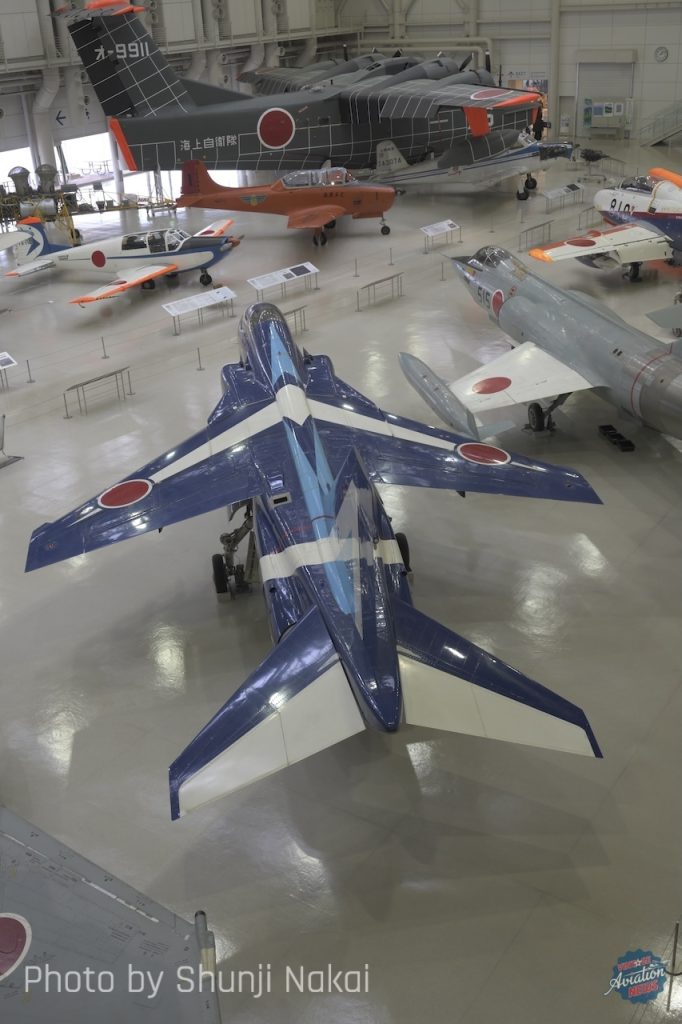
T-2 Advanced Trainer
Commercial Pilot, CFI, and Museum Entrepreneur, with a subject focus on WWII Aviation. I am dedicated to building flight experience so I can fly WWII Fighters, such as the P-51 Mustang, for museums and airshows, and in the USAF Heritage Flight. I lead and run the Pennington Flight Memorial, to honor local MIA Tuskegee Airman F/O Leland “Sticky” Pennington.



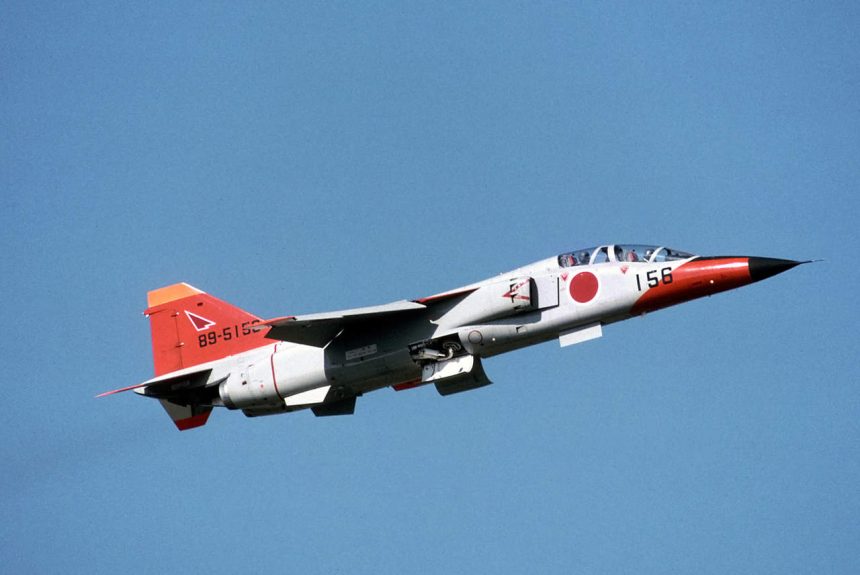

 Fifty-four years ago today, on July 20, 1971, the Mitsubishi T-2 made its maiden flight. Nicknamed the Supersonic Samurai, the T-2 holds the distinction of being the first Japanese-designed aircraft capable of breaking the sound barrier. A sleek, twin-engine jet trainer developed for the Japan Air Self-Defense Force (JASDF), the T-2 marked a major technological milestone for Japan in the post-World War II era.
 Japan explored acquiring aircraft such as the Northrop T-38 Talon and the SEPECAT Jaguar, but those efforts were stymied by licensing costs, export restrictions, and a growing desire for domestic capability. In response, the Japanese government launched the T-X program in the mid-1960s to develop a homegrown, supersonic-capable trainer. The result was the Mitsubishi T-2.
 Powered by two Ishikawajima-Harima TF40-801A afterburning turbofan engines, each delivering 4,710 pounds of thrust, the T-2 could reach speeds up to Mach 1.6 at 36,000 feet. It had a service ceiling of 50,000 feet and a ferry range of 1,550 nautical miles when fitted with three external fuel tanks. The aircraft was armed with a single JM61A1 20mm cannon and could carry up to four air-to-air missiles, including AIM-9 Sidewinders, as well as additional stores on underwing pylons.
 Though the T-2 first flew in 1971, it did not enter operational service until 1975. Mitsubishi produced a total of 96 T-2s before production ended in 1988. The aircraft remained in active service until March 2006, earning a reputation as a reliable and capable supersonic trainer.
 The T-2’s legacy also lived on through its evolution into Japan’s first domestically produced supersonic fighter, the Mitsubishi F-1. Developed from the T-2 airframe, the F-1—sometimes called the Supersonic Zero—first flew in 1975 and served alongside the T-2 until both were retired in 2006. Together, these aircraft represented Japan’s postwar reemergence as an aviation power and a growing emphasis on indigenous defense technology.




 Vintage Aviation News