We appreciate the support from readers like you at Foxiz. Through your purchases using the links on our site, you empower us with affiliate commissions.
Today in Aviation History: First Flight of the Yakovlev Yak‑23
On July 8, 1947, the Yakovlev Yak-23 “Flora” made its first flight, marking an early step in Soviet jet fighter development. Though overshadowed by more advanced designs like the MiG-15, the Yak-23 served several Warsaw Pact nations during the early Cold War and even set climb rate records, securing its unique place in aviation history.
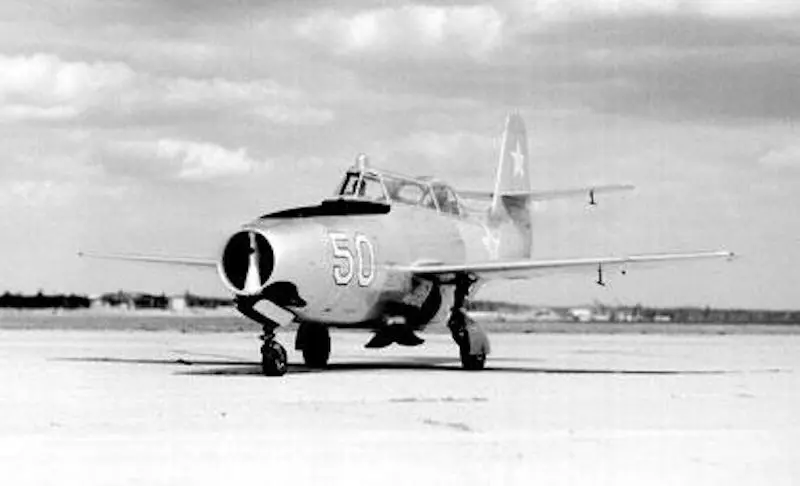
On July 8, 1947—78 years ago today—the Yakovlev Yak‑23 soared aloft for the first time. NATO assigned it the reporting name “Flora.” An early Soviet straight‑wing jet fighter, the Yak‑23 was derived from the Yak‑17 (itself a tricycle‑geared evolution of the Yak‑15 “Feather”). Under its nose sat a reverse‑engineered copy of Britain’s Rolls‑Royce Derwent V turbojet (the same powerplant that propelled the Gloster Meteor).
Yak-23UTI
Production totaled just 319 airframes (including three prototypes), as the Flora’s performance lagged behind swept‑wing rivals like the MiG‑15. Nevertheless, it found customers throughout the Warsaw Pact, flying with Albania, North Korea, Czechoslovakia, Bulgaria, Poland, and Romania into the early 1960s. On September 21, 1957, Polish pilot Andrzej Abłamowicz set two world climb records in a Yak‑23: 9,843 feet in 119 seconds (4,962.6 ft/min) and then 19,685 feet in 197 seconds (5,995.4 ft/min).
Power came from a Klimov RD‑500 centrifugal‑flow turbojet, rated at 3,500 pounds of thrust. This gave the Yak‑23 a top speed of 575 mph, a range of 650 nm, and a service ceiling of 48,600 ft. Armament consisted of two 23 mm Nudelman‑Rikhter NR‑23 cannons, each with 90 rounds. Built between October 1949 and January 1951 and retired by the early 1960s, the Yak‑23’s brief production run nonetheless marked an important step in Soviet jet development. A few examples survive today—most notably at the Krakow Aviation Museum in Poland—ensuring the Flora’s place in aviation history.
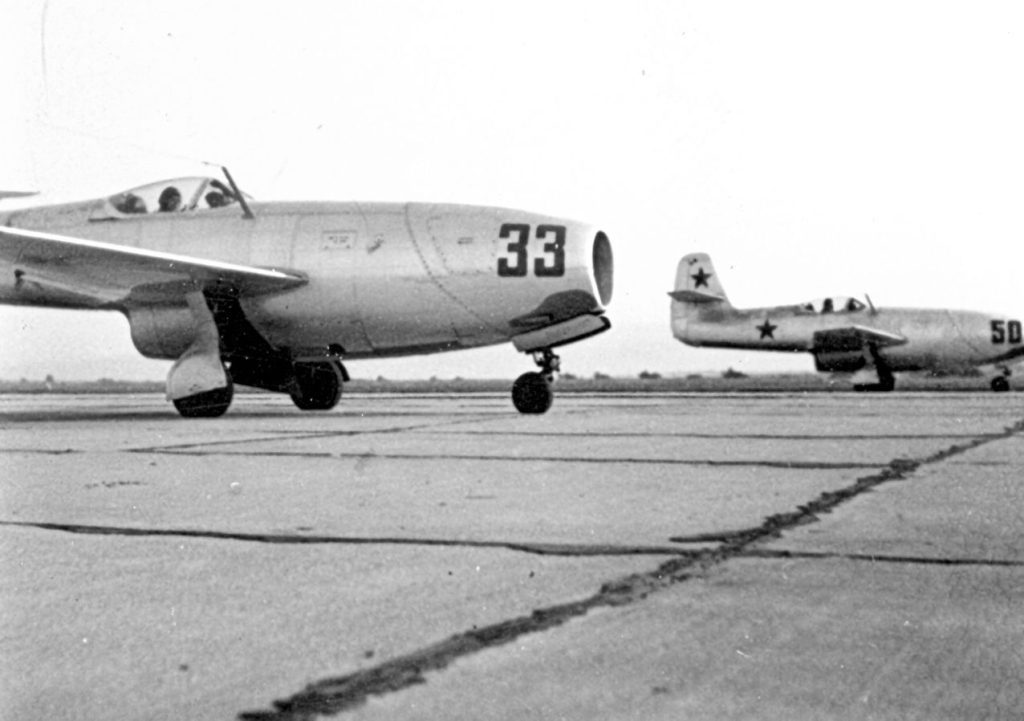
Romanian Yak-23s at Ianca
Commercial Pilot, CFI, and Museum Entrepreneur, with a subject focus on WWII Aviation. I am dedicated to building flight experience so I can fly WWII Fighters, such as the P-51 Mustang, for museums and airshows, and in the USAF Heritage Flight. I lead and run the Pennington Flight Memorial, to honor local MIA Tuskegee Airman F/O Leland “Sticky” Pennington.




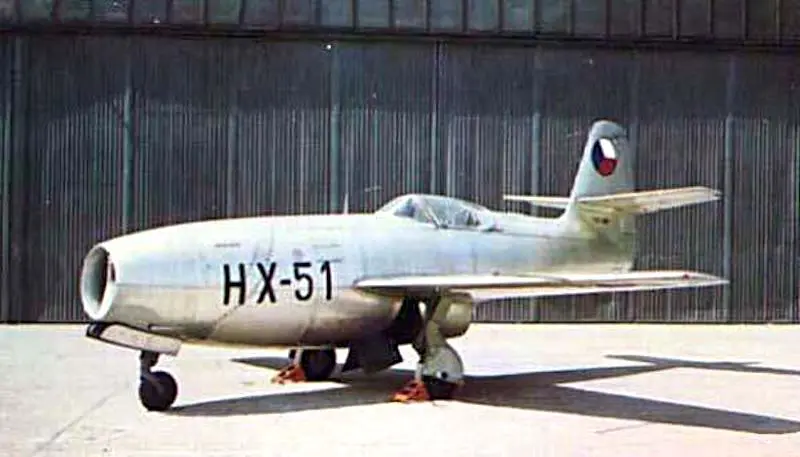

 On July 8, 1947—78 years ago today—the Yakovlev Yak‑23 soared aloft for the first time. NATO assigned it the reporting name “Flora.” An early Soviet straight‑wing jet fighter, the Yak‑23 was derived from the Yak‑17 (itself a tricycle‑geared evolution of the Yak‑15 “Feather”). Under its nose sat a reverse‑engineered copy of Britain’s Rolls‑Royce Derwent V turbojet (the same powerplant that propelled the Gloster Meteor).



 Vintage Aviation News