



Museum of Flight Opens New Aviation Pavilion
photos and words by Joe Kunzler
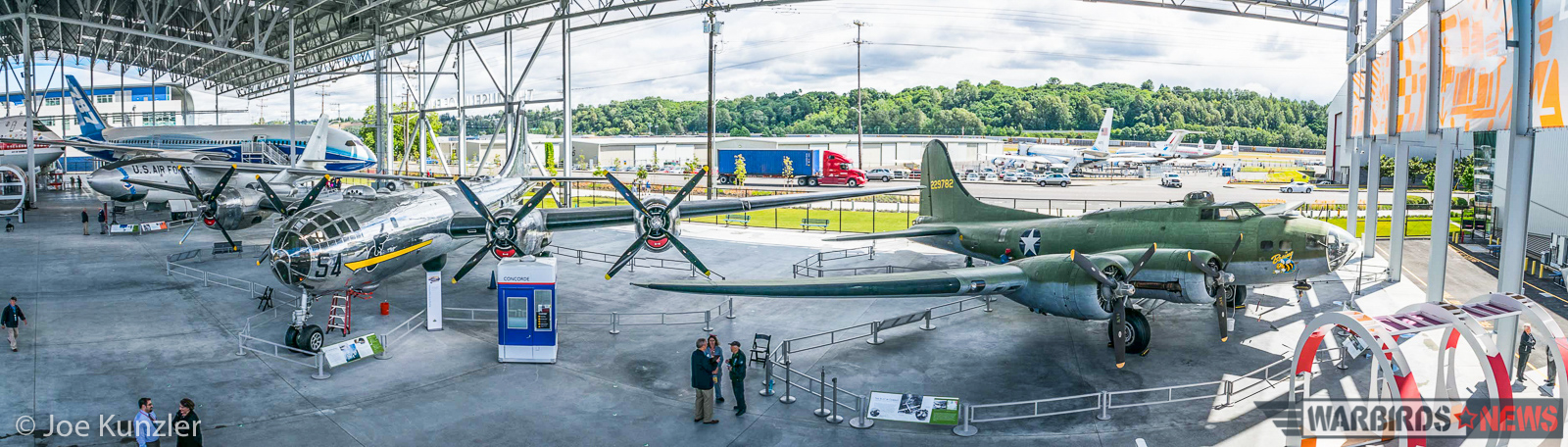
On Thursday, June 23rd, the Museum of Flight in Seattle, Washington invited members of the media to tour the new Aviation Pavilion, take photographs and attend a brief press conference. The new Aviation Pavilion is a massive structure, capable of housing several Boeing 747s. In fact the prototype Jumbo Jet takes pride of place in the new facility. The building will finally provide overhead cover to the many large aircraft at the Museum of Flight which have previously sat outside in the elements or, like the B-29 Super Fortress, been cocooned in plastic sheeting. While the building has a roof, it doesn’t currently have walls, although those will come when funding allows. The important thing was to get these precious aircraft some protection from Seattle’s wet climate as soon as practical.
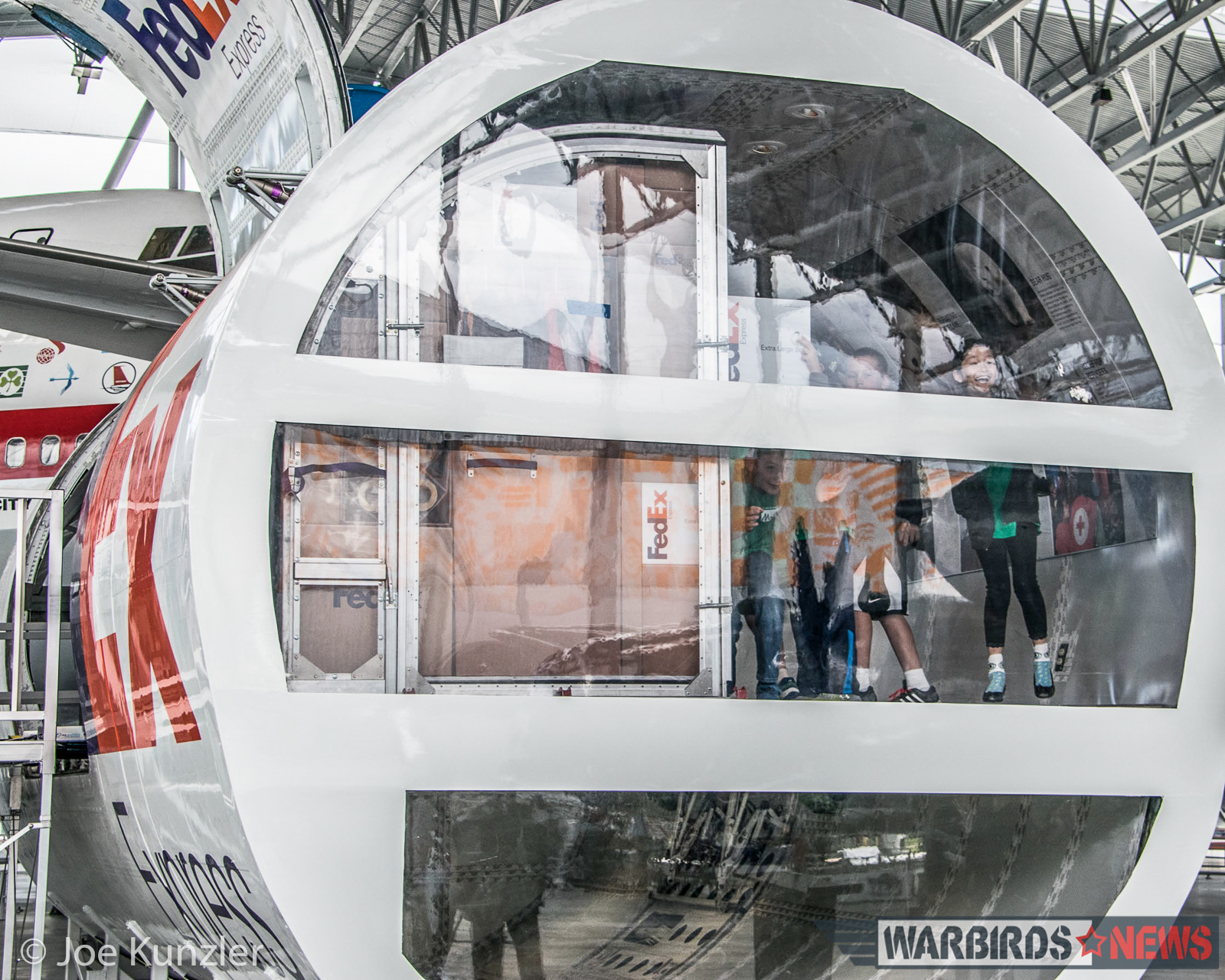
The press event focused specifically upon the museum’s unveiling of their unique, walk-through air-cargo exhibit created using a cutaway Boeing 727 fuselage from Federal Express. The global freight carrier also donated $1.5 million to the museum’s Aviation Pavilion fund.
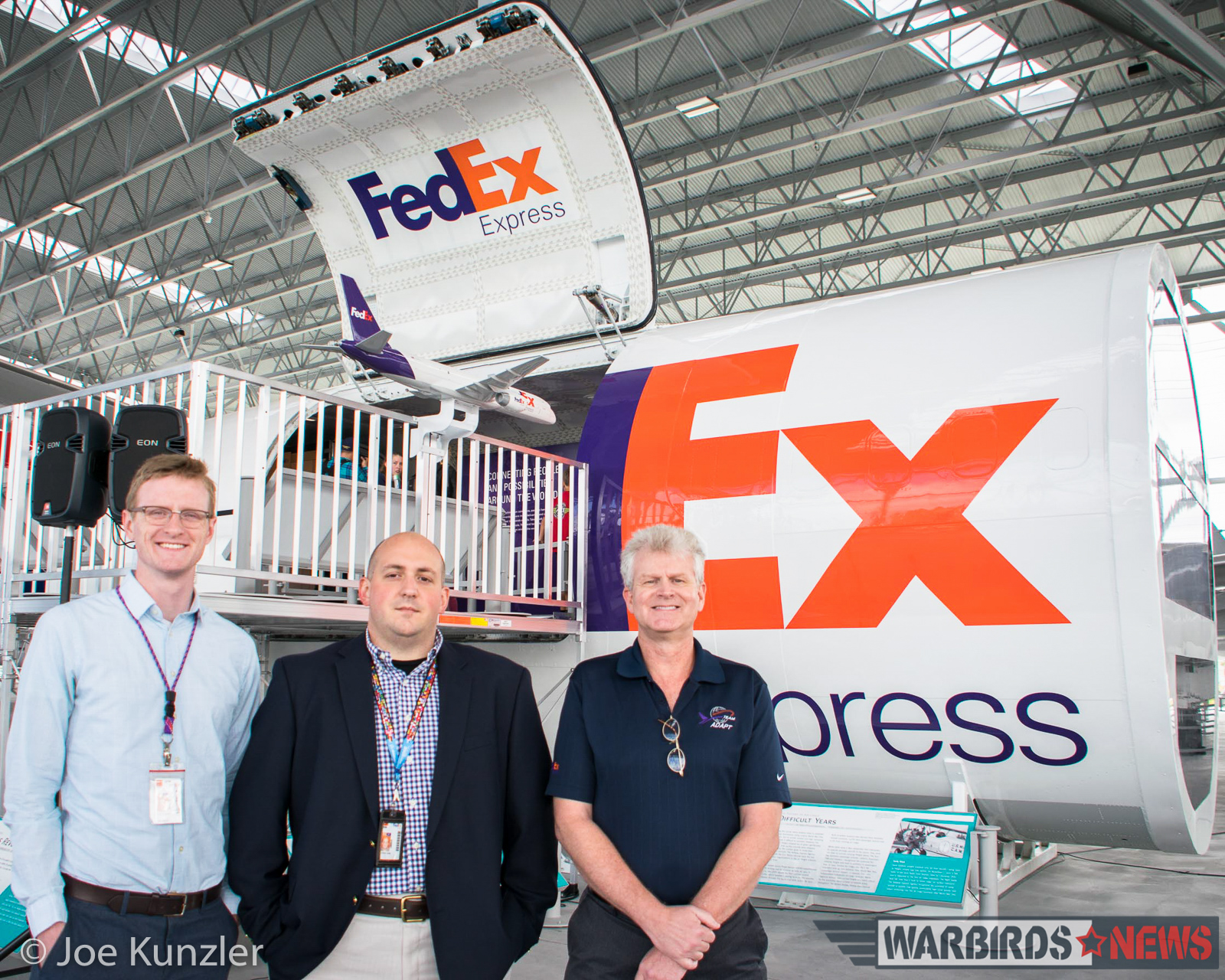
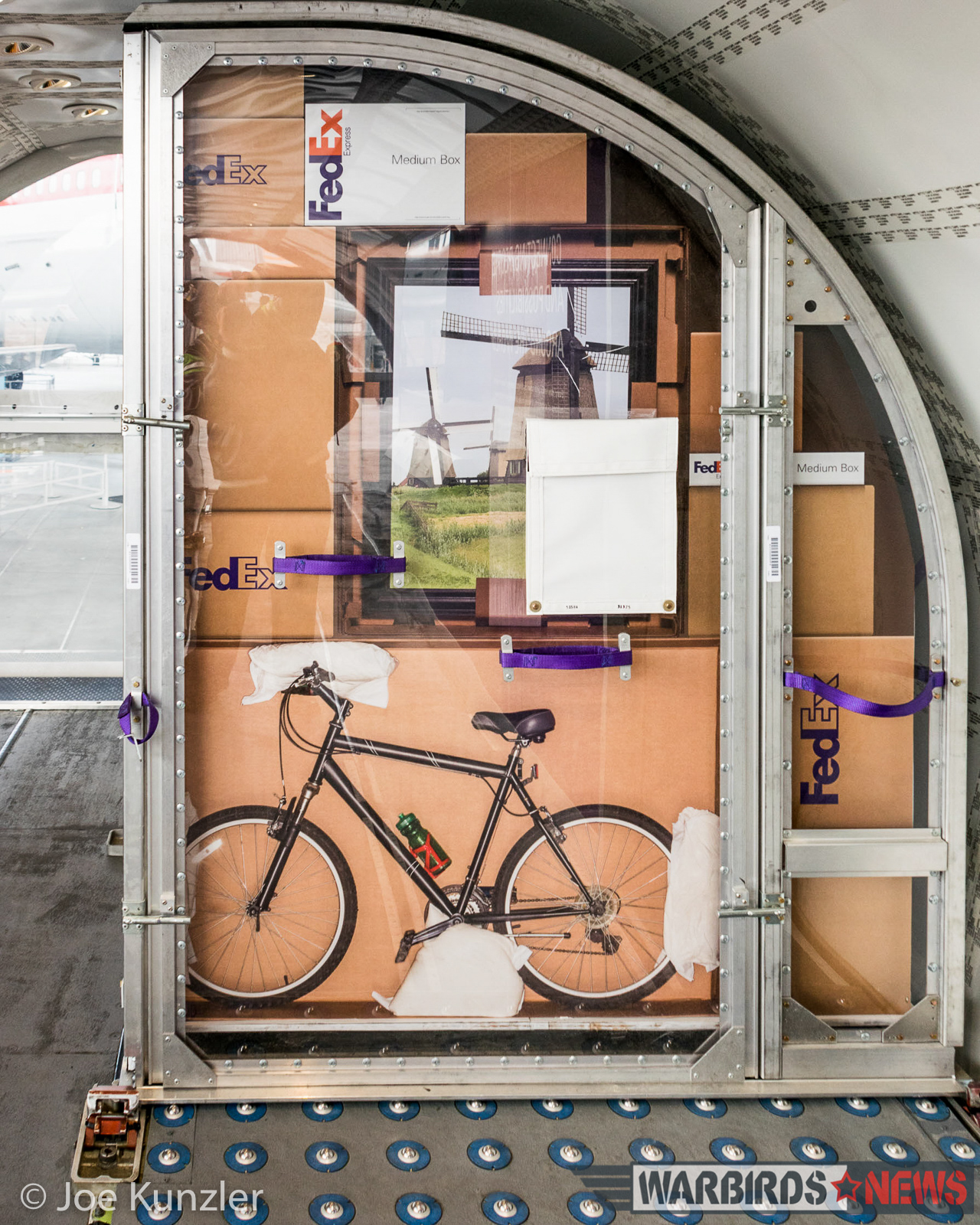
FedEx’s own John Talman worked on the education exhibit, which is based upon a fuselage section from Boeing 727-225 N463FE. N463FE flew passenger service for Eastern Airlines from 1981 until 1991 as N814EA, before receiving a cargo conversion in 1992 for a further 10 years of revenue service. According to the Museum of Flight display, this 727, nicknamed Tonja, has more than 28,000 hours with FedEx shifting millions of pounds in cargo.
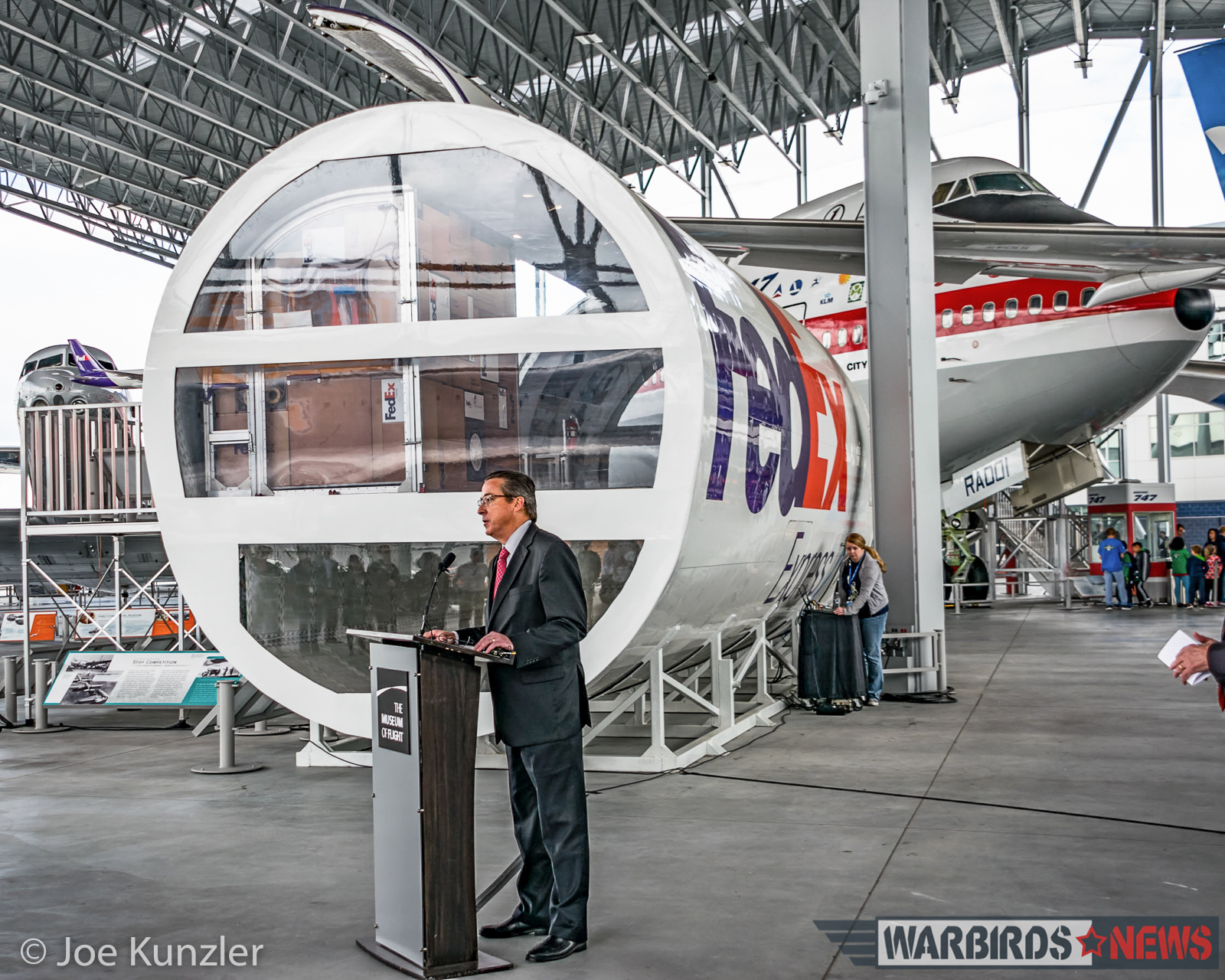

In conversation with WarbirdsNews correspondent Joe Kunzler, FedEx Express Vice President Phil Blum talked about the new exhibit saying, “It’s the world’s first interactive air cargo exhibit to tell the history of the air cargo story. It’s an interesting story if you look at the evolution of how we have gotten where we are today…. You can click on the internet and have a package delivered [to the] front door 10:30 the next morning, or two days later. Air cargo plays a large part in that process.” Blum talked about the miracle of air cargo from their very first Dassault Falcon 20 in 1971 to today’s Boeing 777F. He considers the 787 freighter a possible future acquisition as well.
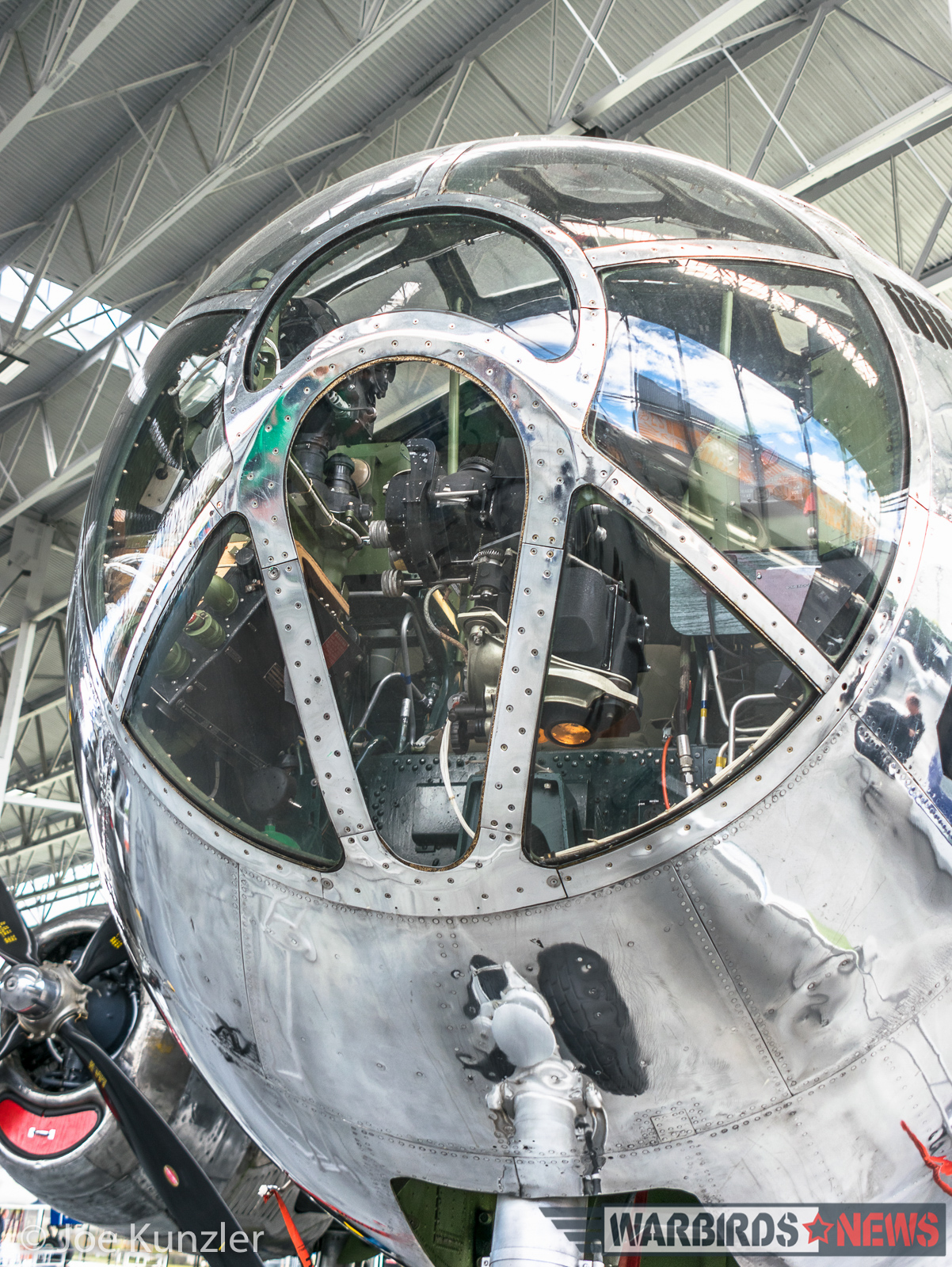
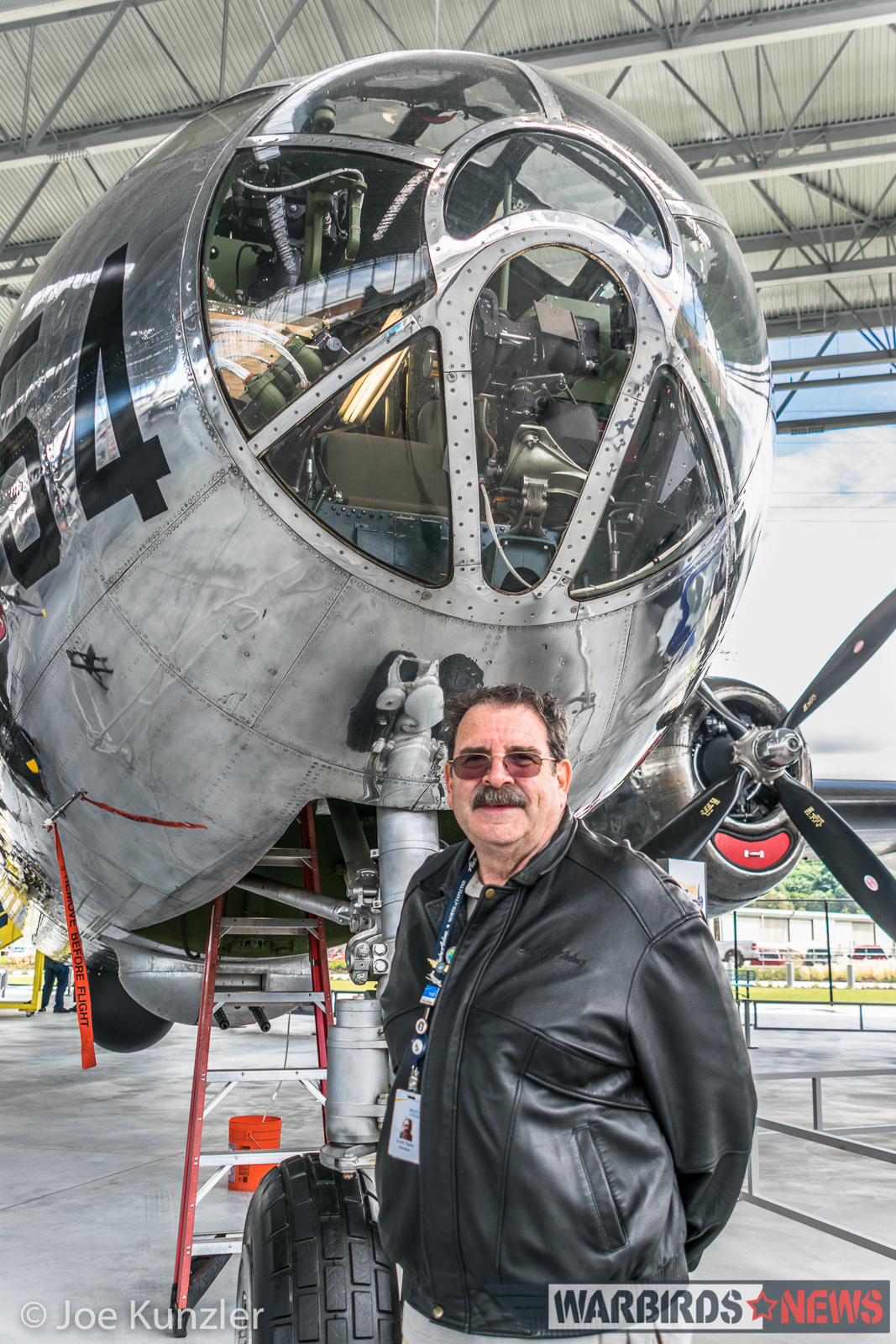
Despite the fascinating aspects of global air cargo, whose roots are strongly intertwined with military aircraft, we know most WarbirdsNews readers will perhaps be more interested in the warbirds on display in the new Aviation Pavilion. With the pavilion opening, the Museum’s Boeing B-29 Superfortress is finally in a permanent, under-cover home and now available for public viewing. According to the Museum of Flight website, this B-29 “…fought in the Pacific during World War II, flying 37 bombing missions with the 875th Bomb Squadron, 498th Bomb Group. The bomber was later converted to an aerial refueling tanker for the Korean Conflict.”
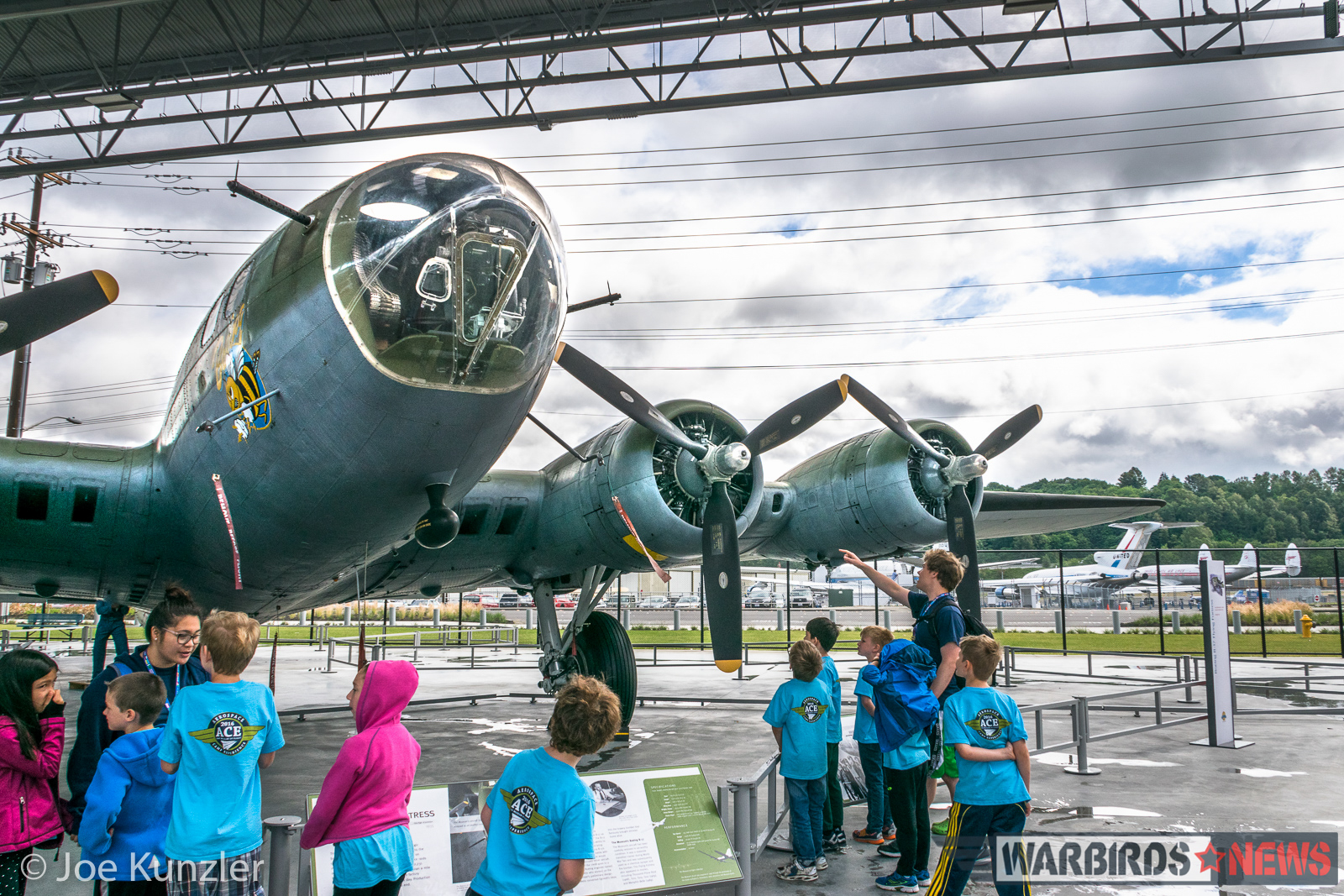
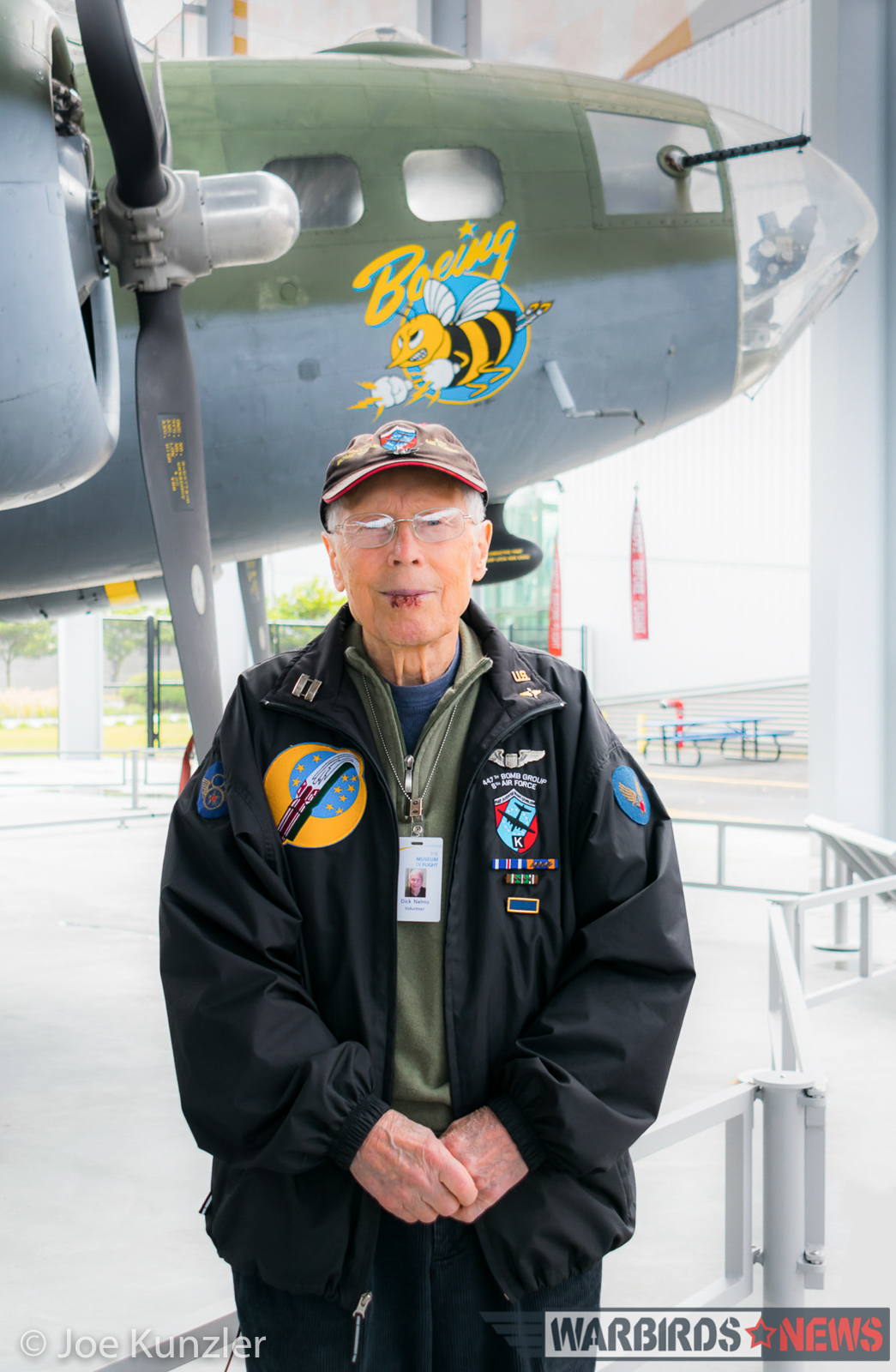
Next to the B-29 is the museum’s Boeing B-17F Flying Fortress. The Museum of Flight website states, “Our airplane began life here in Seattle, a mile north of the Museum, in Boeing’s Plant II on February 13, 1943. Accepted into the Army Air Force as 42-29782, the plane was modified in Wyoming and then assigned training units at Blythe Field and then McClellan Field, both in California. A month later, 42-29782 worked its way back to Washington, flying training flights at Moses Lake. . . . In January 1944, 42-29782 left for the European Theater. While it didn’t see combat, it stayed in Britain for three months. Then in March of ’44, 42-29782 returned to the States,” remaining there for the War’s duration. After World War II, the aircraft would perform multiple civilian duties such as fighting fires and spraying. She was also a faithful reenactor in motion picture films such as The 1,000 Plane Raid, Tora!, Tora!, Tora! and Memphis Belle. WWII B-17 Pilot Dick Nelms, who flew over flak-filled Berlin on more than one occasion, was on hand in front of the B-17, explaining the B-17’s role to visiting students.
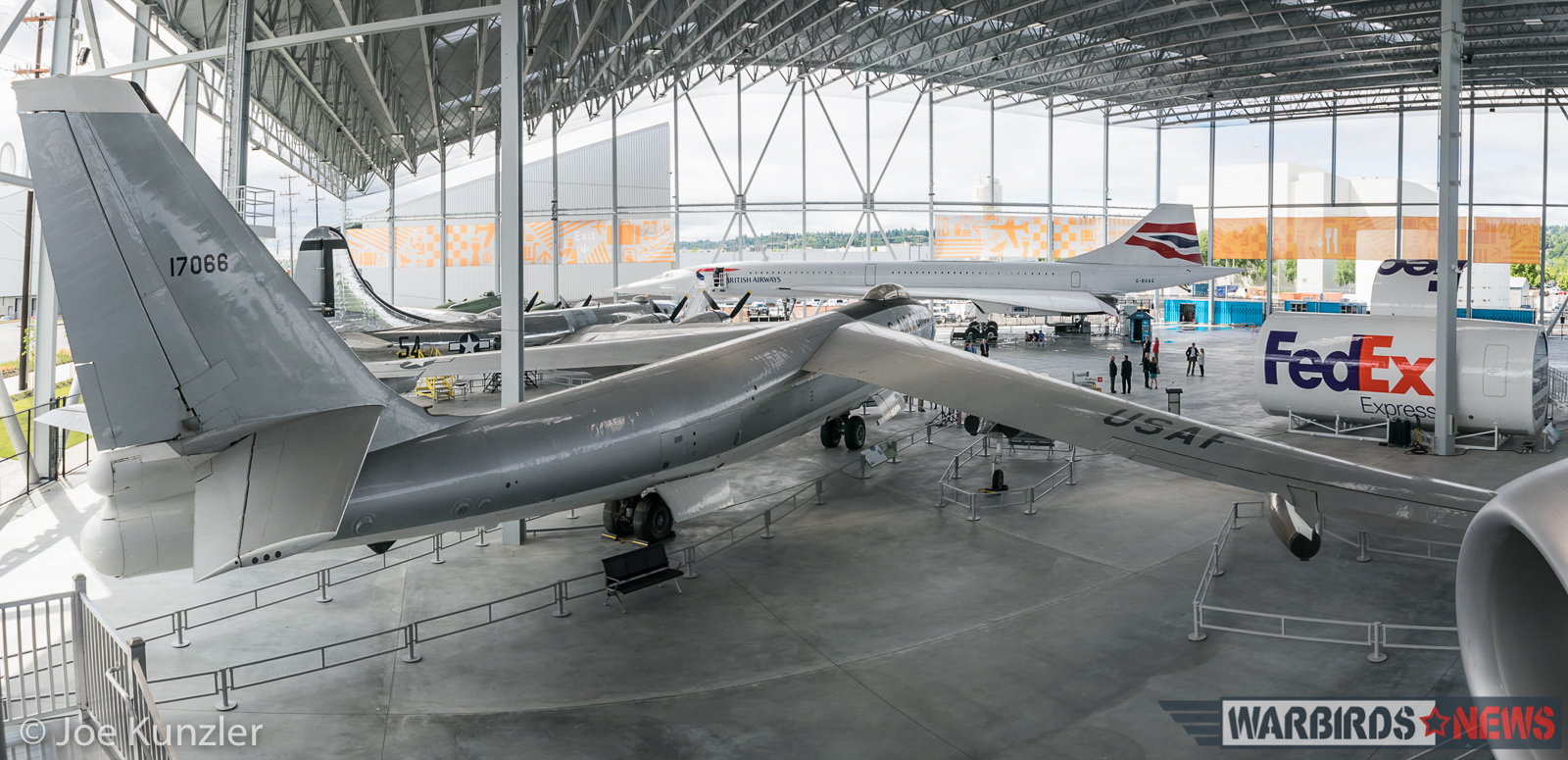
The Museum of Flight also has a Boeing B-47 Stratojet – actually a WB-47E reconnaissance version – in the Aviation Pavilion. The B-47 design was one of the first bombers with swept wings, influenced by captured WWII Luftwaffe aeronautical research and, like the B-29, it initially had a nuclear role. According to the Museum of Flight’s website, “After serving with SAC from 1953 to 1963, the Museum’s Stratojet was redesignated as a WB-47 and flew weather reconnaissance missions with the U.S. Navy into the 1970s.”
The new Aviation Pavilion has other, more recent combat aircraft on view as well, including Grumman F-14A Tomcat Bu. 160382, formerly with VF-84 and the Naval Strike and Air Warfare Center (aka TOPGUN). The Tomcat is on loan from the National Naval Aviation Museum and despite spending quite some time on outside display still gives the outward appearance of being ready for action at a moment’s notice.
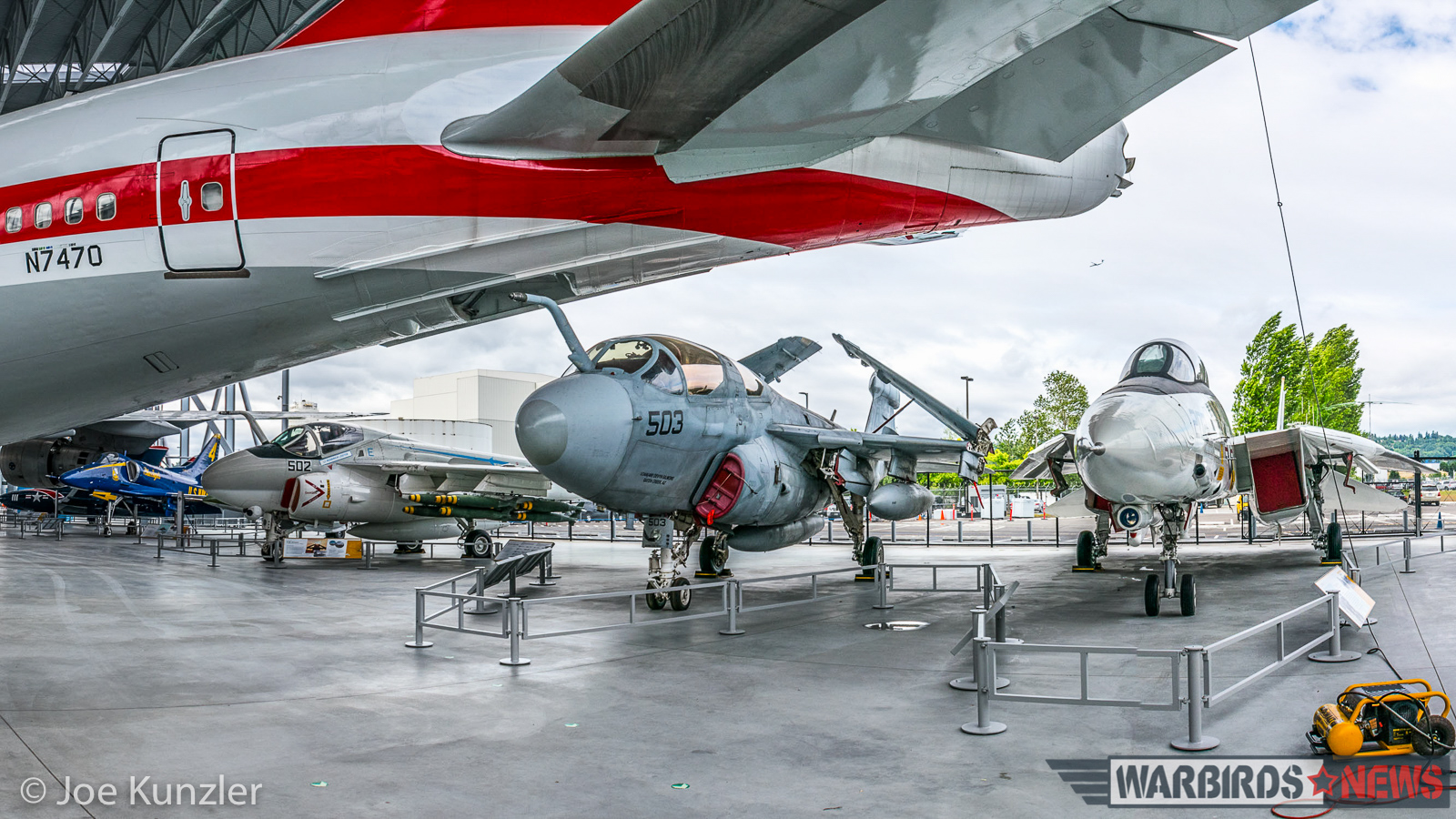
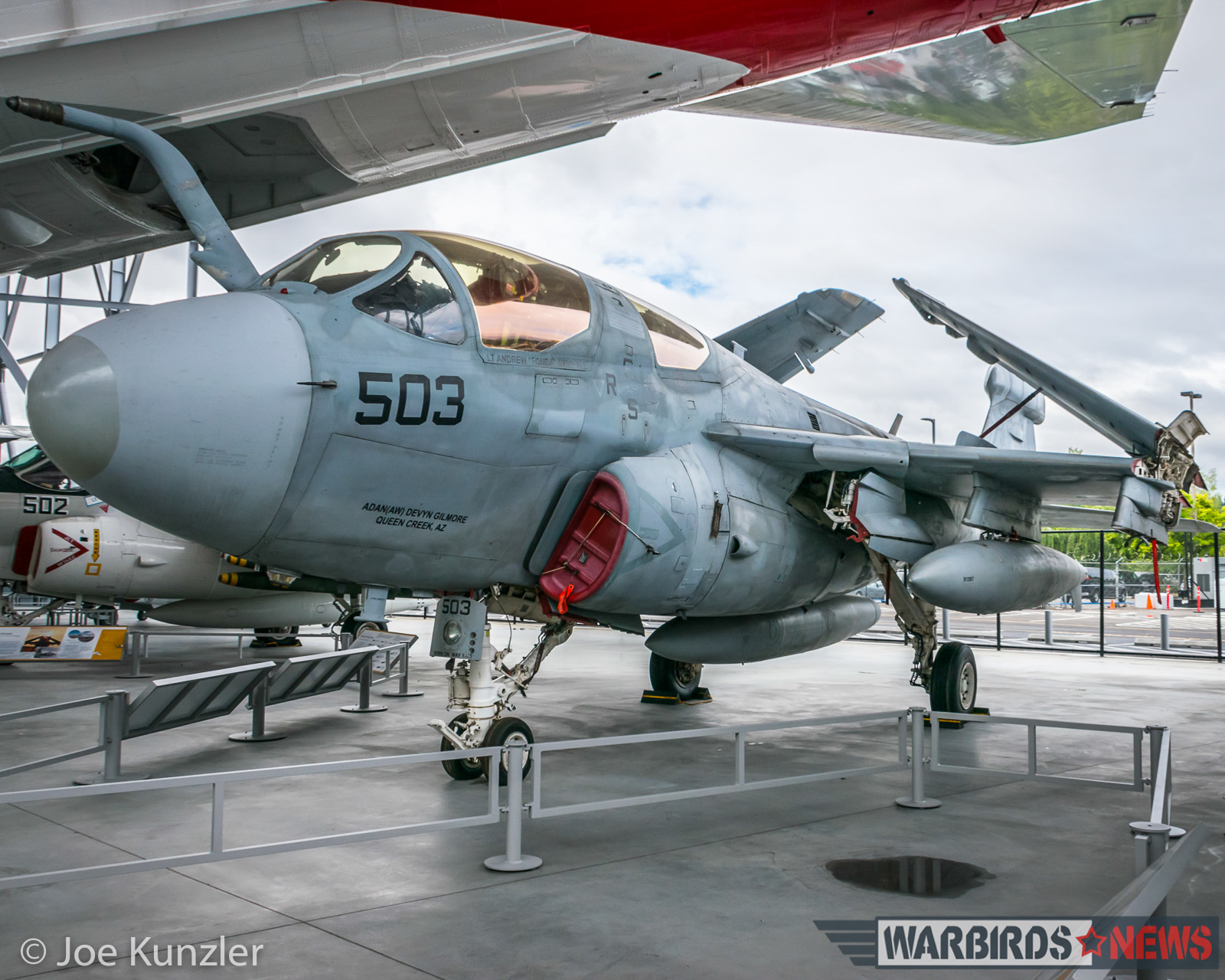
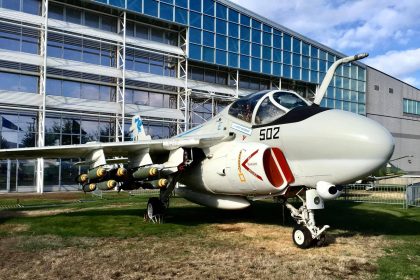
The museum’s Grumman EA-6B Prowler arrived just last year after retiring from the US Navy’s VAQ-134 Garudas at NAS Whidbey Island last May. [Please click HERE to see a series of Joe Kunzler’s images of her arrival.] The Prowler, with her wings tucked up, sits beneath the 747 prototype beside her older sister, the A-6E Intruder. The Prowler served in the US Navy from near the end of the Vietnam War until Operation Inherent Resolve against ISIS with honor and distinction. A few still linger on with the Marine Corps. This particular Prowler, Bu. 161884, flew with several electronic attack (VAQ) squadrons during her service life and could jam everything from air defense radars to cellular phone signals.
Sitting next to the Prowler is the Museum of Flight’s Grumman A-6E Intruder, fully loaded with 22 (inert) Mk.82 iron bombs. The A-6 Intruder was a naval medium attack bomber, capable of launching from carriers with up to 18,000 pounds of guided or unguided ordnance. This particular Intruder entered service in 1973, and accumulated 5,959.1 flight hours – including combat time over Iraq in 1991 – before her March 1995 retirement.
Seemingly appropriate for the Museum of Flight – home plate for US Navy Blue Angels flight operations during Seafair – is a Douglas A-4 Skyhawk painted up in its Blue Angels #4 colors. The US Navy Blue Angels used the diminutive A-4F Skyhawk from 1974 until 1986 and the Museum of Flight website states that their Bu.154180 was “…Often flown in the number 4 or “slot” position. When the Blues Angels fly in diamond formation, the slot flies directly behind the leader, surrounded on three sides by other aircraft.” The A-4 served in the light attack and trainer roles. Some also served as aggressor aircraft in dissimilar aircraft training, simulating some of the possible aircraft types which US forces might have to face in combat. A few, civilian-owned examples still serve in this role.
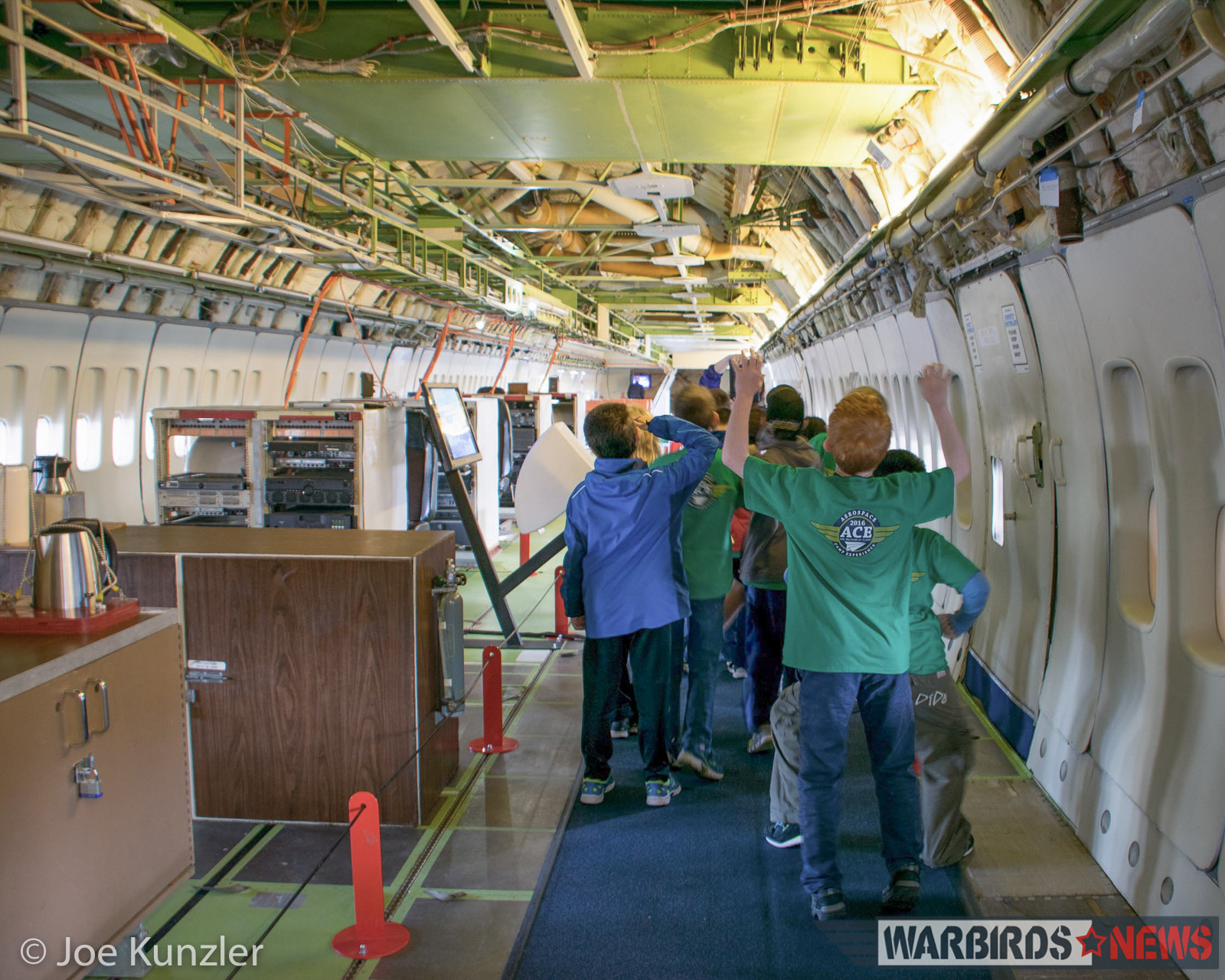
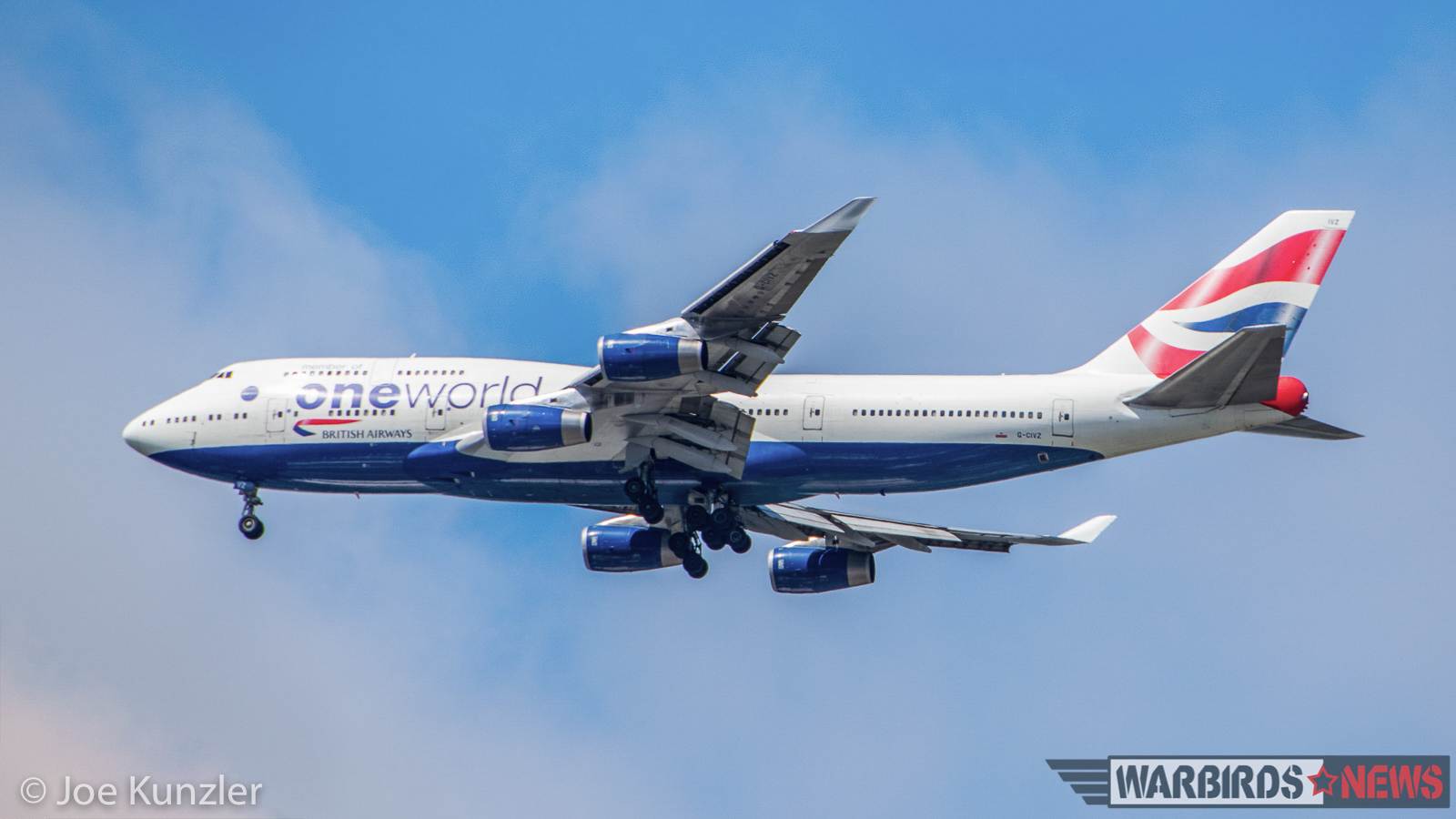
In contrast to those four Cold War naval jets, was the rear fuselage of first Boeing 747 ever built looming over them. This Boeing 747 still has its aerial refueling porthole under the tail and the test equipment is still inside. It’s truly a flying testbed turned into an educational facility. When WarbirdsNews visited the lower deck, several Aerospace Camp Experience students were touring inside. The Boeing 747 will always be known for being the first ‘Jumbo Jet’ airliner and cargo hauler capable of hauling several hundred souls or over a hundred tons of freight over several thousand miles. As the 747 production line winds down at Paine Field, the world’s first 747 begins a new mission, educating the public about aviation, while Boeing 747s fly overhead on final into Seattle-Tacoma International (KSEA) – such as the British Airways example below.
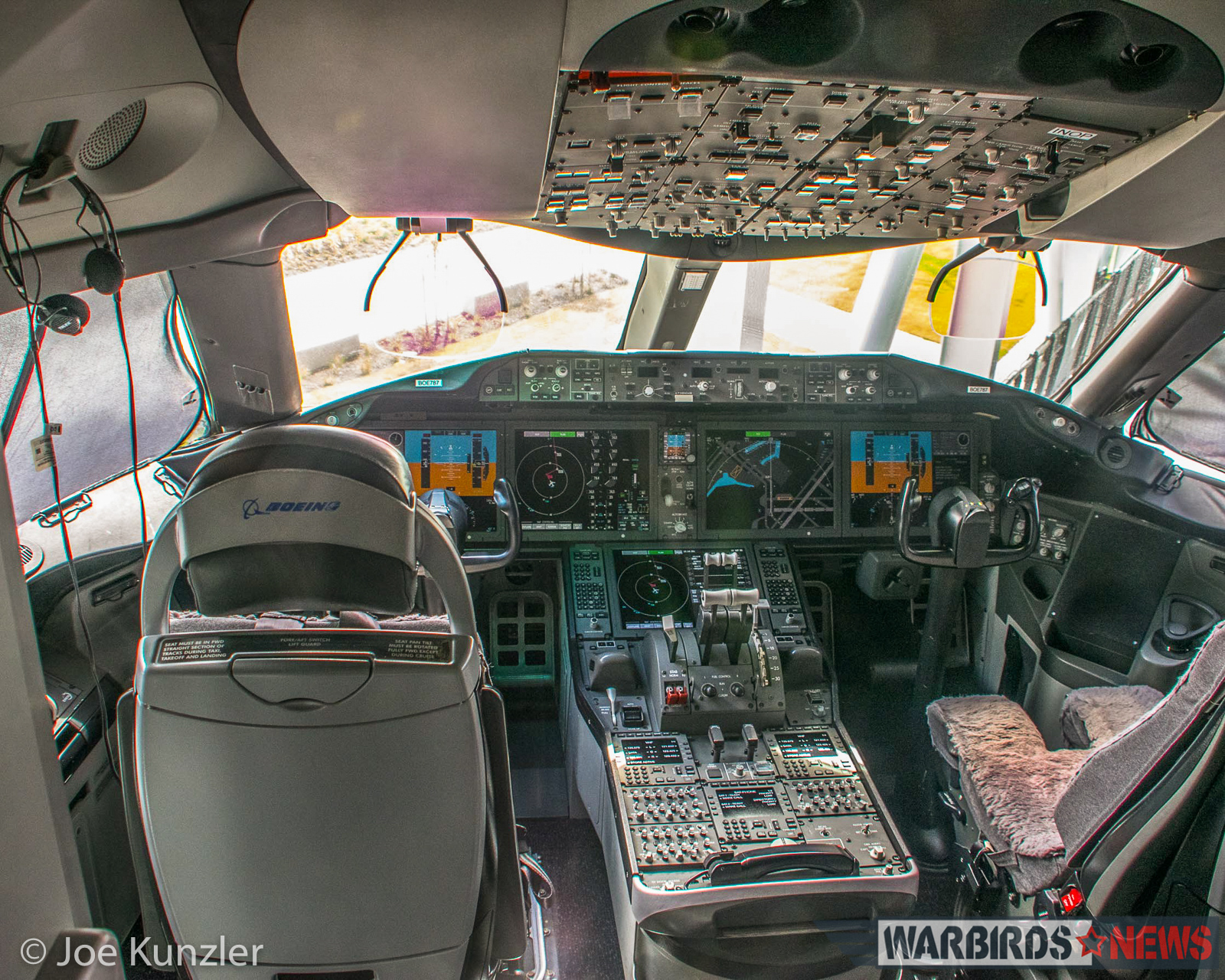
Nearby the first 747 is the third Boeing 787 prototype. Unlike the 747, the Boeing 787 has yet to see US military service, but is already serving in the Mexican Air Force as an executive transport. However, a peek into the 787’s cockpit shows the ‘glass’ technology and heads-up displays similar in many respects to those in today’s combat aircraft.
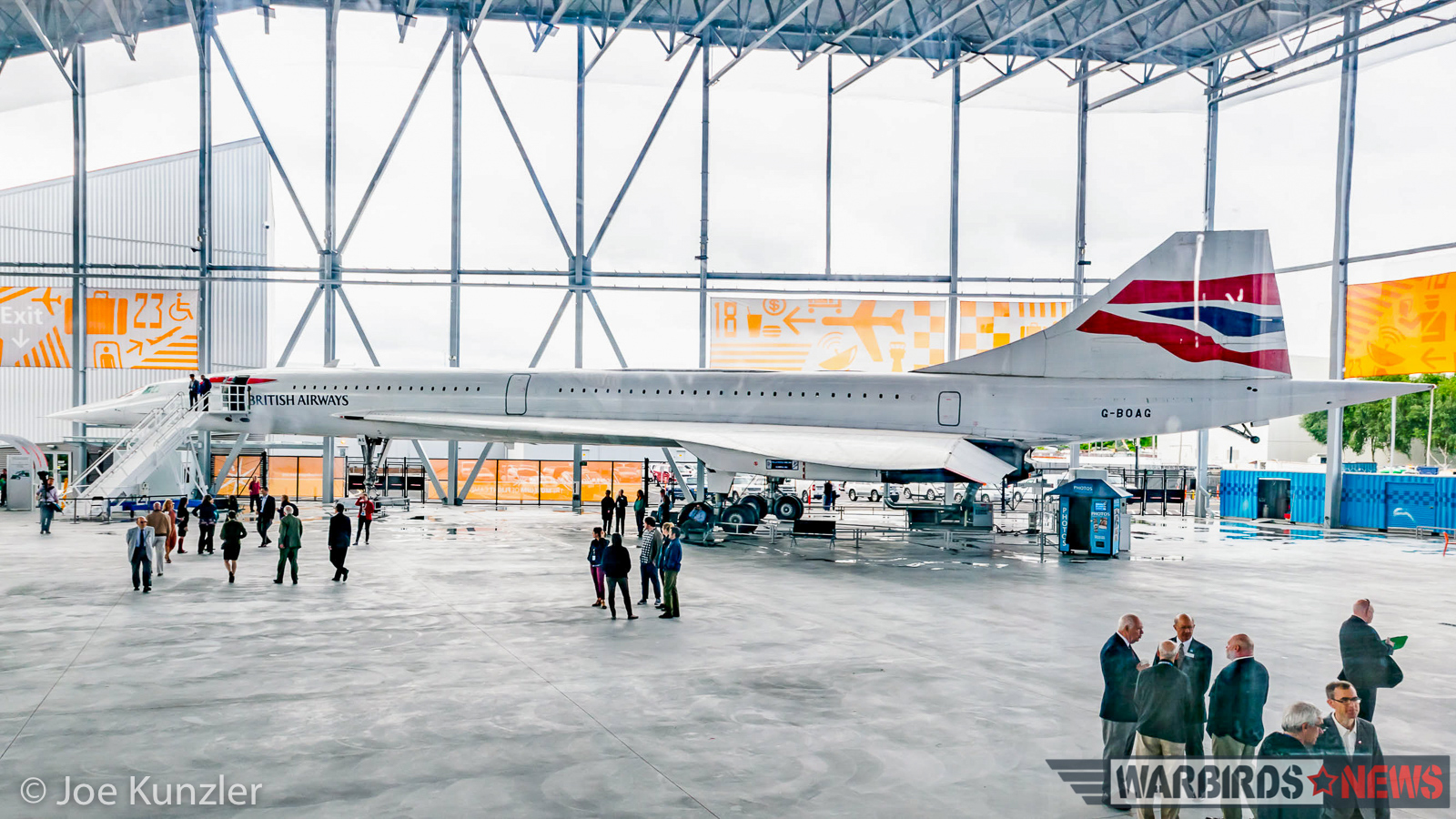
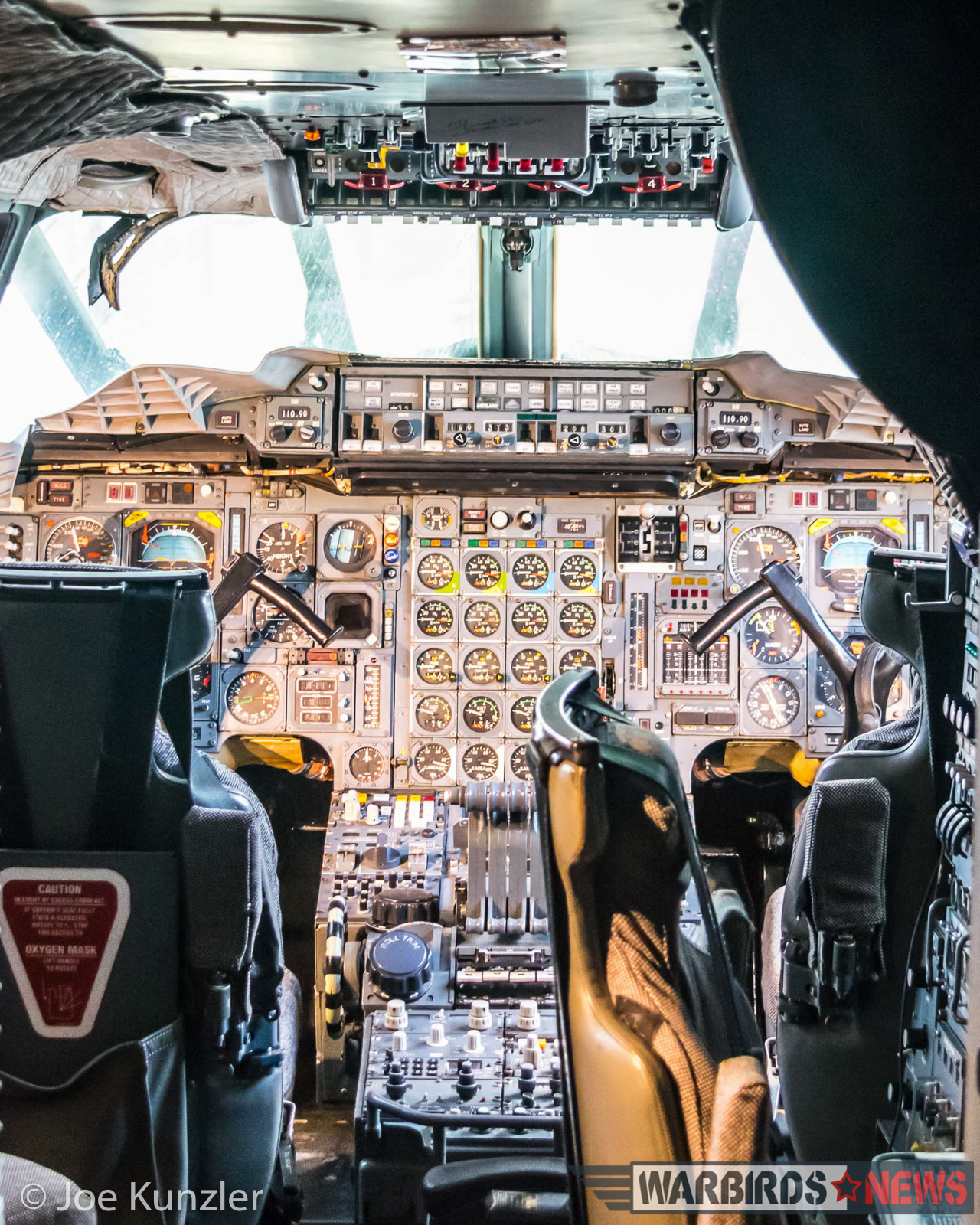
Finally, perhaps the most beautiful aircraft ever to fly, a BAC Concorde supersonic airliner, is also now preserved in the Aviation Pavilion. G-BOAG, formerly of British Airways, has spent more than a decade in the elements since her 2003 retirement, but she is now finally protected from the sun and the rain. The flaps and tailwheel are in the down position, as if she’s just landed. The interior is preserved behind Plexiglas to allow visitors to tour inside without lasting damage. G-BOAG first flew as G-BFKW on January 27th, 1978 and last flew on November 5th, 2003 when she arrived at the Museum of Flight having flown 16,239 hours 27 minutes in the air and completed 5,633 landings.
This fall, Boeing VC-137B 58-6970 (former US Air Force Presidential transport), a Lockheed L-1049G Super Constellation and the prototype Boeing 727 (previously covered) will move into the Aviation Pavilion.
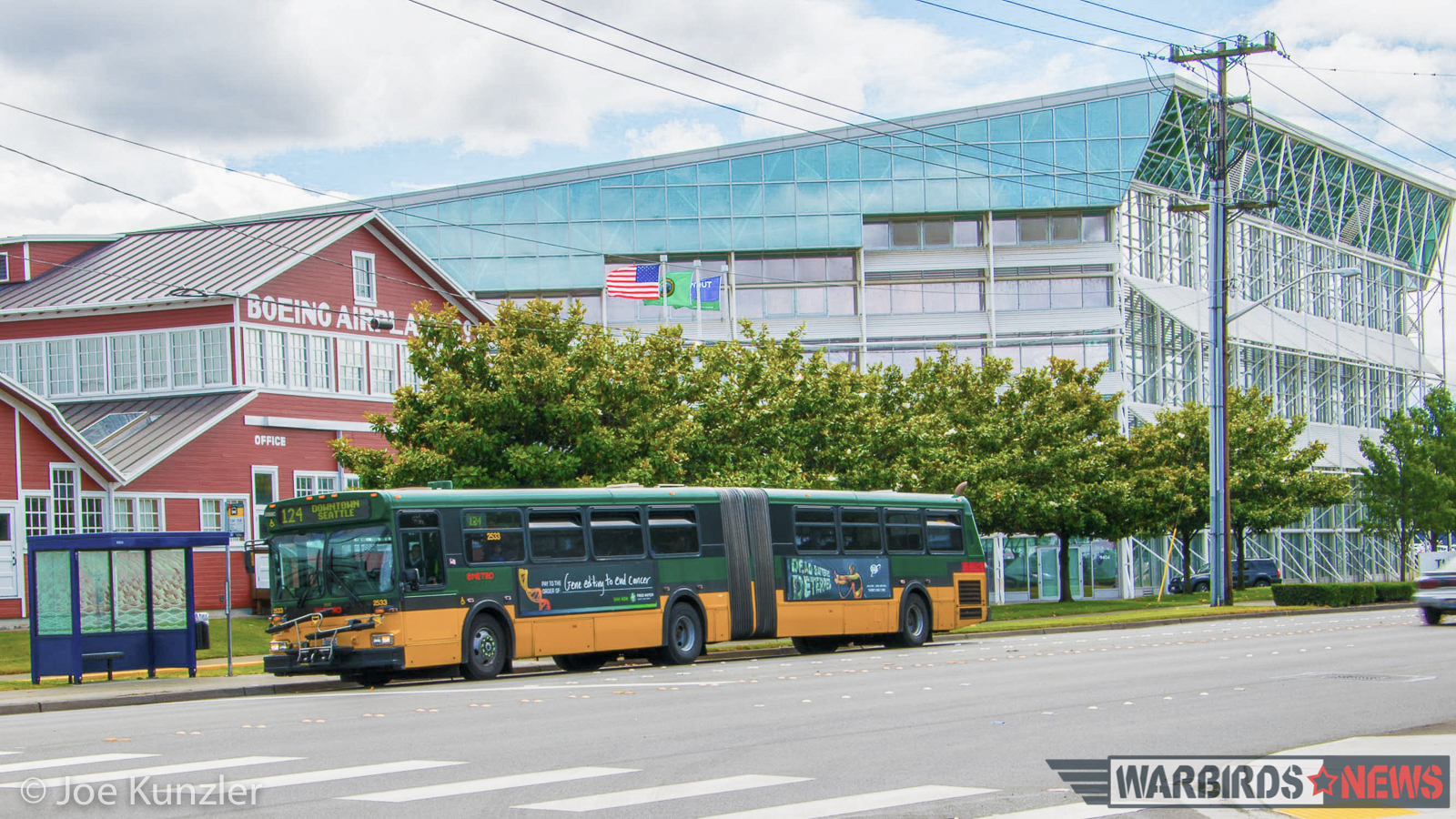
Ultimately, the Aviation Pavilion will provide protection for the Museum of Flight’s outsized aircraft for visitors to enjoy in the decades ahead. It’s well worth the visit and admission price, and there’s usually lots of activity on the co-located Boeing Field runway as well. Free parking is available, or you can take King County Metro’s Route 124 bus which connects to Tukwila International Boulevard light rail station, linking to SeaTac International Airport or downtown Seattle.
WarbirdsNews wishes to thank Joe Kunzler very much for his report and photographs!





 Vintage Aviation News
Posting to https://www.flickr.com/photos/avgeekjoe/albums/72157667523702844 the photos that we just couldn’t squeeze in here. Hope folks enjoy responsibly the adjunct photo gallery.
Call Bill Gates to provide the glass walls to protect the precious aircraft inside!