




by Greg Morehead and Richard Mallory Allnutt
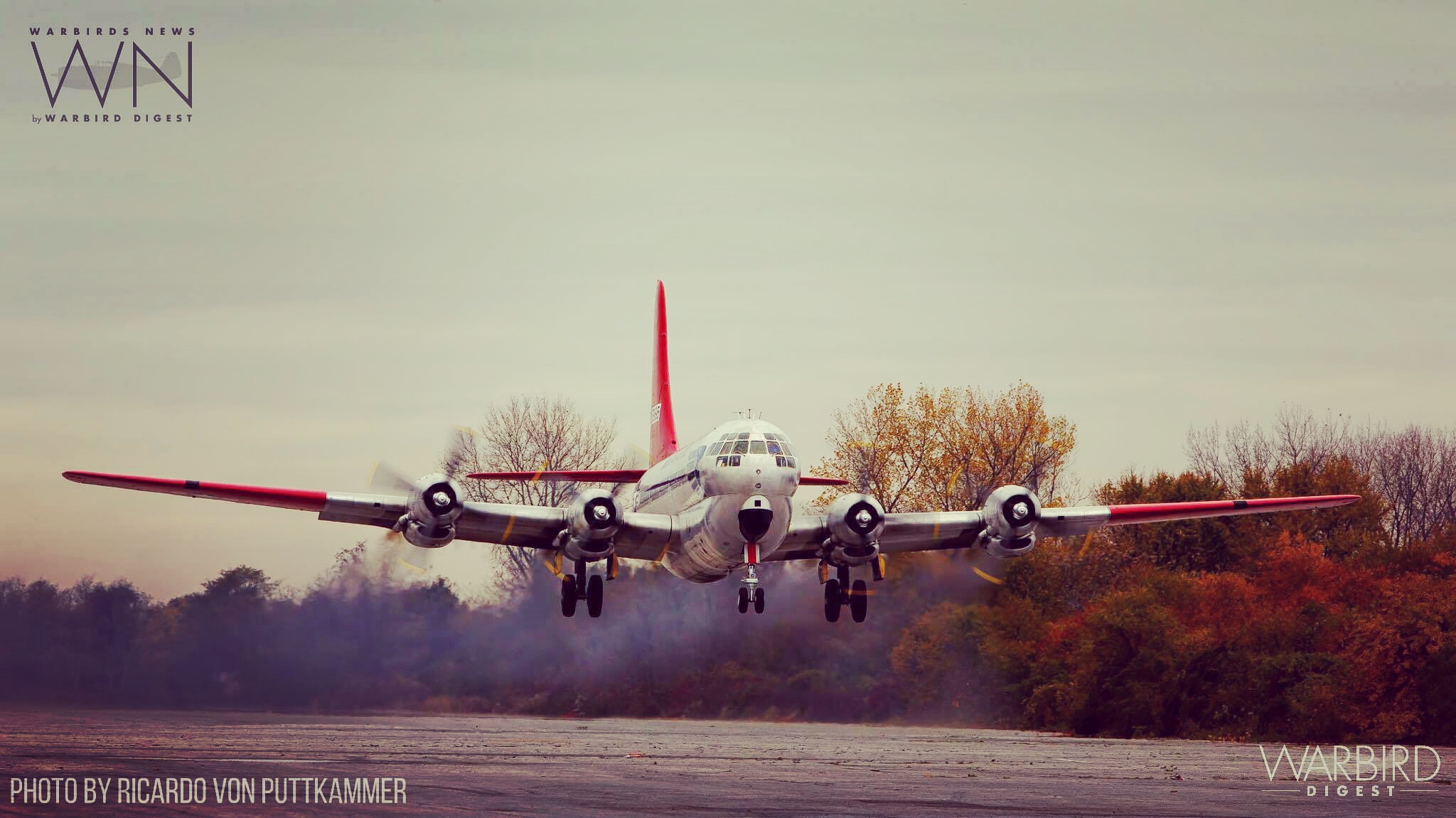
When Tim Chopp, founder of the Berlin Airlift Historical Foundation (BAHF), acquired Boeing C-97G Stratofreighter 52-2718 just over twenty years ago, he had no idea of the odyssey that awaited his organization. It seemed inconceivable in May, 2002, when the venerable cargo plane landed at Floyd Bennett Field in Brooklyn, New York, that it would not fly again for fifteen years! Now, after a decade and a half of determined labor, the BAHF is preparing to escape the bounds of this closed airfield, turned National Park.
“If you had to choose between a sharp stick in the eye, or restoring a C-97 to airworthy condition, you might want to choose the stick, because it would be less painful,” Chopp laughed. The man is a dedicated leader, and an inspiration to BAHF members, a good number of whom have been working under Tim’s direction for many years. It is difficult to overstate the magnitude of the challenge Chopp and his volunteers have overcome. The costs involved are staggering. Even the toll-road charges are enough to make a working man’s head spin. Each trip to work on the plane has cost Chopp $100, and he has made the trip hundreds of times. With area traffic, a full day’s effort usually yielded just four hours maximum work time.
In 2012, Hurricane Sandy ripped away much of Hangar B’s roof, with the C-97 stored within. Thankfully the plane came through intact, but it had to move outside while the roof received its repairs. However, after a brief return to the hangar, Chopp got word that he could no longer keep the Stratofreighter inside. Although the effort to prepare the aircraft for an escape flight from New York had been underway for a decade, banishment from Hangar B brought an elevated urgency to the restoration.
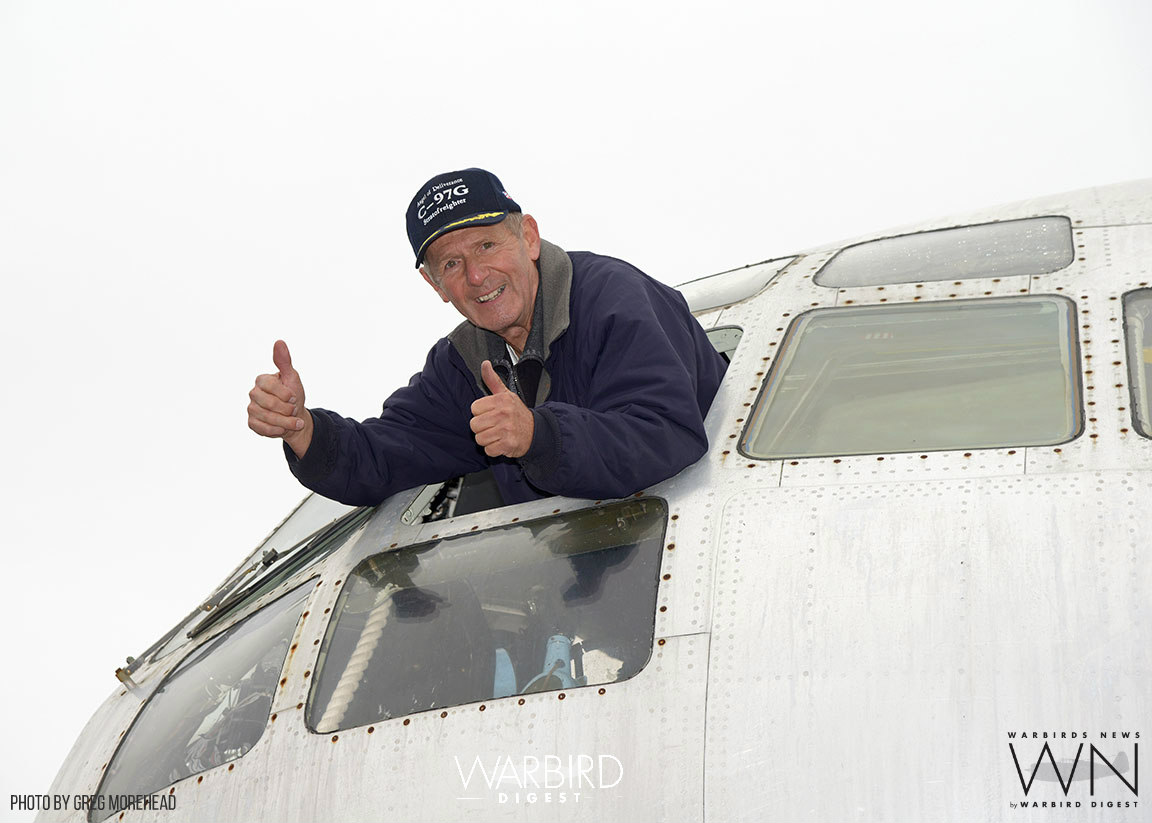
Major hurdles in getting the C-97, now nicknamed Angel of Deliverance, airworthy again started with the acquisition of specialized tooling and equipment. Bringing the engines back to life required a complete oil flush, 224 new spark plugs, and various other maintenance. They also had to source a crane to facilitate engine removal. The team stripped unused/unnecessary equipment from the plane, which reduced the aircraft weight by 3,200 pounds. She now weighs in at a very light (for the type) 81,900 pounds! To counteract the newly nose-heavy balance, BAHF strapped down six 450 pound ballast barrels in the aft cargo bay.
The FAA has currently approved the C-97 to operate with named essential crew only. For the exodus flight, the crew included: Tim Chopp, aircraft commander; Paul Stojkov, First Officer; Ray Stinchcomb, Flight Engineer; and load master/scanners Steve Grubisich and Mark Howard. The vast experience of Consulting Flight Engineer, George Weekley, has proven invaluable to the effort. Like other four and six-engine aircraft of the era, the flight engineer is arguably the most critical crew member, because they monitor every aspect of engine performance and fuel flow.
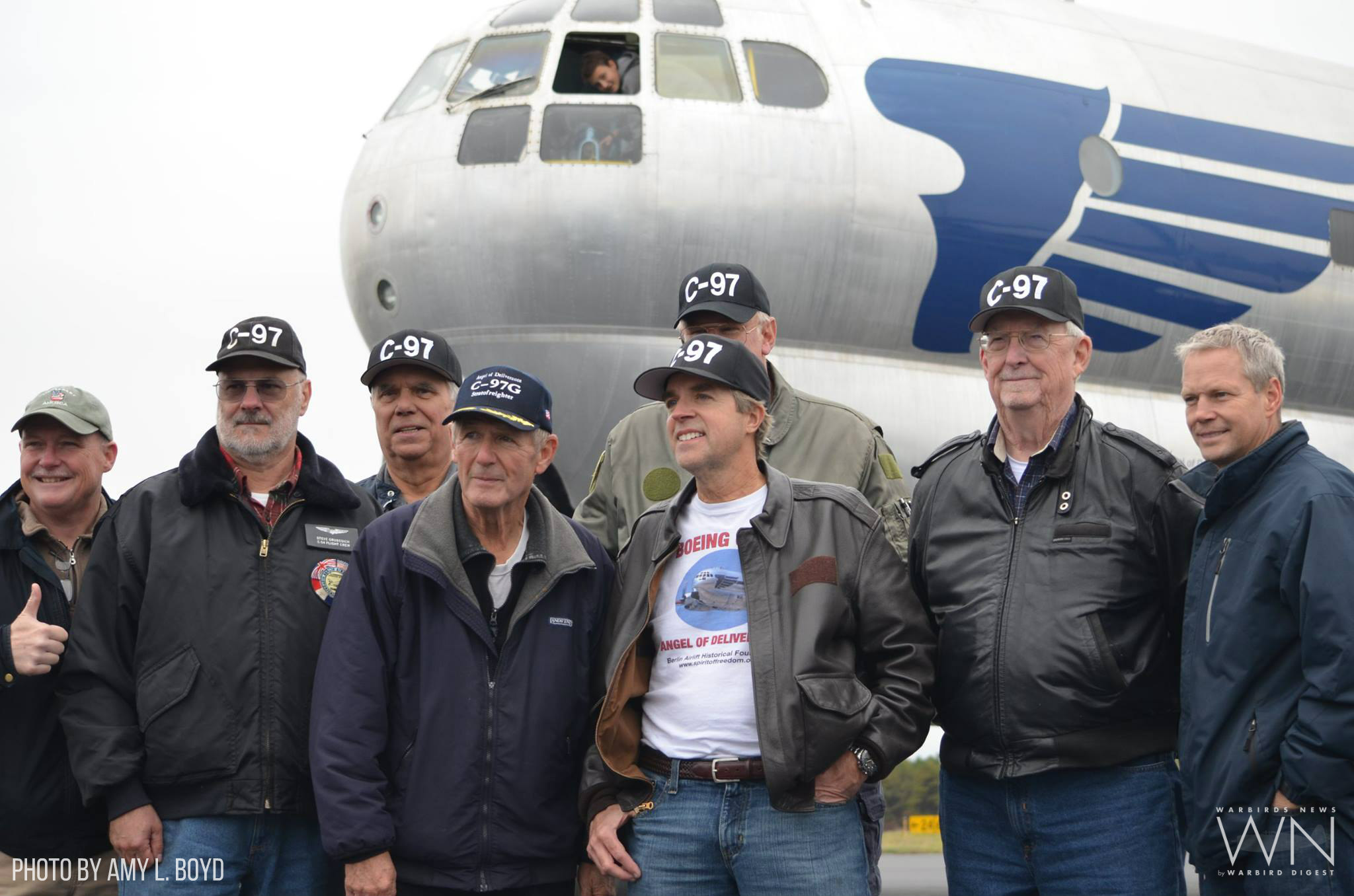
Once the crew climbed out from Floyd Bennett Field, they flew to Toms River, New Jersey to take on fuel and check the aircraft over. They then departed on a short flight to Reading, Pennsylvania, where Angel of Deliverance will become a guest with Russ Strine and the Mid-Atlantic Air Museum until after their “World War II Weekend” event in the first weekend of June, 2018.
Another challenge for the BAHF is to secure a permanent, indoor home for their C-97 and C-54. Two possible locations include Hagerstown, Maryland and Winston-Salem, North Carolina. If any of our readers have empty hangar space, and want this amazing organization to relocate to your field, please contact Tim Chopp. But, before you get too excited, here are the specifications for the required hangar space: C-54 117’ width x 96’ length x 27’ height; C-97 141’ width x 110’ length x 26’ height.
Update: In a brief phone interview yesterday with Warbird Digest’s chief editor, Greg Morehead, Tim Chopp described the flight to Reading, and what lies ahead for the BAHF….
GM: “How well did she fly?”
TC: “More than I ever expected. It performed brilliantly! …. It’s a great airplane. What a feeling, what a feeling that was when I’m rolling down there in that little simulator that A2A Simulations put together for me. Scott Gentile from Connecticut. I told Scott, I said, ‘If anything helped me to make this comfortable it was all those hours and hours and hours over the past several years on that little simulator.’ When I was rolling down the runway, I felt I was behind my little simulator, I really did, it was that good! You know, when I started back I hit 95 knots, and I was going to rotate at 100, and I just leant the stick back, and… it just lifted off like slow motion. And as soon as it broke ground, I instantly realized, hey man this CG is right where it should be, exactly the way we calculated it, with the water in the back [the ballast]. It was fantastic. It couldn’t have been loaded any better. I cannot imagine those people taking off at 170,000lbs with this airplane… golllleee!”
GM: “It was really neat for us flying alongside you…”
GM: “How about the second leg. Did it start raining on you before you got to Reading?”
TC: “We were lucky. We were lucky. The rainy weather actually came up quite a bit. We were leaving the shore, I could actually look out and see brighter [skies]. In fact, I remarked to Paul [1st officer Paul Stojkov] that they came in with ten thousand [feet altitude] and ten miles visibility. But we were still under the ceiling. In fact, what actually happened was that the weather was changing since the last report. I said to Paul, ‘We’ve got that ridge. We’ve gotta clear that ridge. By the way this looks I don’t think we can clear that ridge VFR. We might get into a problem here.’ So I said, ‘Get ahold of Reading Approach and see where we are at.’ So he did. He called, and they found us on radar… not that we were lost.… We knew about where we were, but I wanted to know how far we had to go to get to the airport. Well it turns out we were a lot closer than he had expected, and he said, ‘Right now it looks like threatening moderate rain.’ And I said, ‘That can’t be. We experienced that on our briefing before we ever took off. It showed rain across the whole area. But nothing was there.’ And so even the radar controller said,… ‘I don’t know what I’m looking at, but that can’t be.’ So by then I spotted the runway, and I said, ‘Hey Paul, there it is! We’re going to have to hustle and get down.’ But as we were on right base to runway 3-1, I said, ‘Paul, hey we’re in snow! We are actually in rain and snow mix. I can actually see snow!’ But we were able to get the gear down, and get the flaps, and get in a good position to make a nice landing on runway 3-1.”
GM: “So was anyone from the Mid Atlantic Air Museum there to greet you?”
TC: “Russ Strine was there.… There were probably 15 people there to greet us. Russ was elated. So we shut down, and within ten minutes, after shut down, the moderate rain began. If we’d have been ten minutes later we would have been in real trouble. But we were on the ramp. We shut down, and actually had to wait to get proper umbrellas. It was raining that hard. It didn’t stop for hours after we landed, so we were very lucky.”
GM: “So is the airplane in the hangar, or outside up there?”
TC: “It’s outside. It will be outside until June. The airplane is going to remain in Reading until we get funding to be able to continue the program. It’s that simple. Until we get funding, we will begin with some training flights in the spring. We gotta do some tweaking on maintenance, but we gotta get funding in order to continue the program.”
GM: “So how do people contribute?”
TC: “Just go to the website spiritoffreedom.org”
Many thanks to Tim Chopp for taking the time to talk with us. We wish he and his whole team many congratulations for their remarkable achievement. We urge our readers to contribute to this important effort in commemorating the Berlin Airlift, and for preserving this extremely important airframe!
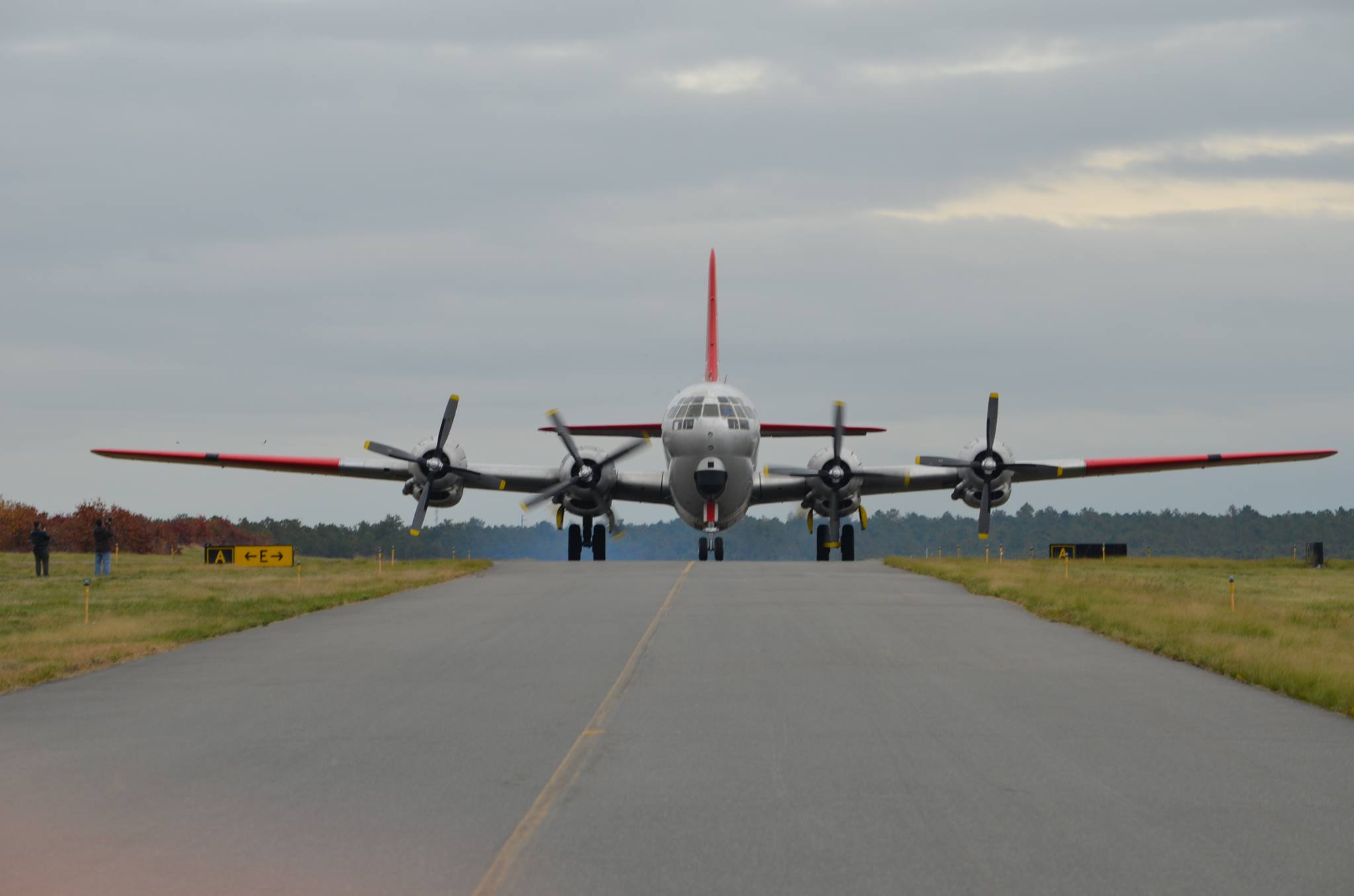
Tim Chopp, founder and president of the Berlin Airlift Historical Foundation, told WarbirdsNews: “The plane flew great all the way to Reading. The weather was racing us towards the airport, but we made it in.” Chopp noted that he could see a line of rain/sleet moving towards the field as they were turning from base to final. “God guides your footsteps,” he added, “I can’t wait to show the airplane to the public.”
To support the mission of the Berlin Airlift Historical Foundation, click HERE.
Don’t miss the featured article about the C-97 on the next issue of Warbird Digest magazine. Click the image below to subscribe.






So glad to see the Angel at Miller! Hope you find a roof in NJ because I want to see her again and bring Susan inside. She still talks about the flight in the C54. And please tell Capt Tim that in NJ you cannot pump your owngas!
Absolutely phenomenal!
A wonderful article! So proud of Tim Chopp and the whole crew! What an amazing organization keeping history alive.
awesome!!!!!!!
Congrats to you and your dedicated crew.
Great job Tim looking forward to seeing that beast in the air ,beautiful bird.
Well done guys,i myself just love U/K WW2 bombers,but to see what you all have done is wonderfull.
I went to work at Boeing as a flight line modification mechanic in 1950. I started on B-50’s modifying them for ECM missions. I worked on the B-52 as a production illustrator for a while and then was sent to Renton to work on the KC-97G, illustrating wiring and plumbing systems modifications on the last model of the KC-97. Near the end of the KC-97G we were assigned to work on a new airplane, the 367-80 and everything took off after that with the 707,720,707-300 series, 727, 737,747,757,767 , and my final job after 45 years was on the 777 as a technical designer. I went back twice for four more years as a contract designer. I finally hung it up in 2002.
Wow!!! What a fascinating career you have had! It must have been terrific to have such a bird’s eye view of so much technological development on so many significant designs. Thank you so much for writing in Robert! We’d love to hear more if you care to share.
What a great article and me importantly kudos to the restorers
Tim – I hope either (or maybe BOTH) aircraft can visit MQI – on the North Carolina Outer Banks!!
All the best!
Hello
If I am correct the C-97 has the same engines of the B-29 and we have 2 of them flying today aka FIFI and DOC.
The C-54 powerplants might be close to the ww2 B-17.
Someone let me know on this please.
The XC-97 used the R-3350 like the B-29, but the later versions used the R-4360 Wasp Major – 28 cylinder monster used on the B-50, C-124, and B-36 among others. The C-54 uses P&W R-2000 which was an enlarged version of the R-1830 that was used on the B-24.
No, the B-29 has Wright R3350s. The C-54 has P and W R2000s
Great to see this bird in the air. My father flew both C-54 and HC-97G (rescue) while in the air force. He always talked about how sweet an airplane the 97 was to fly – once you got it in the air. The R4360s could be pretty temperamental getting started. BTW, he did take off out of Trinidad at 170,000 pounds to support one of the Gemini space shots, and it was as scary as you imaged it would be. They may have bent the rules a little on the amount of time at METO until they could get a little altitude and airspeed.
I was stationed at Earnest Harmon AFB in Newfoundland in 1962-1963 and worked in the engine shop. Due to the time the planes flew at METO, it was very rare to replace an engine on hours. Most failed before they required changing for time of operation. The KC-97’s could only take off toward the ocean no matter the wind direction since there were mountains at the other end of the runway. Seeing this plane restored sure brings back a lot of memories. The Cuban missile crisis happened during my stay. That was quite an experience!
I was a co-pilot on the KC-97 stationed at Westover AFB in MA. I was just out of pilot training as an Aviation Cadet, this was my first assignment. Did alert at Harmon and Sonderstrom. We established the Aviation Cadet Museum, Inc. at Eureka Springs, AR in 1994.