


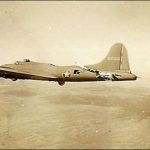


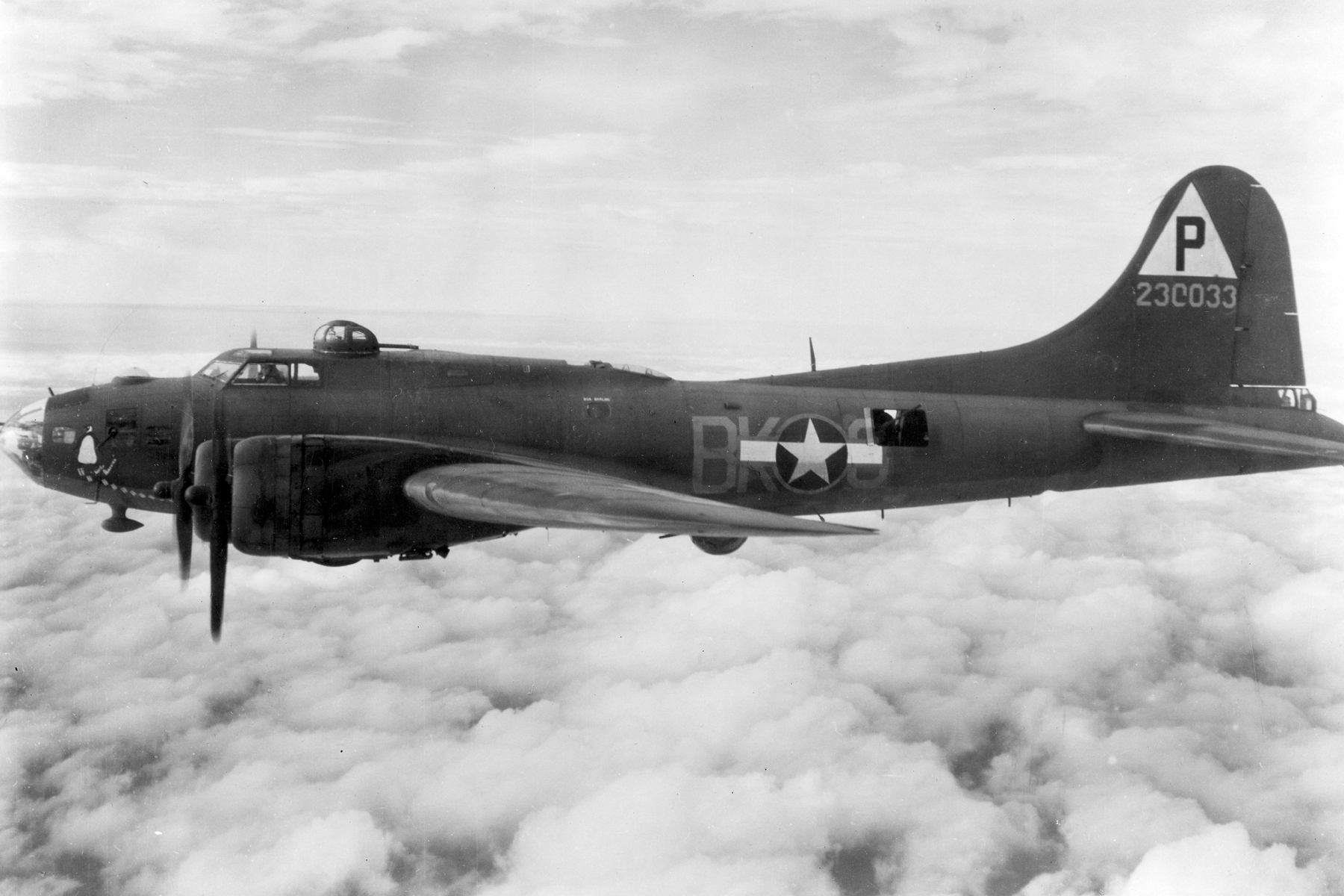
For the past decade, a vintage automobile restorer named Ray Moore has been following his singular passion for the Boeing B-17 bomber in Asheville, North Carolina. Moore has harnessed his expertise in precisely shaping metal and focused it in a new direction, the restoration and recreation of an airworthy Flying Fortress. Part of Moore’s fascination with the Fort’ extends from his great uncle, MSgt Marvin Hudson, who was a B-17 line chief with the 546th BS/384th BG during WWII at RAF Grafton Underwood in Northamptonshire, England. One of the aircraft he worked on was B-17F 42-3455, nicknamed Lucky Thirteen by her crew. However, Lucky Thirteen’s luck ran out during a bombing mission to Stuttgart on September 6th, 1943, when Uffz Kahlhammer shot her down in his Focke-Wulf Fw 190A-5 near Clermont in France. Amazingly though, Lucky Thirteen’s luck held for her crew though; they all bailed out successfully and survived the war to reach old age.

By happenstance, Ray Moore came into contact in 2009 with a man named Gerard Lequien who had excavated some of Lucky Thirteen’s parts from French soil. Though just small fragments of this once magnificent aircraft, some of these parts will be incorporated into Ray Moore’s B-17, which will give the aircraft a faint, though definitive aroma of provenance when she finally wears the 384th BG’s Triangle P on her tail in the years to come. The project also has at its disposal several large sections of other B-17s, including B-17Gs 44-83316, 44-85813, 44-83542, which will contribute parts and patterns to the project.
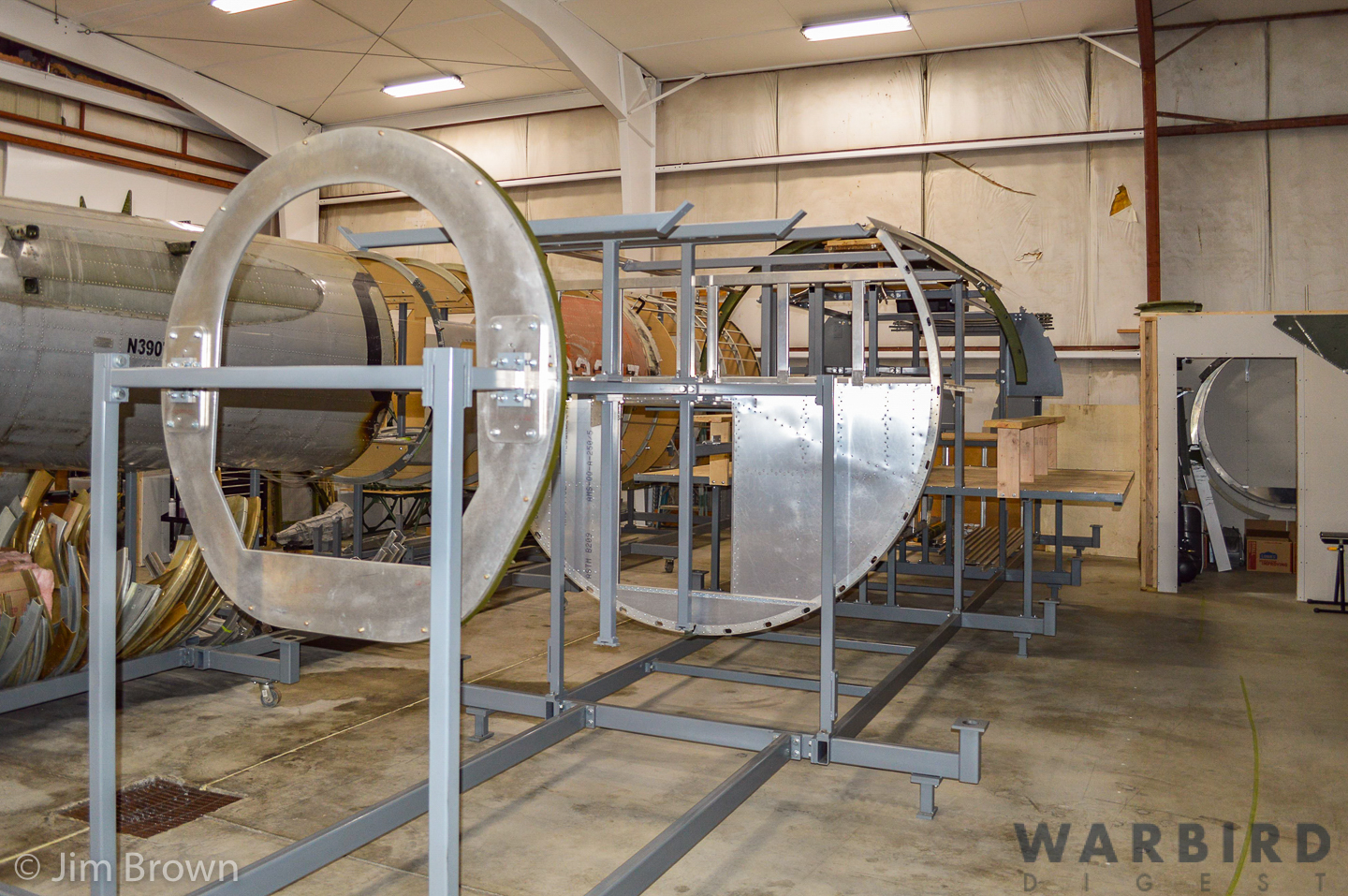
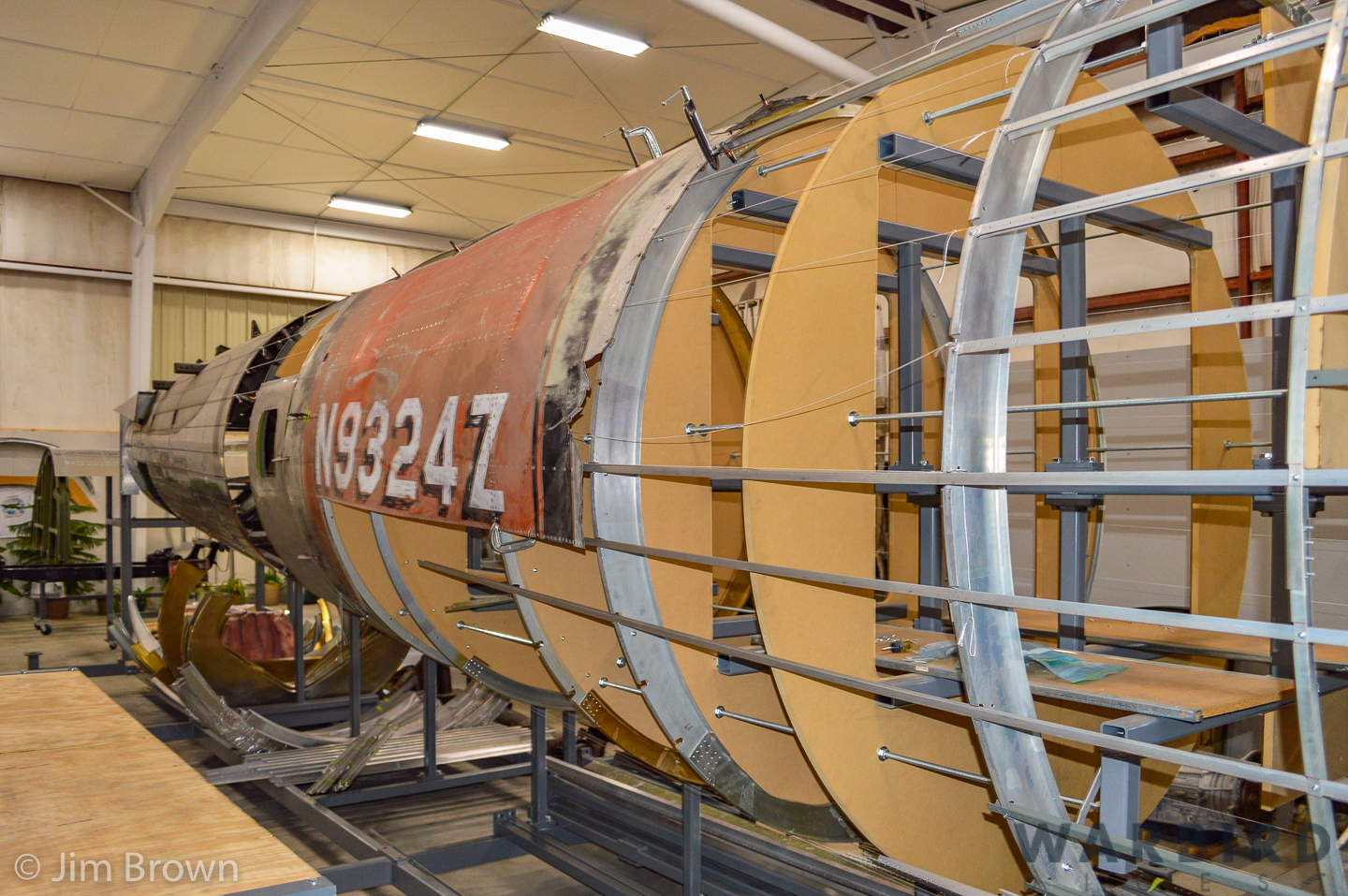
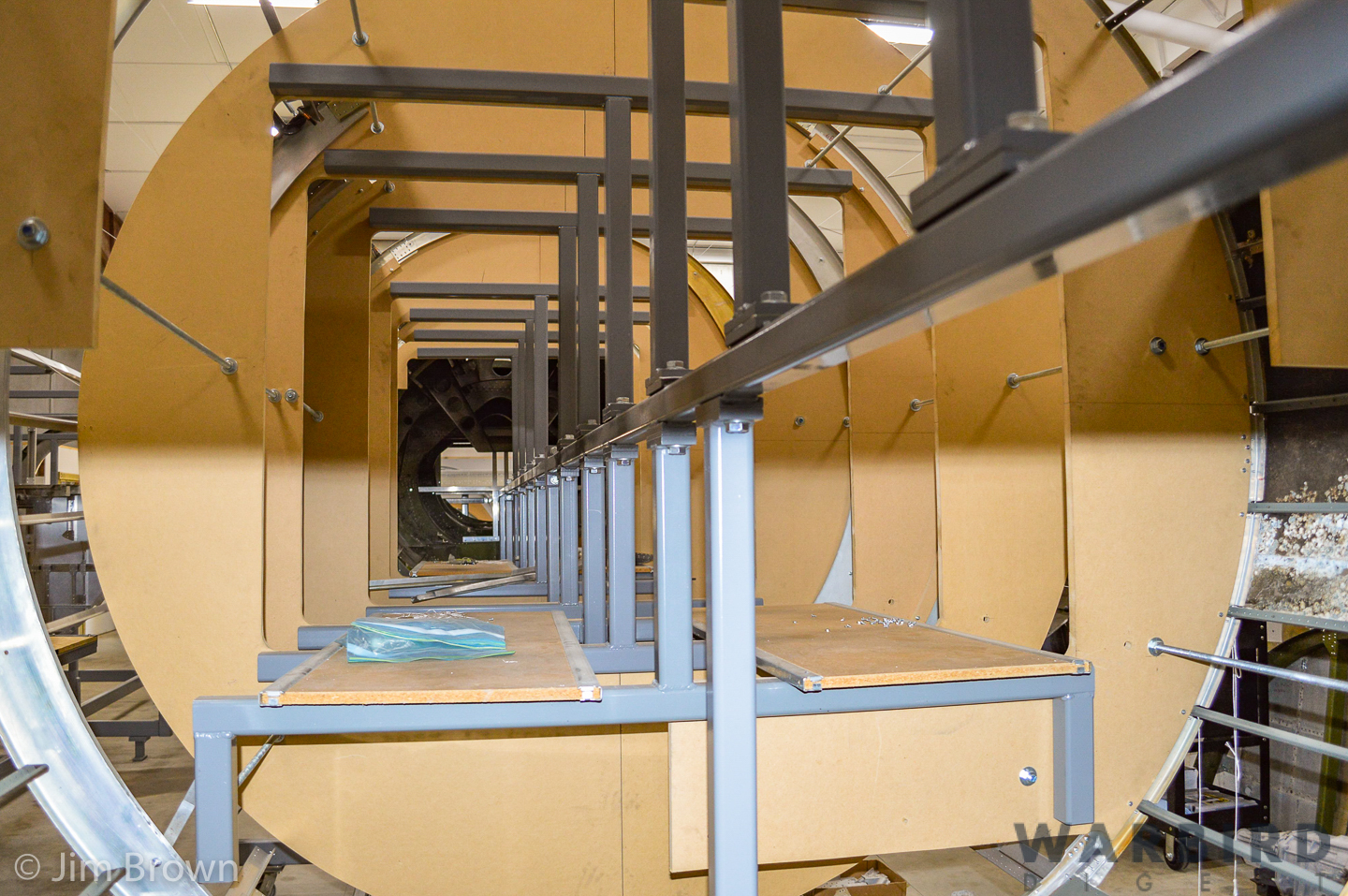
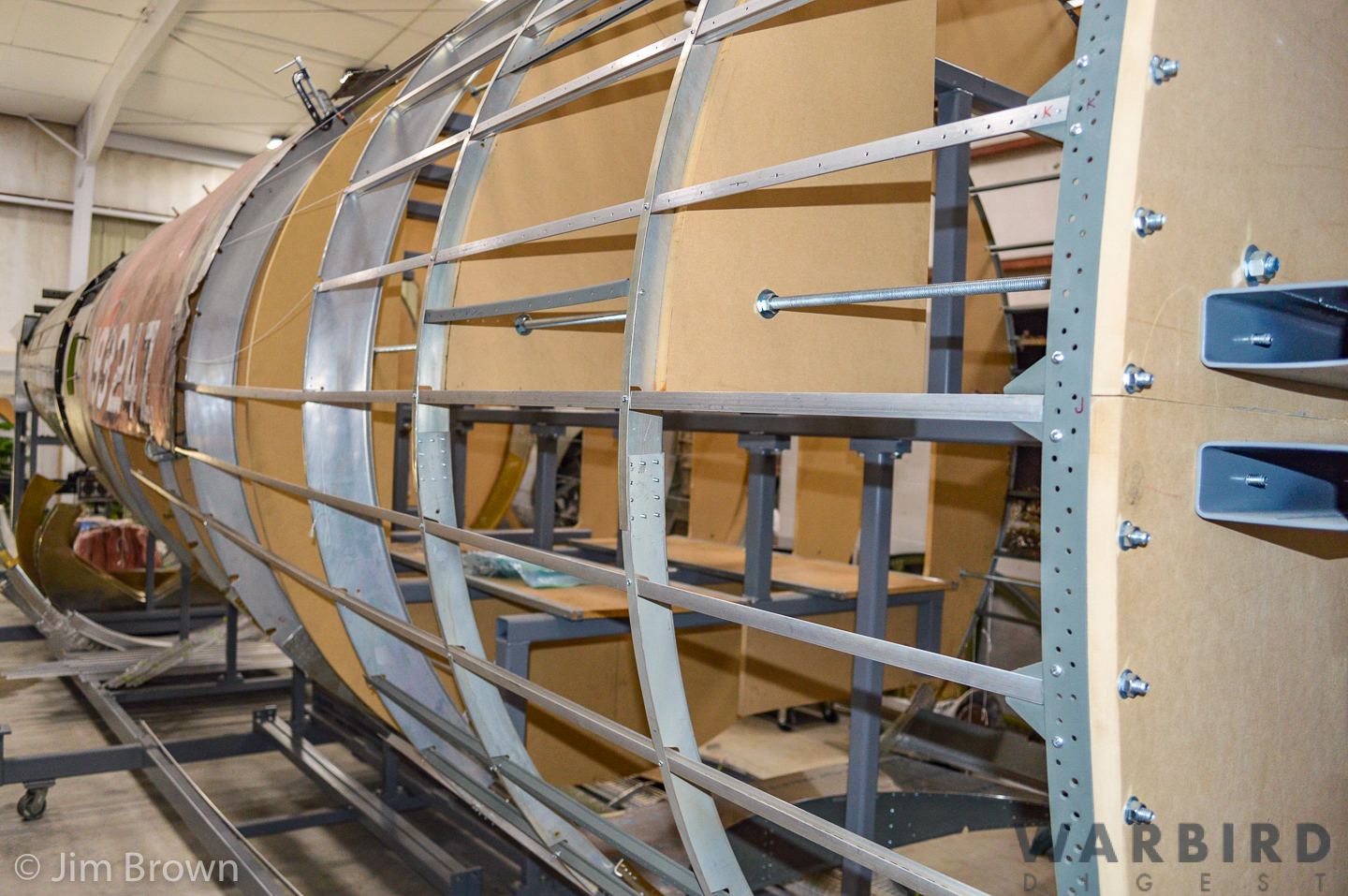
A practical man, Ray Moore has used his engineering skills to benefit at least five other B-17s under restoration as he progresses, creating several sets of fuselage jigs and components for these projects, even while he works on his own. This way the economy of scale will benefit Lucky Thirteen as she slowly moves towards completion. Currently in his shop, Lucky Thirteen’s forward fuselage is taking shape in her jig, while, phoenix-like, the rear fuselage of the Liberty Belle Foundation’s B-17G 44-85734 is coming back together again following her near-total destruction by fire back in 2011. We thought our readers would like to see the current progress, and Jim Brown has brought us a wonderful outline of the project following his recent visit to Ray Moore’s workshop to lend a hand with the project. Jim is also an experienced hand at aircraft restoration, and is currently building a P-40 Warhawk which we also hope to cover in due course…
Resurrecting Lucky Thirteen
by Jim Brown
I first heard of Ray Moore Jr. and Lucky Thirteen when I went to visit Eric Miller at Project Warbird to pick up some parts for my TP-40N Warhawk project back in 2016. I first made contact with Ray this September when I called and asked him if I could come see his project, and he said, “Sure I am usually here seven days a week but call before you come to make sure I will be here.”
I often thought after I first heard of Ray’s project, “How does a man go about restoring a plane as big as a B-17 all by himself?” The day finally arrived for me to go and I was up at 3:00 am for the drive from my home in Chattanooga, Tennessee to Asheville Regional Airport, where Ray’s project is housed in a hangar. When I arrived, Ray met me at the entrance and let me in through the security gate. When we walked into the hanger I was greeted with numerous jigs containing various portions of B-17 fuselage. As I walked around, there were components made up original airworthy parts, salvaged from other airframes, as well as newly fabricated parts installed. As we talked I learned he is not just fabricating parts for his plane but for several other projects that are on-going around the country.
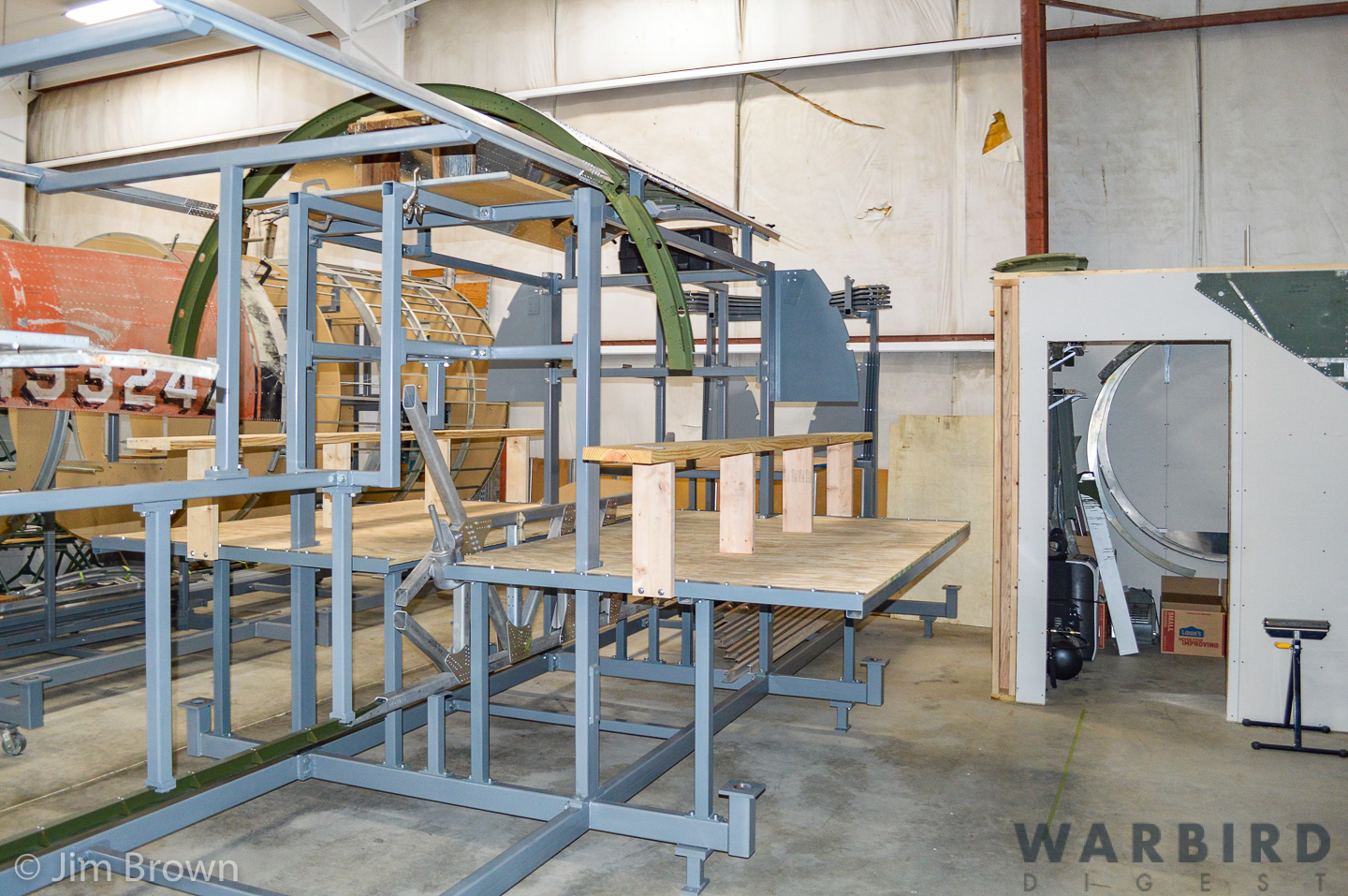
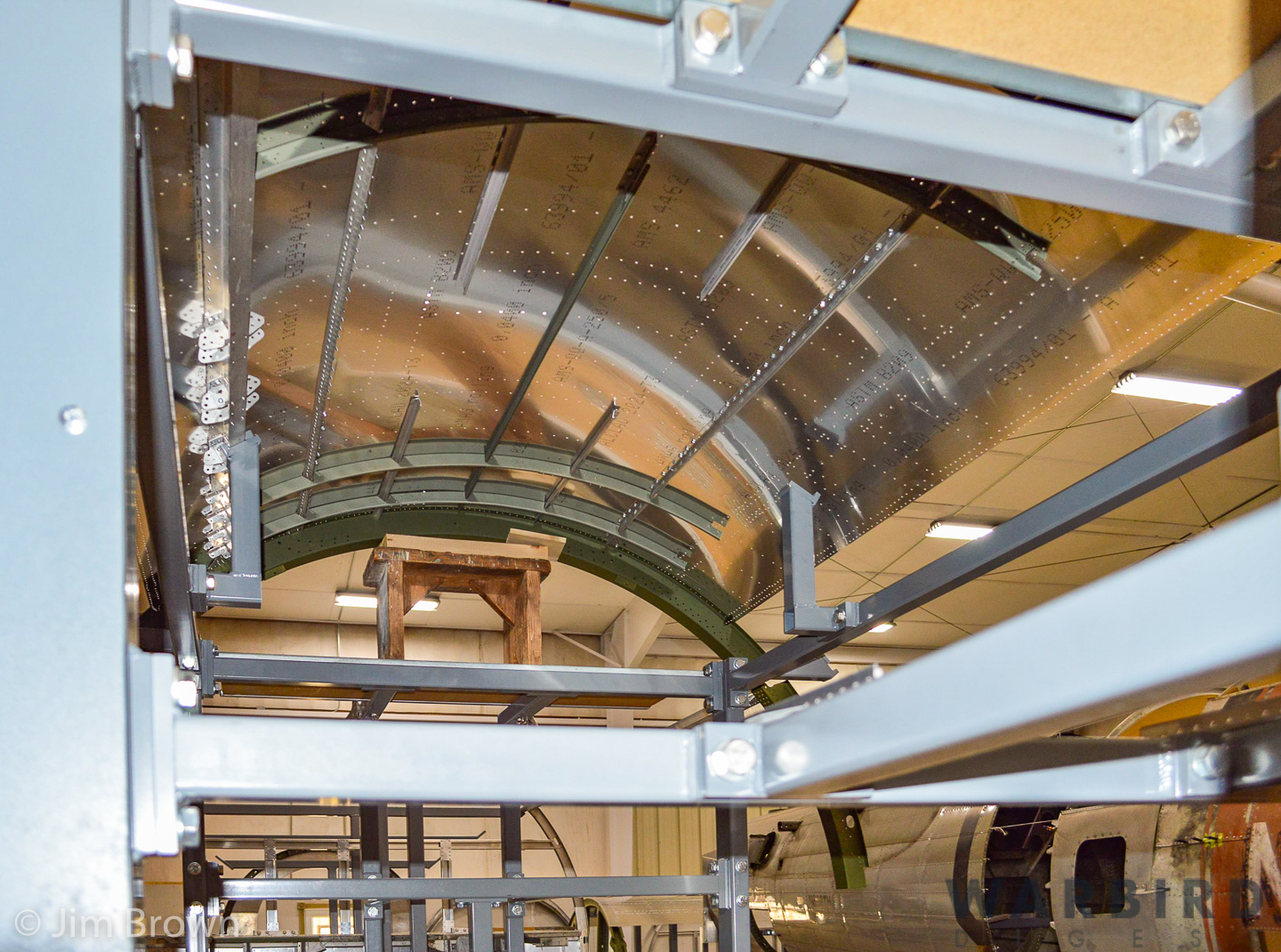
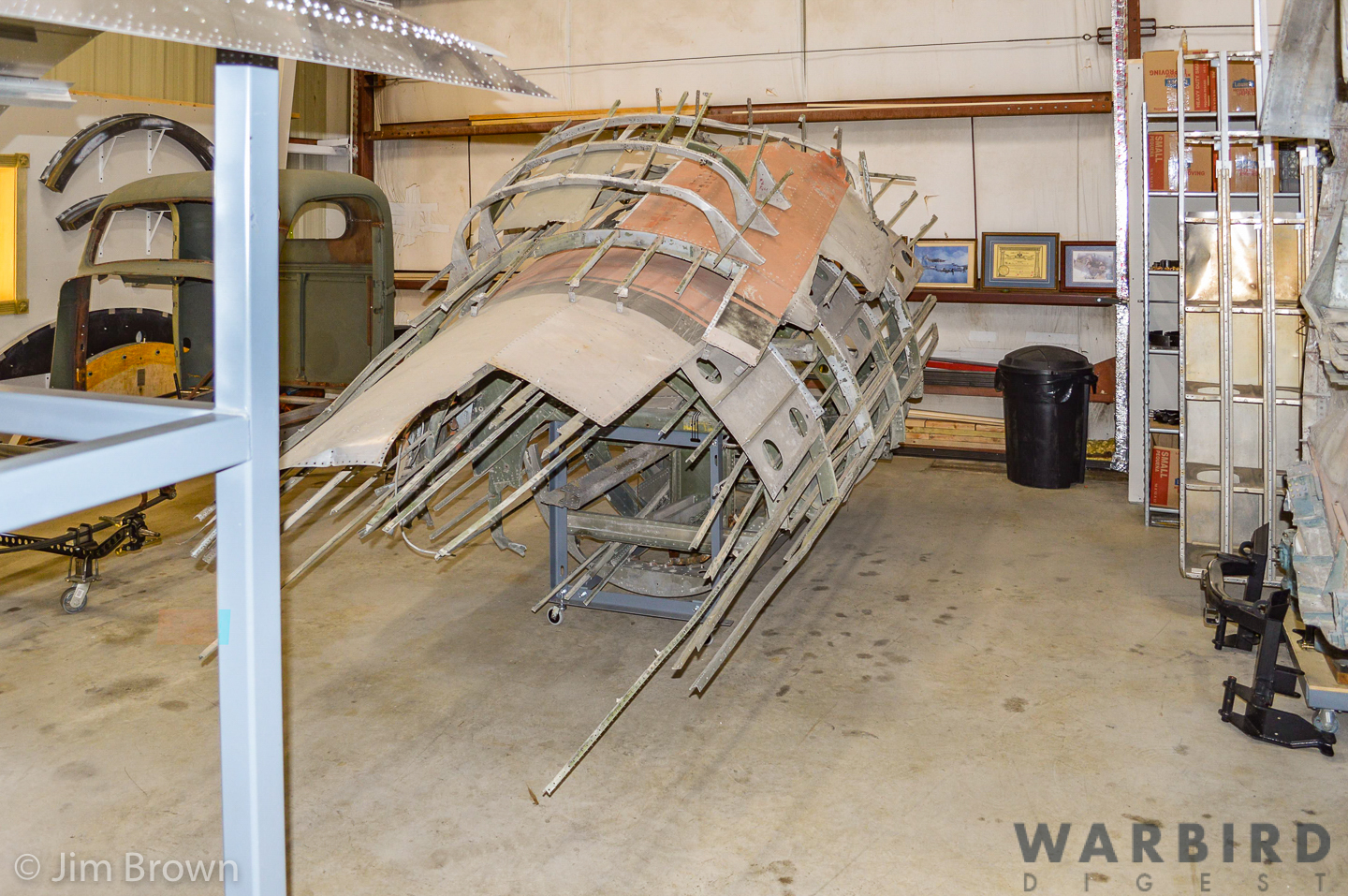
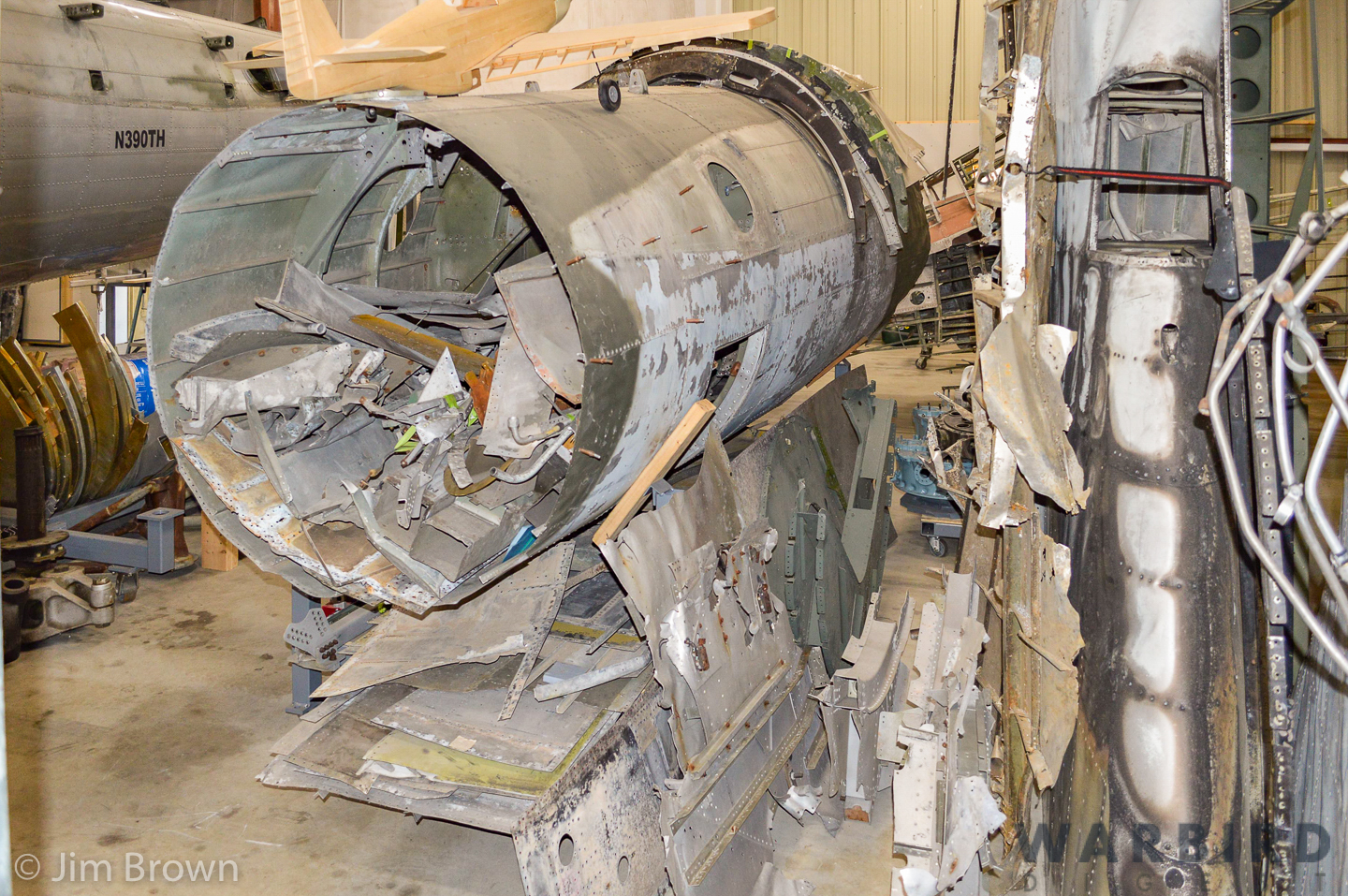
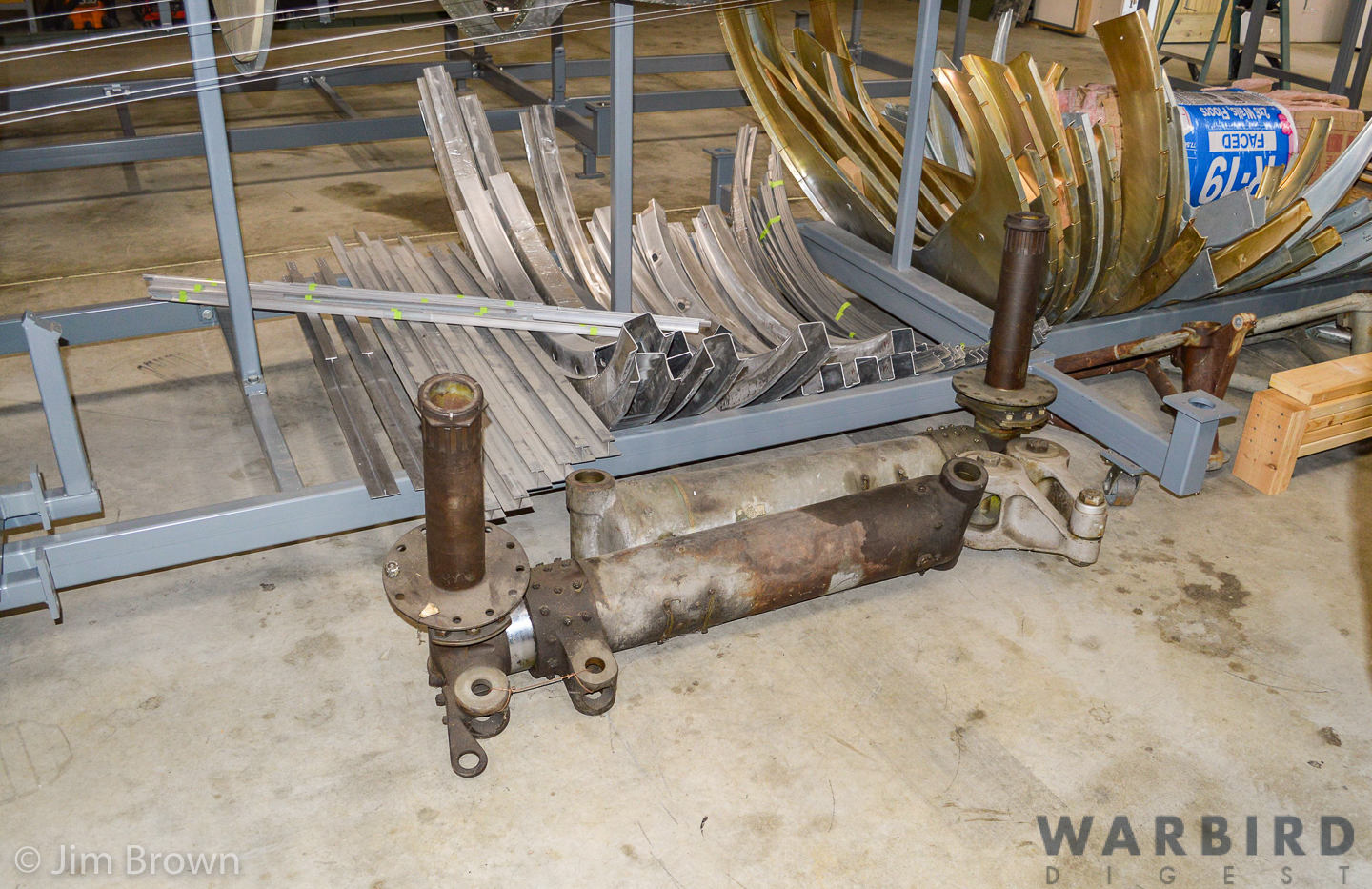
Ray’s focus is to restore Lucky Thirteen back to the way she would have looked fresh from the factory, using as many original airworthy parts as possible. As you can imagine, airworthy original parts are hard to come by, so he is fabricating new components from factory drawings as well as making templates from original, non-airworthy parts. His attention to detail and craftsmanship are first rate. When one of his suppliers sent him some splice plates for the fuselage bulkheads he said, “I need to send them back so you can cut them in two and make a duplicate set as they are doubled.” The supplier said it wouldn’t hurt to use them the way they were, but Ray said, “That wouldn’t be correct and I’m sending them back.” He also said that as the parts are completed and heat treated he dips them in ‘zinc chromate’ primer just like the factory did instead of spraying them.
While I was there, Ray let me do some bead blasting of a few components to remove the corrosion so they could be used as templates for making new parts. It was amazing to think about the men and women who fabricated and installed these parts in the factory, and of course those who flew combat missions during the war with those original parts as I held them in my hands. You could see the part numbers stamped into them, as well as the inspector stamps that had been placed after the part was inspected and judged to have met factory acceptance. I was also thinking that while the B-17 is a large plane, it is quite small inside for a crew of ten men. In the 1940s, most of the crew were in their late teens and early twenties, weighed between 120 and 150 pounds and were under six feet tall. When you think about this it makes you realize how much larger the modern day human has become.
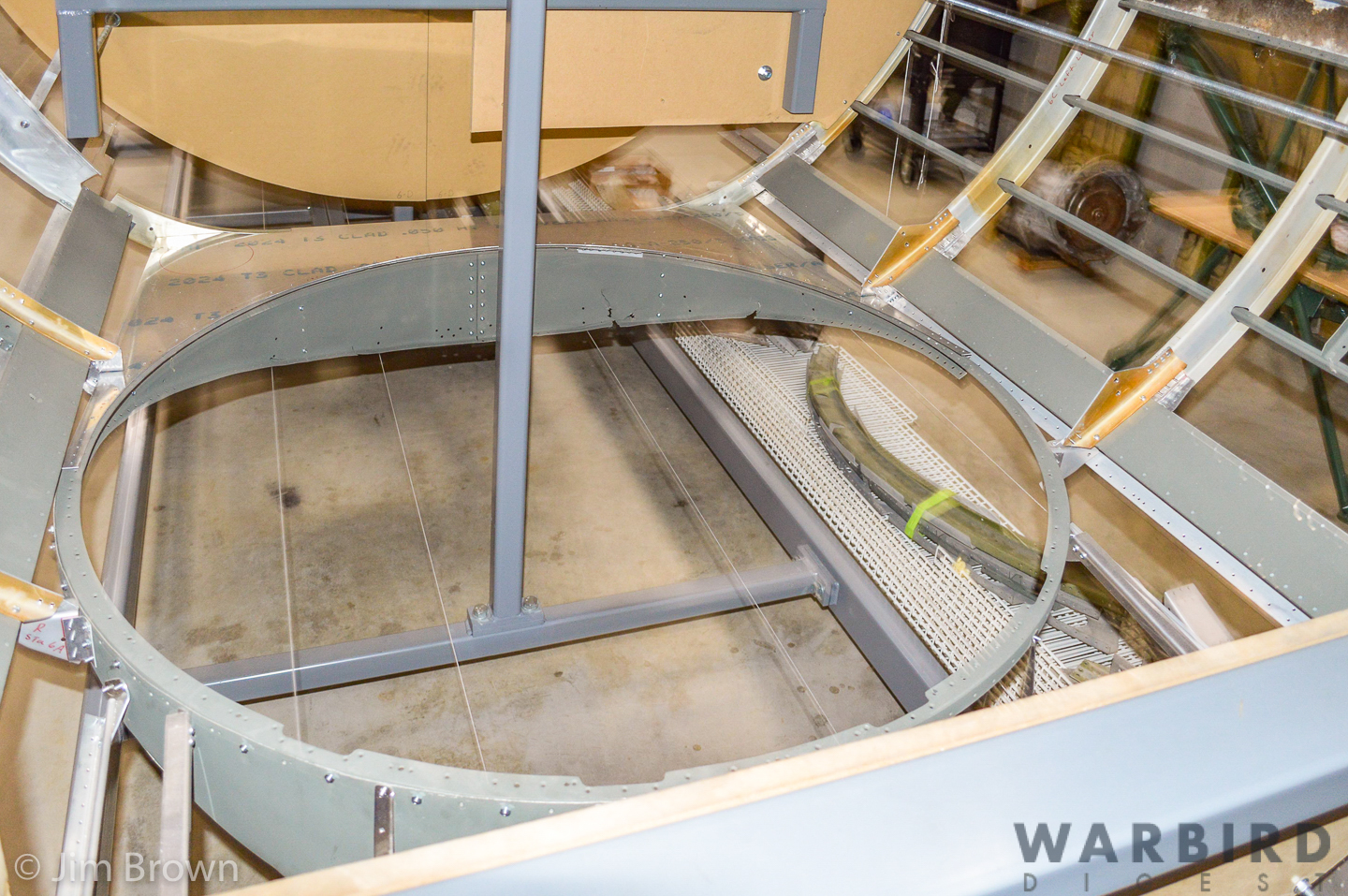
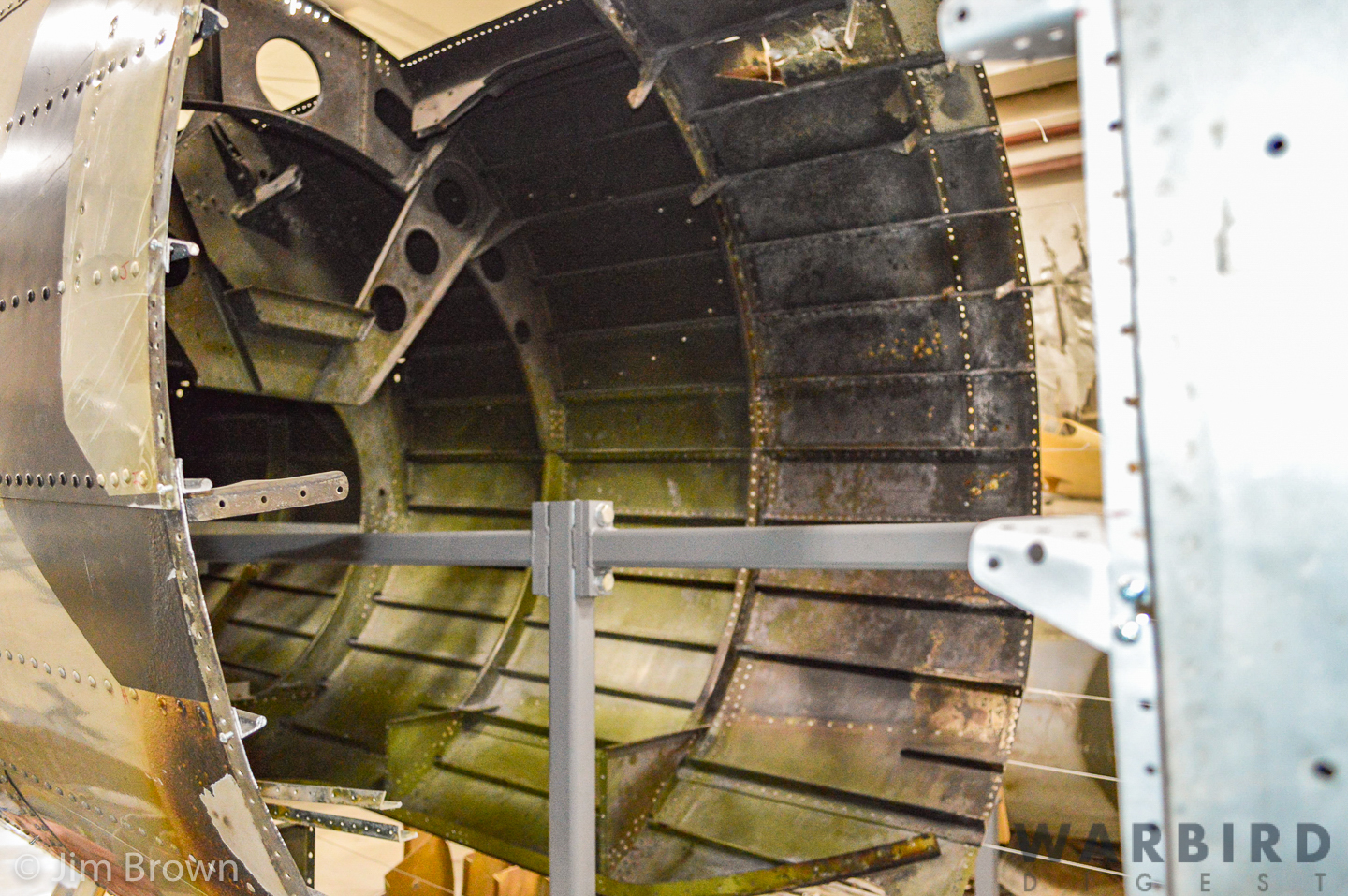
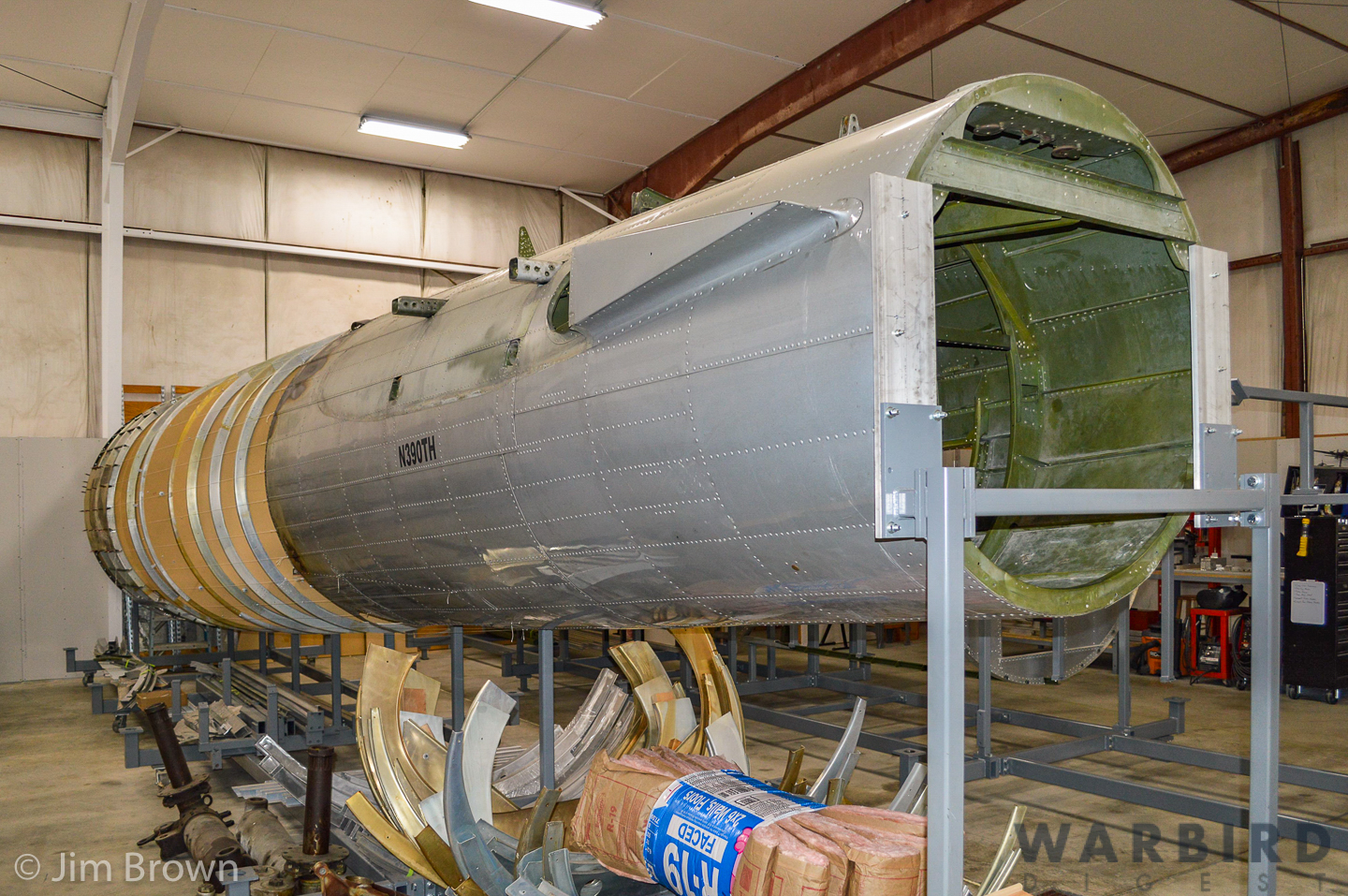
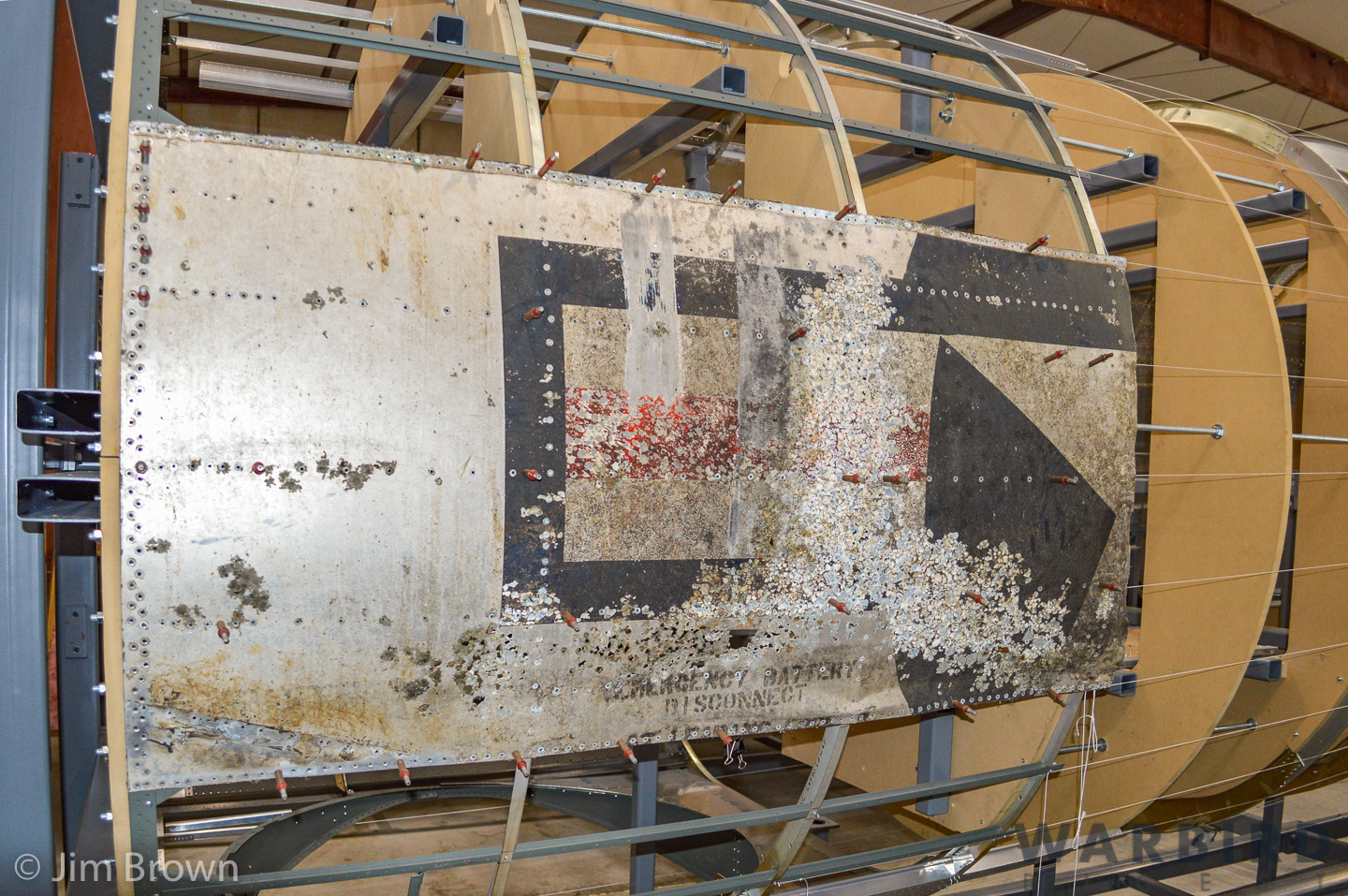
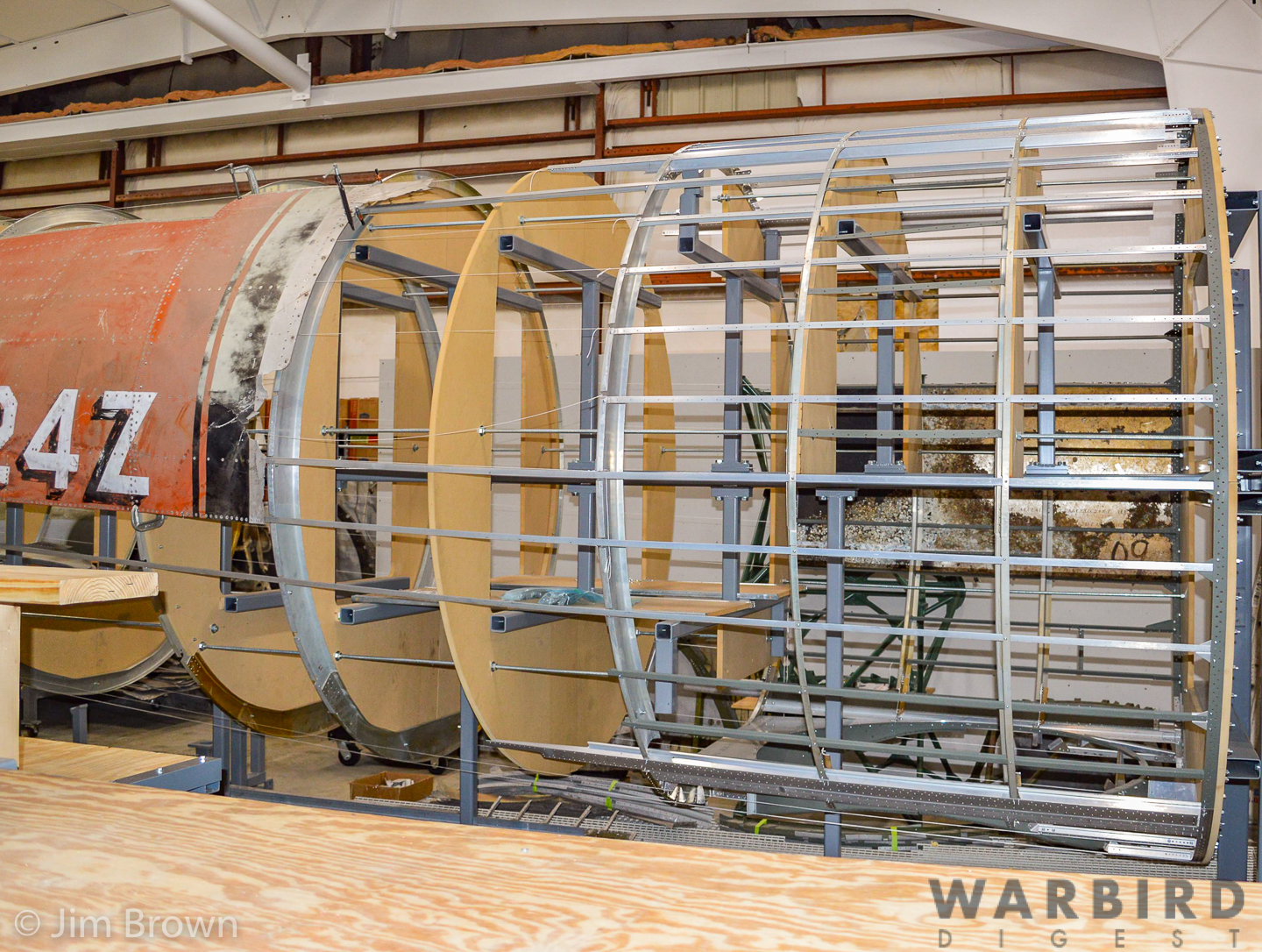
I also deburred some new bracket blanks that had been cut out of aluminum using a water jet. People sometimes think restoring a historic airplane is a glamorous endeavor, but it is anything but that. It is hours of searching for parts, researching and hours upon hours of tedious mundane tasks. As I was looking at some of the newly fabricated components I asked Ray why the rivets in one section were not equally spaced down the centerline. He said these planes were built on an assembly line and after drilling and installing rivets for eight hours a day your precision would be off too. These were not built as show planes, but were being produced rapidly to win a war. It’s this attention to detail from the original planes that will truly honor those men and women from the greatest generation who built and flew these planes that saved the world.
Many, many thanks to Jim Brown for this report, and also to Ray Moore for his perseverance and dedication to preserving aviation history. We hope to provide more progress reports on this important effort in the future! For those interested in seeing Jim’s progress on his P-40 project and other endeavors, please click HERE.




 Vintage Aviation News