


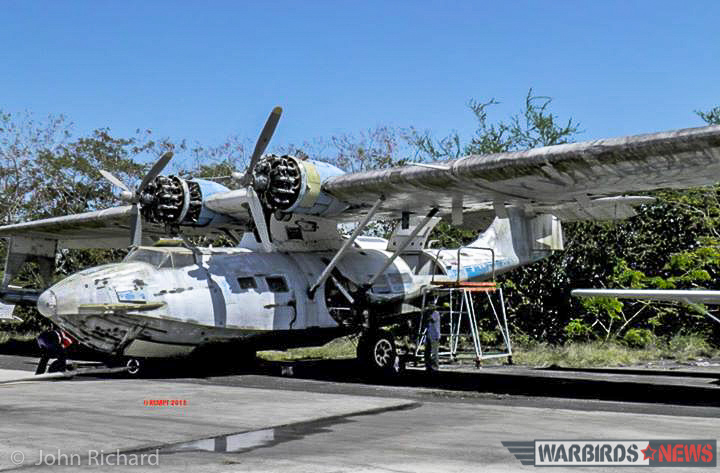

RATHMINES CATALINA RESTORATION UPDATE JUNE 2017
by Terry Woolard / Phil Buckley and Photos by John Richard
WarbirdsNews last reported on the Rathmines Catalina Memorial Park Association (RCMPA) and their efforts to restore their former US Navy Consolidated PBY5-A Catalina (Bu.48412) to static condition back in mid-2016 (click HERE). The project is located in the Rathmines area of Lake Macquarie, around 1.5hrs drive north of Sydney in New South Wales, Australia. A lot of work has occurred in the interim since our last report, so RCMPA volunteer co-ordinator Terry Woolard and media officer Phil Buckley will now bring us up to date on their progress.
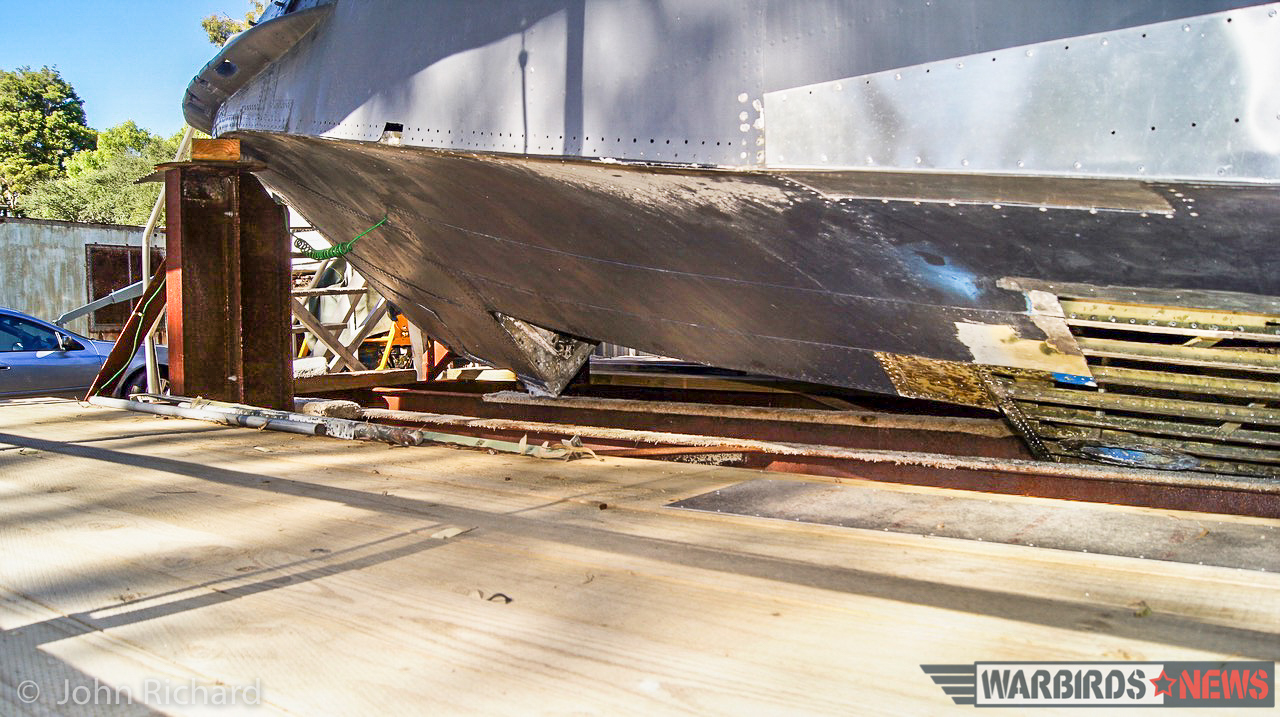
NOSE SECTION WORK
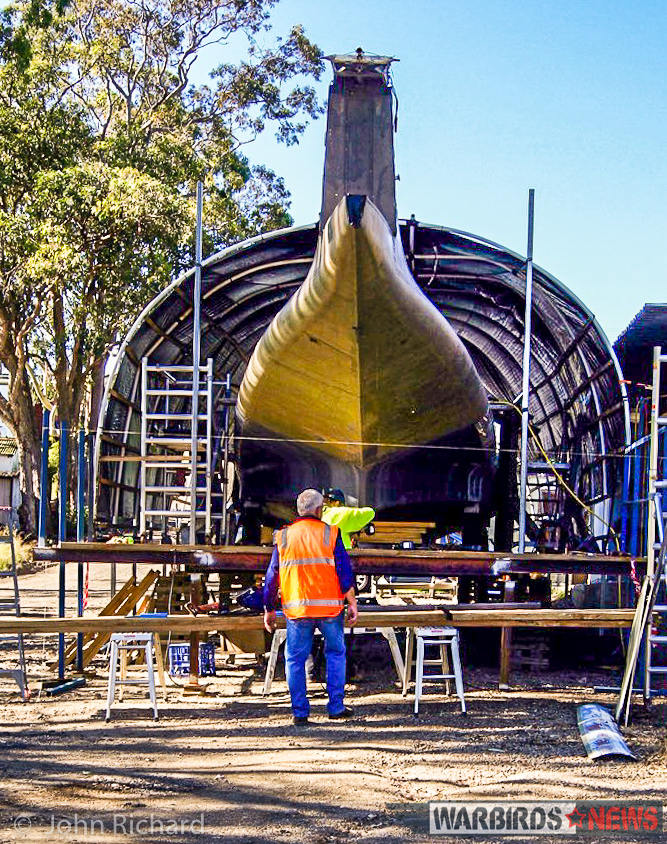
Starting at the bow, the team has removed the entire nose wheel assembly, along with the gear doors. Terry Fahey (T2) is currently working on removing the last of the actuating mechanism from inside the fuselage. These components will then be cleaned, with any seized or damaged parts repaired as required. All of the refurbished components will receive a coat of epoxy primer and then be placed into temporary storage awaiting their turn in the reassembly process. The temporary storage area is a newly acquired weatherproof and well ventilated setup which can accommodate shelving for all of the repaired components, other spares and important tooling.
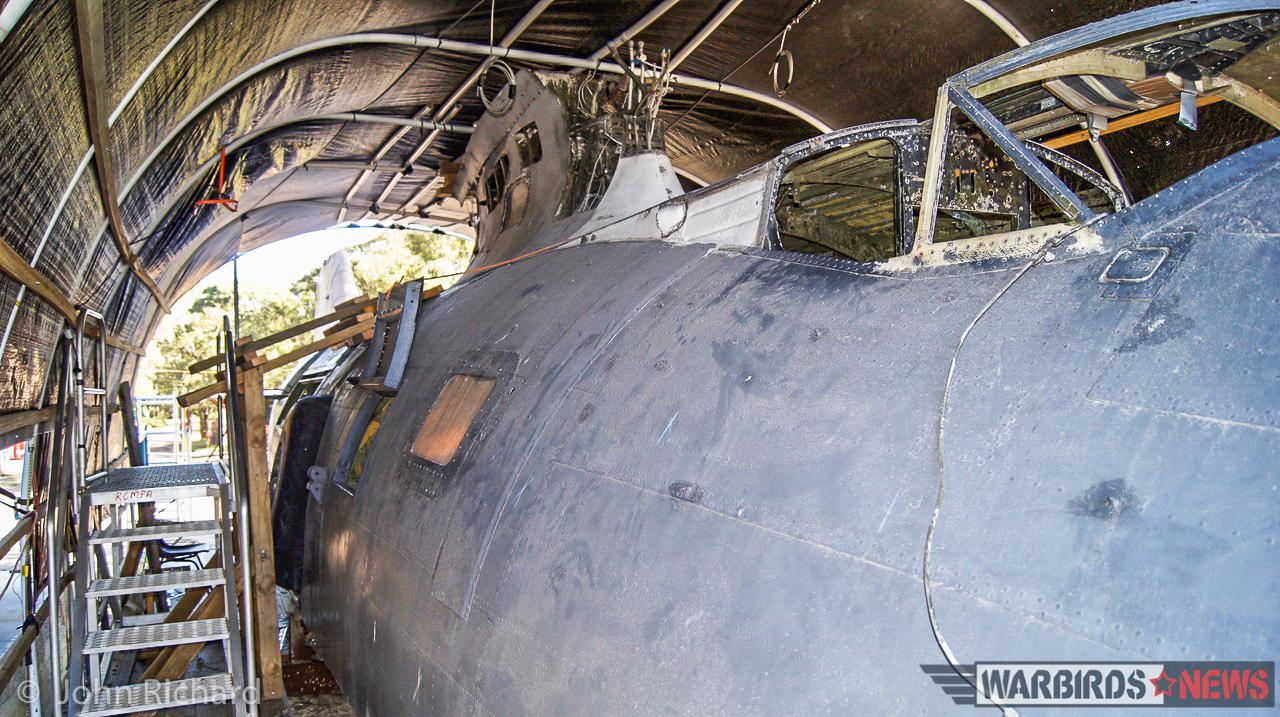
COCKPIT AND MID FUSELAGE SECTION WORK
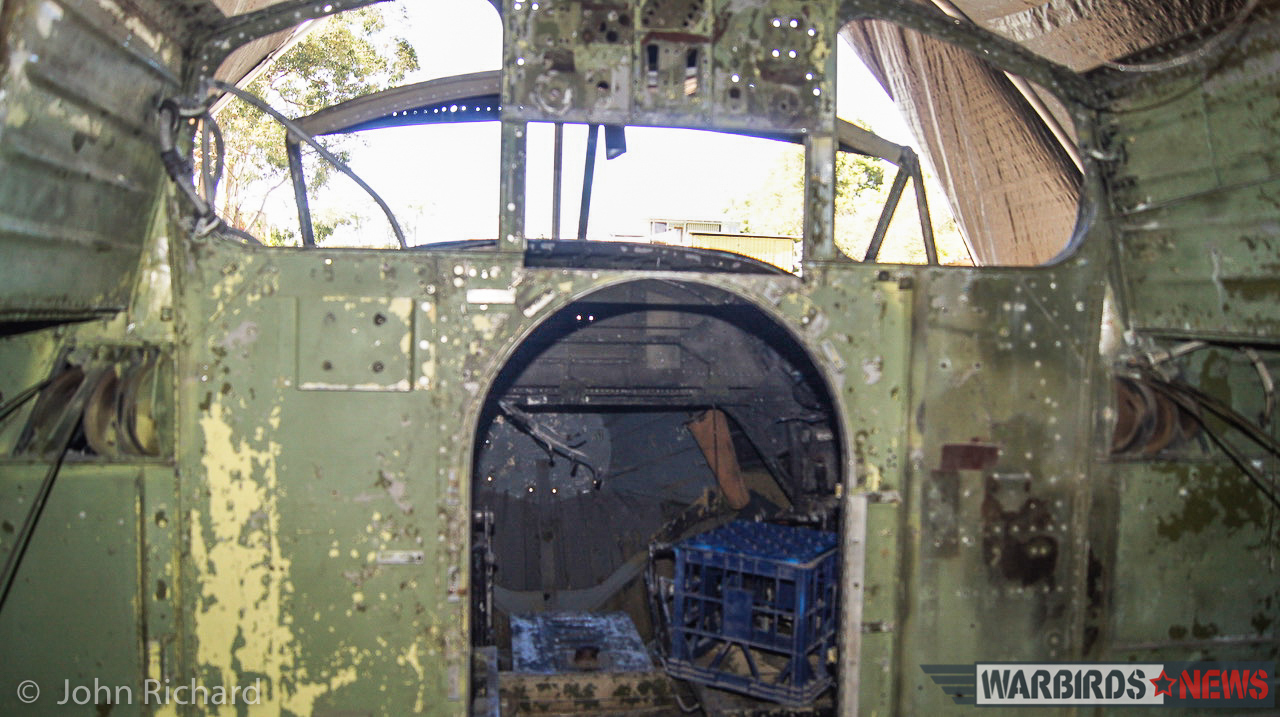
Moving aft a little into the cockpit and the navigator and radio operator’s compartments, Steve Brown and Greg Mewton are removing the last of the internal components, such as the control column and rudder pedal assemblies. Once again, all of these parts will be refurbished and stored until they are needed for reinstallation once the interior structural restoration is complete. The restoration team has also stripped out most of the post-war mods, including wiring and electrical equipment, as part of a project to return the aircraft to its original configuration. It is still our intention to eventually end up with a showpiece cockpit and first compartment looking as original as possible. Steve is also continually searching for the various components we do not have. They are all out there somewhere, but we just need to locate them at the right price! The team will pressure wash a section of the first compartment shortly to determine how much of the old paint comes off and how much remains. This will hopefully be the procedure to prepare all interior areas for application of epoxy primer, followed by a layer of olive green top coat. All going well, largely due to Warren Easterbrook’s good work, the project has a paint supply sponsor on board which will be a huge boost.
REAR FUSELAGE WORK
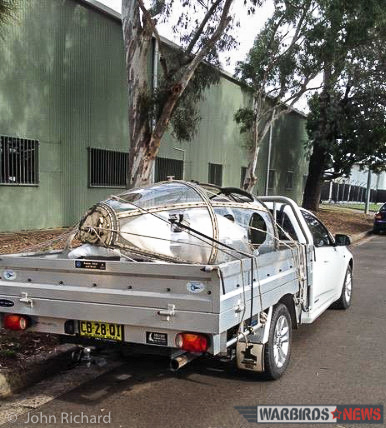
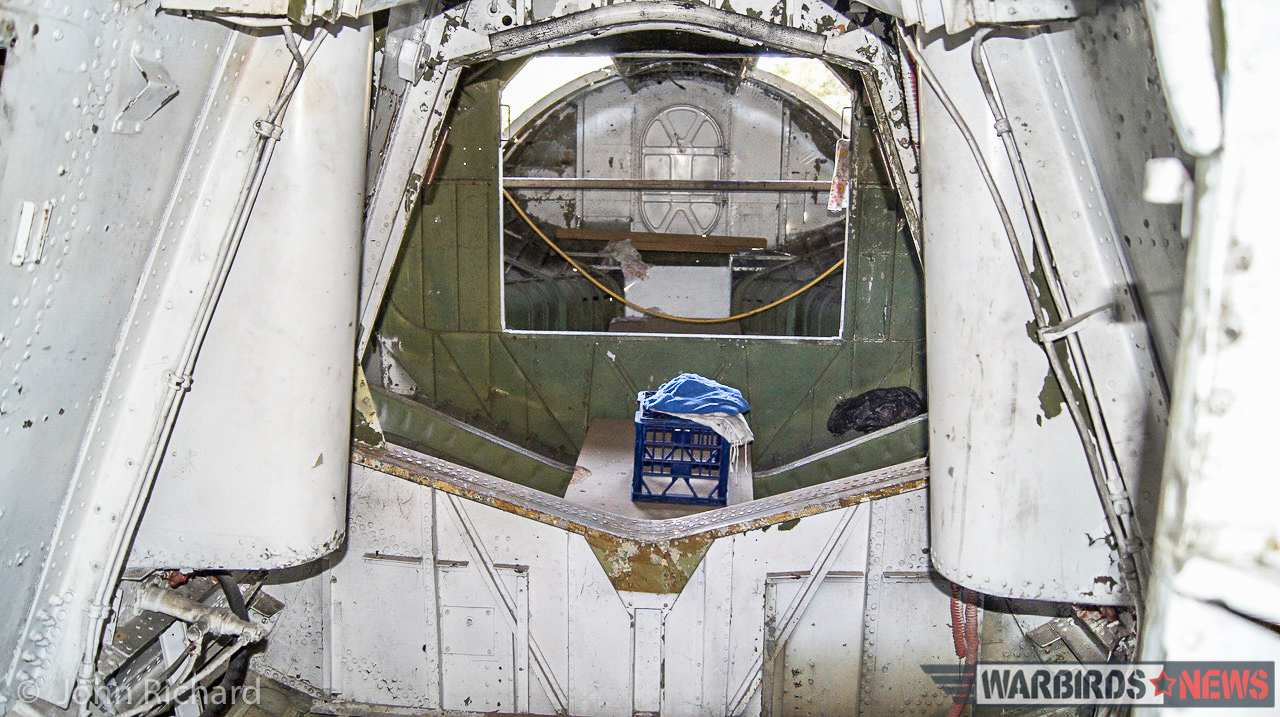
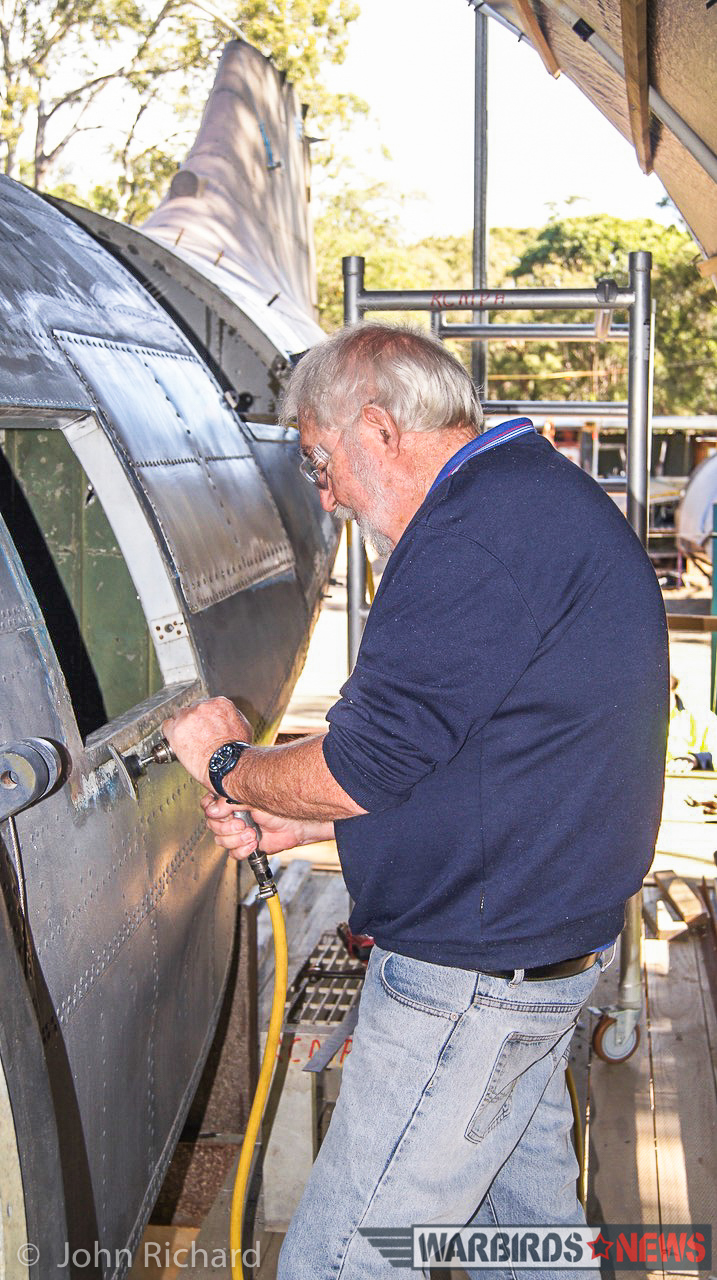
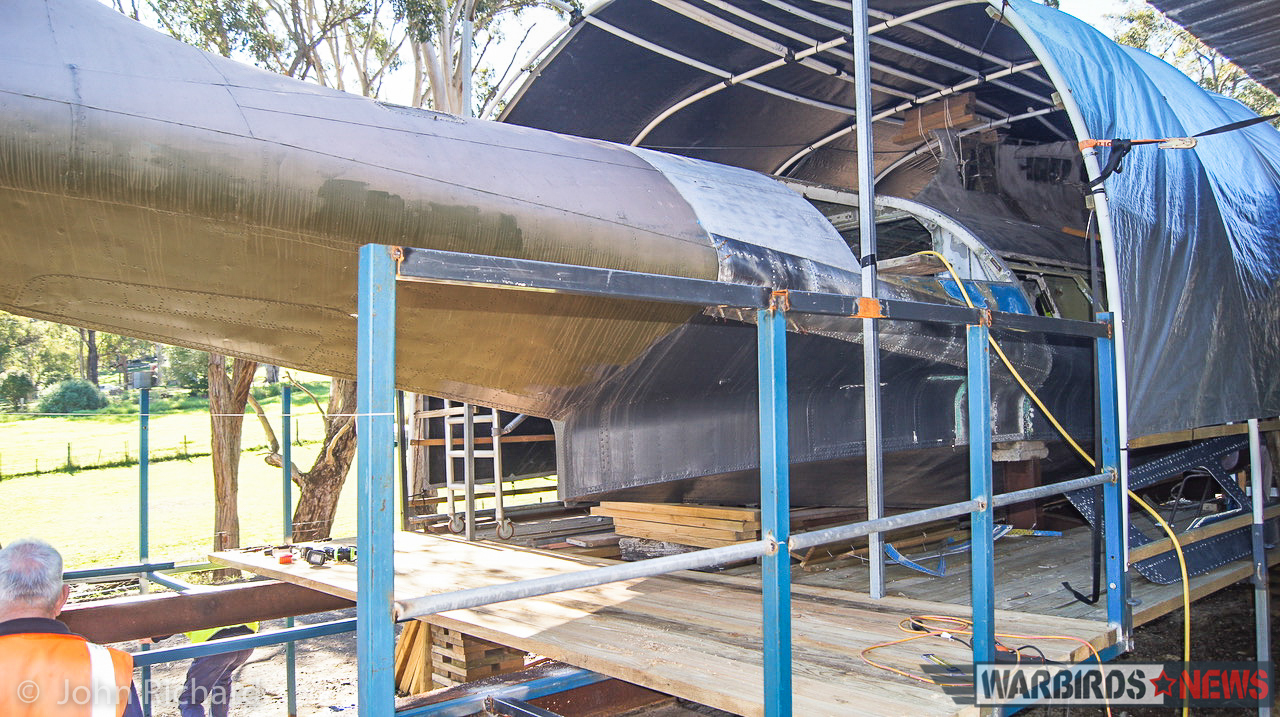
A lot is happening in the rear section around the blister window compartment. Brian is working on the removal of all the post-war windows and associated sheet metal while Ray, Warren and Andrew are replacing corroded skin in the areas where the observation/gunners blisters will be eventually fitted once we have replicated them. The repaired fuselage sections in this area are a credit to those responsible, and we hope the remainder of the aircraft can be finished to the same standard. We have acquired on loan, from the Catalina Flying Memorial, a set of blister windows to use as templates for the manufacture of new assemblies. We have also made contact with people experienced at working with and forming the compound-curved glazing panels for the blisters. They will work on the cockpit windows too.
While working on a shoestring budget, the team has made a conscious decision to use quality aluminium for at least the fuselage repairs. While most flying aircraft of this era would use 2024-T3 aluminum alloy structural sheeting, 6061-T6 is totally appropriate for a static aircraft, is straightforward to work with, and the finished product looks much better than a cheaper grade. We are working on obtaining a supply of 6061 aluminum sheet for at least a reduced price.
Thanks must go to Hilton Jones for his efforts in sourcing some excellent tools for the project, plus the donation of a sheet metal sheer. The rivet removal gear we now have is making the tedious task of drilling out old rivets so much easier too.
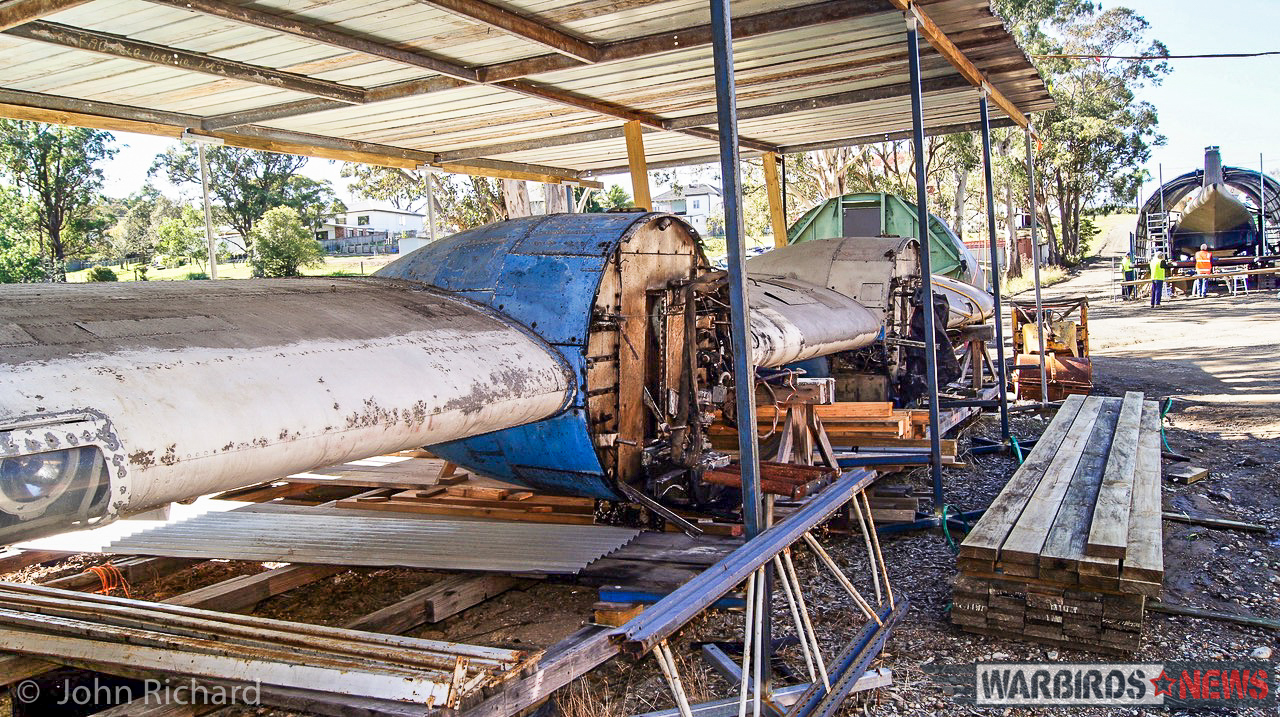
WINGS
Volunteers have been cleaning the wing centre section at the storage site prior to restoration work being undertaken.
TAIL SECTION
The tail section and evalators have been undergoing reskinning and sheet metal work at RAAF Edinburgh by RAAF volunteers who are highly motivated to help complete the project.
ENGINES
A port R-1830 engine is still in South Australia at RAAF Edinburgh undergoing restoration by members of the RAAF who are keen to see their WWII forebears legacy preserved. The RCMPA recently sourced a genuine P &W R-1830 engine work stand which they have now refurbished. The workstand was on display at last October’s Catalina Festival, complete with a partially assembled Twin Wasp mounted upon it.
WORK STANDS
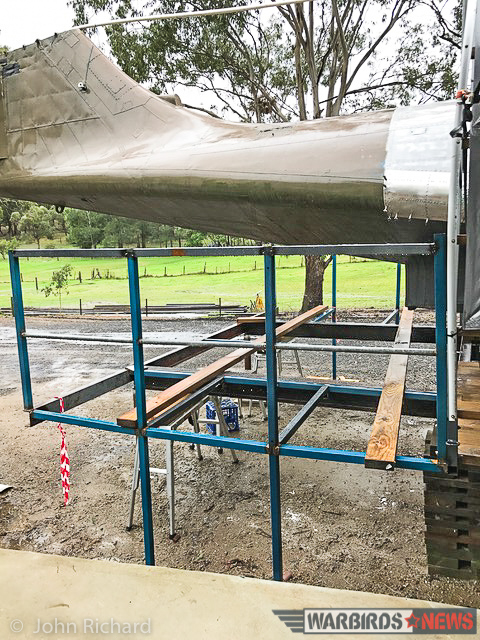
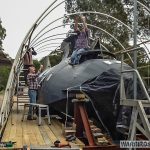
Even though the project is reasonably equipped with scaffolding and work platforms, Peter, Jim and Terry are raising the rear work deck by another three metres to allow safe access to the higher sections aft of the blister positions. Ray and his team have been temporarily moved to work on other parts of the Catalina until the new scaffolding is ready. Assembly of the steel frame, including safety rails, is well underway. A huge ‘Thank You’ must go to Chris from Nova Timbers, who has come to the fore once again by providing the lumber for the work deck.
RCMPA
The project depends entirely on volunteers to function, and is keen to welcome anyone willing to help get the aircraft restored. Over the last year, plans to create a permanent museum near the lake’s shores have progressed in various areas. The museum project is open to donations which can be made via bank account – The Greater Bank BSB: 637 000 Account # 720 223 155. Any support of the Catalina Memorial Museum project will be greatly appreciated and help keep the history of Rathmines and WWII alive for future generations. The RCMPA is a charitable organisation registered with the Australian Charities and Not-for-profits Commission. ABN 38 215 922 527.
In the meantime, discussions are taking place regarding the feasibility of relocating into a temporary facility to house the project until completion at Rathmines base itself. This would have some benefits, as this proposal would bring better public exposure and access. Pending a decision, the project and volunteers will remain at the current location.
And finally, the project still needs a few items to help complete the restoration, including a pilot’s seat, a seat for the engineer’s position in the pylon and corrugated walkway components for the rear hull. Any help sourcing these for donation would be greatly appreciated!
More information on the Rathmines Catalina Memorial Park Association Inc can be found at http://rathmines-catalina.com





 Vintage Aviation News
Hello , my name Eduardo (Eddie) and did work at INC for some years were had repaired some instruments for Catalina aircraft with great satisfaction.Control Wheels, Servo for Rudder… etc. Retired now.
I loved it.
Regards Eduardo Guzman.
My next door neighbour in Casino, NSW was a turret gunner in WW2! On PBY-5 Catalina fly.boats, trained in Canada, would stay up for 22 hrs. on missions, great to see your appreciation for an old reliable war bird. oh Richard De Looze his name, father a musician Prof. B.B DeLooze of Pratt St. Casino. Have his wings AG plus.