


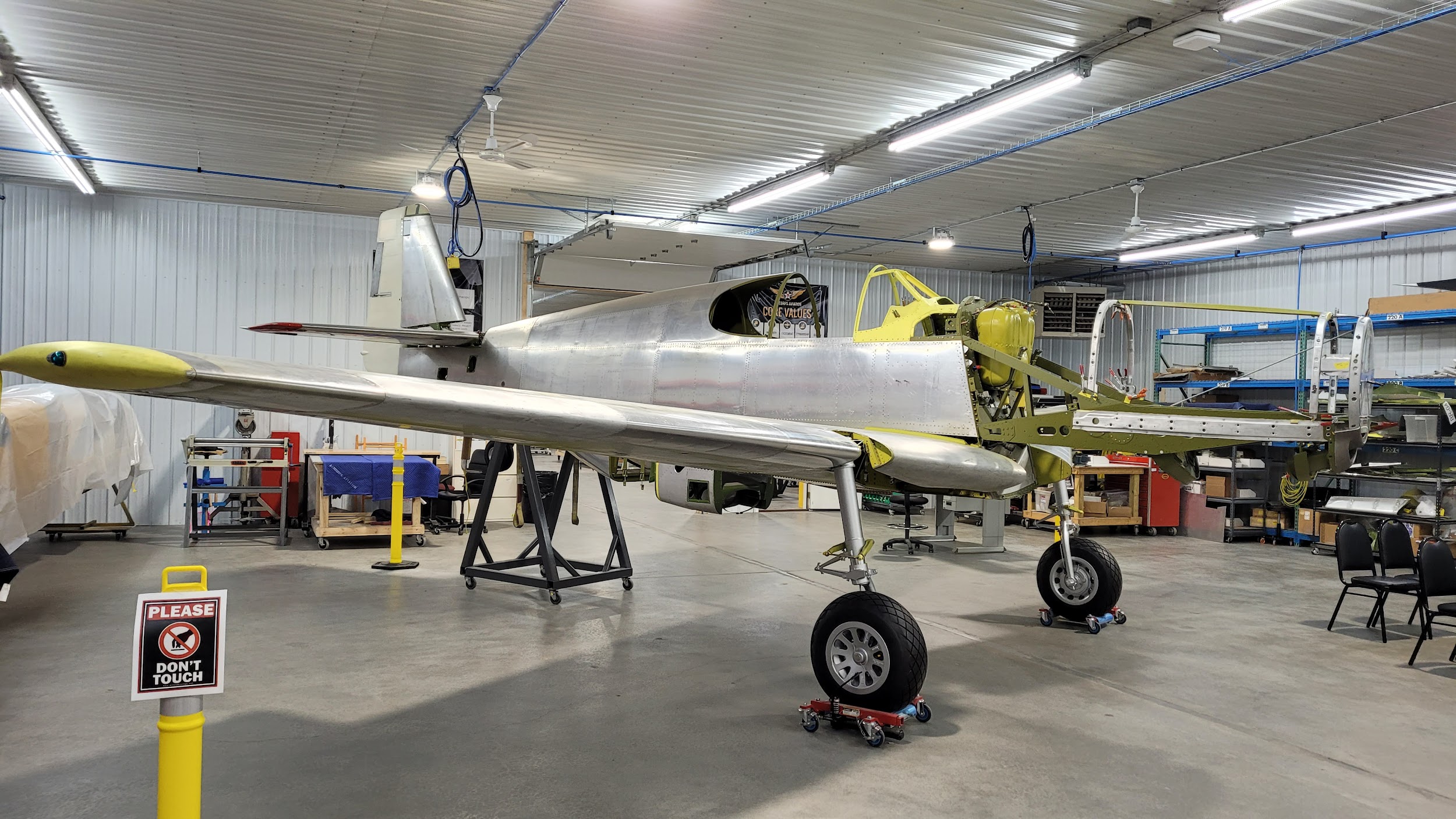

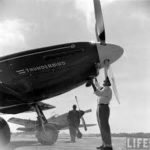
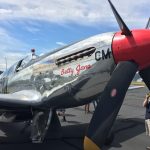
Over the past several years, aviation historian Chuck Cravens has brought us regular updates regarding ongoing restoration projects at AirCorps Aviation in Bemidji, Minnesota. Many of the aircraft involved have been for the fabulous Dakota Territory Air Museum, and such is the case for this particular story about the resurrection of a long-lost, legendary racing Mustang which dates to the post-war Cleveland National Air Races. The original constructors of this race plane built the airframe up from the components of three different Mustangs, but did not record their serial numbers. They listed it as a P-51C with the FAA, with the registration being N5528N. During her racing career, the Mustang bore the names Thunderbird, and later, Mr.Alex, so with the lack of a definitive airframe serial number, we will refer to it henceforth simply as Thunderbird/Mr.Alex. This current episode is Craven’s fourth installment of that aircraft’s remarkable story and its journey back to flight…
Thunderbird Owner, Jimmy Stewart’s Distinguished Military Career
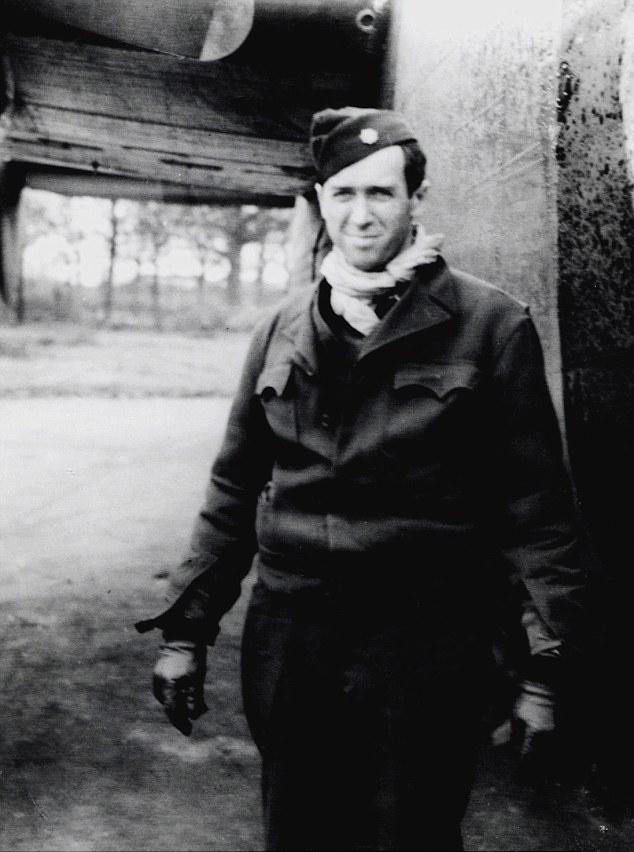
Thunderbird’s first civilian owner, James Maitland Stewart (May 20, 1908 – July 2, 1997) is, of course, most famous for his career as an Oscar-winning Hollywood film star, who featured – often in leading roles – in some 80 motion pictures between 1934 and 1991. Bart Barnes, a staff writer at the Washington Post, perhaps best characterized Jimmy Stewart in an obituary following Stewart’s death, noting that “Stewart was the cinematic epitome of common sense and decency.”1
In addition to his acting success, James “Jimmy” Stewart also had a distinguished military career, serving in America’s armed forces for 27 years.
As a young man, Stewart had dreamed of attending the United States Naval Academy to become a naval aviator, but his father’s wishes prevailed, seeing him enroll at Princeton University instead. While at Princeton, Stewart’s interest in acting rekindled after making a new friend, the future film star, Henry Fonda; both men participated in an intercollegiate drama team.2 Although Fonda wasn’t a Princeton student, both men shared an interest in the theater as budding actors, and they also happened to share an interest in model aircraft.
1 Bart Barnes Film Hero Jimmy Stewart Dies at 89, Washington Post, Thursday, July 3, 1997; Page A01
2 McGowan, Sam, War Hero, Jimmy Stewart, WWII History July 2012, https://warfarehistorynetwork.com/article/jimmy-stewarts-rise-from-private-to-colonel/
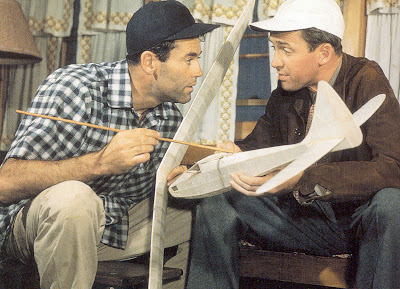
After college, Jimmy and Henry headed to Hollywood, California where they shared an apartment as they sought to make their mark in cinema. Theirs was a lifelong friendship despite having significantly different political views. Jimmy was always a strong supporter of the Republican party, while Fonda was a Democrat. Stewart once said: “There were certain subjects we just didn’t talk about.”
Shortly after his arrival in California, Jimmy began taking flying lessons; by early 1941, he owned a Stinson 105, had recorded 300 flying hours, and held a commercial pilot rating in addition to his private pilot’s license.
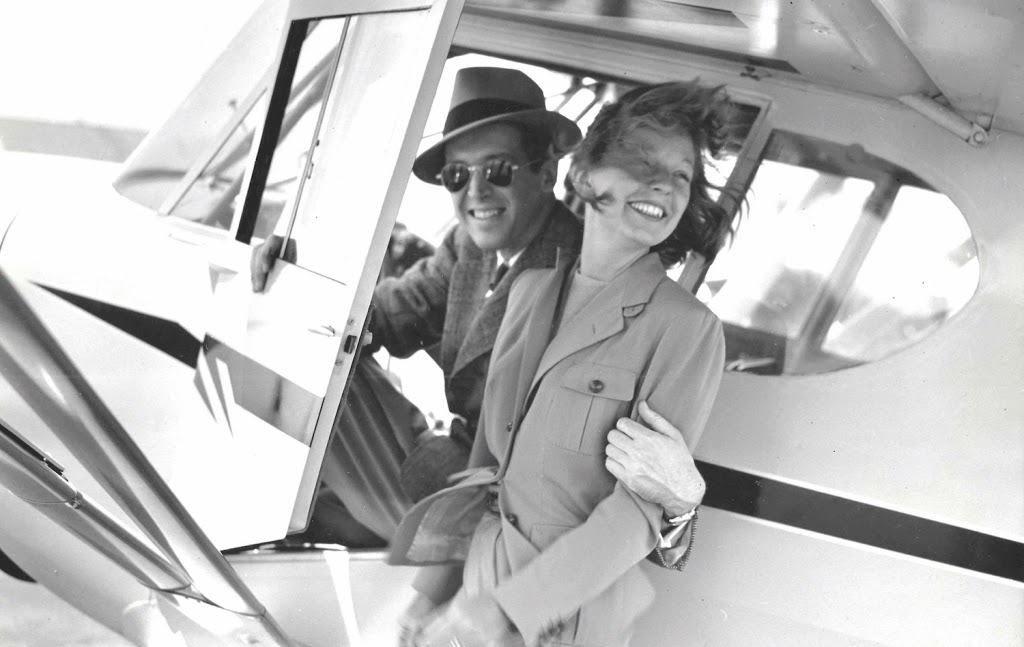
As it became clearer that the United States would likely become involved in World War II, Stewart joined other stars such as Hoagy Carmichael, Cary Grant, Henry Fonda, Robert Taylor, and Margaret Sullivan in publicly supporting the construction of a pilot training airfield. Hollywood agent and producer, Leland Hayward, former Air Service pilot John H. “Jack” Connelly, and Life magazine photographer, John Swop, helped initiate this project. Leland, Jack, and John were convinced that a pilot training facility would be critical to America’s interests should the nation become actively involved in WWII.
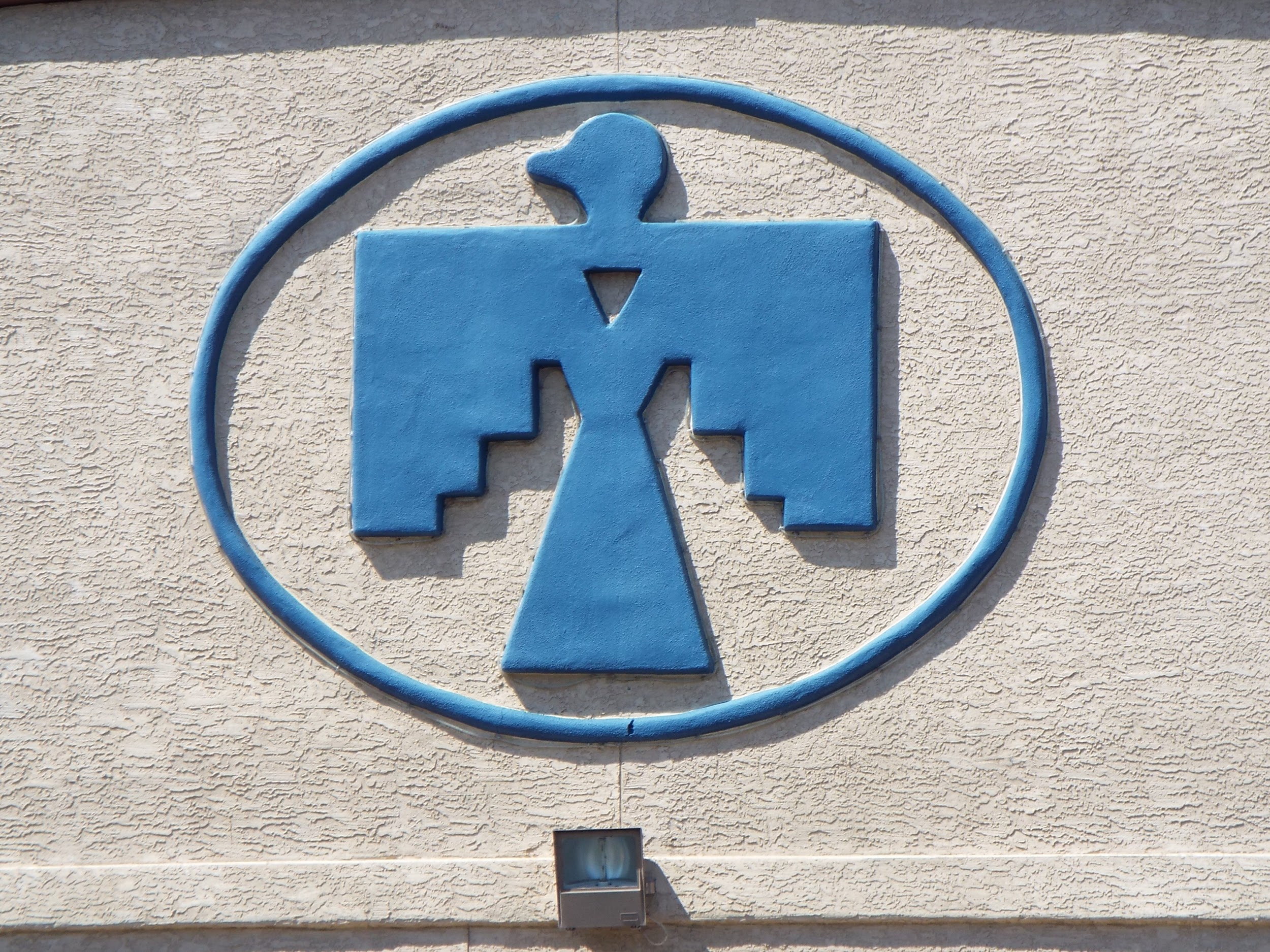
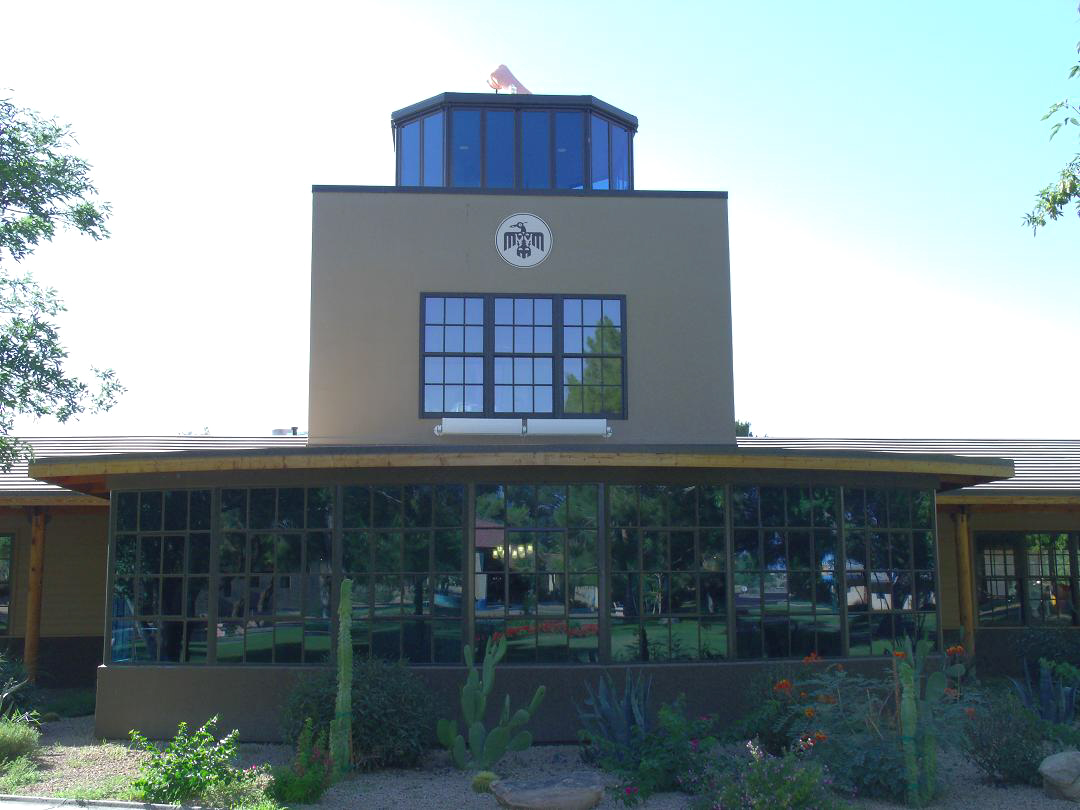
The new training field was constructed about 25 miles from Phoenix, Arizona. The buildings, landscaping, and runways were arranged to approximate a mythical Anasazi Thunderbird when seen from the air, with the control tower forming the bird’s head. The project began in 1939, with the construction of the pilot training facility beginning on January 2, 1941. It tooka remarkably short period of 3 months to complete the training facility! The new facility’s name, Thunderbird Field, undoubtedly influenced Stewart and DeBona’s choice of name for their P-51 racer after the war.
Eventually, the U.S. Army Air Forces absorbed Thunderbird Field into their network of training establishments; the site helped produce more than 10,000 pilots during World War II.3
Interestingly, much of the film work for the 1942 motion picture Thunder Birds: Soldiers of the Air took place at Thunderbird Field. This was a typical, wartime film to motivate enlistment; it was full of cliches and schmaltz, not to mention inaccuracies and inconsistencies – for instance, one shot shows a Stearman biplane taking, but once it is in the air, it has somehow magically transitioned into a Boeing P-12! Even so, this color film does at least give viewers an idea for what Thunderbird Field looked like during its heyday.
Prior to America’s entry into WWII, Stewart found work in numerous films between 1934 and 1941. These include his role as the lead in Frank Capra’s marvelous film, Mr. Smith Goes to Washington (1939), which earned him an Academy Award nomination, and George Cukor’s hilarious Philadelphia Story (1940), for which Stewart actually won the Oscar.4 His firmly established fame as an actor later became a point of contention when the Army initially assigned him to non-combat duties.
Just before the United States entered World War II, Stewart became the first major American movie star to enlist in the United States Army. However, being 32, he was too old to qualify for aviation cadet training, his desired first choice.5
In 1941, after winning the Academy Award for Best Actor with his performance in The Philadelphia Story, Stewart’s reported income from his movie roles was a then-substantial $12,000 a month. The running joke in Hollywood at the time, however, was that his salary as an Army private was just $21 a month – effectively a (huge) pay cut of $11,979!6 While some in the movie industry may have scoffed at this change in pay, Jimmy Stewart’s willingness to forgo his movie star income for that of a private demonstrates the significant sense of duty he felt towards his country.
That Stewart enlisted was no great surprise to his family, however; their military ties dated back to Fergus Moorhead, Jimmy’s 3x great grandfather, who served in the Revolutionary War. Furthermore, his maternal grandfather was a general in the Union Army during the U.S. Civil War, while his father, Alex, served in both the Spanish-American War and World War I.
Oddly enough, when Stewart first tried to enlist in November, 1940, the board rejected him because, at just 138 pounds, his weight fell 5 pounds below the minimum requirement for his 6’3” frame. Three months later, however, Jimmy enlisted successfully and reported for his induction on March 22, 1941. Accounts attribute Stewart’s success in passing the weight requirement to various schemes ranging from having a friend man the scales, to loading up on bananas before the weigh-in; regardless James Maitland Stewart was now a private in the U.S. Army Air Corps.
3 Bart Barnes Film Hero Jimmy Stewart Dies at 89, Washington Post, Thursday, July 3, 1997; Page A01
4 Together We Served website, https://blog.togetherweserved.com/2021/12/01/jimmy-stewart/ accessed 11-23-2022
5 TResch, John Phillips (2005). Americans at war: Society, culture, and the homefront. Detroit: Macmillan Reference. ISBN 002865806X. Retrieved July 15, 2019.
6 Emmanuel Levy, Oscar Actors: Stewart, Jimmy–Making of a Star; Pay Before and After Military Service,https://emanuellevy.com/profile/stewart-jimmy-how-much-he-got-paid-before-and-after-military-service/ accessed 11-29-2022
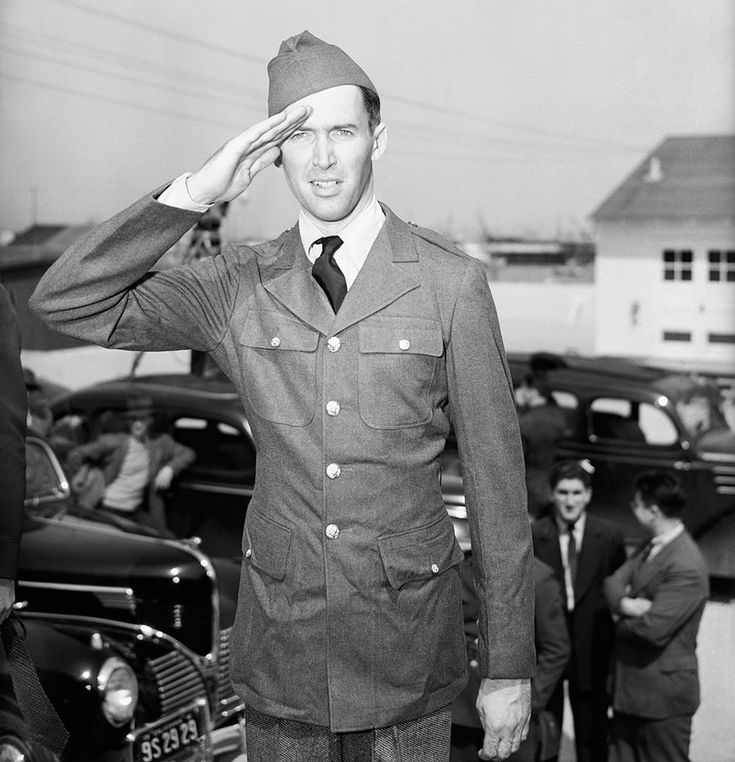
Moffett Field, near San Francisco, California, became Stewart’s first station. As a college graduate, he was eligible to apply for a commission as an officer. During his 9-months at Moffett Field, now-Corporal Stewart completed courses with the goal of obtaining a pilot’s commission, which required 400 logged flying hours. When he arrived at Moffett, Jimmy was 40 hours short in the 200+ hp aircraft required for a second lieutenant’s commission. To rectify that deficiency, he logged flight time in high-performance aircraft at his own expense during weekends.
As Corporal Stewart awaited news of his commission, the infamous attack on Pearl Harbor took place. “A month later he received his commission, and because he had logged over 400 hours as a civilian, he was permitted to take basic flight training at Moffett and received his pilot wings. During the next nine months, he instructed in AT-6, AT-9, and B-17 aircraft, and flew bombardiers in the training school at Albuquerque, N.M.”7
Although Stewart’s first flying assignment was as a flight instructor, the Army was determined to use him as a recruitment tool; there was little doubt that a star of his stature, wearing a USAAF uniform and pilot’s wings, would be an effective inducement to prospective enlistees. While he did participate in some early war publicity tours in Washington D.C., Jimmy wanted to contribute to the war effort as a combat pilot rather than as a foil for recruitment purposes. With that goal in mind, Lieutenant Stewart enrolled in multi-engine and instrument training upon his return to Moffett Field.
When he completed his multi-engine rating, Stewart moved to Mather Field for multi-engine instructor pilot training. Now a qualified multi-engine instructor, Stewart then went to Kirkland Field near Albuquerque, New Mexico, where he flew Beechcraft AT-11s on bombardier cadet training flights. Later, at Mather Field again, he served as a four-engine instructor in both B-17 and B-24 heavy bombers. Much to his dismay, Stewart remained Stateside for almost two years, working as a flight instructor.
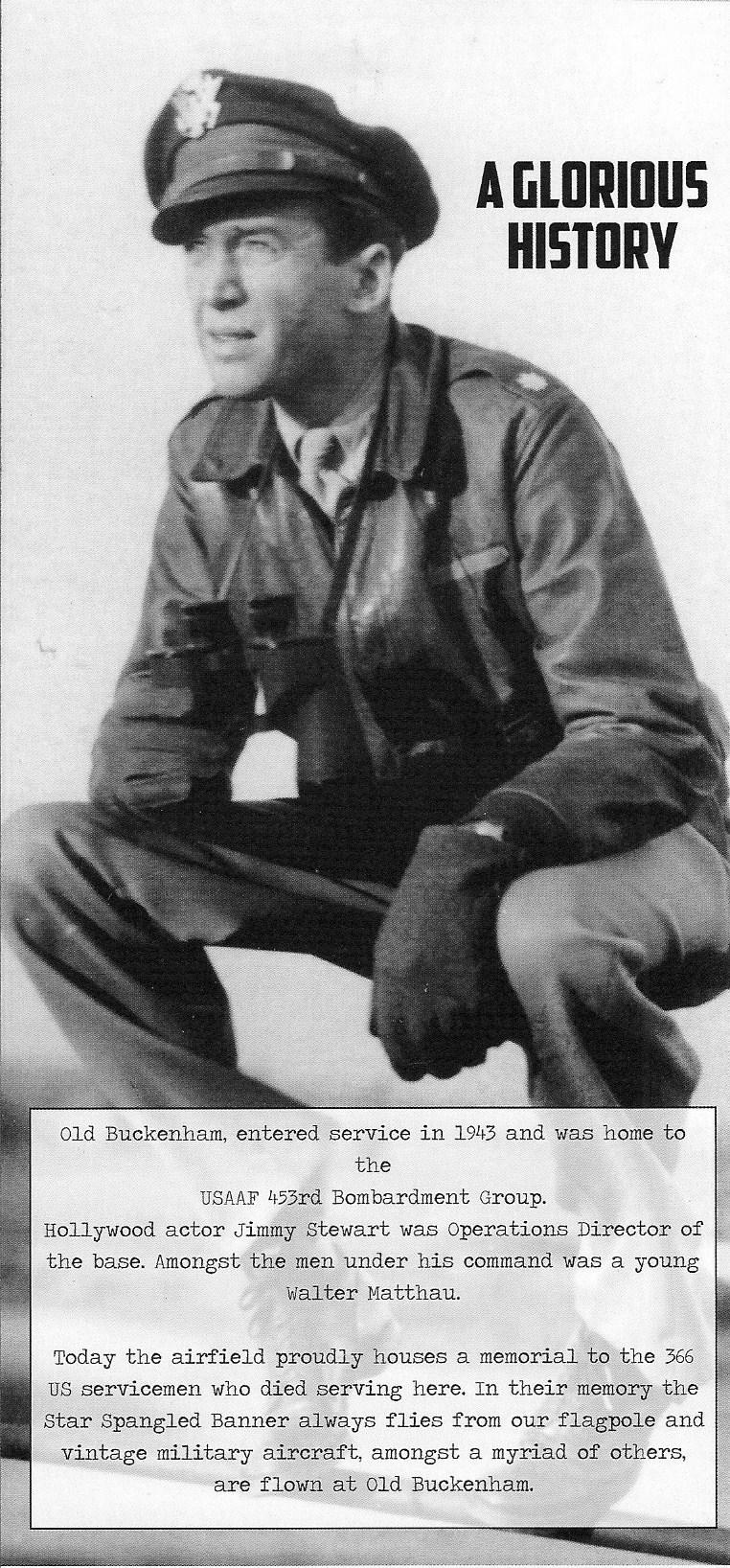
In the fall of 1943, Stewart – now a captain – finally received a combat assignment; he was the new Operations Officer for the 703rd Bombardment Squadron, 445th Bombardment Group, then-destined for Britain.
7 National Museum of the United States Air Force, https://www.nationalmuseum.af.mil/Visit/Museum-Exhibits/Fact-Sheets/Display/Article/196679/brig-gen-james-m-stewart/ accessed 11-23/2022
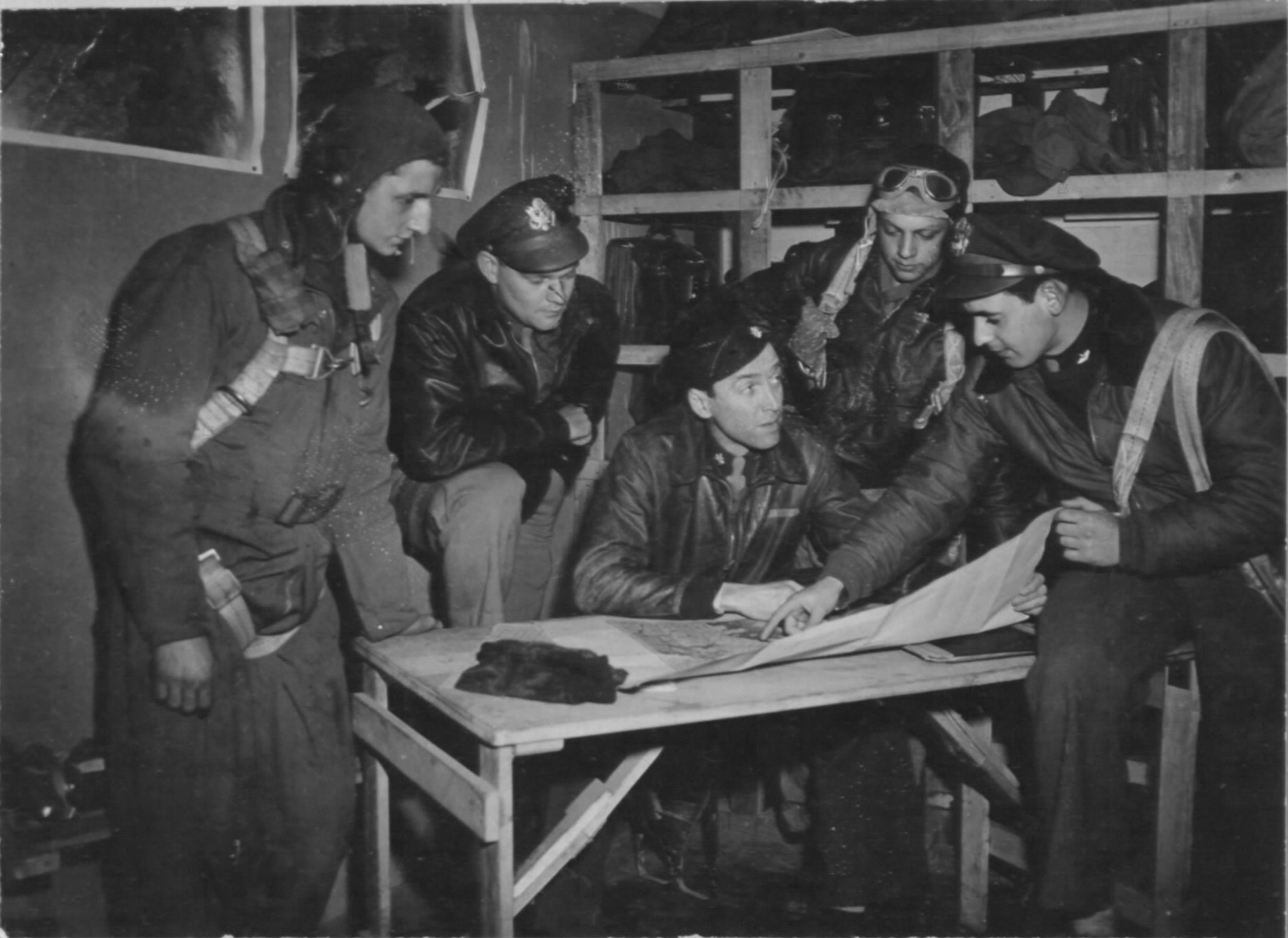
Stewart soon began flying combat missions. On March 31, 1944, he became Operations Officer for the 453rd BG and, subsequently, Chief of Staff for the 2nd Combat Wing, 2nd Air Division of the 8th Air Force.8
8 National Museum of the United States Air Force, https://www.nationalmuseum.af.mil/Visit/Museum-Exhibits/Fact-Sheets/Display/Article/196679/brig-gen-james-m-stewart/ accessed 11-23/2022

Stewart ended WWII as a colonel in the U.S. Army Air Forces, fully decorated as the result of the 20 combat missions he flew over enemy territory as leader of a B-24 squadron. Among the medals he received were two Distinguished Flying Crosses and a French Croix de Guerre.
In February 1944, Stewart had perhaps his closest call of the war when, on a nine-hour, round trip bombing mission to Furth in Germany, Jimmy’s B-24 encountered very accurate, radar-directed enemy antiaircraft fire. After the bombers hit their target, a flak shell smashed into the belly of Stewart’s Liberator, directly behind the nose wheel. Despite this significant damage, the Stewart and his crew managed to nurse their bomber home safely, although the fuselage cracked open in front of the wing and buckled upon landing. Commenting on his crew’s luck escape, Stewart mused to a bystander while looking at the wreck, “Sergeant, somebody sure could get hurt in one of those damned things.”9
9 Richard Hayes, Mr. Stewart Goes to War, https://www.historynet.com/mr-stewart-goes-to-war/accessed 12/1/2022
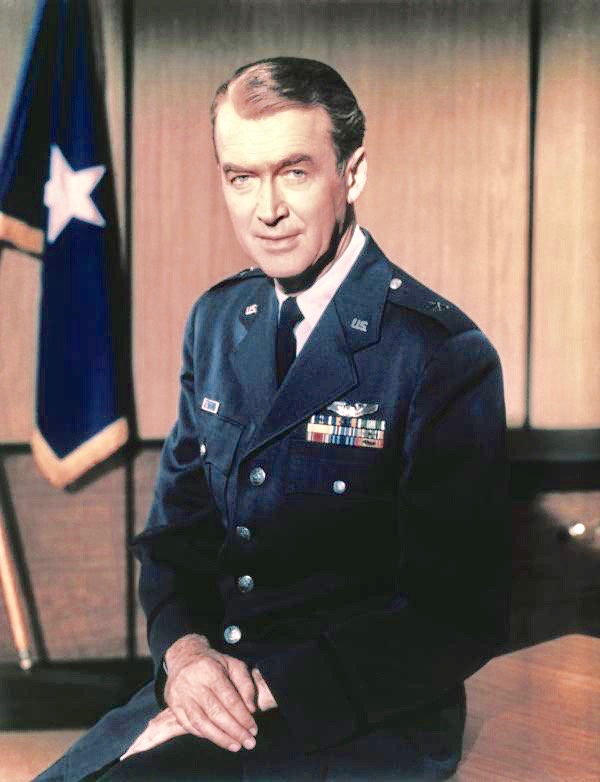
Stewart continued his military career after WWII in the USAF Reserve, achieving the rank of Brigadier General on July 23, 1959.
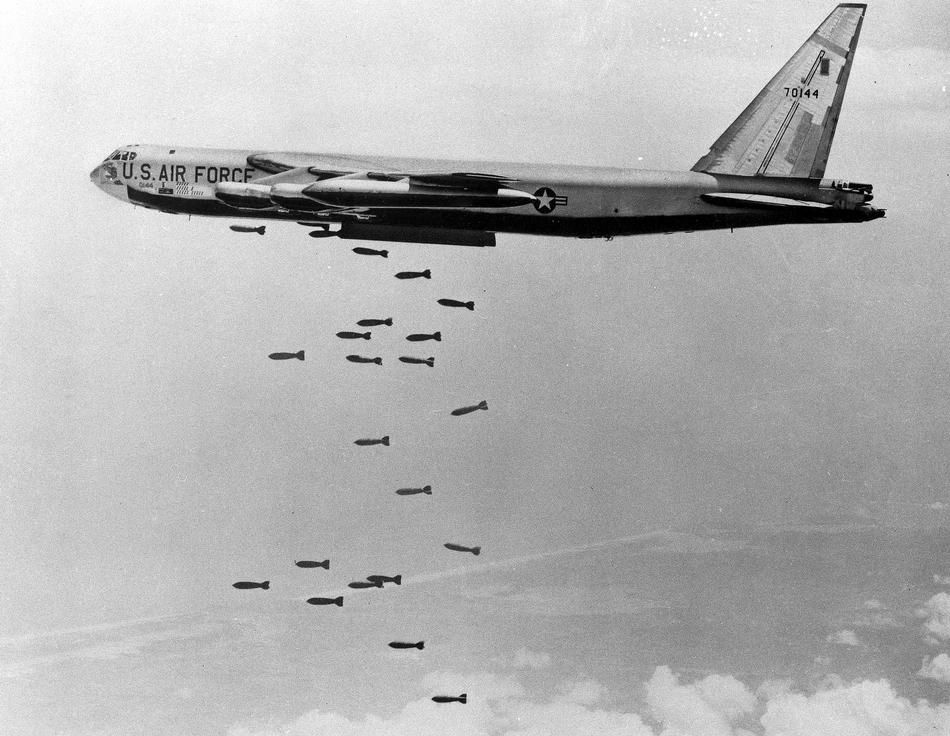
On February 20, 1966, Brigadier General James M. Stewart, United States Air Force Reserve, flew the last combat mission of his military career, a 12 hour, 50 minutes “Arc Light” bombing mission over Vietnam, aboard Boeing B-52F-65-BW Stratofortress 57-0149 (call sign GREEN TWO) of the 736th Bombardment Squadron, 454th Bombardment Wing. It was the number two aircraft in a 30-airplane bomber stream.10
10 This Day in Aviation website https://www.thisdayinaviation.com/tag/736th-bombardment-squadron-heavy/
Thunderbird: Restoration Work
Fuselage
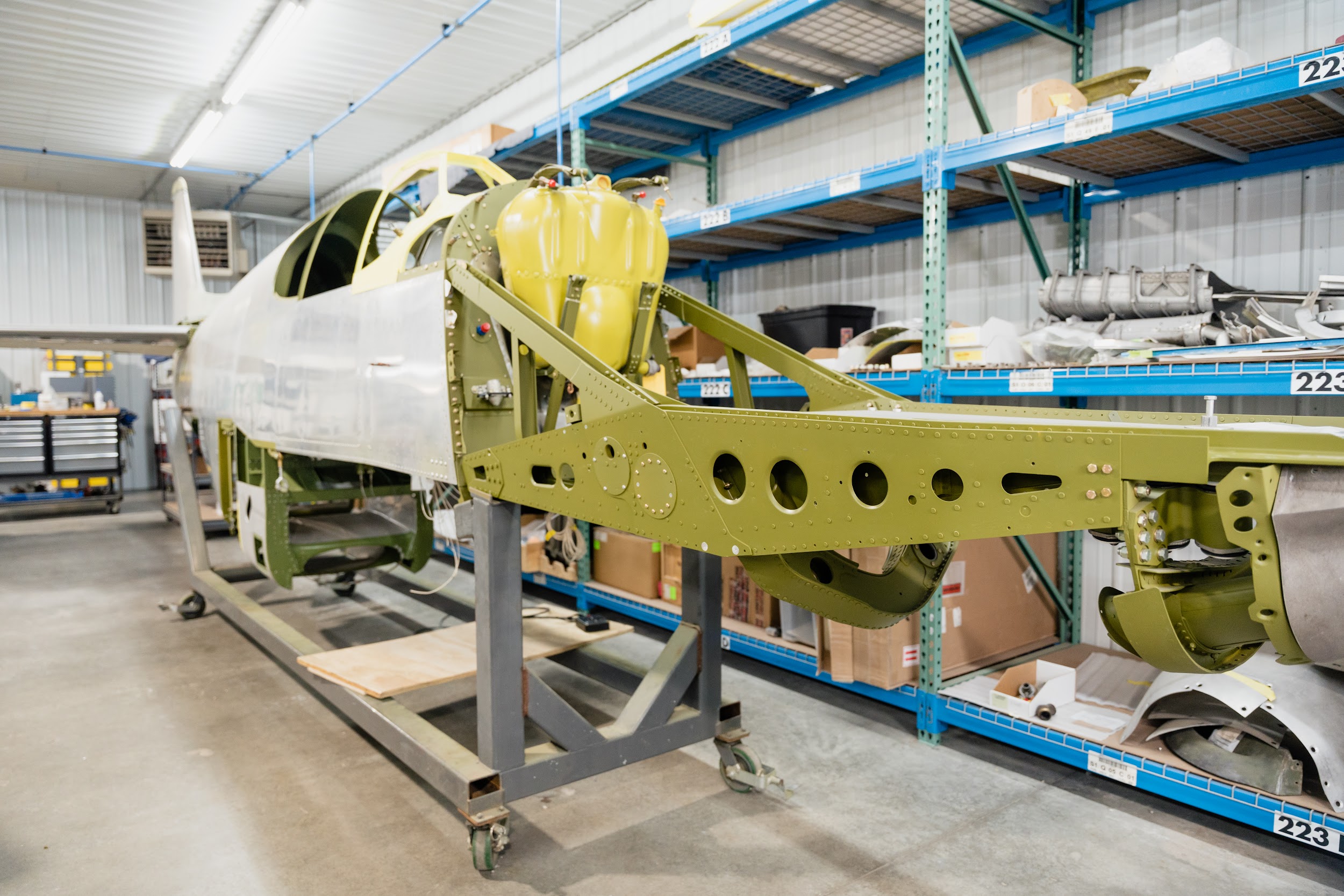
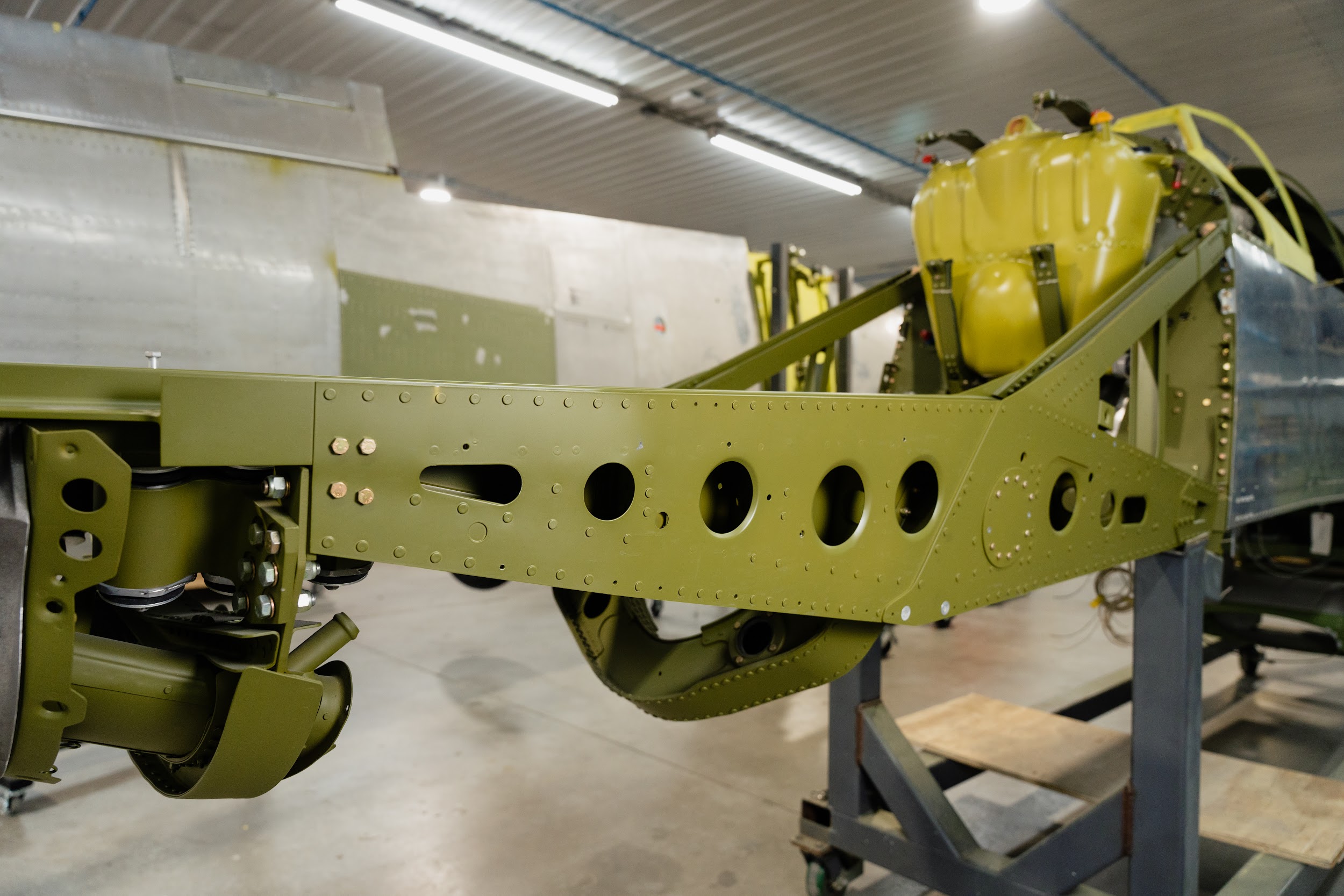
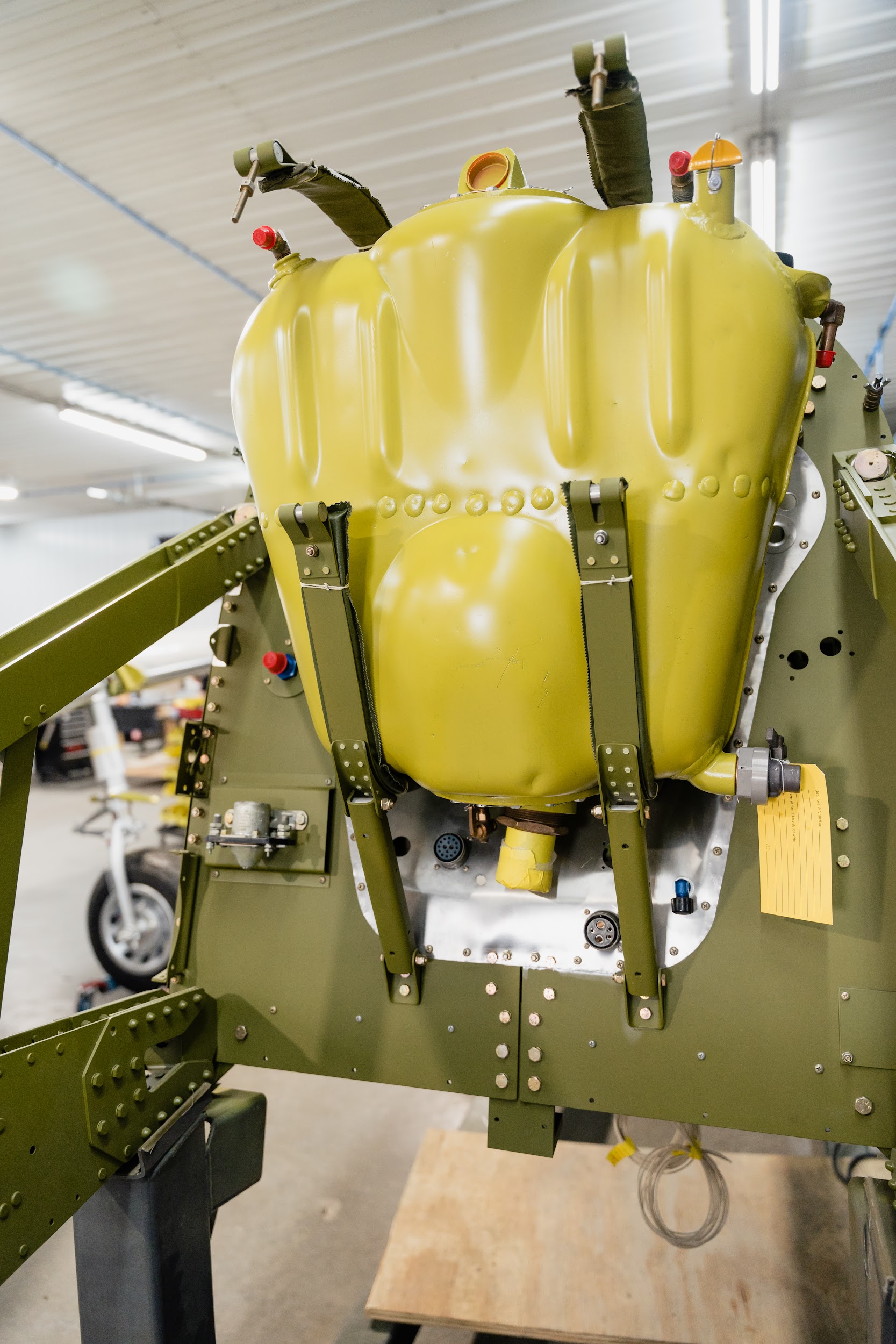
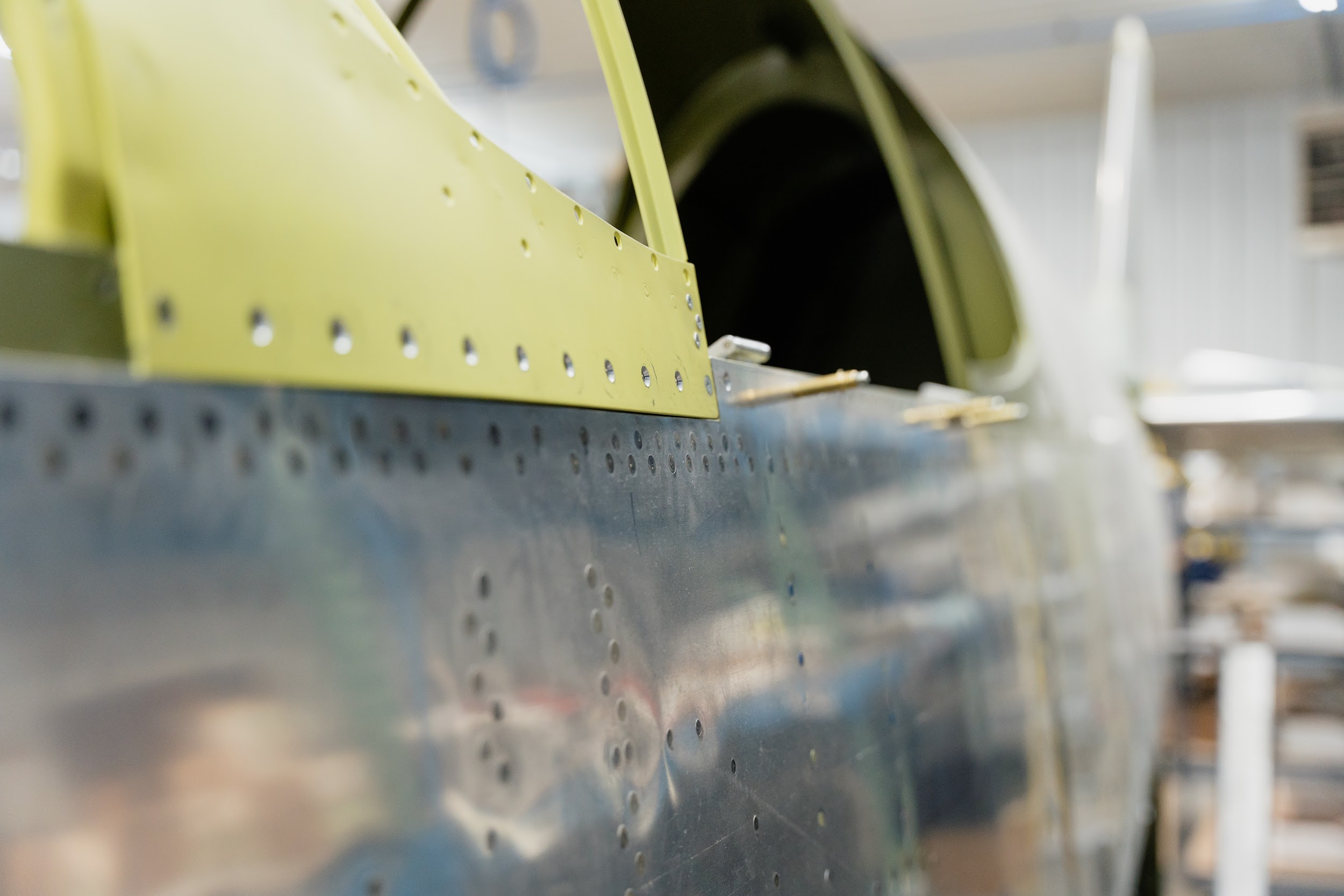
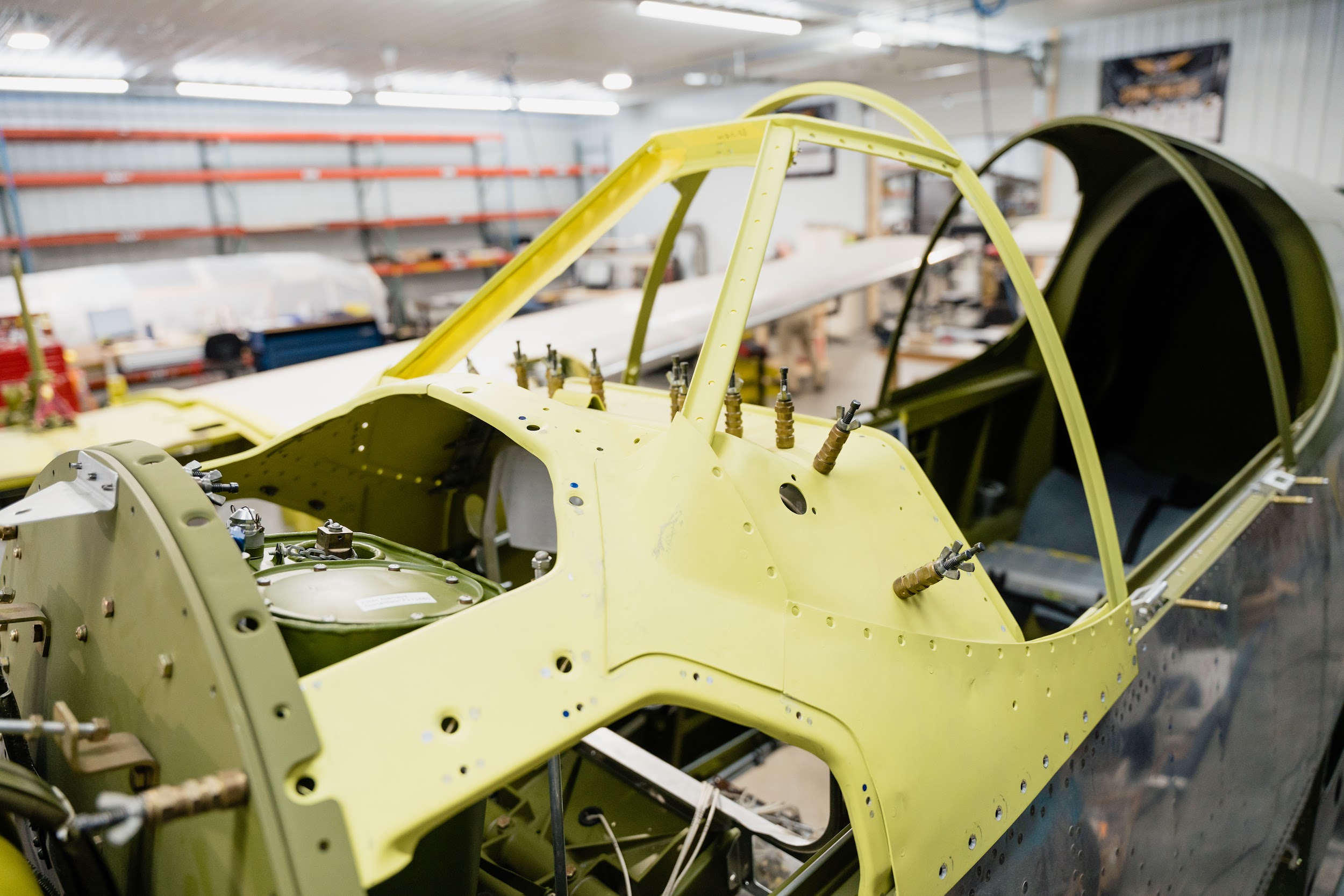
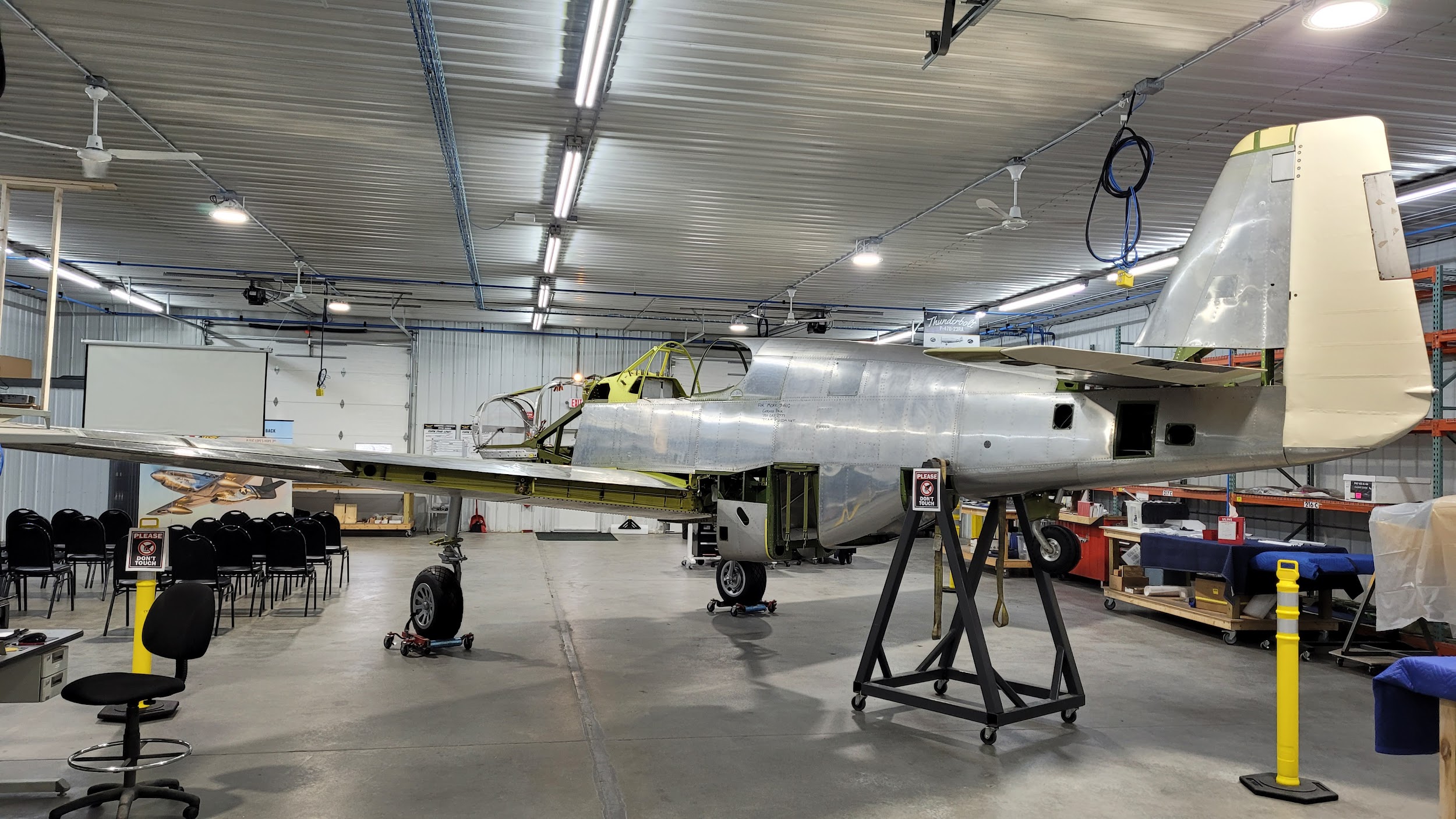
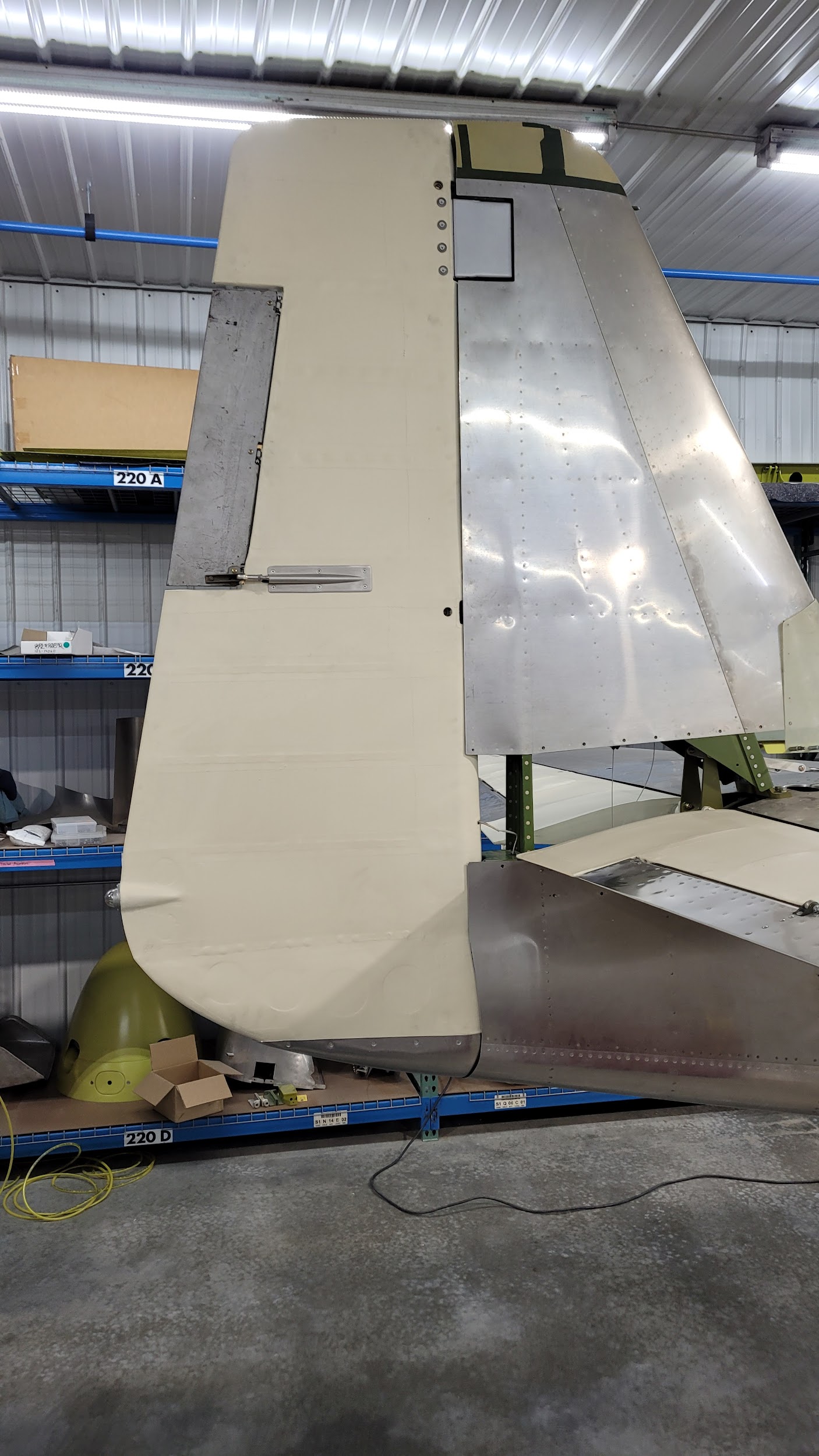
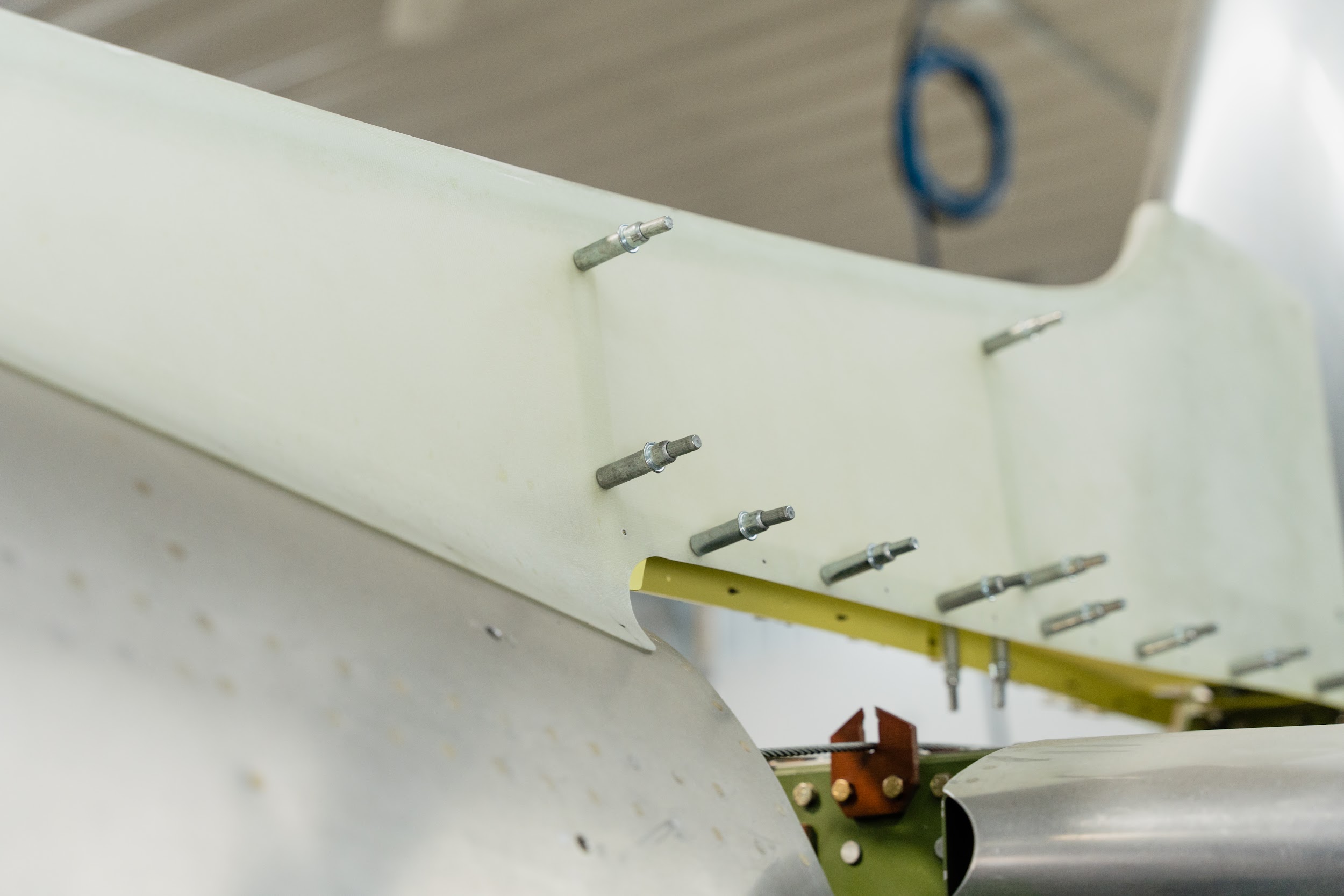
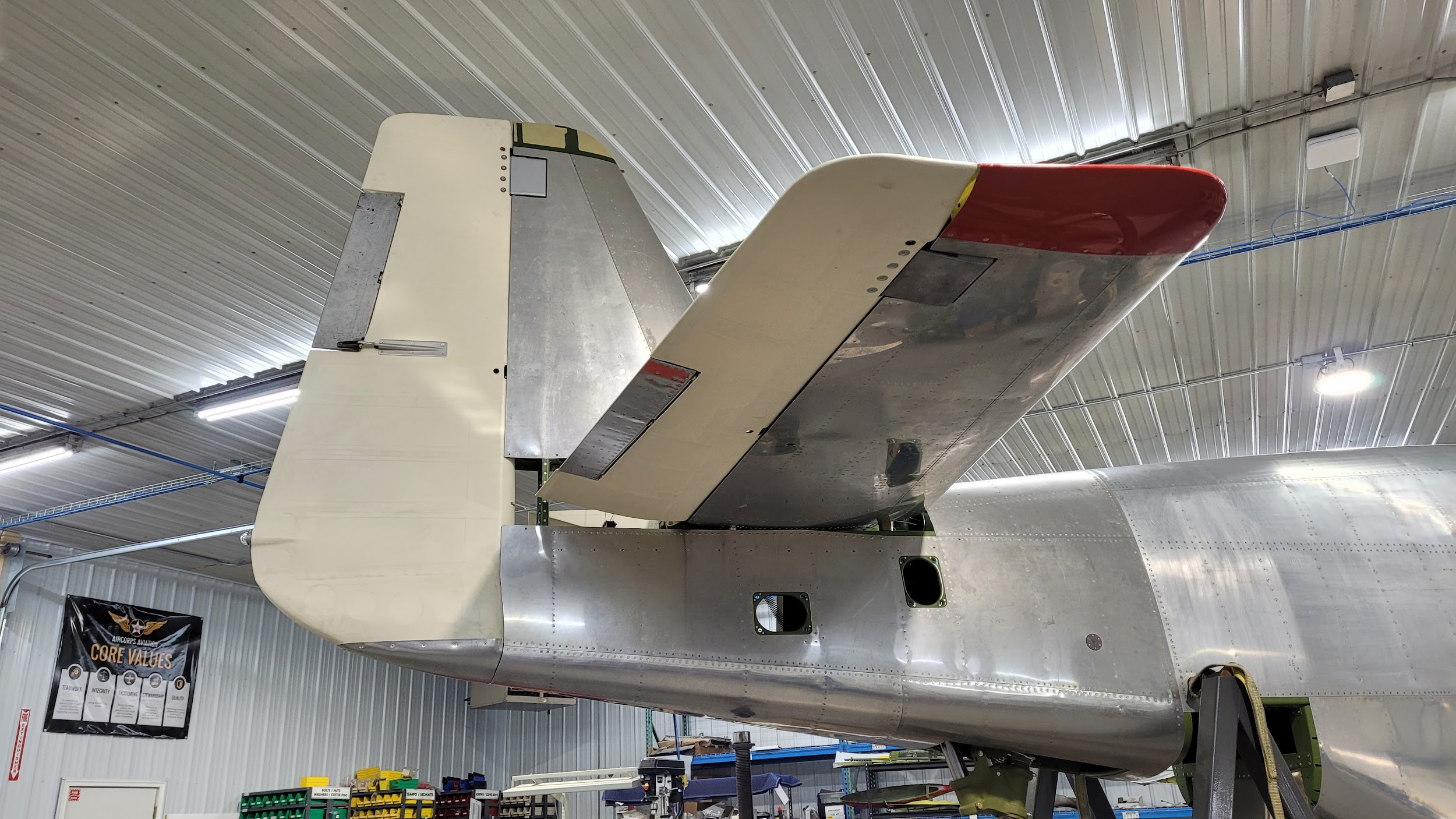
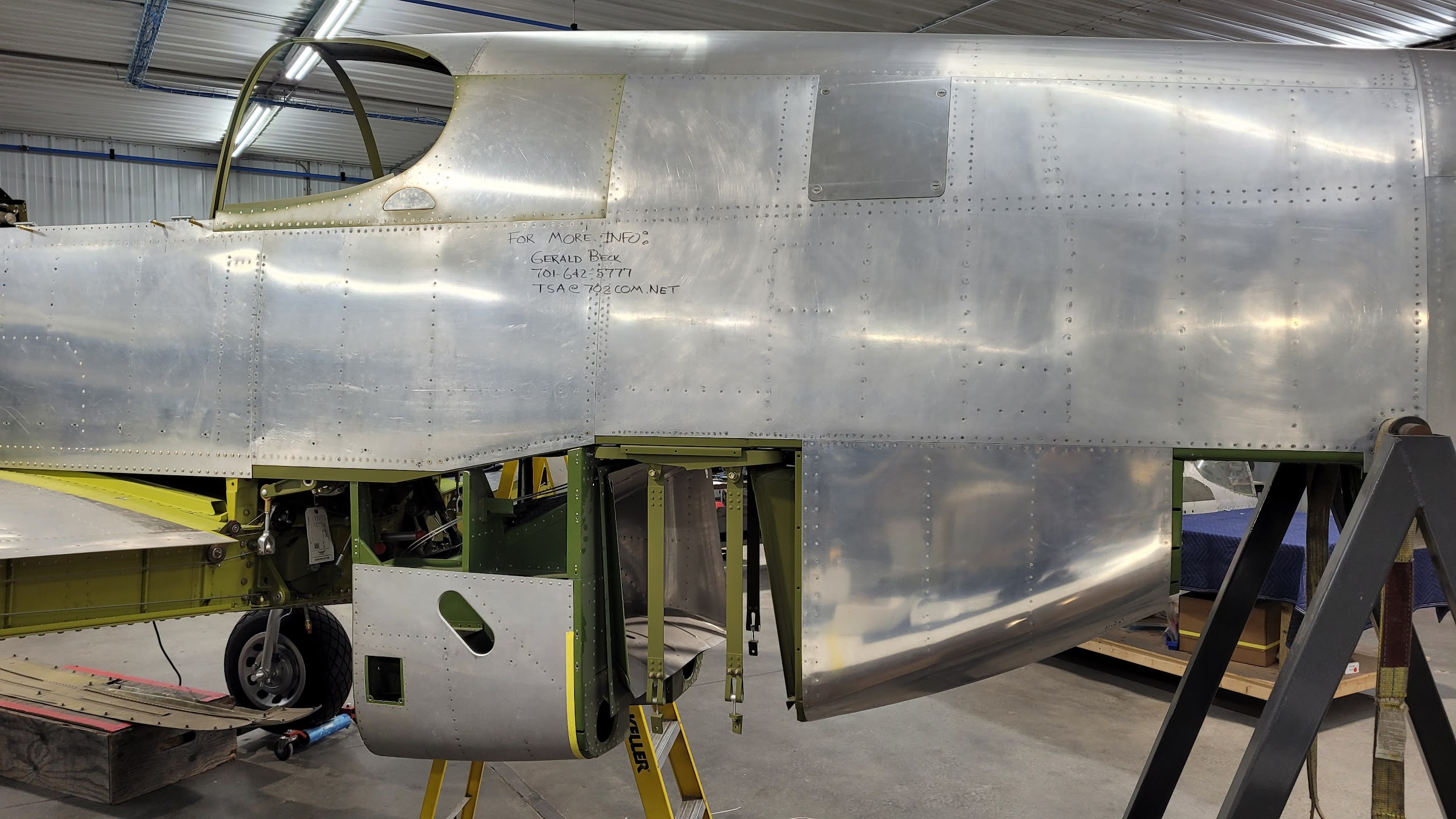
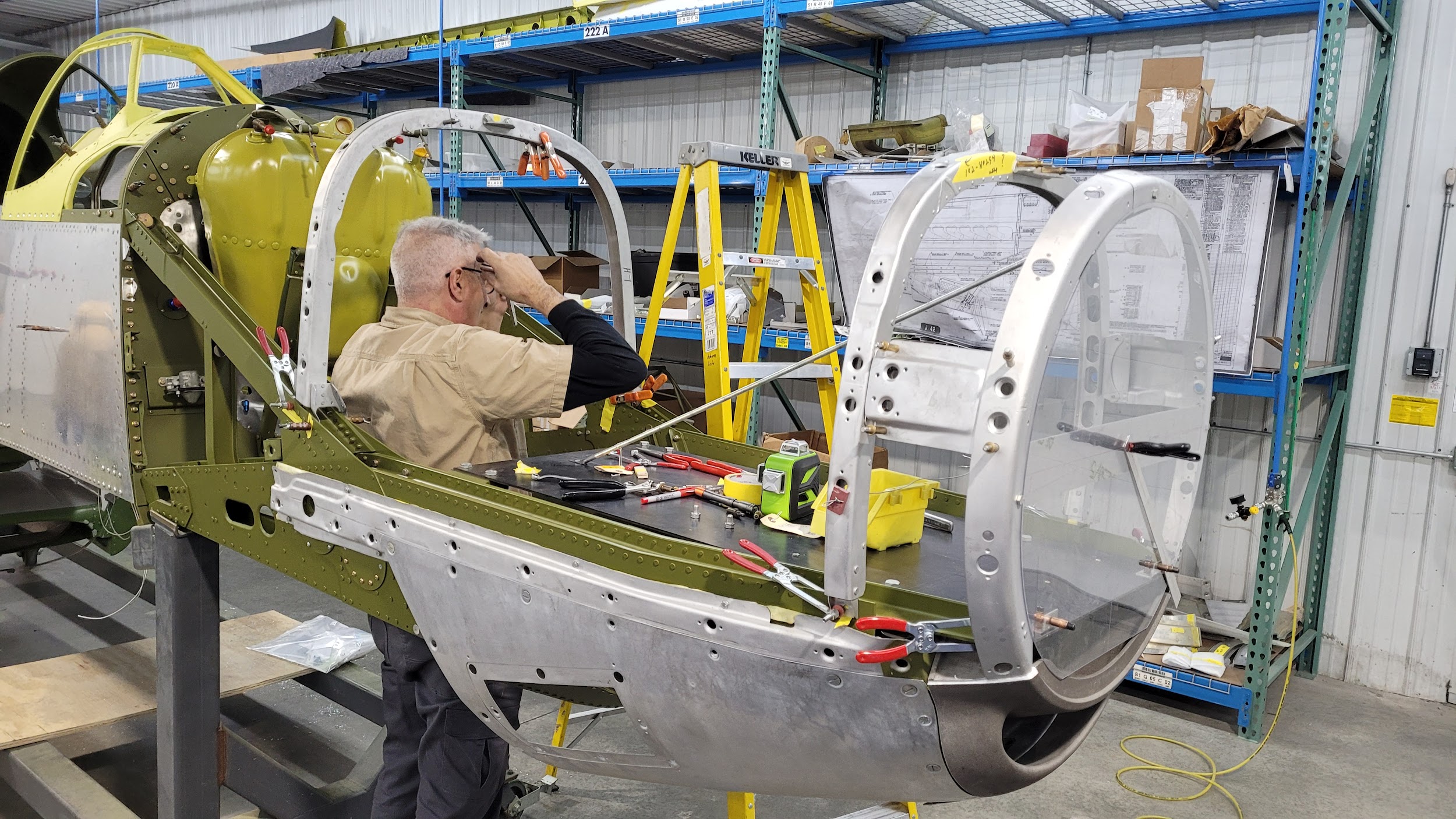
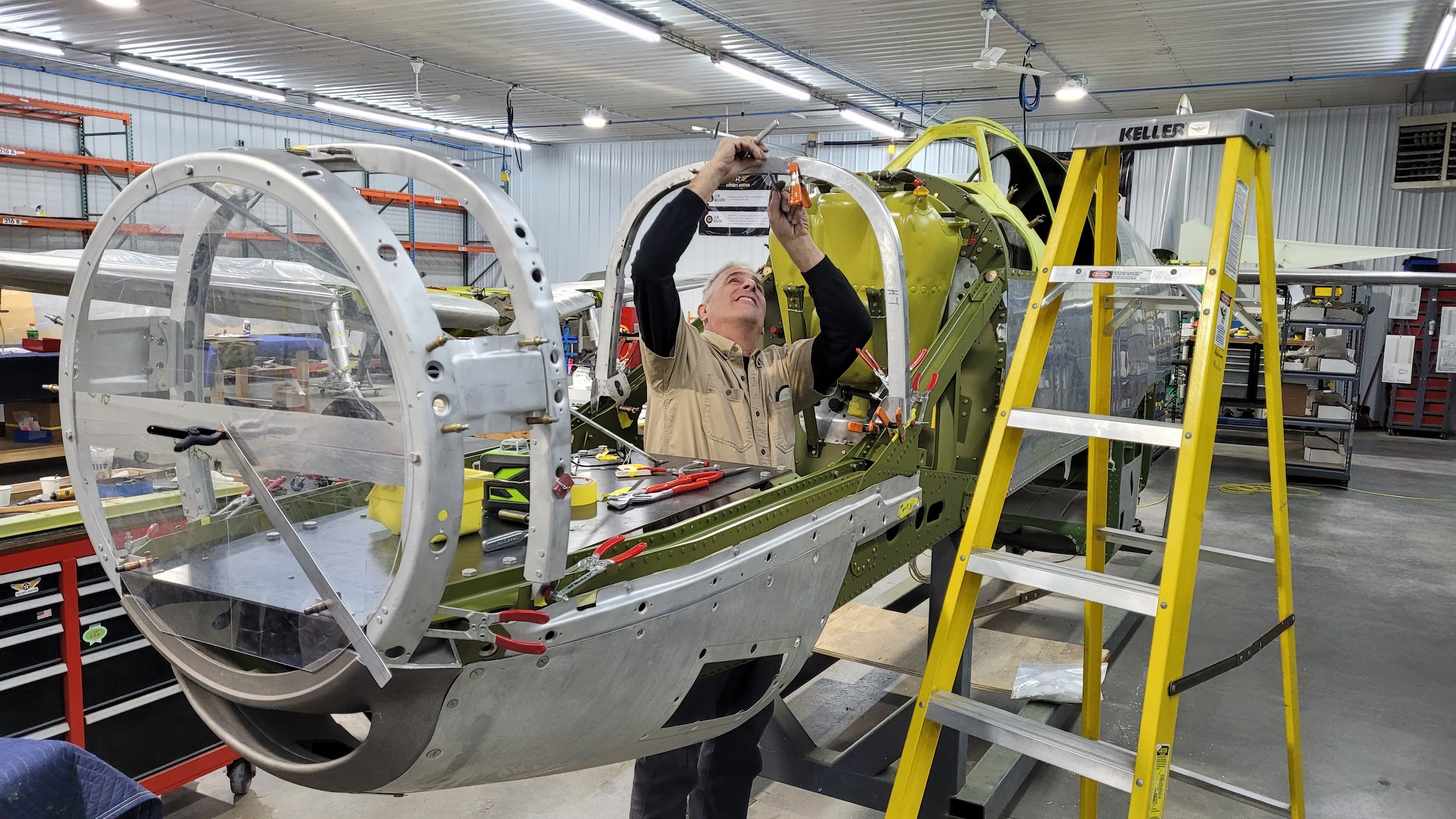
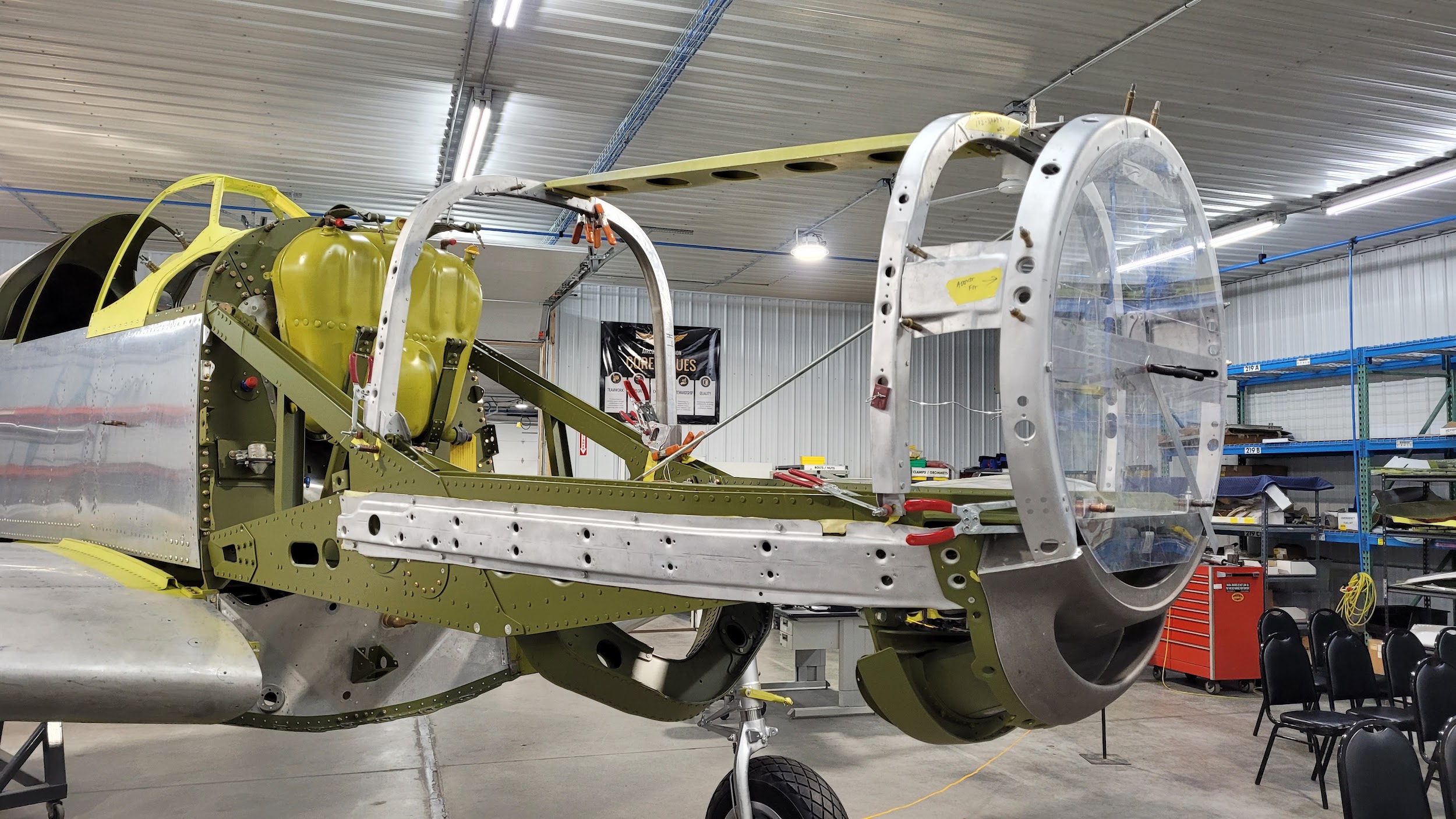
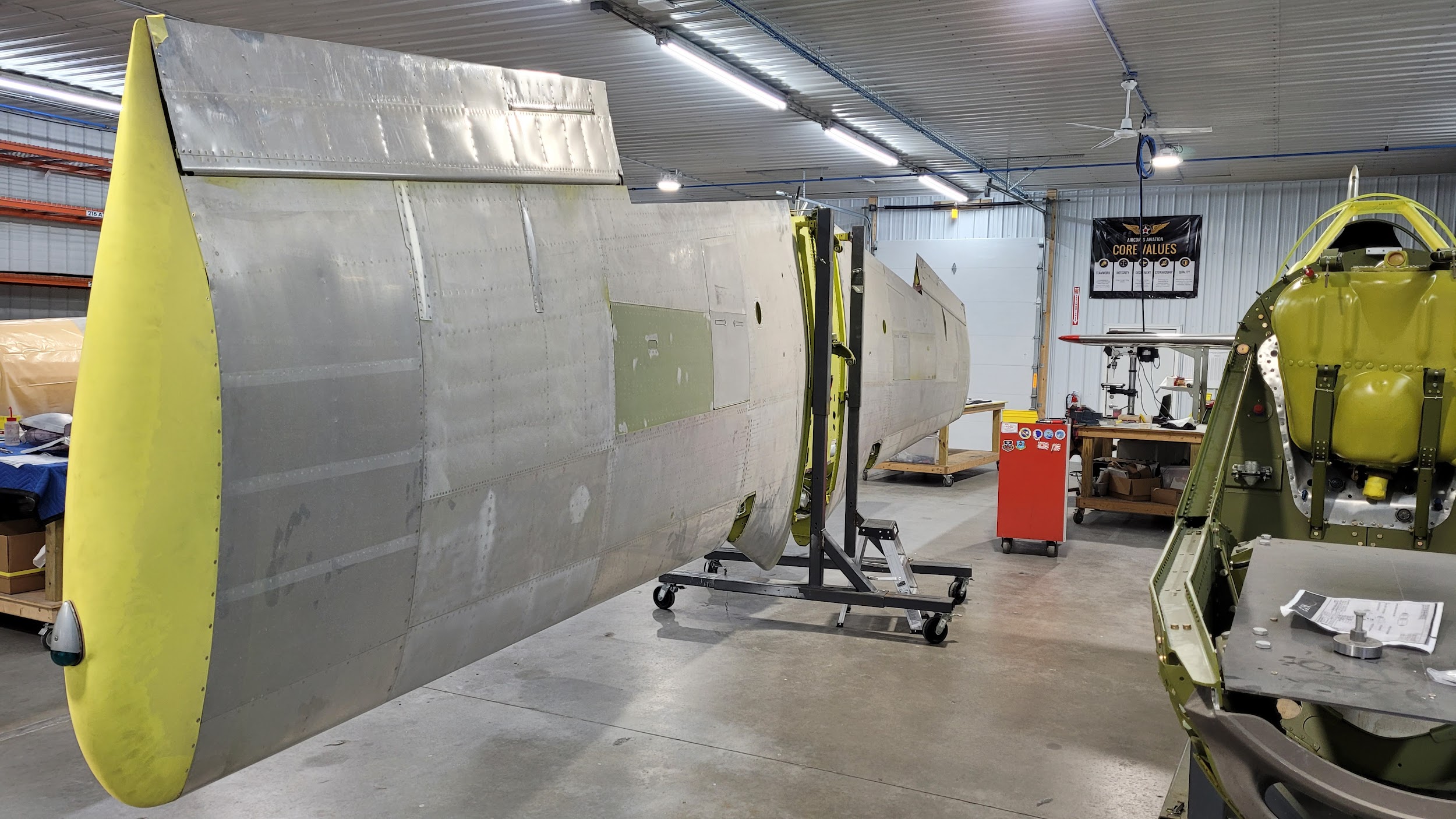
The rudder, elevator, and dorsal fin were fitted or installed in December, 2022. The windshield assembly and cowl formers and stringer were also fitted.
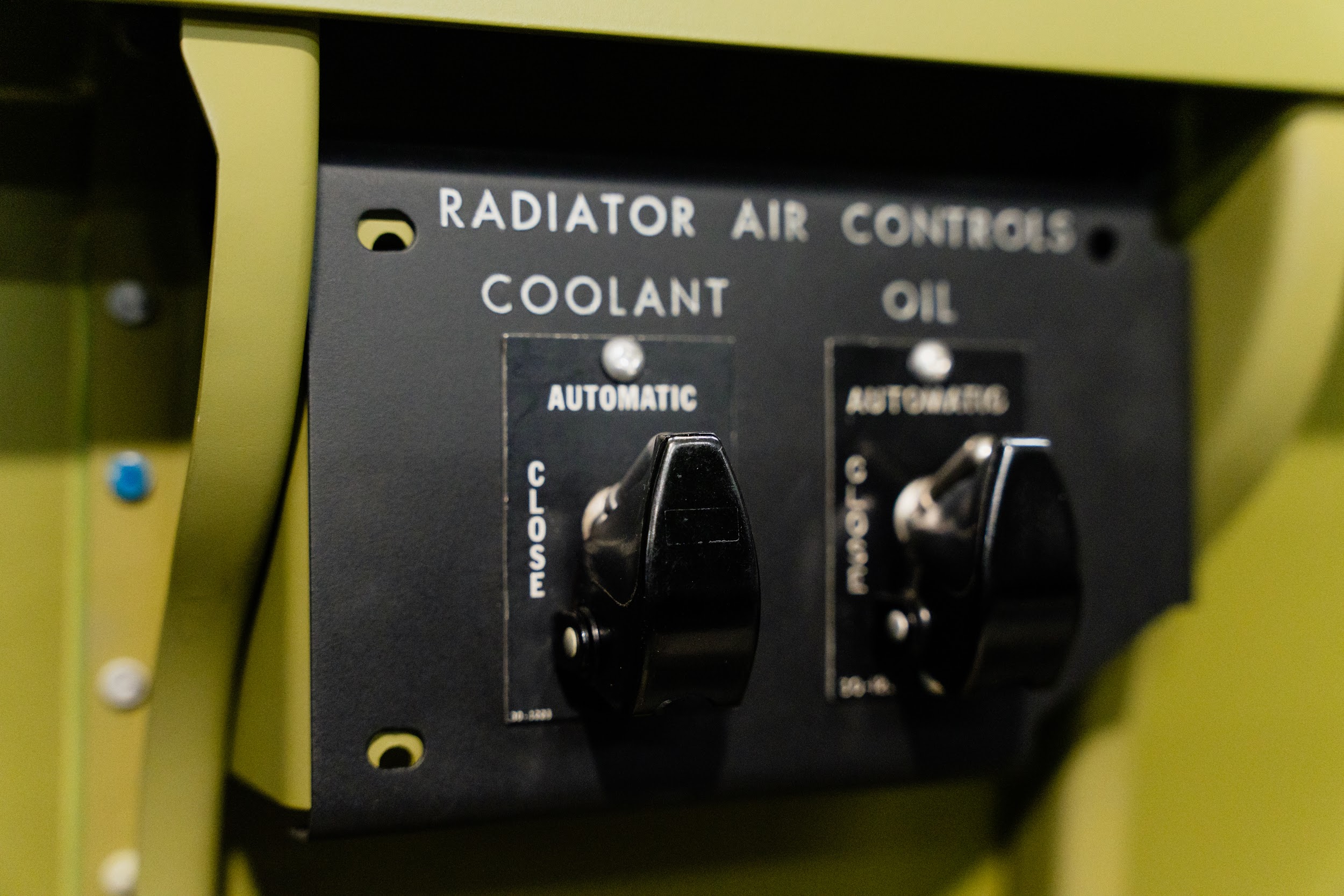
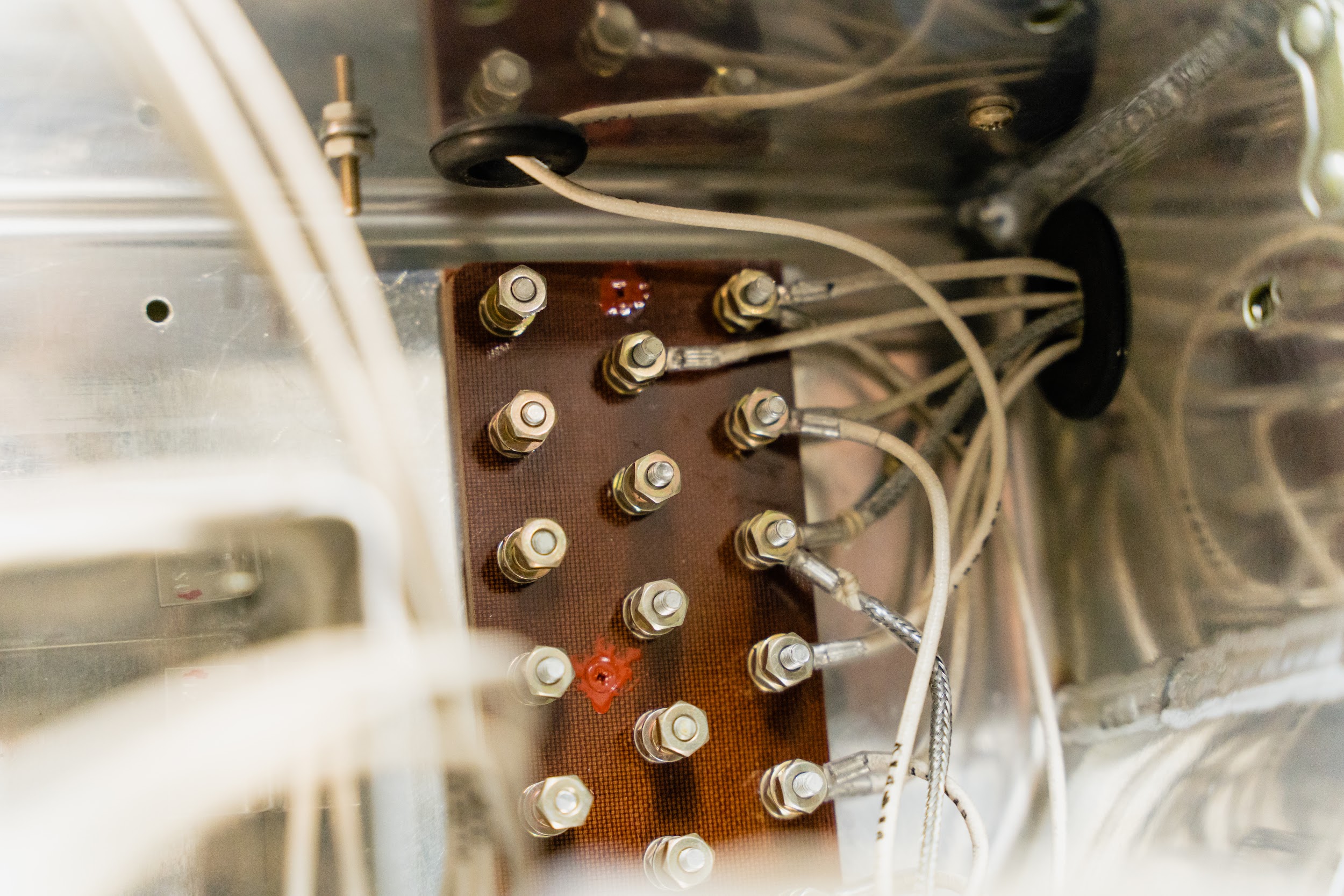
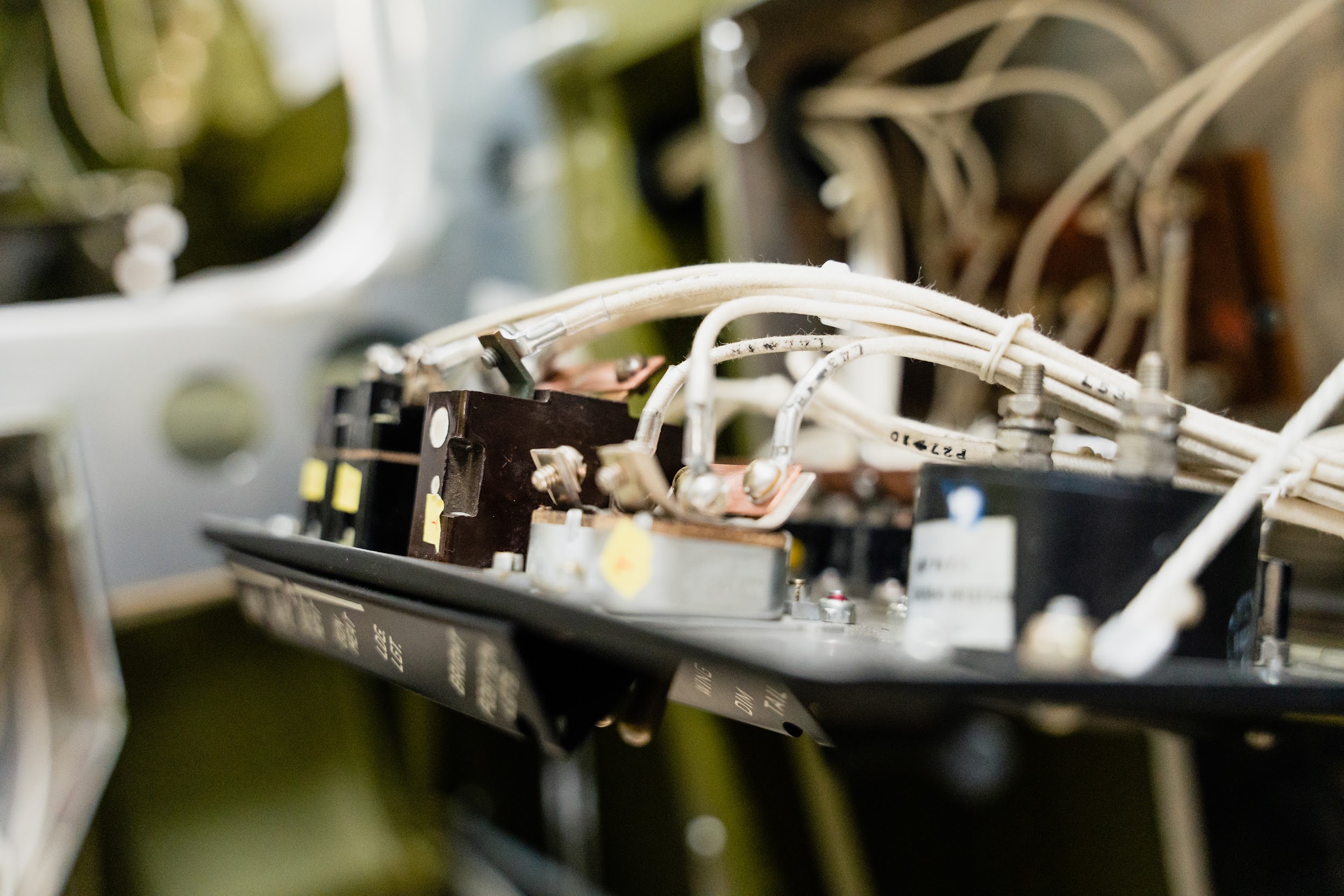
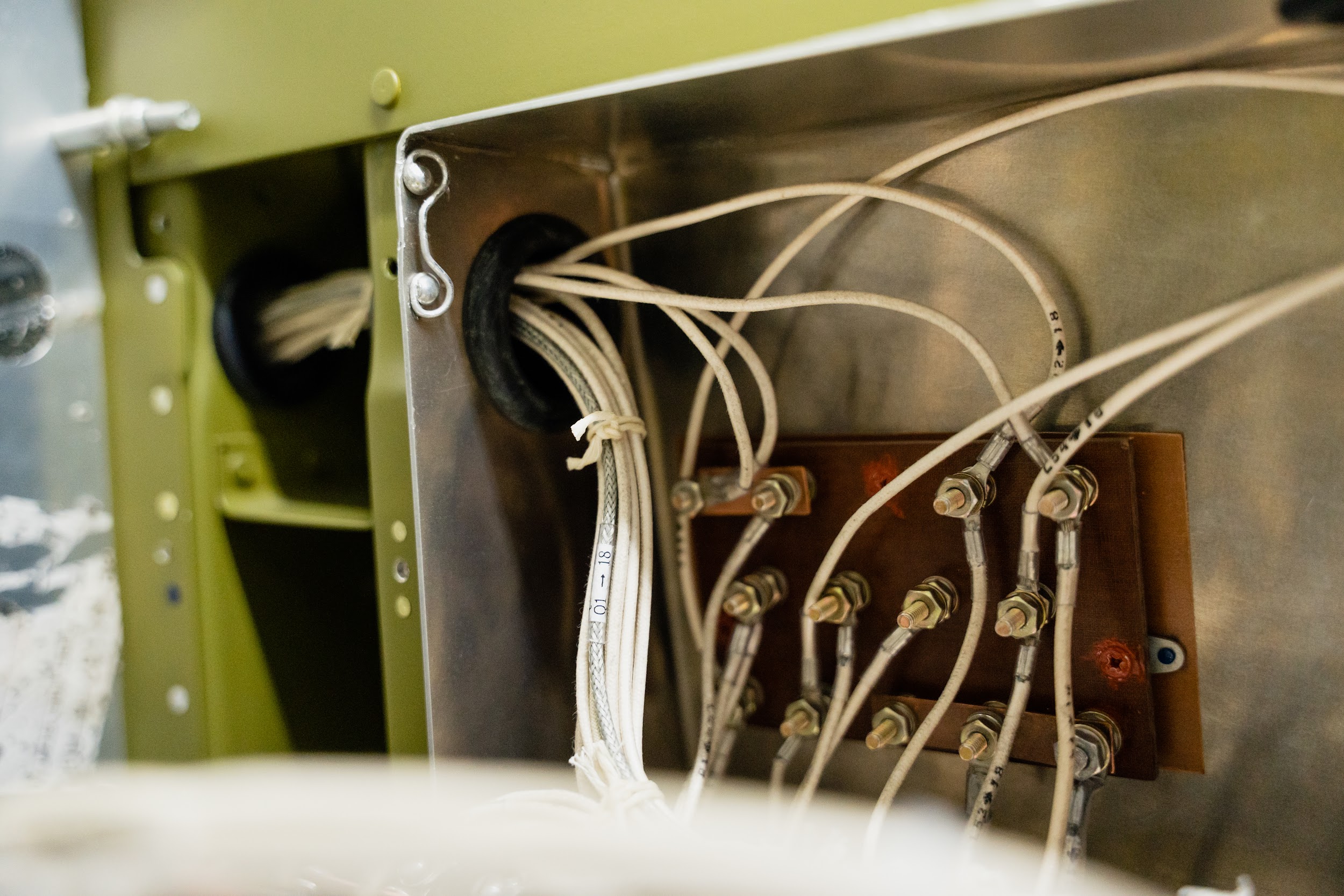
Electrical System
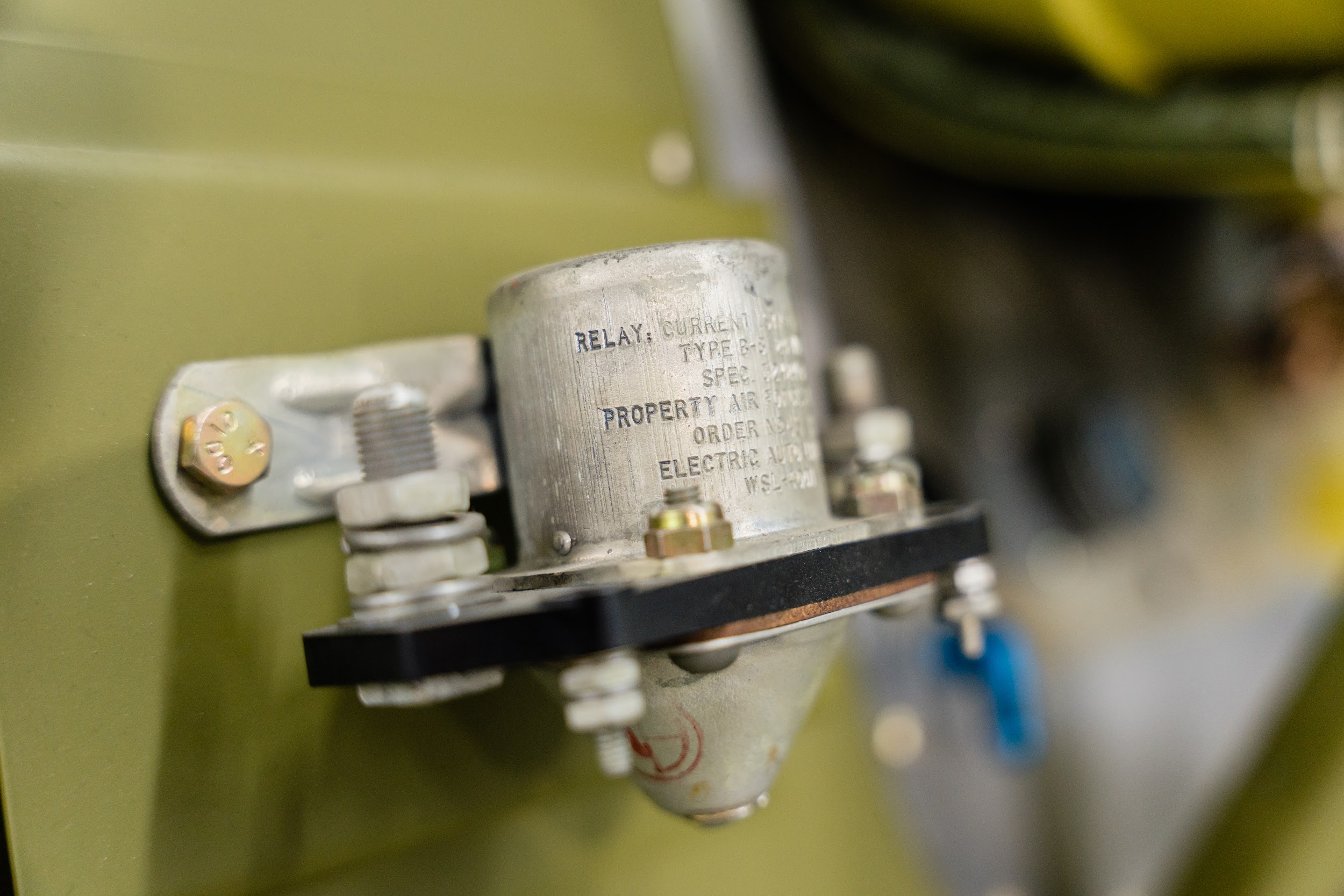
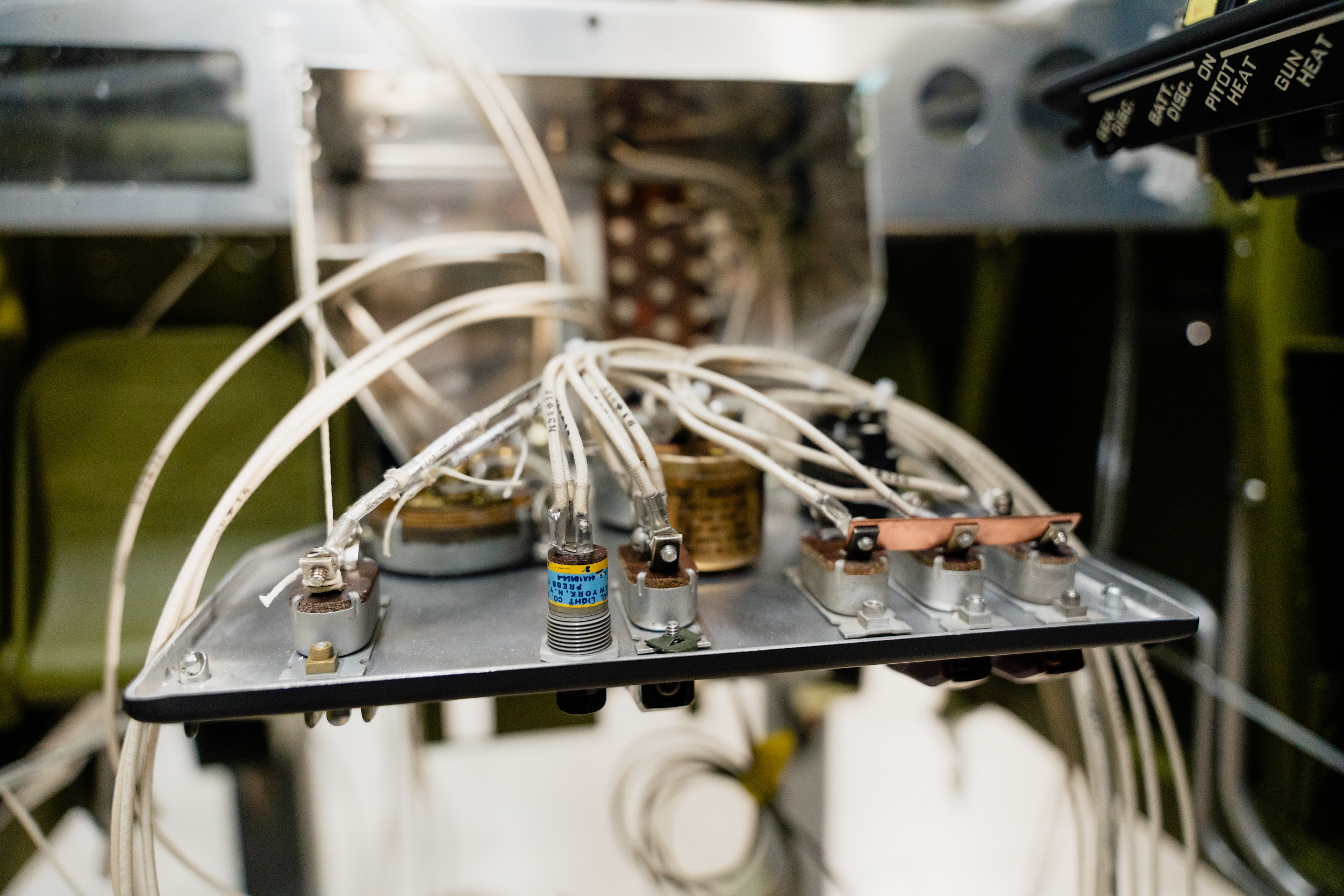
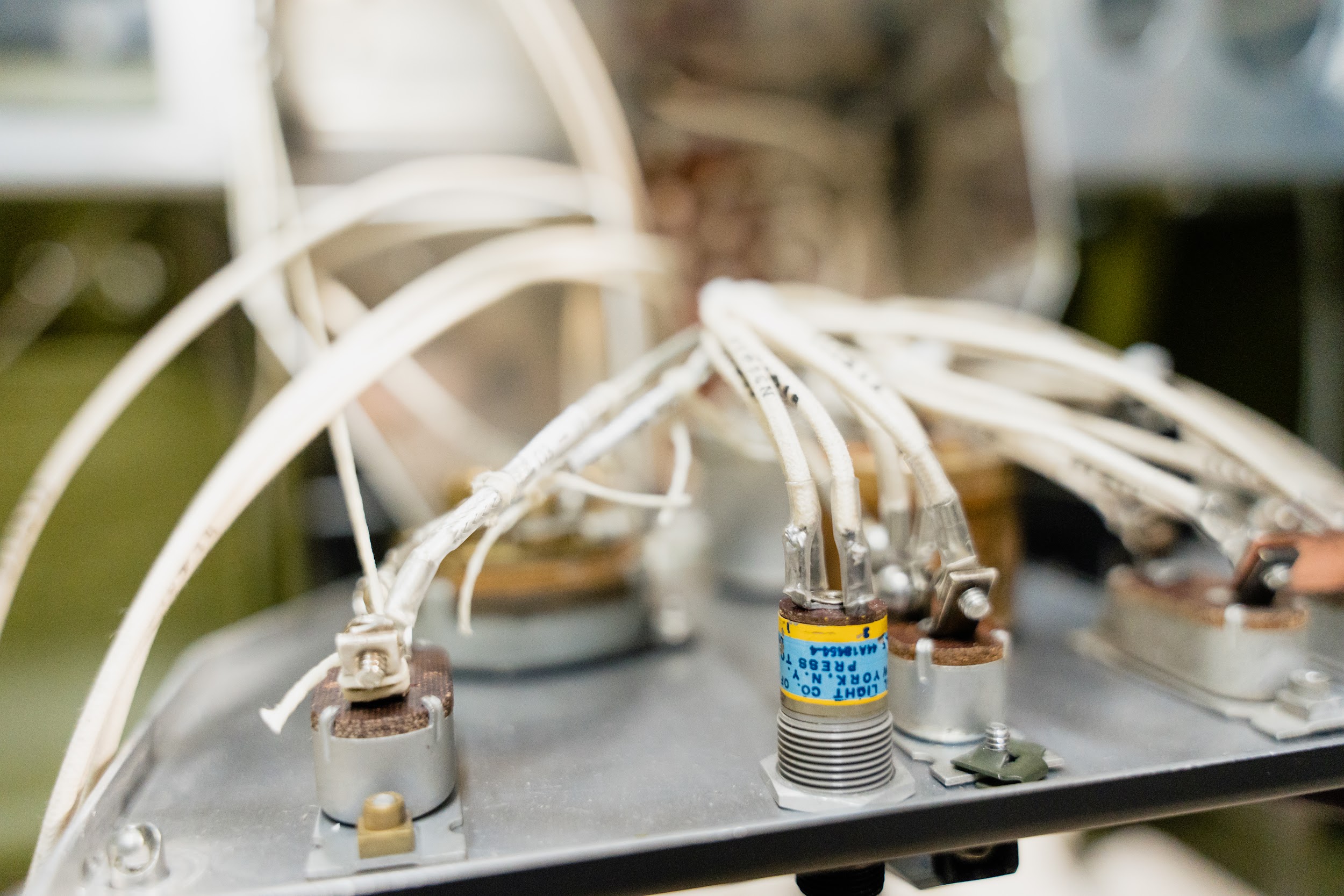
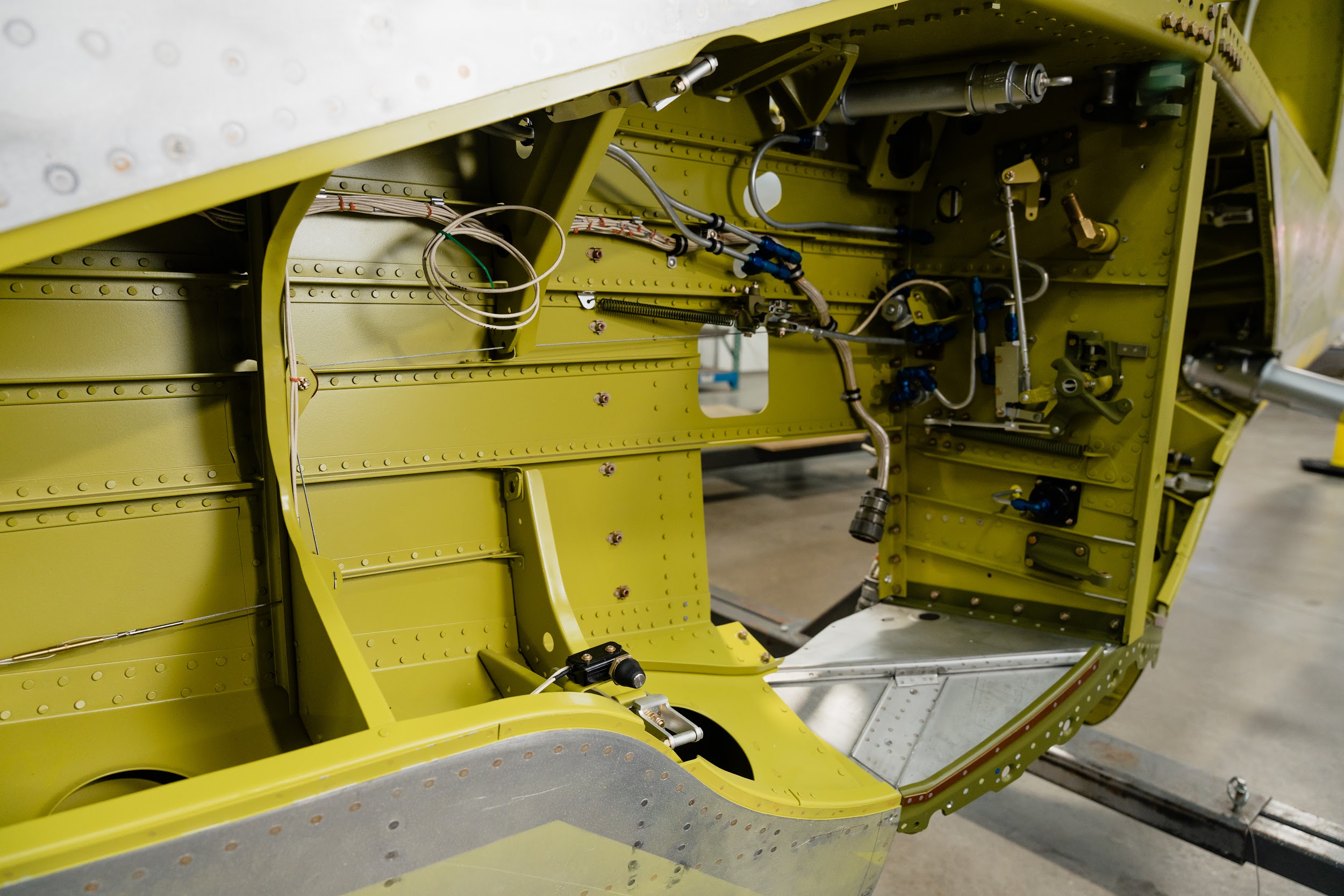
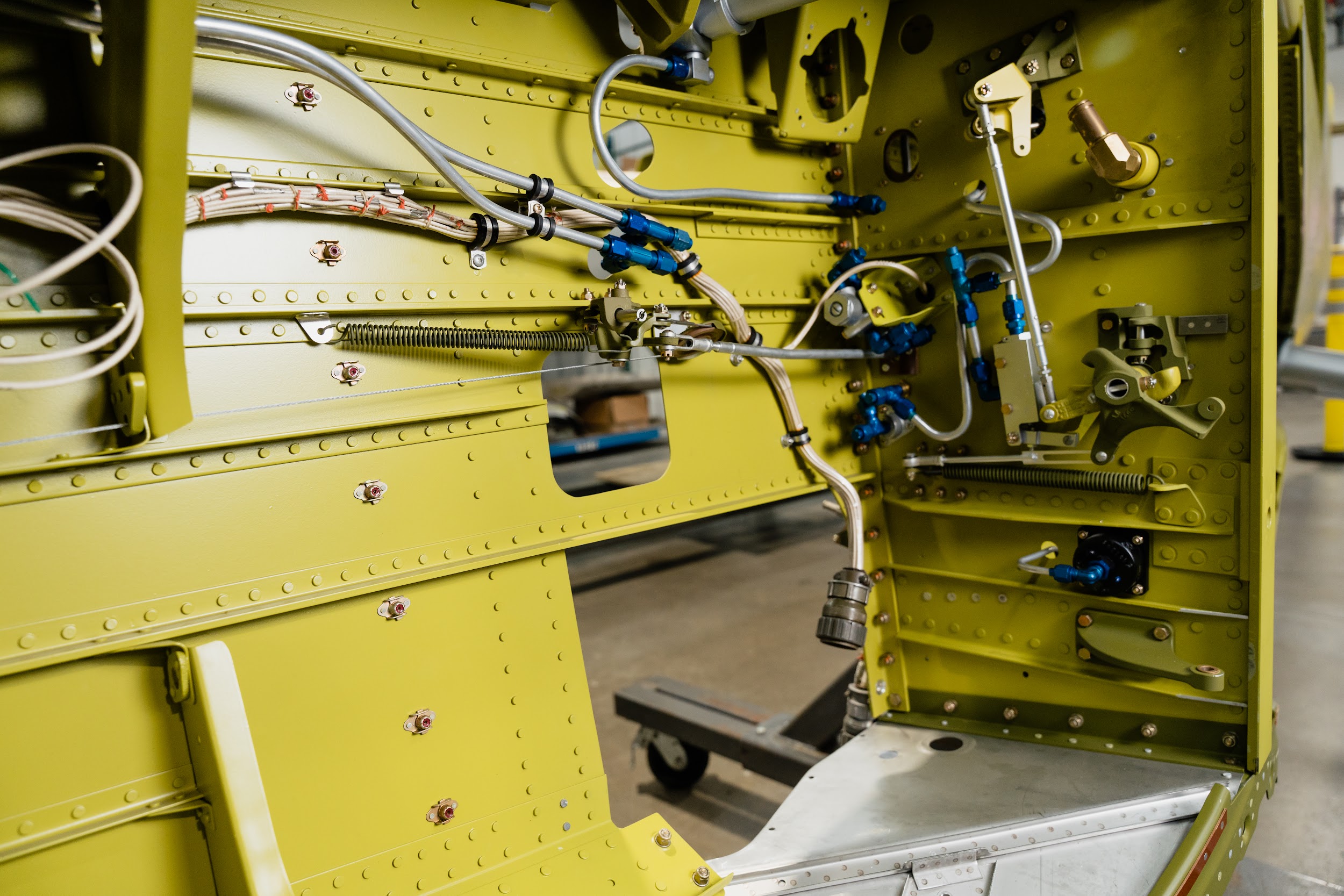
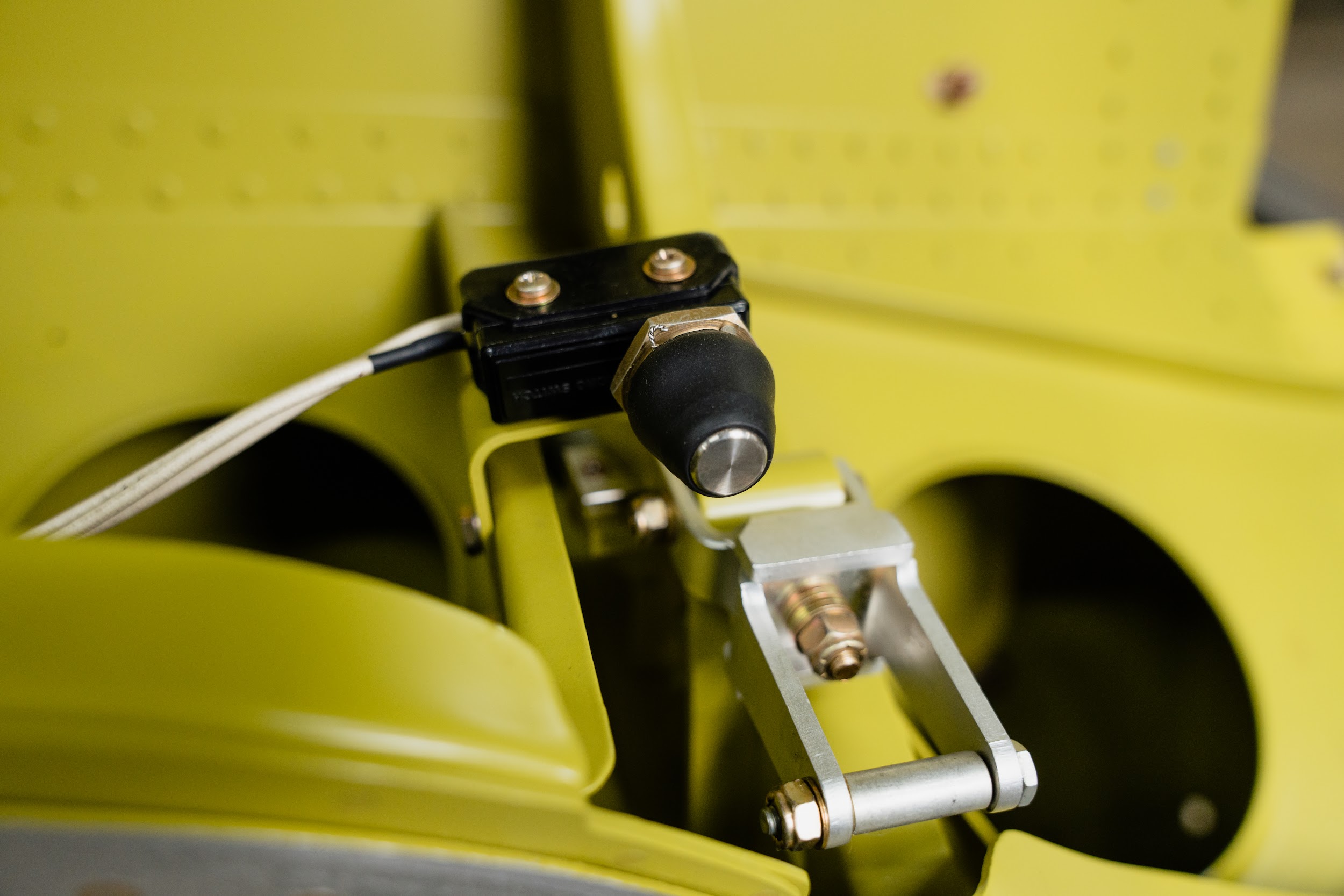
Much of the wiring was completed in December.

Wings
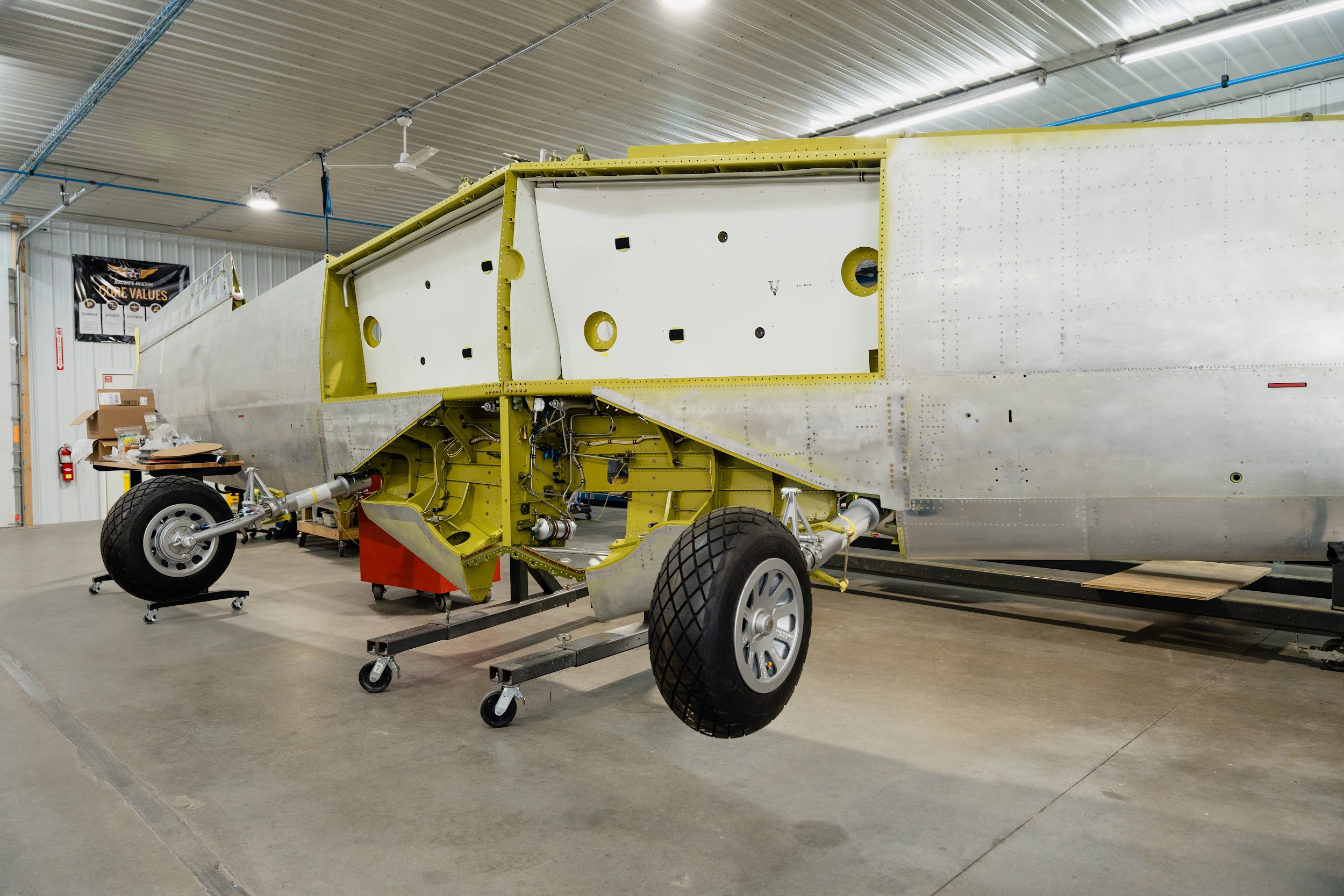
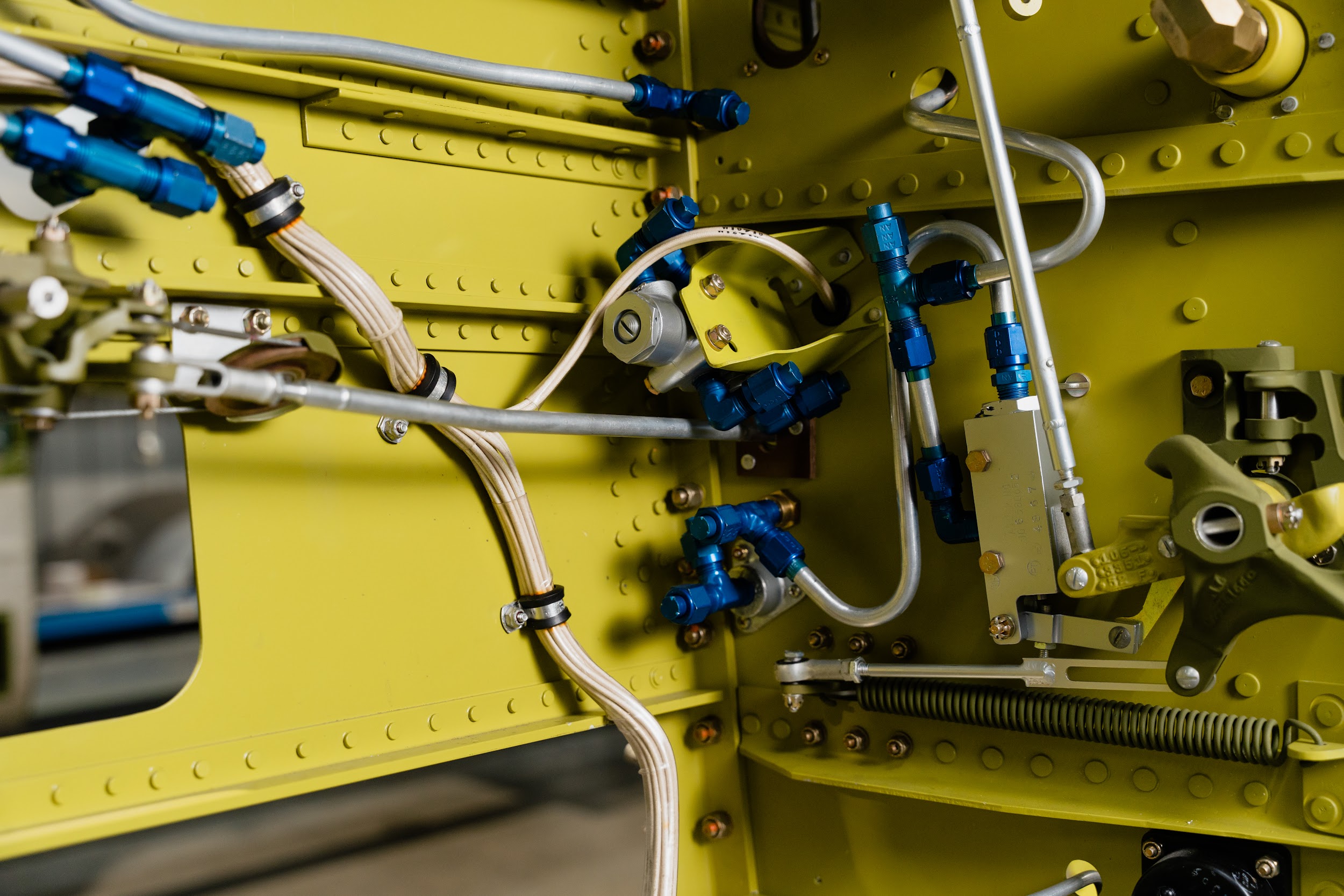
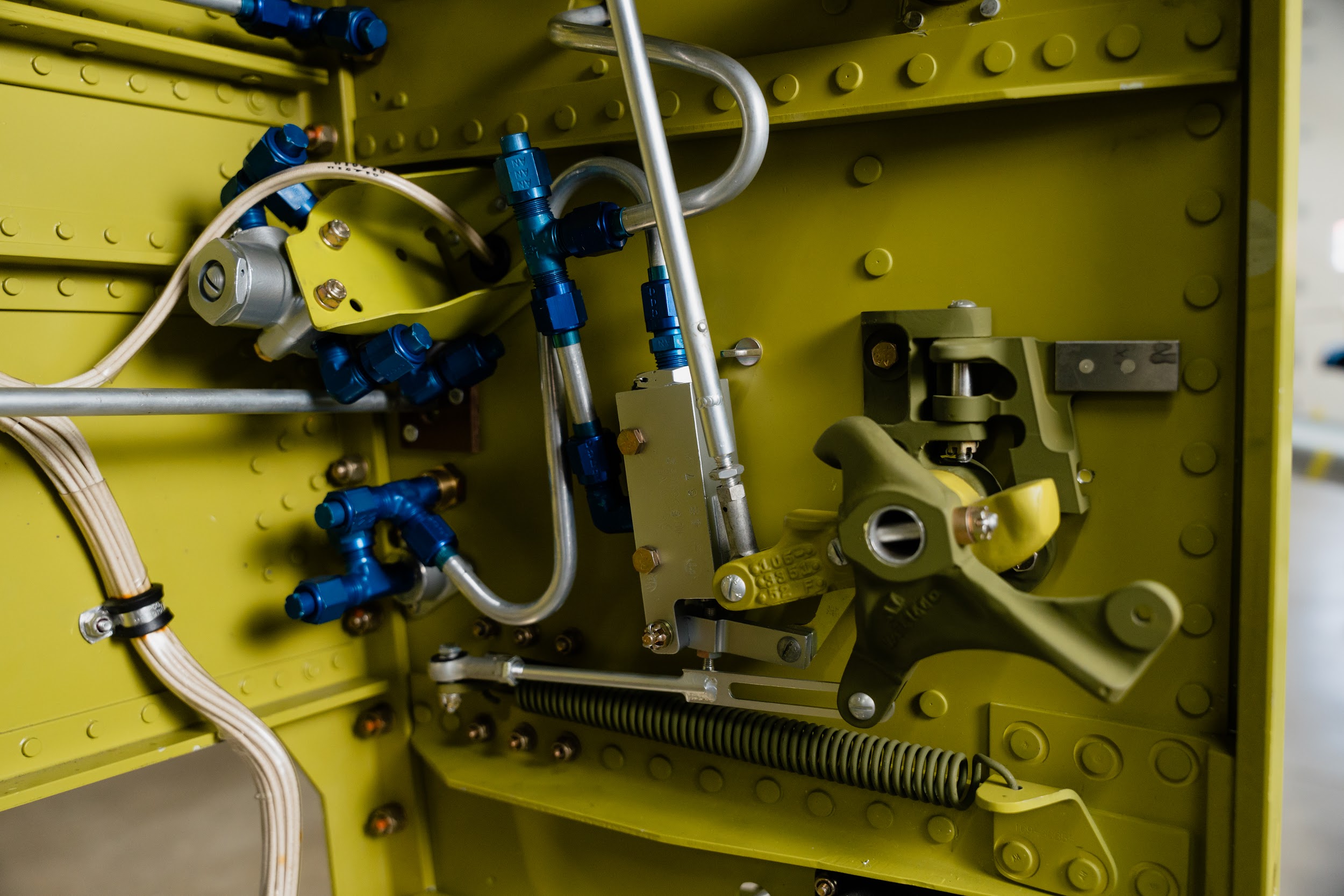
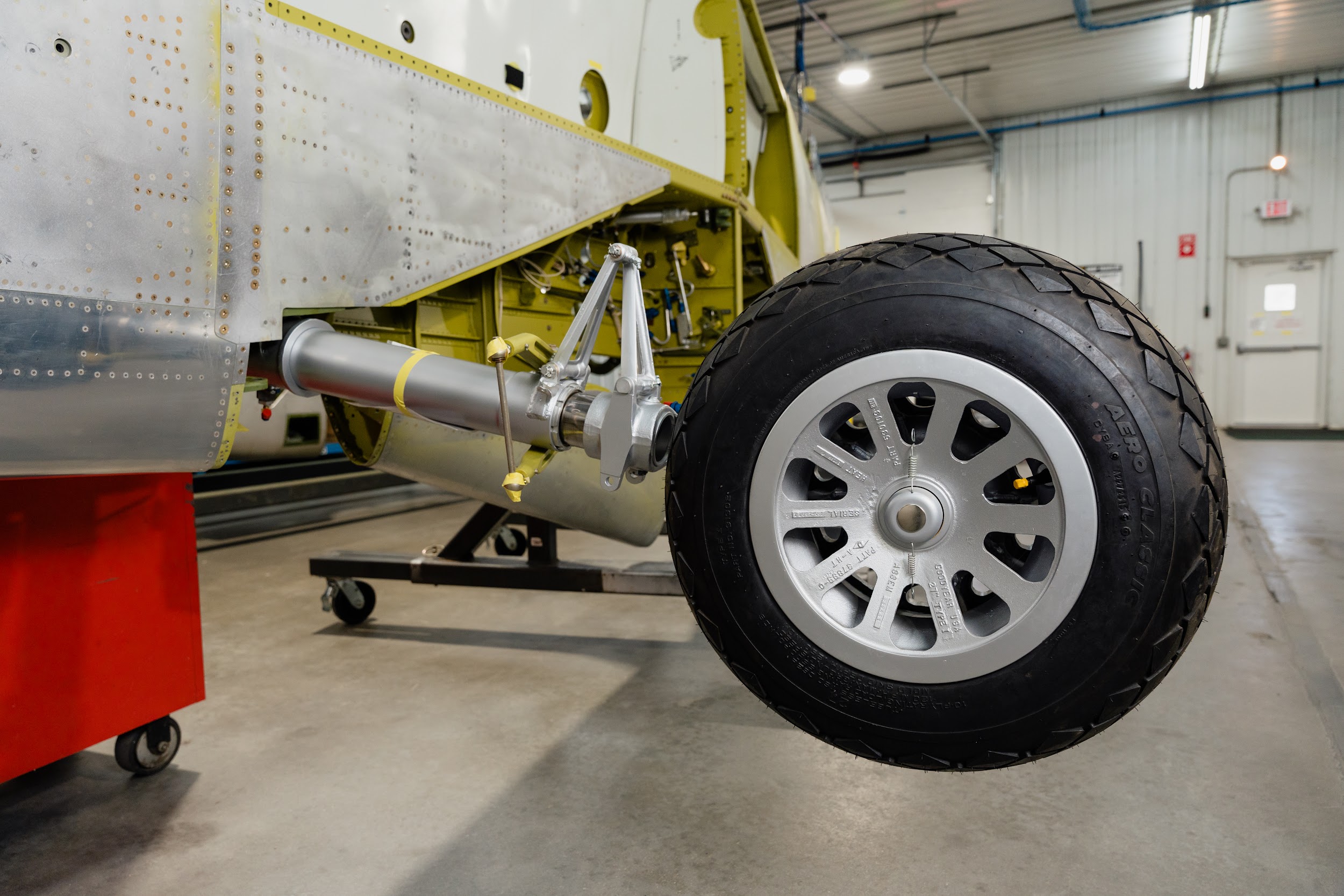
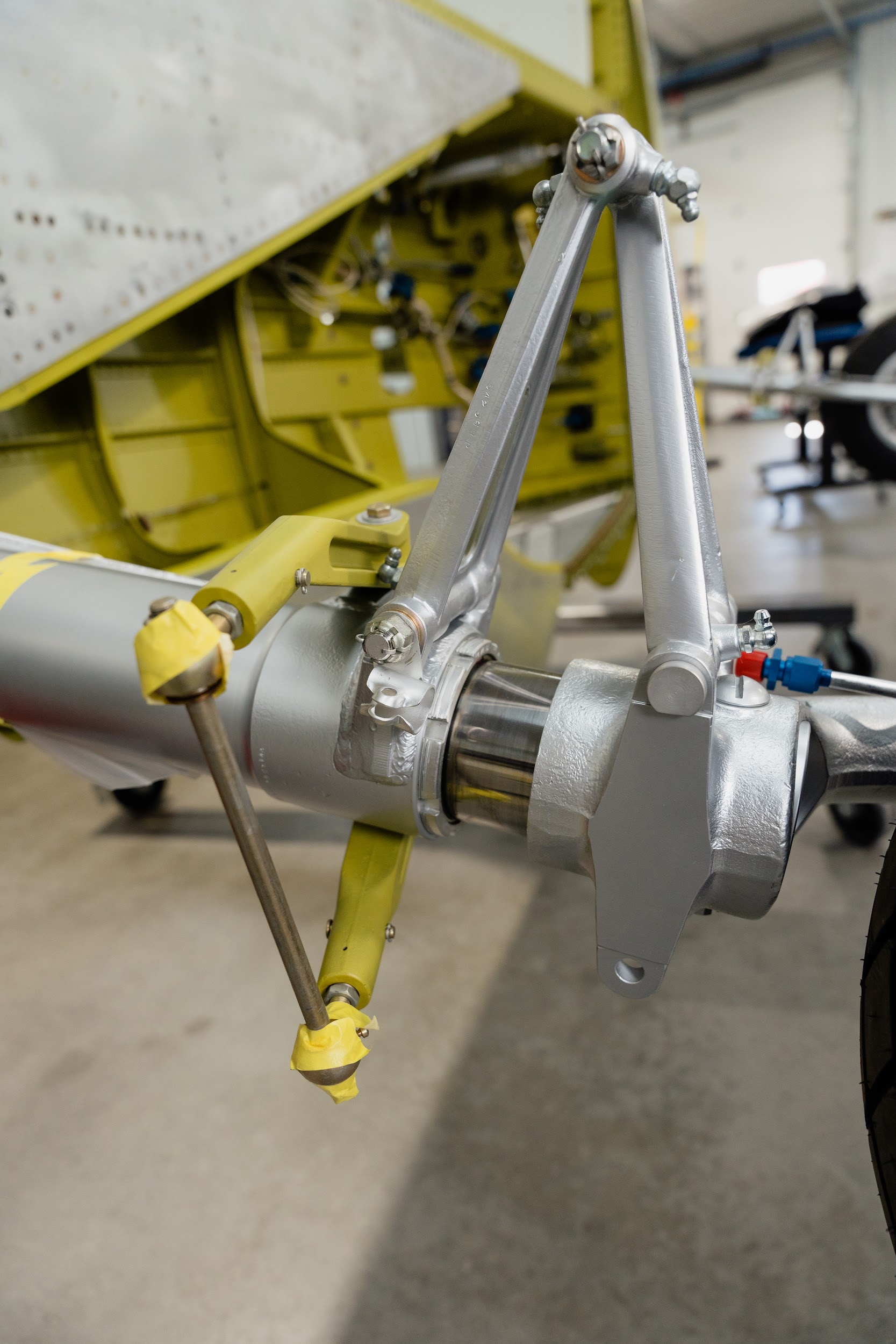
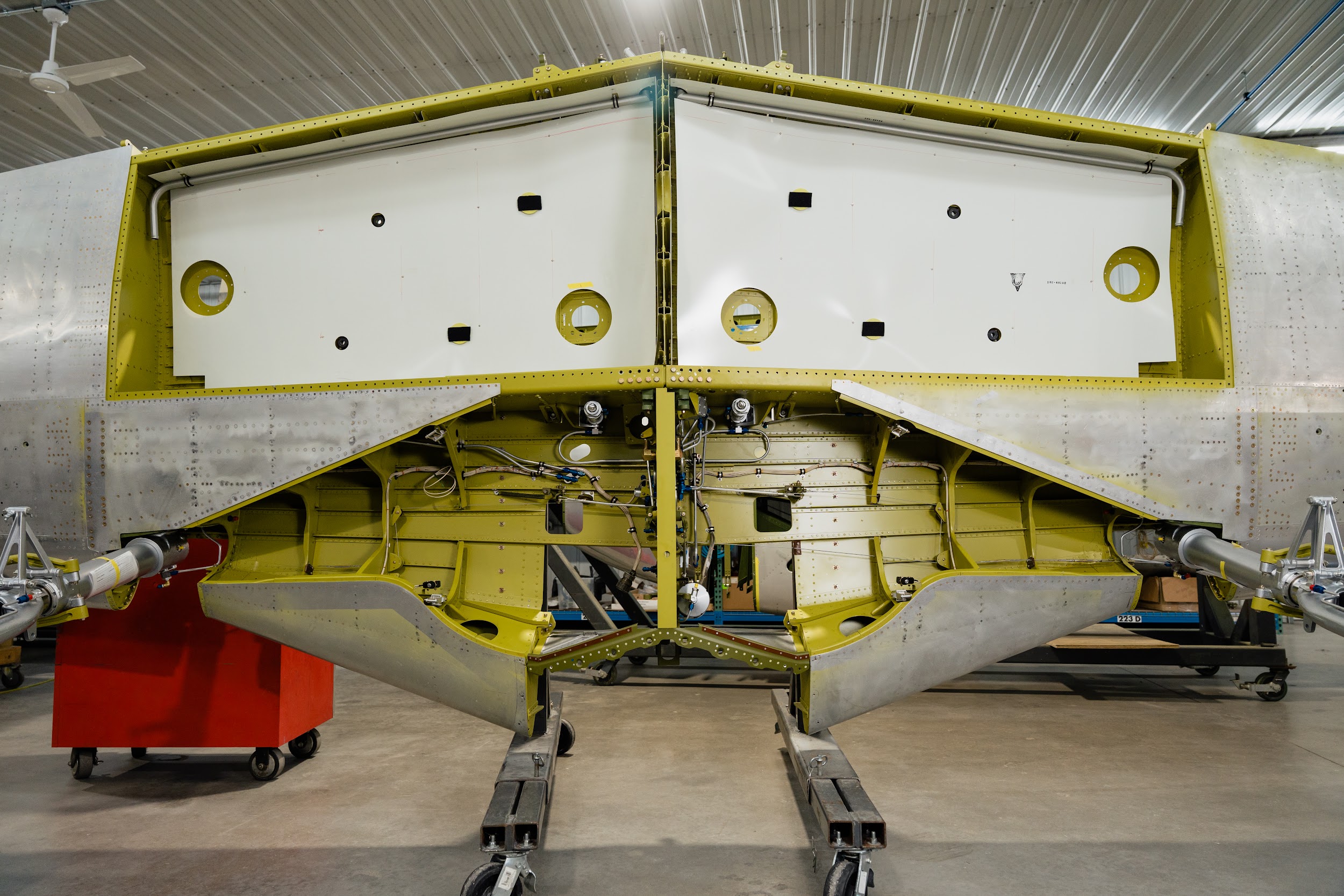
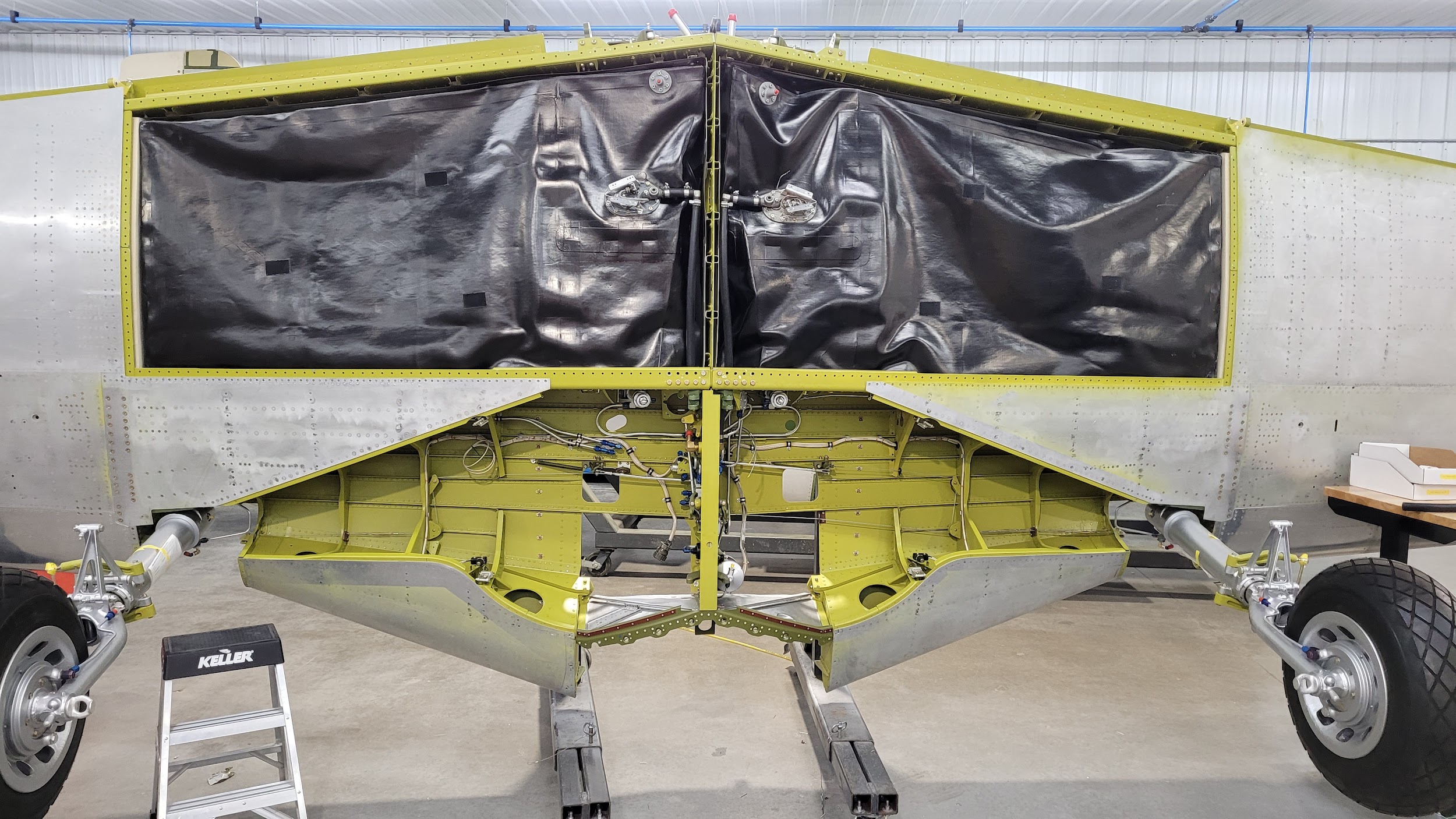
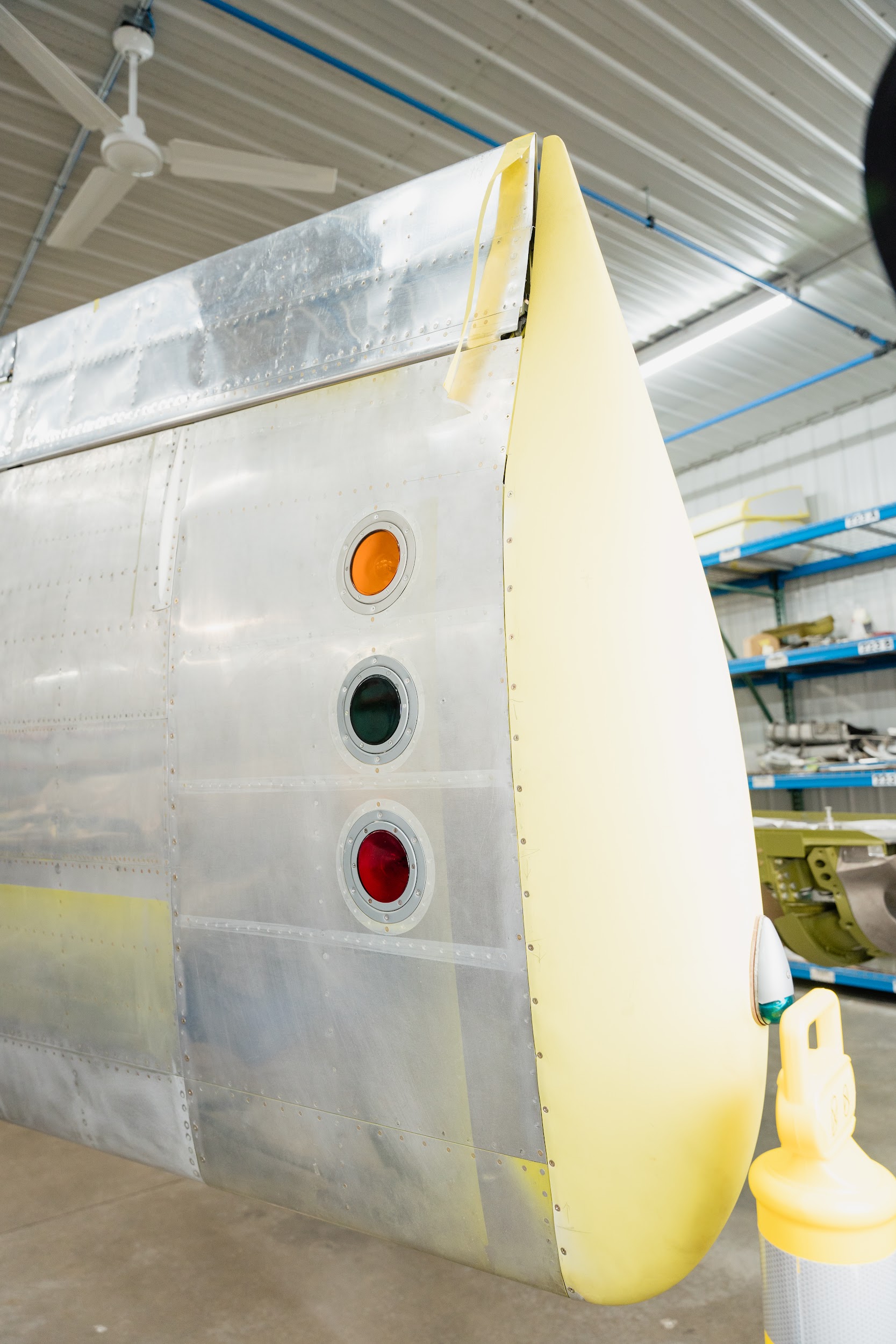
Hydraulic plumbing, wiring, and installation of the fuel tank bladders were the major focus of work on the wings in December.

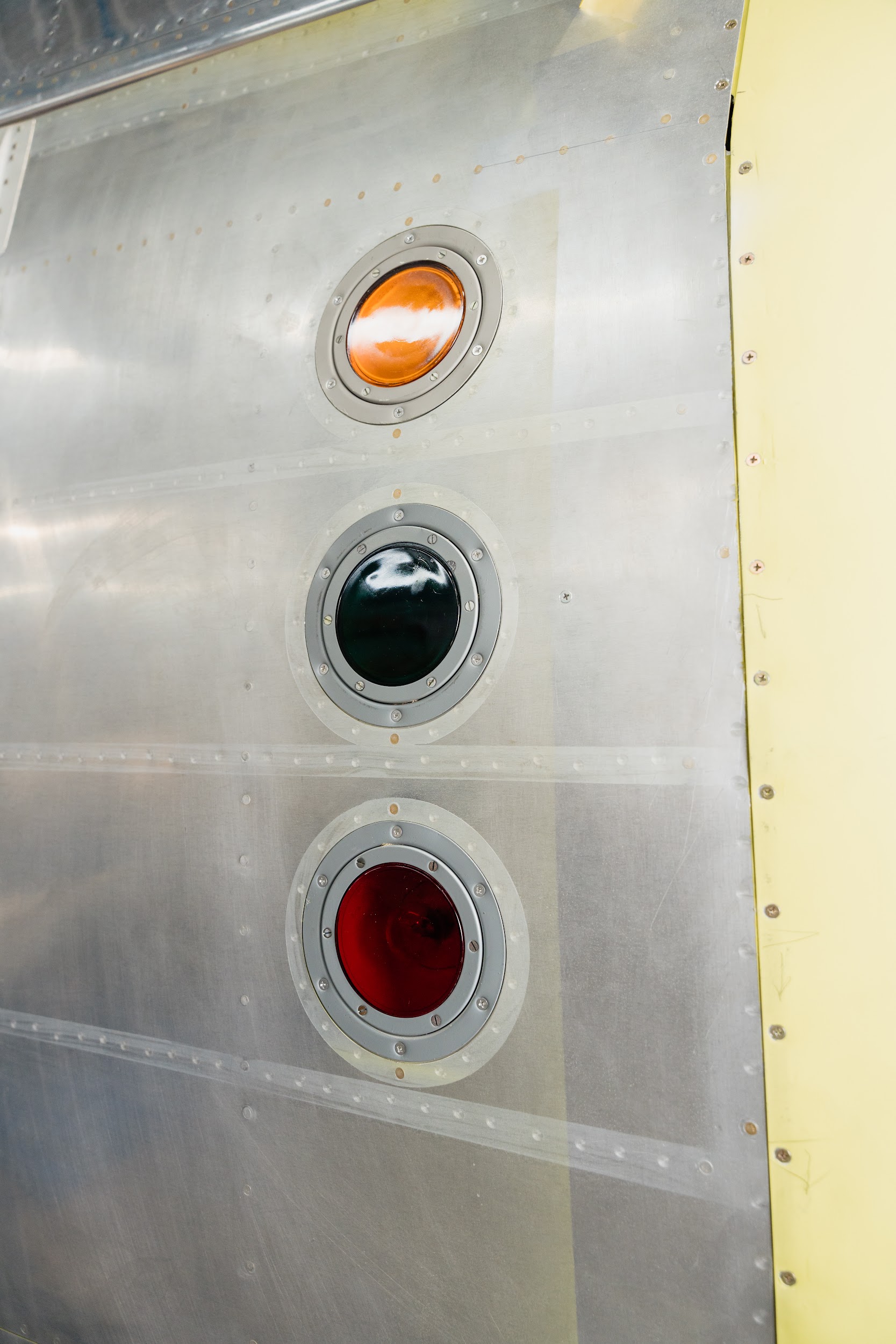
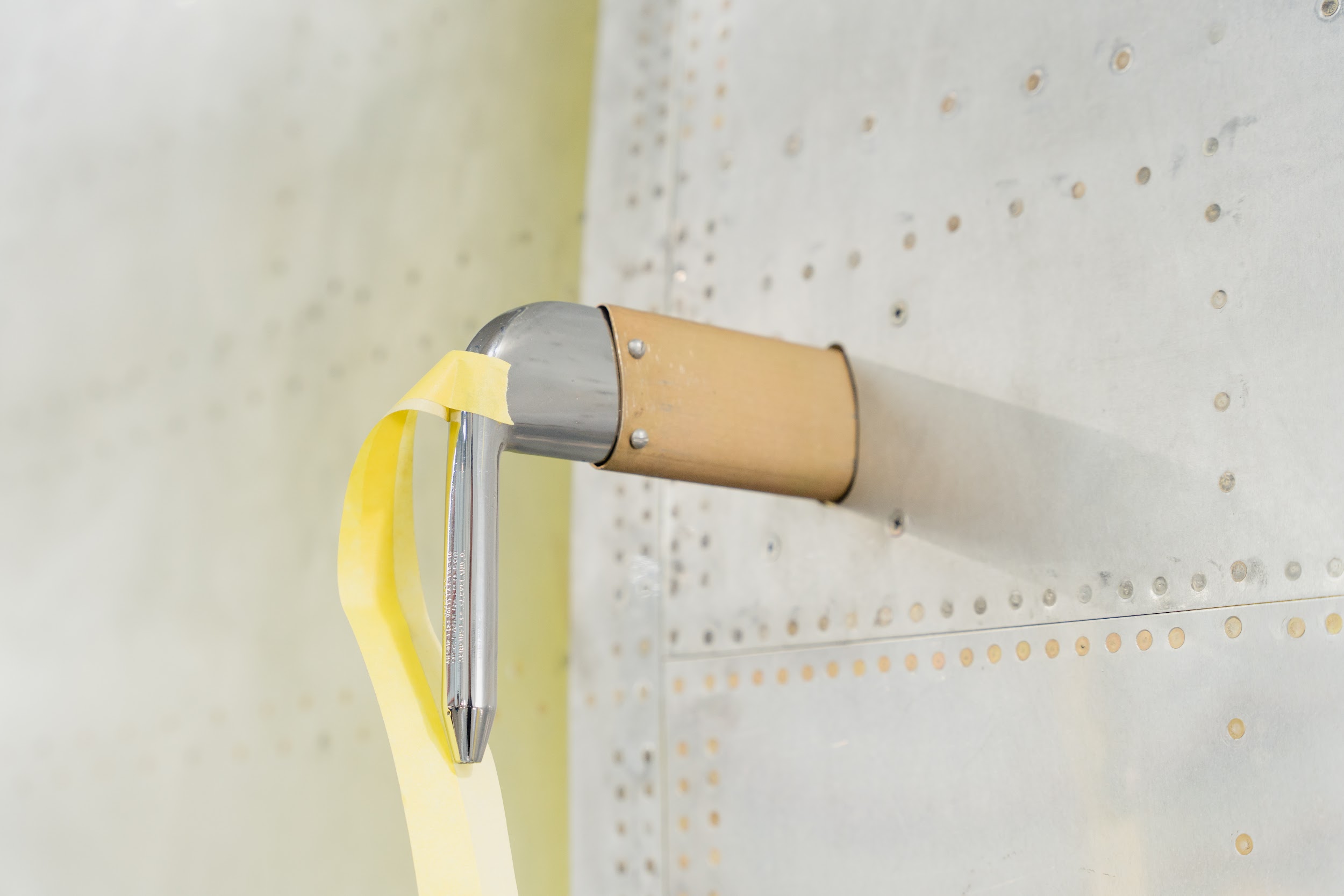
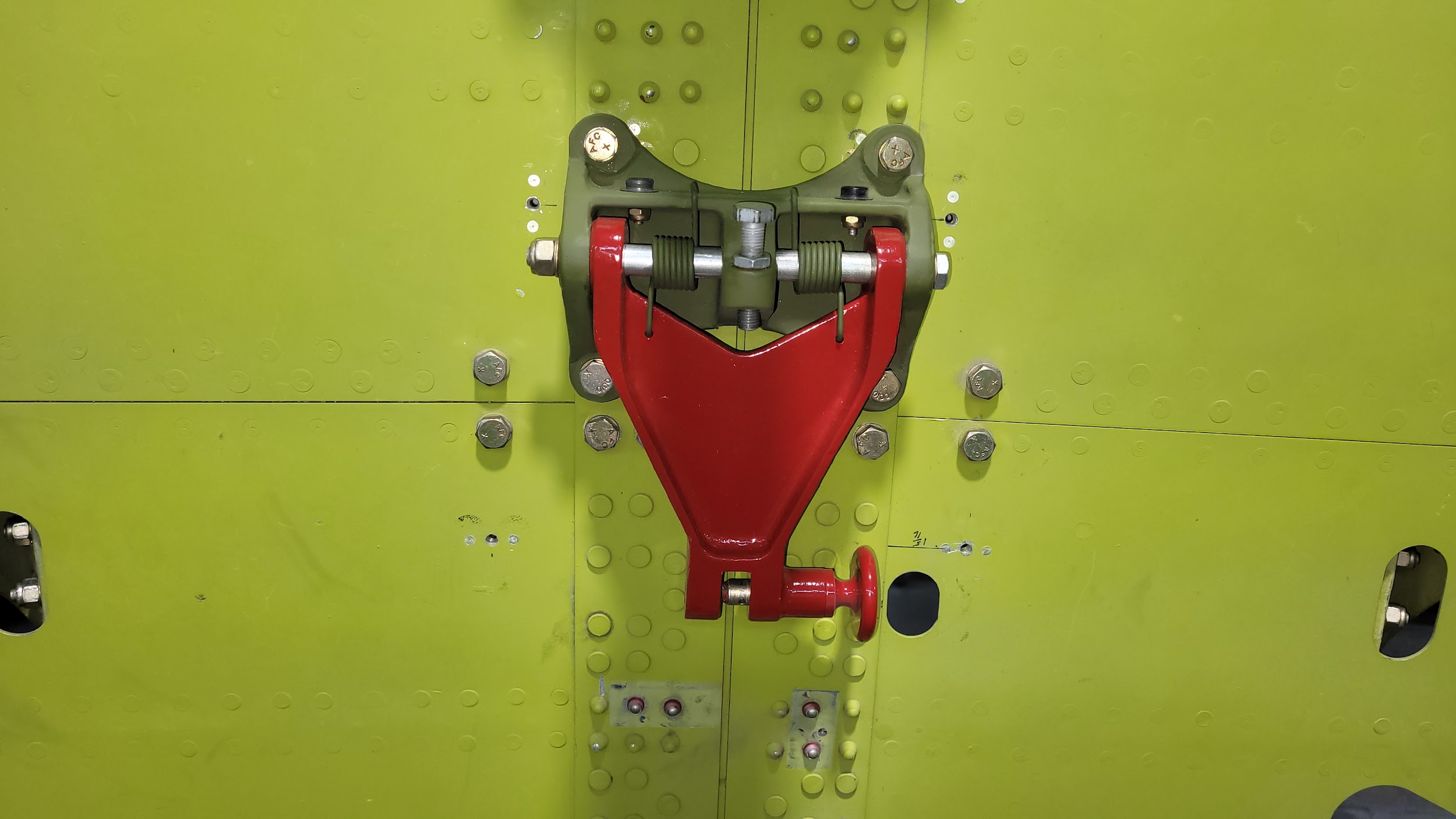
And that’s all for this exciting news about the resurrection of Thunderbird. We will present further updates as this famous racing aircraft returns to her former glory. Many thanks to Chuck Cravens and everyone at AirCorps Aviation and the Dakota Territory Air Museum for their help in making this article possible.




 Vintage Aviation News