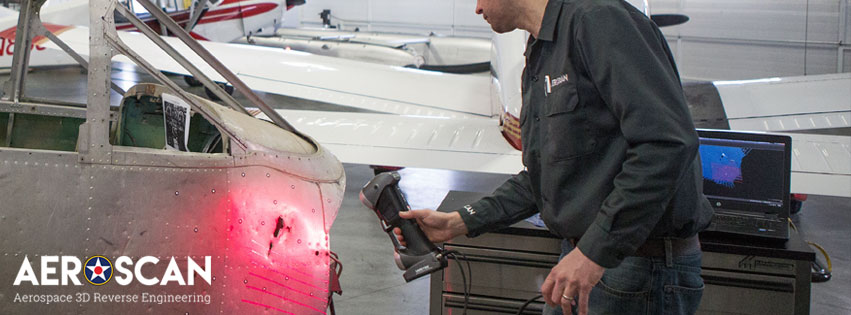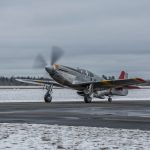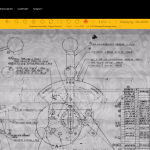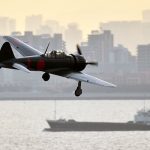




With the world’s fleet of affordable, airworthy aircraft aging, owners and operators are continually facing the challenge of obtaining replacement parts to keep them flying. When the original manufacturer no longer exists, or has discontinued a certain part, maintenance groups must find a way to reverse engineer and refabricate that item, often as a one-off product. Making sure that the newly-made part conforms to all specifications and fits first time is key to making the process financially viable. This is where AirCorps Aviation‘s recently launched subsidiary, Aeroscan can really make the difference in getting a complex maintenance or restoration project done on time and on budget.
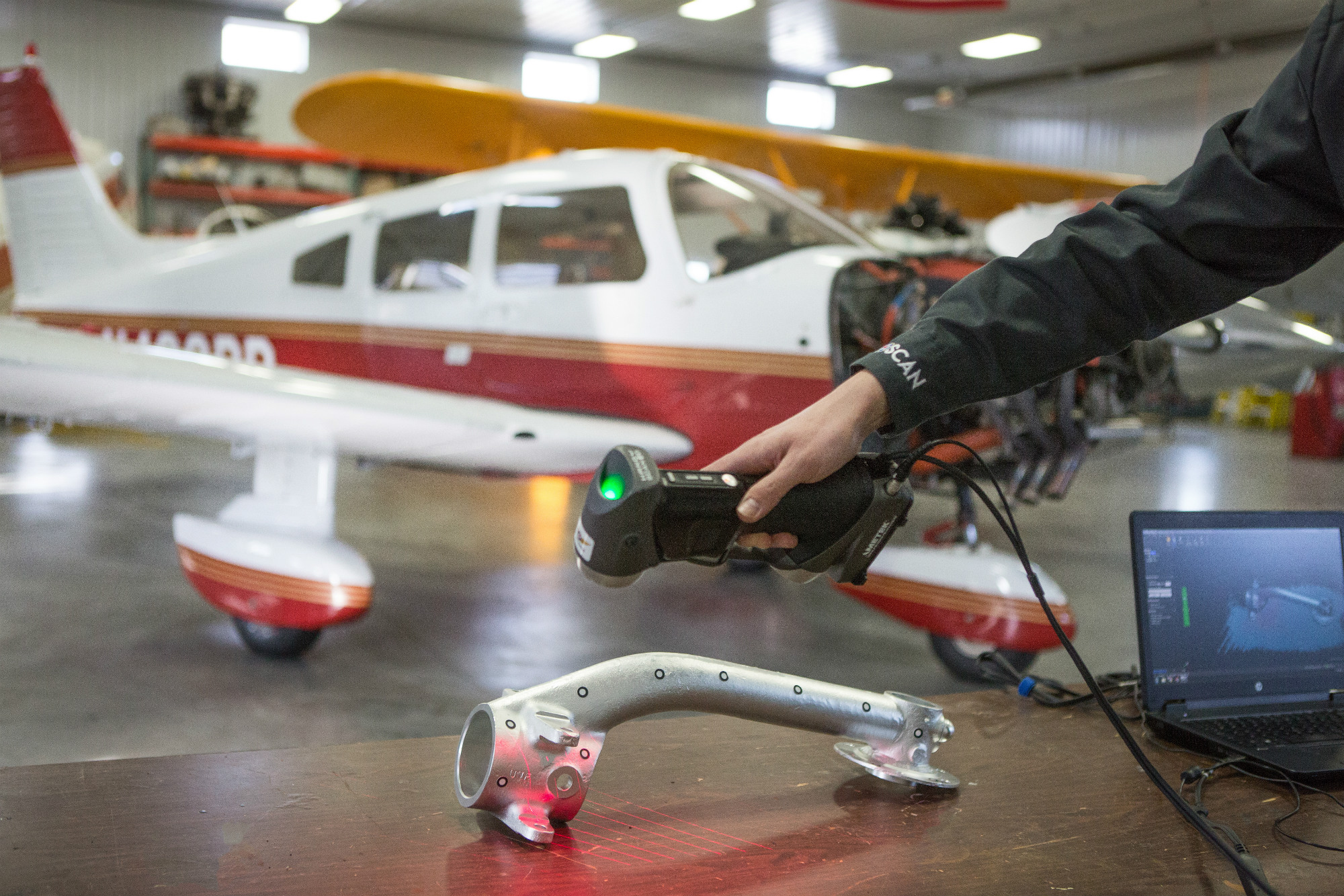
Aeroscan has the ability to inspect or reverse engineer aircraft parts using state-of-the-art 3D laser scanning technology, which makes measuring, modeling, and fabricating complex-shaped aerospace parts that fit first time a reality. Aeroscan’s technicians can precisely measure the dimensions of almost any aircraft part or structure, and quickly import these data into a computer solid modeling program to recreate the scanned objects digitally. This then gives the team all the dimensional information they need to accurately manufacture new components. This isn’t the only benefit of 3D scanning though, as it’s also an efficient way of assessing structural damage following an incident, for example. Other applications include: RVSM inspection, corrosion inspection, hail damage depth, fixture measurement, first article inspection, part archival, cabin retrofits, propeller comparison, fuselage measurement/straightness and tooling measurements.
The company uses portable 3D laser scanning equipment which they selected as their preferred tool partly because of it’s accuracy and rapid data acquisition, but also because of its versatility with respect to the size, material or location of the objects needing to be scanned. Traditional measurement methods use tools that do not provide the same level of precision nor the speed of dimensioning that 3D scanning can. Aeroscan’s personnel honed their expertise while working under the umbrella of their parent company, applying 3D scanning with great effect to reverse engineering efforts in the restoration of WWII aircraft. This success has allowed Aeroscan to service and provide solutions to the larger aerospace industry beyond the warbird niche.
While there are other scanning services available, Aeroscan’s evolution from an aviation company ensures that their team has the expertise necessary for aerospace efforts. Aeroscan’s ability to quickly reverse engineer and also deliver fabricated aircraft parts to spec solidifies them as full service provider.
Aeroscan LLC. operates from the Anoka county airport in Blaine, MN. For more information and 3D scanning aerospace applications, visit their website at www.3daeroscan.com or on Facebook at www.facebook.com/3daeroscan.