


Today in Aviation History: Ed Link Introduces the Ground-Based Flight Trainer

On April 14, 1929, Ed Link introduced the worldโ€™s first ground-based flight trainerโ€”an invention that would revolutionize pilot instruction. Built using components from his fatherโ€™s piano and organ business, the "Pilot Maker" laid the groundwork for modern flight simulators.

Austin Hancock
Austin Hancock
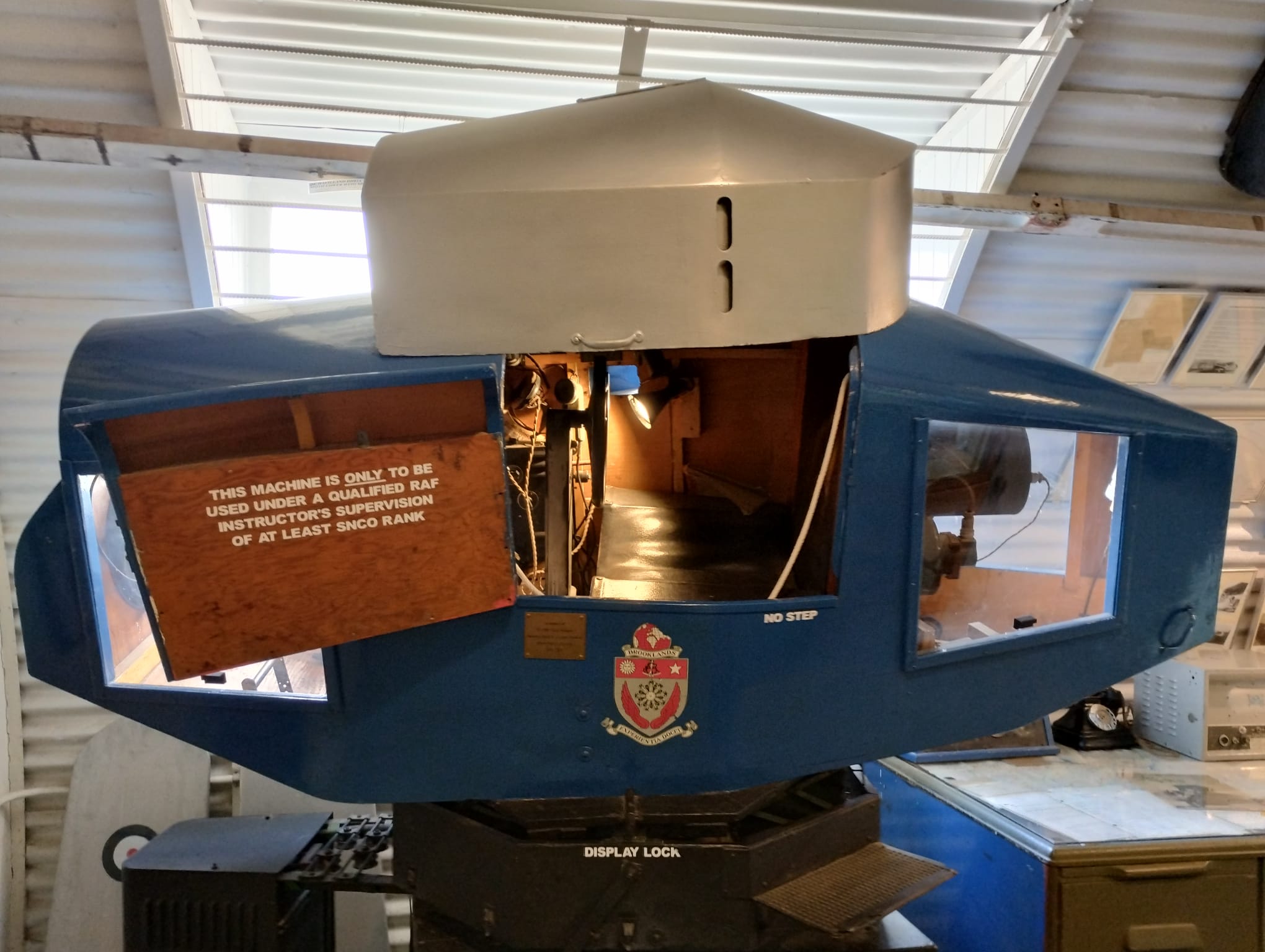
A working example of a Link Trainer. The sign inside the door reads: โ€˜This machine is only to be used under a qualified RAF instructorโ€™s supervision of at least NCO rankโ€™. (photo by Charlotte Bailey)
Platinum B 729

VAN Today in Aviation History Banner

On this day in aviation historyโ€”April 14, 1929โ€”we mark the 96th anniversary of the introduction of the first ground-based flight trainer, developed by aviation pioneer Edwin โ€œEdโ€ Link. That same year, Ed founded Link Aviation Devices in Binghamton, New York, where he combined ingenuity with parts from his fatherโ€™s piano and organ businessโ€”such as bellows and compressed air systemsโ€”to develop a revolutionary tool that would transform pilot training.
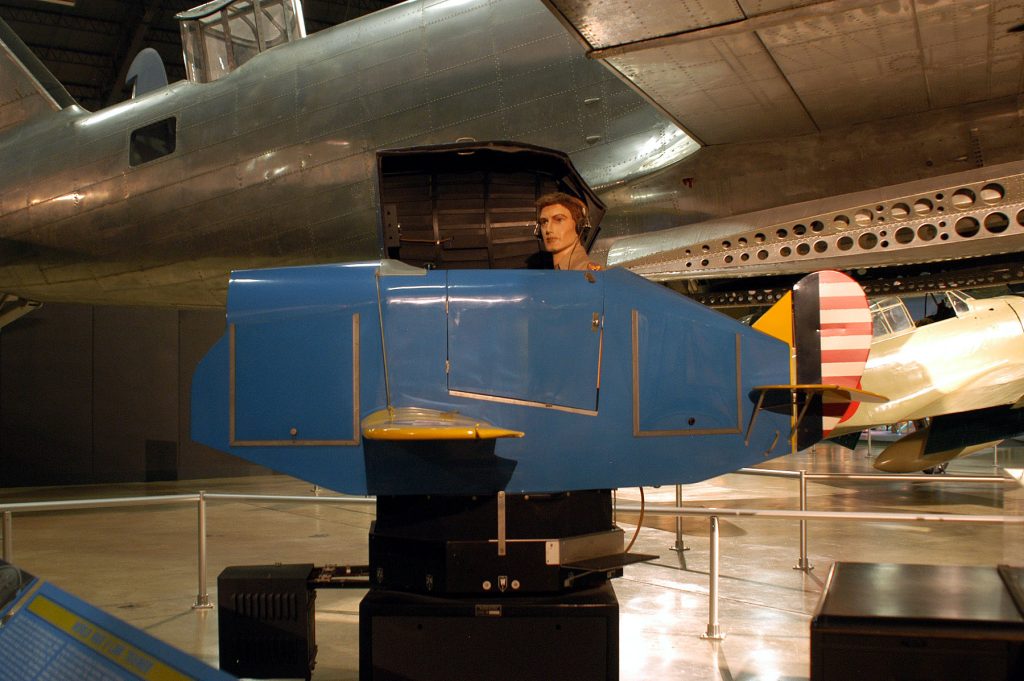
Link Trainer National Museum of the United States Air Force
DAYTON, Ohio — Link Trainer on display in the Air Power Gallery at the National Museum of the United States Air Force. (U.S. Air Force photo)

The first model, known as the Pilot Maker, was born out of necessity. In an era when pilots were learning to fly by the seat of their pants, there was a growing need to teach instrument flying skillsโ€”especially in poor visibility or night conditions. Ed Linkโ€™s trainer provided a safe, realistic environment for new and low-time pilots to learn these crucial skills. Interestingly, some early units were also sold to amusement parks, thanks to Linkโ€™s decision to patent the Pilot Maker as both a flight training device and an “entertainment apparatus”โ€”an early example of what we might now call edutainment.
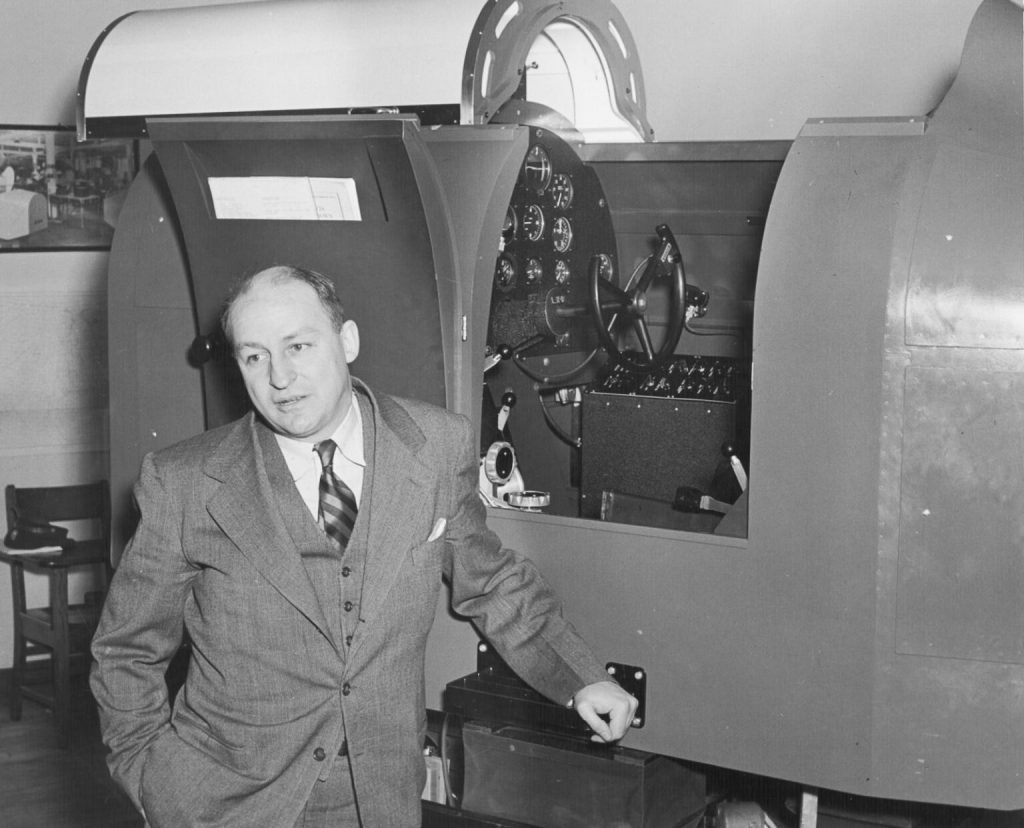
Edwin Albert Link jr with a Link Flight Trainer image via Binghamton University Librarysmall 1536x1242 1
Edwin Albert Link, Jr. resting against a late-war model (ANT-18) of his famed Link Flight Trainer. Photo Binghamton University Library via Wikipedia

Among the most well-known of Linkโ€™s designs was the AN-T-18, also known as the Army-Navy Trainer Model 18. This version was widely adopted for military use during World War II. At the heart of the AN-T-18 was the iconic “Blue Box” cockpit, which enclosed the trainee in a vision-restricted space to simulate instrument-only flying. Outside the box, the instructor monitored the studentโ€™s progress at a control station featuring a map table and duplicated instruments. A wind-drift computer powered an ink markerโ€”nicknamed โ€œthe crabโ€โ€”which plotted the aircraft’s simulated course on the map. Bellows, gears, motors, and pulleys combined to move the trainer in response to the pilotโ€™s inputs, mimicking real flight behavior. Headphones provided communication between the instructor and the student.

Activities at Royal Naval Air Station Lee on solent 13 To 17 September 1943 A19290
Activities at Royal Naval Air Station Lee-on-solent, 13 To 17 September 1943 The Link trainer in action at the RNAS Lee-on-Solent. Here budding pilots receive their first training in blind flying while the instructing officer speaks to them by phone. Photo Royal Navy official photographer, Zimmerman, E A (Lt) via Wikipedia

Today, many examples of the Link Trainer, including the AN-T-18, still exist in museums across North Americaโ€”some even remain operational. Ed Linkโ€™s innovative spirit laid the foundation for modern flight simulation, from early analog trainers to todayโ€™s high-fidelity digital simulators like the Redbird and beyond. Could Ed Link have imagined just how far his idea would go? Nearly a century later, his invention continues to shape aviation training around the world.ย  Check out this great article by Richard Mallory Allnutt, Vintage Aviation News Senior Editor and Military Aviation Museum’s Digital Content Curator.
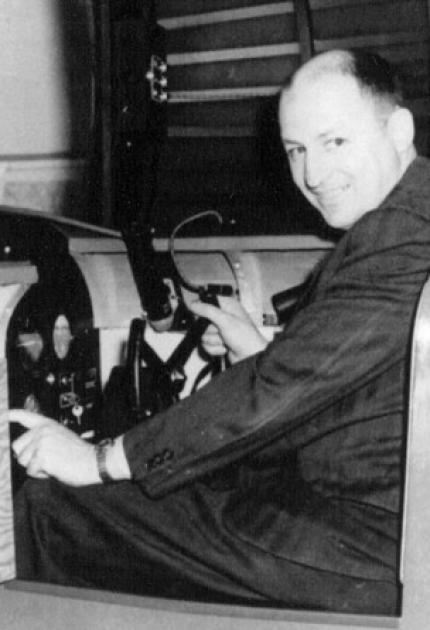

Edwin A. Link
Edwin Link sits in the pilot trainer developed by his company, Link Aviation Devices. Image via Wikipedia
Austin Hancock

Commercial Pilot, CFI, and Museum Entrepreneur, with a subject focus on WWII Aviation. I am dedicated to building flight experience so I can fly WWII Fighters, such as the P-51 Mustang, for museums and airshows, and in the USAF Heritage Flight. I lead and run the Pennington Flight Memorial, to honor local MIA Tuskegee Airman F/O Leland โ€œStickyโ€ Pennington.

Barnerstormer Hugault 729x90
Share This Article
Commercial Pilot, CFI, and Museum Entrepreneur, with a subject focus on WWII Aviation. I am dedicated to building flight experience so I can fly WWII Fighters, such as the P-51 Mustang, for museums and airshows, and in the USAF Heritage Flight. I lead and run the Pennington Flight Memorial, to honor local MIA Tuskegee Airman F/O Leland โ€œStickyโ€ Pennington.
Leave a comment

Leave a Reply

Your email address will not be published. Required fields are marked *