

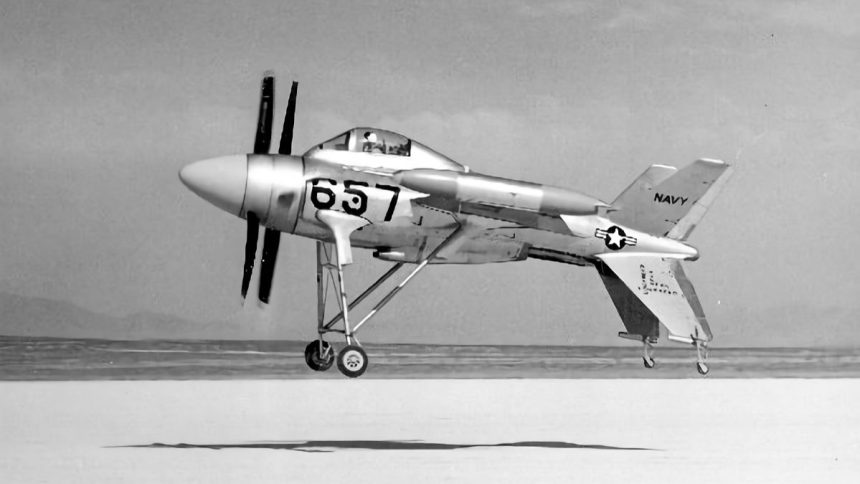


On this day in aviation history—June 16, 1954, 71 years ago—the Lockheed XFV made its first official flight. Nicknamed the “Salmon” after its test pilot, this unusual prototype was Lockheed’s attempt to develop a tail-sitting vertical takeoff and landing (VTOL) fighter for the U.S. Navy. It emerged during a decade of intense experimentation in American aviation, and the XFV stands as one of the most striking examples of that era’s ingenuity.
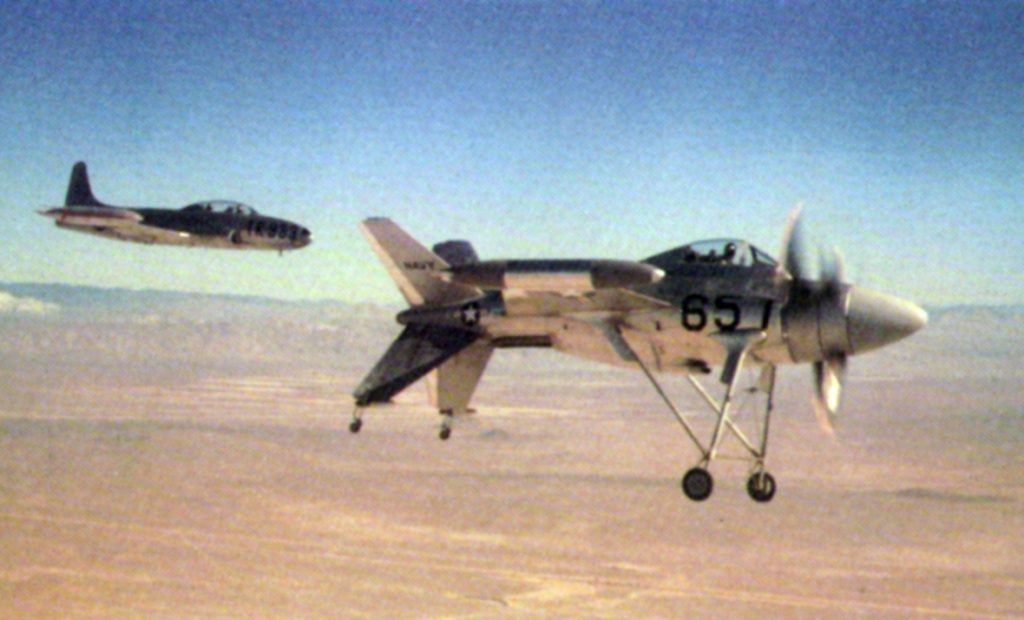
The concept originated in 1948, when the U.S. Navy issued a requirement for a VTOL aircraft that could operate from compact platforms mounted on the aft decks of conventional ships. In April 1951, Lockheed received a contract to build two prototypes under the initial designation XFO-1. The designation was later changed to XFV-1, reflecting the Navy’s updated coding system (from “O” to “V” for Lockheed aircraft). The aircraft’s tail-sitting configuration made it resemble a rocket poised for launch, leading Lockheed engineers to affectionately call it the “flying pogo stick.”
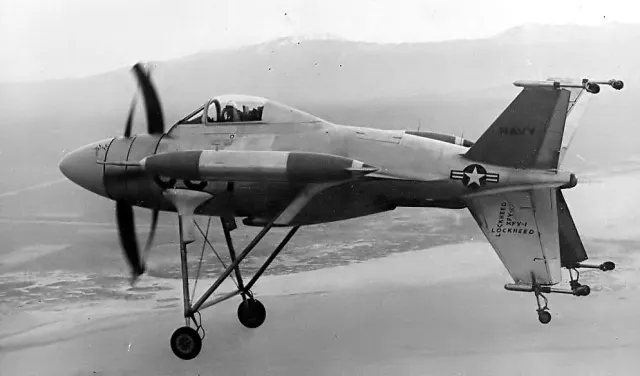
Flight testing was led by Herman “Fish” Salmon, Lockheed’s chief test pilot and the inspiration for the aircraft’s nickname. On its first official outing, Salmon intended only to taxi the aircraft, but he inadvertently reached liftoff speed, resulting in a brief hop into the air—thus marking the XFV’s first flight. Powered by a 5,100 shp Allison XT40-A-14 turboprop, the XFV was initially limited by delays in the development of its intended engine, the 7,100 shp Allison T54. Despite this, the aircraft successfully demonstrated the transition from vertical takeoff to horizontal flight, a key milestone in VTOL development.
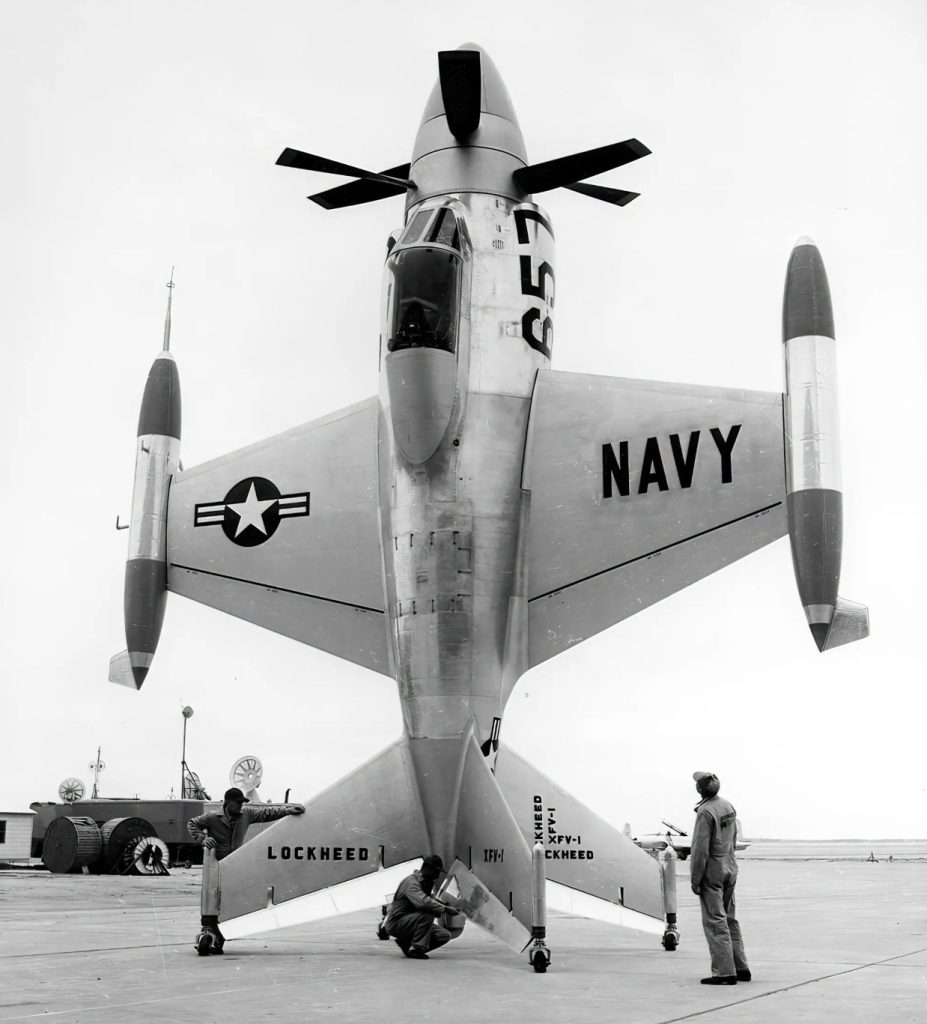
However, as testing progressed, several shortcomings became clear. The XFV-1 was underpowered, slower than existing Navy fighters, and required complex and extended pilot training. Ultimately, these limitations led to the project’s cancellation in June 1955. Only one XFV-1 was ever flown, but it survives today and is on display at the Sun ‘n Fun Museum in Lakeland, Florida. The second, incomplete prototype is preserved at Los Alamitos Army Airfield in California. Both airframes serve as rare reminders of an ambitious chapter in VTOL experimentation.