

Today in Aviation History: First Powered Flight of the North American X-15

On September 17, 1959, test pilot Scott Crossfield made history with the first powered flight of the North American X-15. Dropped from a Boeing NB-52A at 35,000 feet, Crossfield ignited the rocket planeโ€™s twin XLR-11 engines and accelerated to Mach 2.11, marking a major milestone in hypersonic flight and paving the way for future space exploratio

Austin Hancock
Austin Hancock
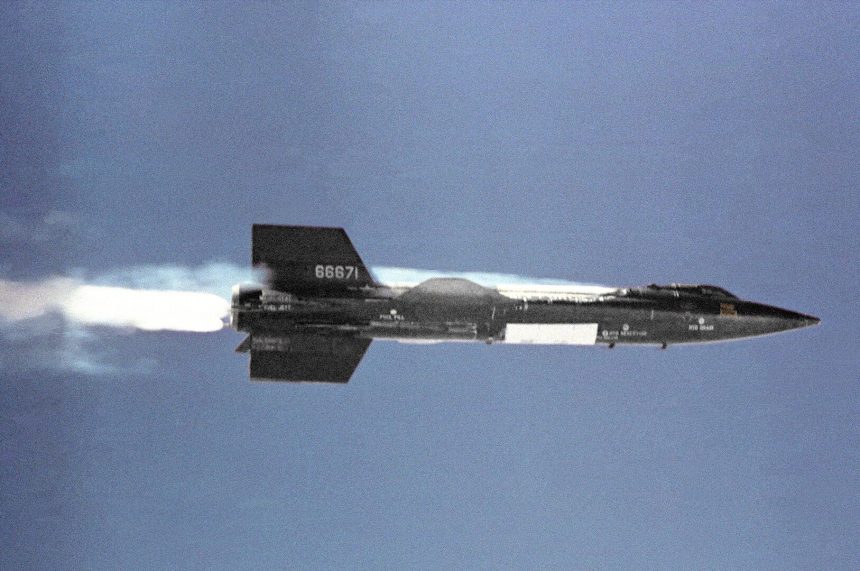
The X-15 #2 (56-6671) launches away from the B-52 mothership with its rocket engine ignited. Image via NASA
Platinum B 729

VAN Today in Aviation History Banner

On this day in aviation history, 66 years ago (September 17, 1959), the North American X-15 made its first powered flight. At the controls was legendary test pilot Scott Crossfield, renowned for his distinguished naval and experimental flight career. Crossfield had already flown the X-15 in an unpowered glide test, but this flight marked the moment the rocket plane truly came to life. The X-15 was a rocket-powered hypersonic research aircraft developed as a joint program between the U.S. Air Force and NASA as part of the X-plane series. Its mission was to explore the edges of speed, altitude, and aerodynamicsโ€”pushing beyond what was previously thought possible and paving the way for manned spaceflight during the early years of the Space Race.
X 15 and B 52 Mother ship 1
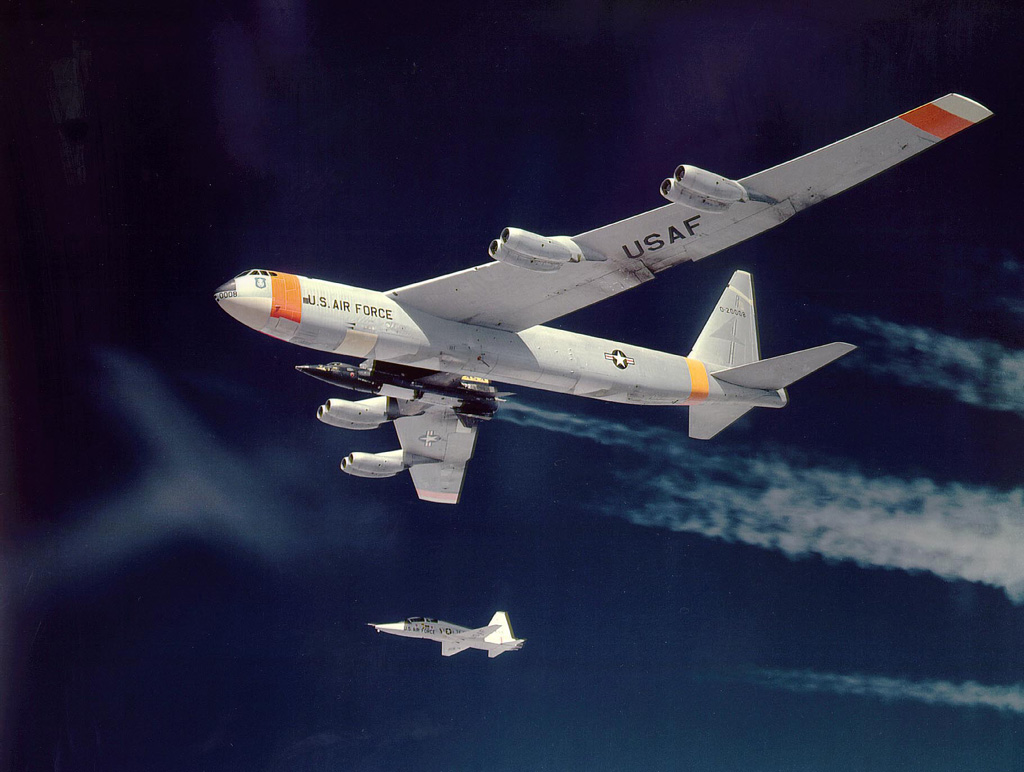
X-15 being carried by its NB-52B mothership (52-0008), with T-38A chase plane. San Diego Air and Space Museum Archives catalog

For the first powered flight, a Boeing NB-52A Stratofortress once again served as the mothership, carrying X-15 serial number 56-6670 to an altitude of 35,000 feet. At 8:08:48 a.m., over Rosamond Dry Lake west of Edwards Air Force Base, the X-15 was released. Crossfield dropped 2,000 feet before igniting the aircraftโ€™s two XLR-11 rocket engines, beginning a steep โ€œuphillโ€ climb. With 224.3 seconds of burn time available, Crossfield accelerated the X-15 to Mach 2.11โ€”roughly 1,393 mphโ€”marking a major milestone in hypersonic flight research.
x 15 first powered flight 10 crossfield in cockpit prior to release naa
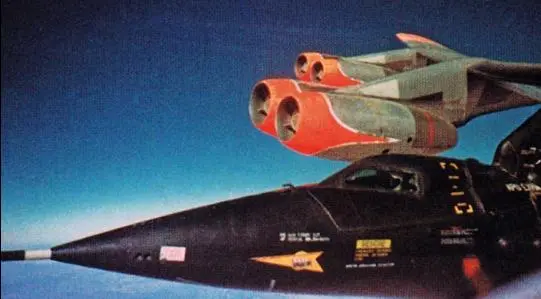
Pilot A. Scott Crossfield is visible in the cockpit of the X-15 shortly before the release from the B-52 carrier aircraft. Image via NASA

The X-15 would go on to set records that stand to this day. On October 3, 1967, pilot William J. โ€œPeteโ€ Knight flew the aircraft to its fastest recorded speedโ€”Mach 6.70 (4,520 mph). Later variants were equipped with a single Reaction Motors XLR99-RM-2 liquid-fueled rocket engine, producing 70,400 pounds of thrust. The aircraftโ€™s design was as radical as its performance: 49 feet, 2 inches long, with stubby 22-foot, 4-inch wings. It could climb at an astonishing 60,000 feet per minute and reach altitudes as high as 354,330 feetโ€”well into the fringes of space.

1438px X 15 flying
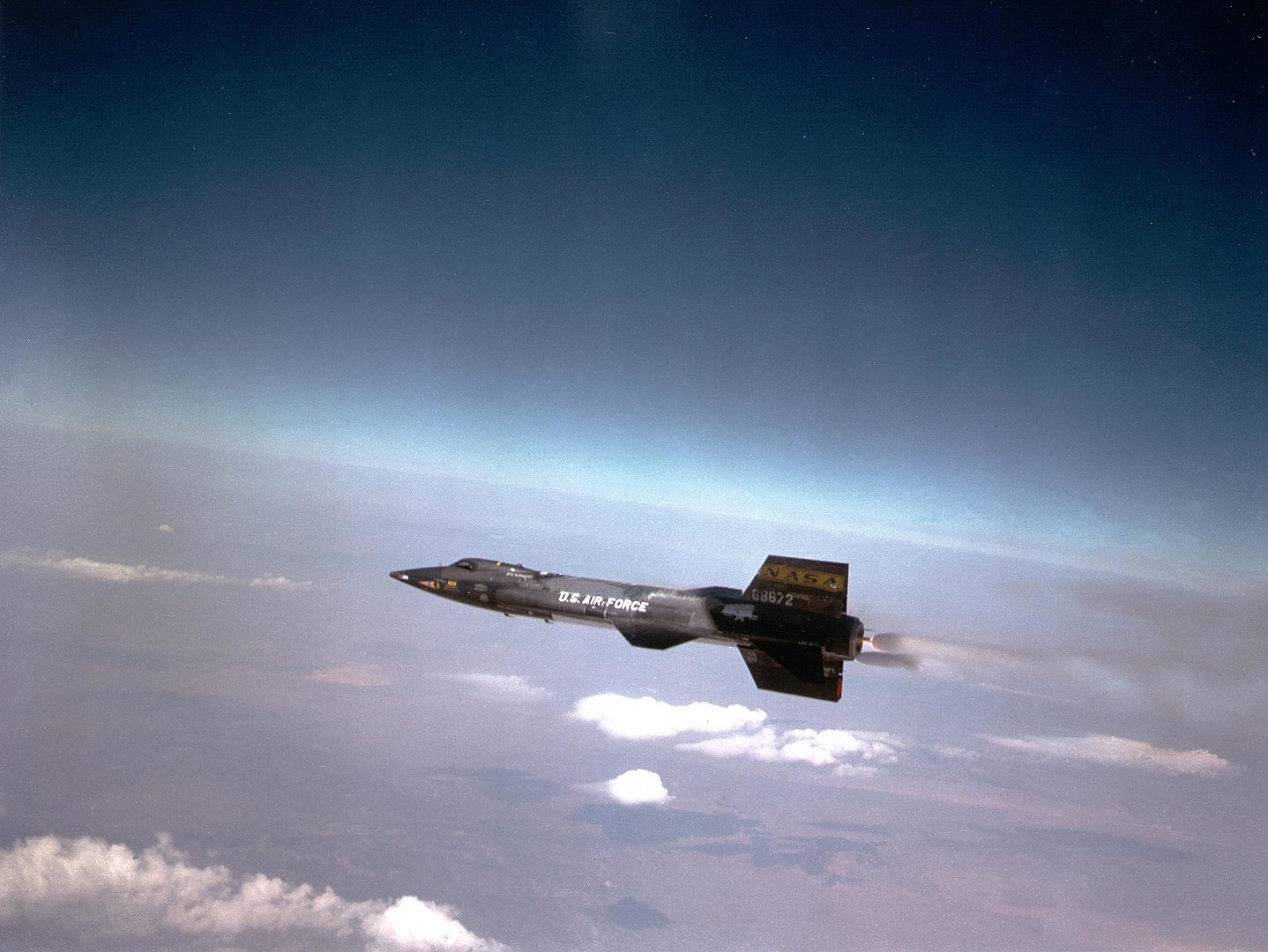
The X-15A-3 rocket plane soars over Edwards Air Force Base during a 1960s mission. This aircraft was lost in 1967 in a crash that claimed the life of Maj. Michael J. Adams. A NASA investigation cited a โ€œstable but non-robust adaptive controllerโ€ as the cause. Recently, the U.S. Air Force Test Pilot School validated a new, more robust adaptive controllerโ€”developed by the University of Illinoisโ€”that can adapt to any fly-by-wire aircraft. Image via NASA

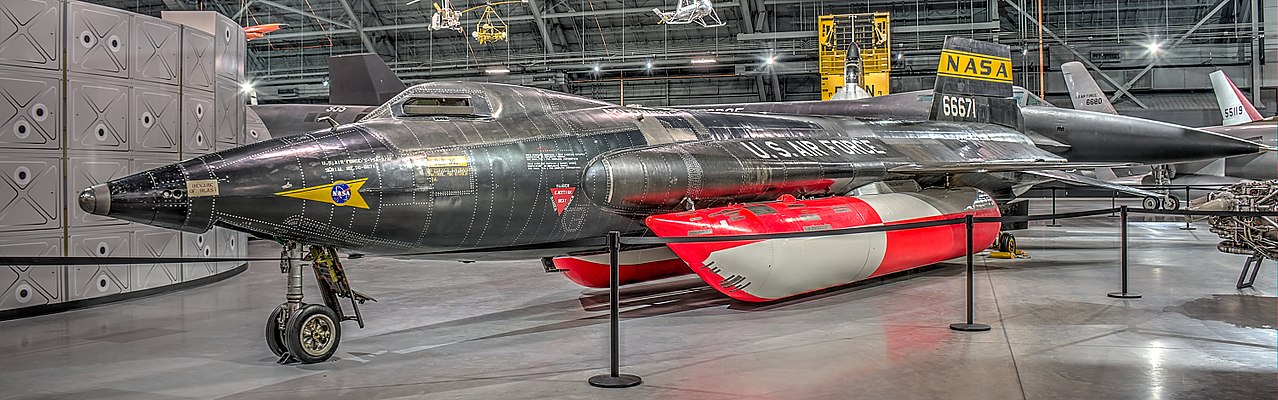
North American Aviation built three X-15s, and two survive today. X-15-1 (USAF s/n 56-6670)โ€”the very aircraft Crossfield flew on this historic dayโ€”resides at the Smithsonian National Air and Space Museum in Washington, D.C. X-15A-2 (USAF s/n 56-6671) is proudly displayed at the National Museum of the United States Air Force in Dayton, Ohio, preserving the legacy of one of the most extraordinary aircraft ever built.

X 15 at the USAF Museum
X-15A-2 (AF Ser. No. 56-6671) is at the National Museum of the United States Air Force, at Wright-Patterson Air Force Base,
Austin Hancock

Commercial Pilot, CFI, and Museum Entrepreneur, with a subject focus on WWII Aviation. I am dedicated to building flight experience so I can fly WWII Fighters, such as the P-51 Mustang, for museums and airshows, and in the USAF Heritage Flight. I lead and run the Pennington Flight Memorial, to honor local MIA Tuskegee Airman F/O Leland โ€œStickyโ€ Pennington.

Aircorps Art Dec 2019
Share This Article
Commercial Pilot, CFI, and Museum Entrepreneur, with a subject focus on WWII Aviation. I am dedicated to building flight experience so I can fly WWII Fighters, such as the P-51 Mustang, for museums and airshows, and in the USAF Heritage Flight. I lead and run the Pennington Flight Memorial, to honor local MIA Tuskegee Airman F/O Leland โ€œStickyโ€ Pennington.
Leave a comment

Leave a Reply

Your email address will not be published. Required fields are marked *