



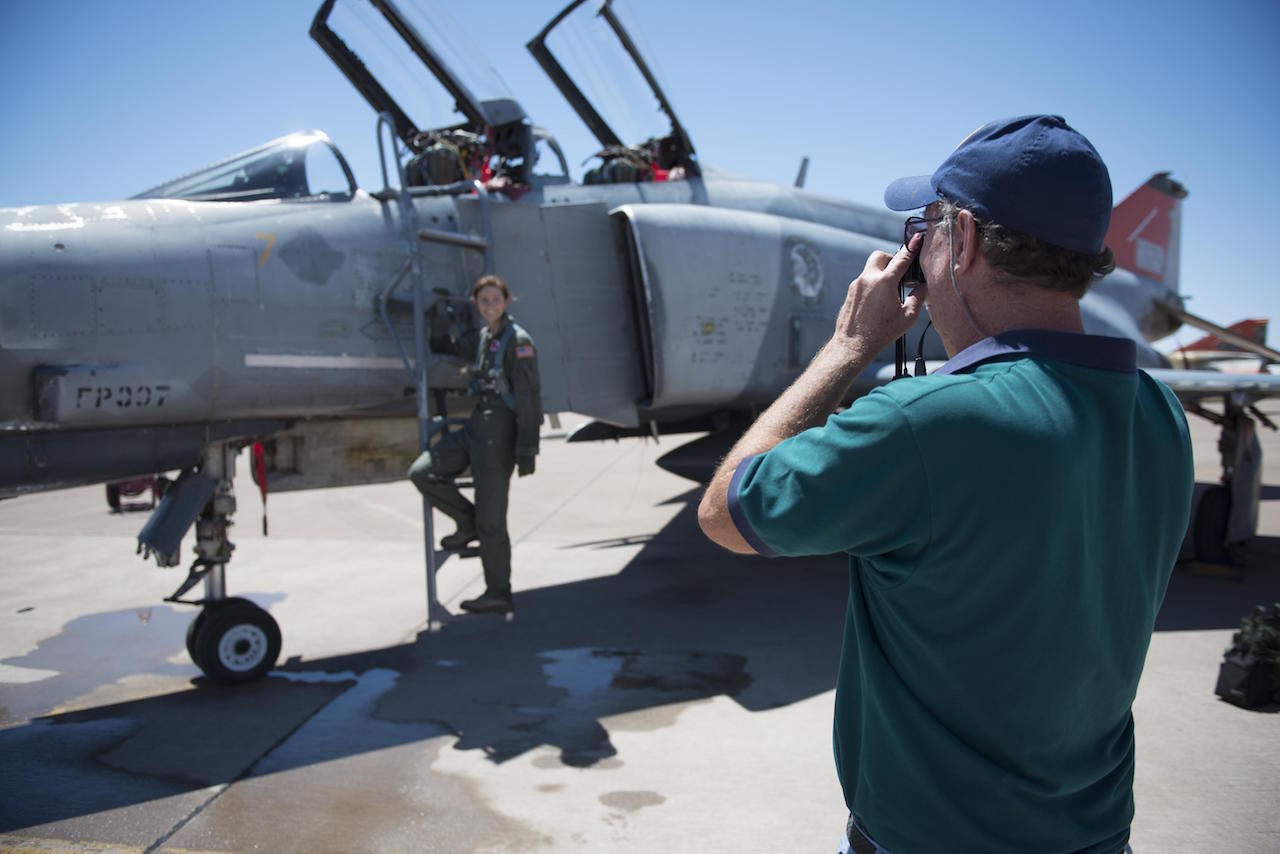

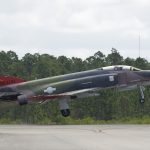
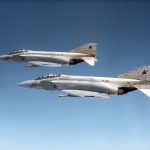
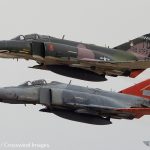
It’s the summer of 1967. Lyndon B. Johnson is president, Rolling Stone published their first magazine and girls all over the world are going crazy over an English boy-band called The Beatles. Right now, none of that matters. With sweaty hands, a young cadet carries his helmet bag toward the F-4 Phantom, mentally preparing himself for his first flight in an Air Force fighter jet. Forty-nine years later, a cadet in her junior year at the Air Force Academy climbs into one of the few remaining F-4’s in service, following the footsteps of her father—nearly half a century later. She wasn’t expecting to see him as she climbed down the ladder after her first flight—or the bucket of water he was throwing at her. True to the fighter pilot tradition that began in Vietnam, pilots are greeted with buckets of water or sprayed down by firehoses after completing a milestone in their career.
For Cadet 2nd Class Kaitlyn, it was her inaugural flight, for retired Col. David, it was another chance to pass on a tradition to his daughter, and for Detachment 1 with the 82nd Aerial Target Squadron at Holloman, it was the first time they witnessed a father surprise his second-generation fighter pilot daughter. “It was a great opportunity,” Kaitlyn said. “I think it’s mind-blowing to think I could be one of the last cadets to fly in an F-4. (Detachment 1) made it all happen, and I can’t thank them enough.”
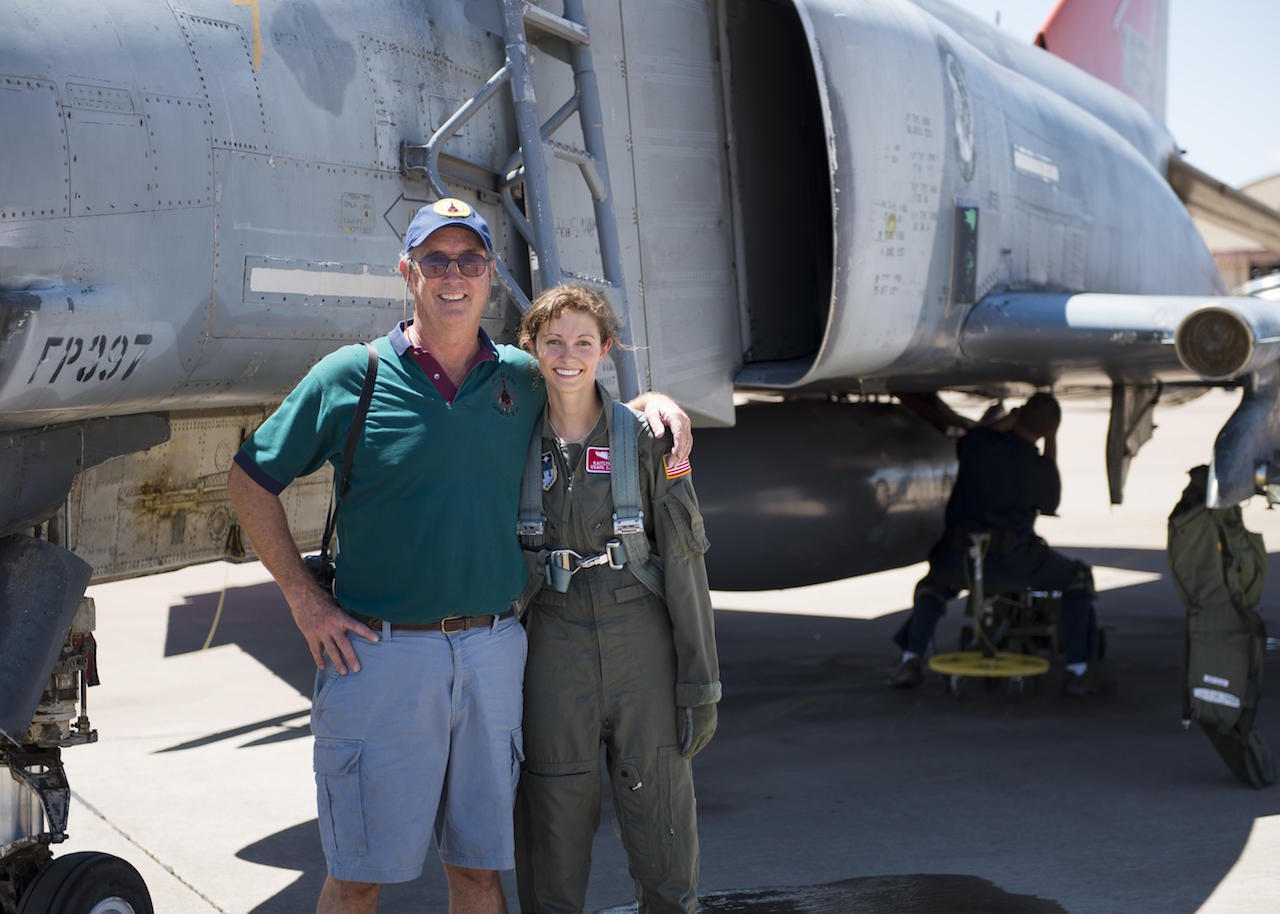
David was the commander of Det. 1 from 1992 – 1994. While waiting to surprise his daughter, he caught up with some of the maintainers who were under his command over 20 years ago. “The folks here at the detachment do a lot of work to make sure everything is put together,” David said. “They are very sharp and excellent at their job.” That same excellence is overseen by Lt. Col. Ronald King, the current commander of Det. 1, who flew with the second-generation cadet on her first sortie.“She was great,” King said. “She wanted to pull more G’s and go upside down more and go fast and go low. We got to go supersonic and below 500 feet. It was a great day for flying.”
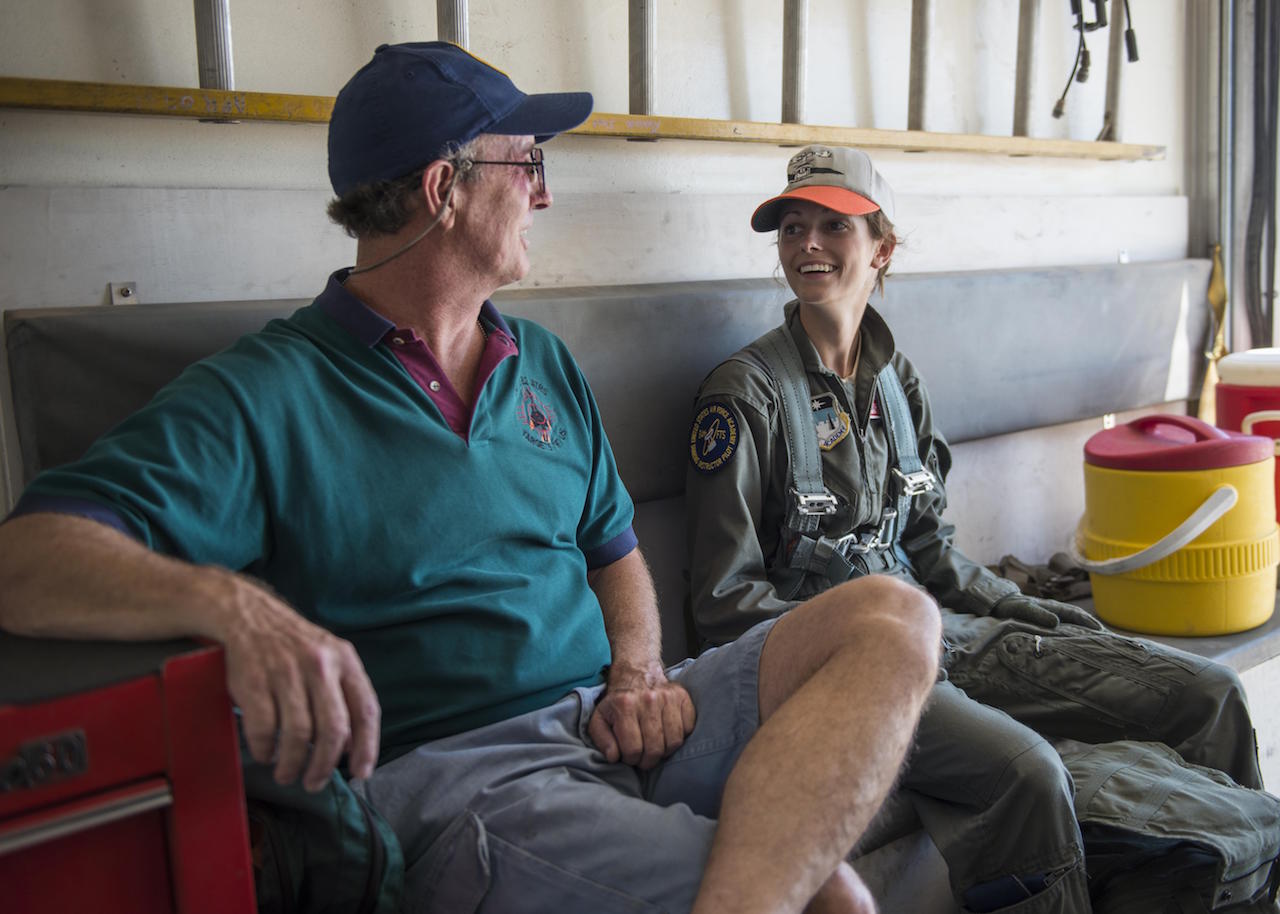
Kaitlyn credits her interest in flying to her father who flew three different aircraft during his time in active duty as a combat pilot. “He got me into gliders since I was a junior in high school,” Kaitlyn said. “Ever since then, it’s taken off.” Gliders are a specially designed aircraft with no engine that needs to be towed into the air by another aircraft. After reaching the desired elevation, the glider detaches and uses updrafts to keep the plane in the air until the pilots decides to land.
The young cadet is a rated glider pilot and instructor at the same academy her father went to all those years ago. “It’s not that she is following in my footsteps,” David said. “Of course I’m happy for her, but it’s about her setting her sights on something and then achieving that goal. She has worked her (butt) off, and I’m very proud of her.It was definitely a once-in-a-lifetime opportunity,” King said. “Hopefully she will get a chance to fly in the next generation of fighter aircraft.”

 Vintage Aviation News