



The Imperial War Museum’s Battle of Britain Air Show
by George Land
Over the weekend of September 18th/19th the Imperial War Museum at staged a Battle of Britain air show at their facility in Duxford, Cambridge, the last major show of the year at the former RAF Duxford. The weather conditions varied significantly over the two days from bright sunlight to dull and hazy, but luckily the predicted rain failed to arrive.
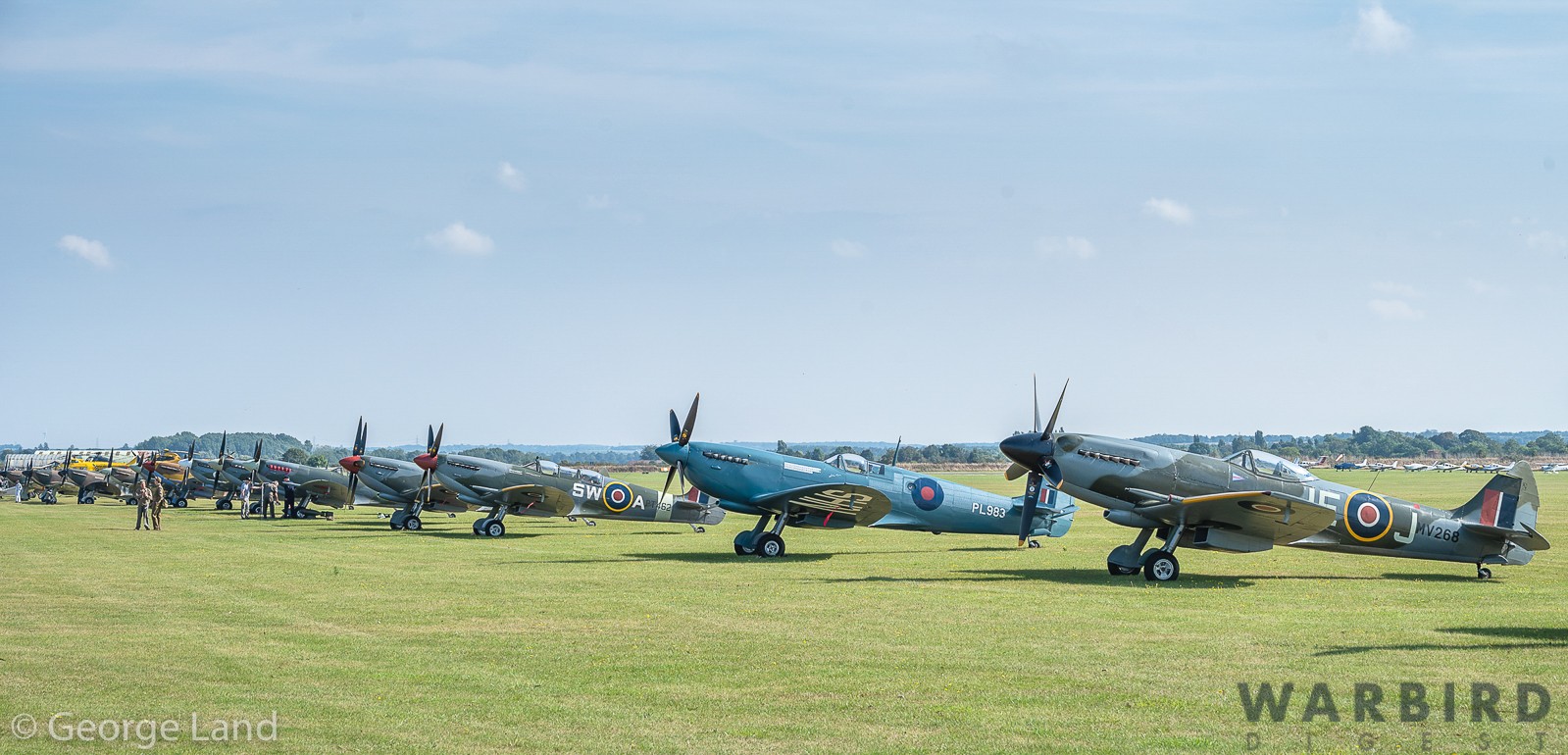
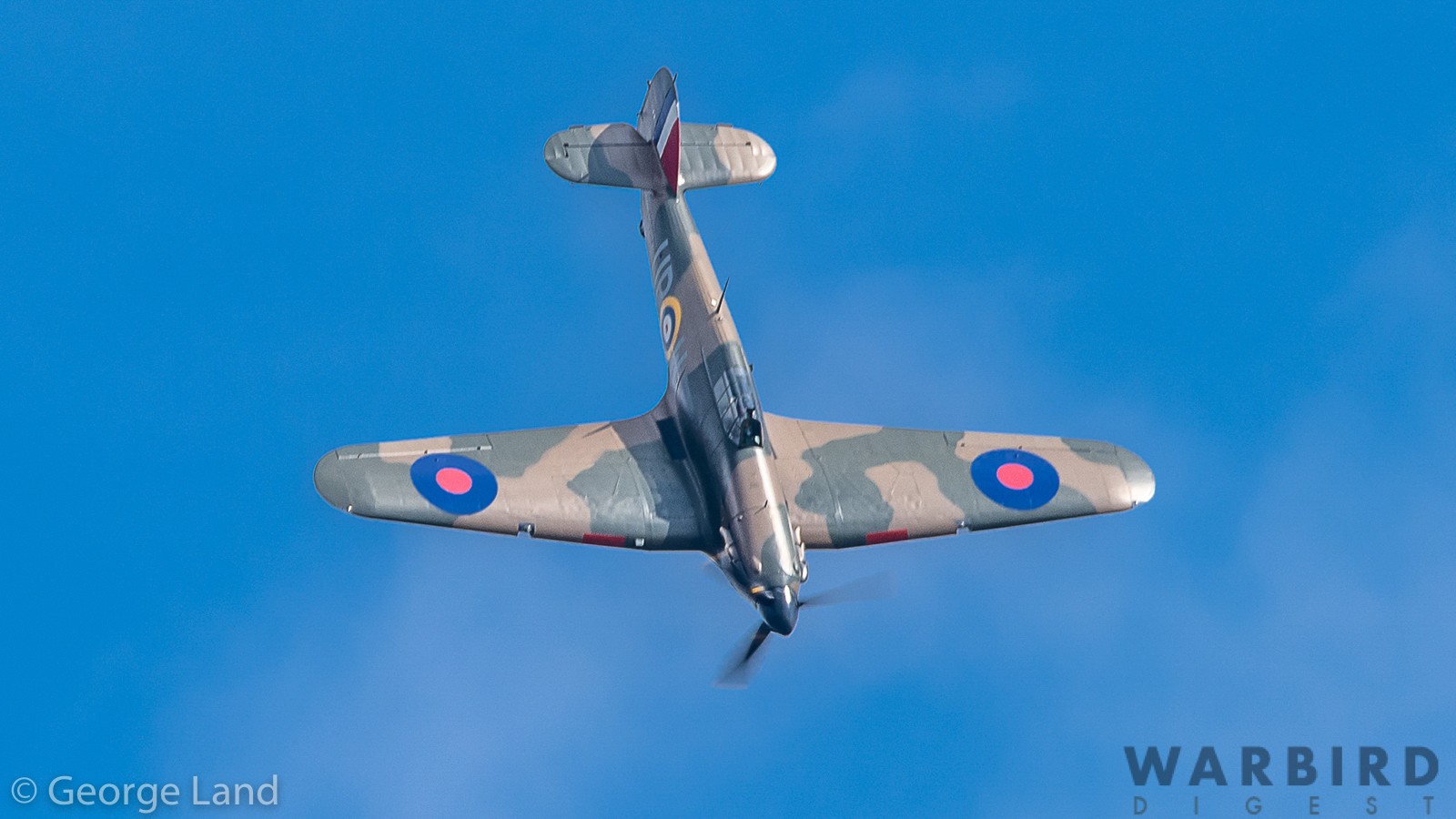
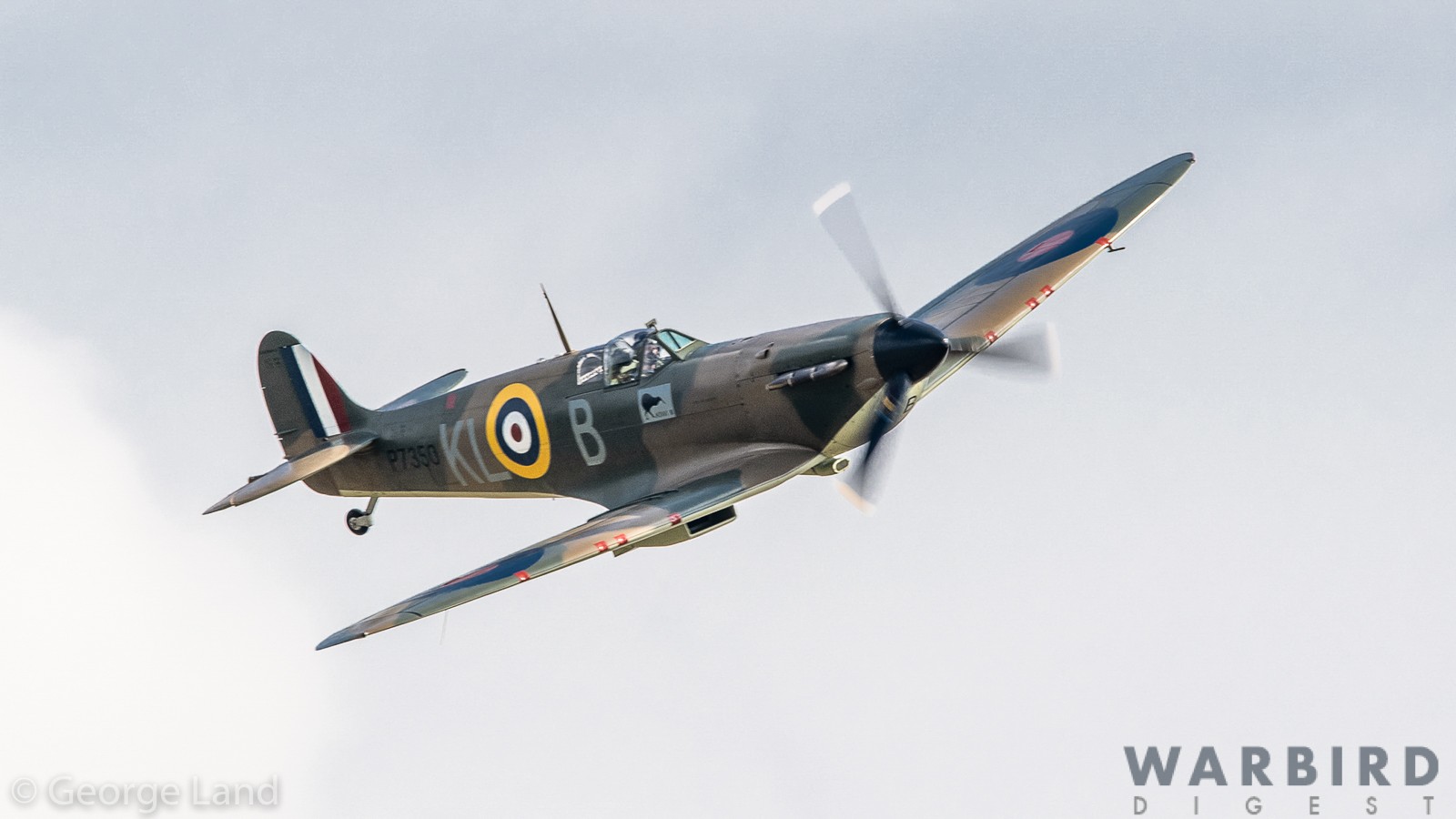
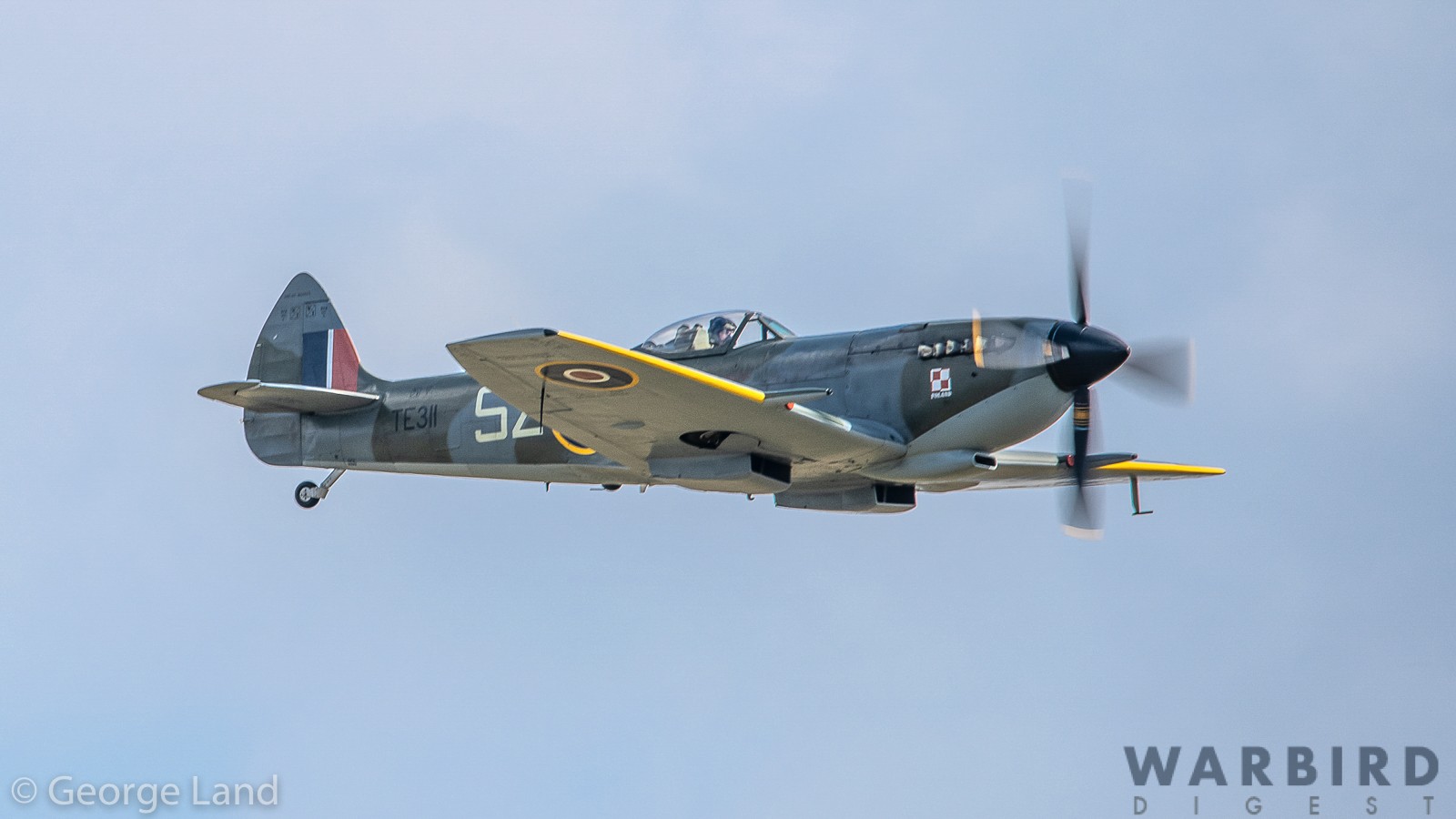
As might be expected for an air show with ‘Battle of Britain’ in its title, the event’s primary emphasis focused upon the two classic Royal Air Force fighters of that period, the Supermarine Spitfire and Hawker Hurricane. While four different Hawker Hurricane Mk.Is took part in the weekend show, a total of 17 different Spitfires participated, representing nine different marques – from the Merlin-powered Mk.I to the Griffon-powered Mk.XIV.
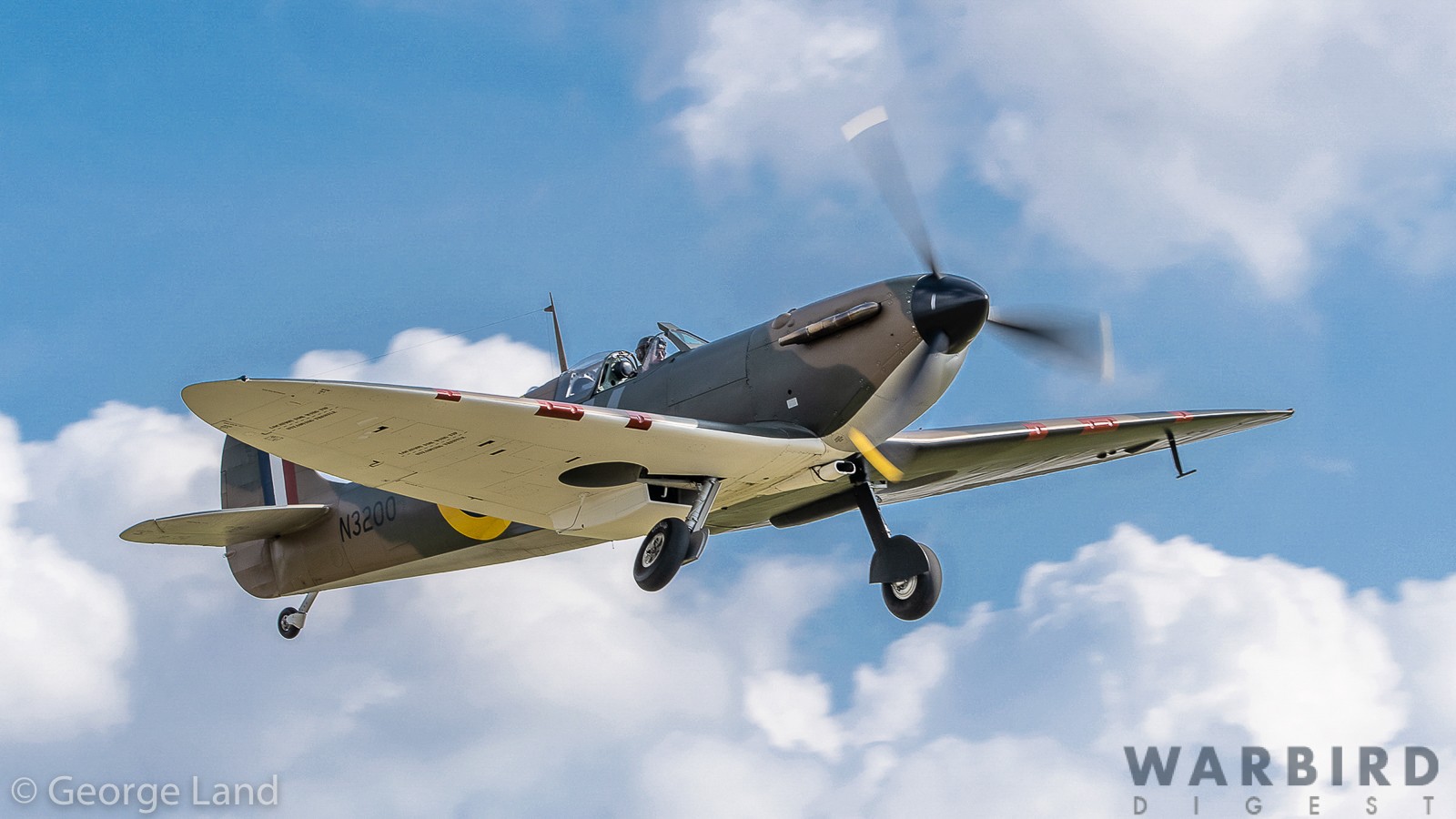
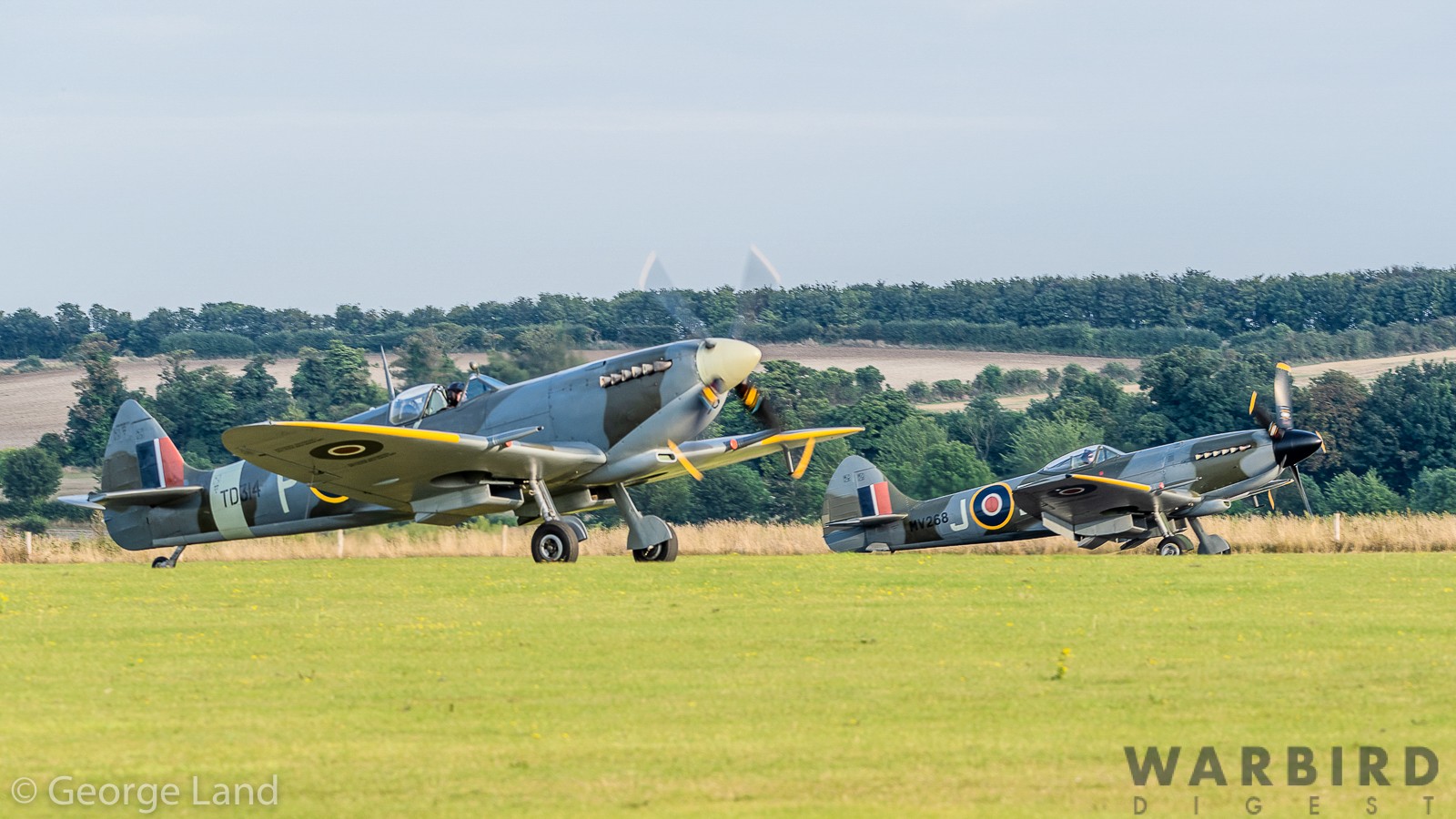
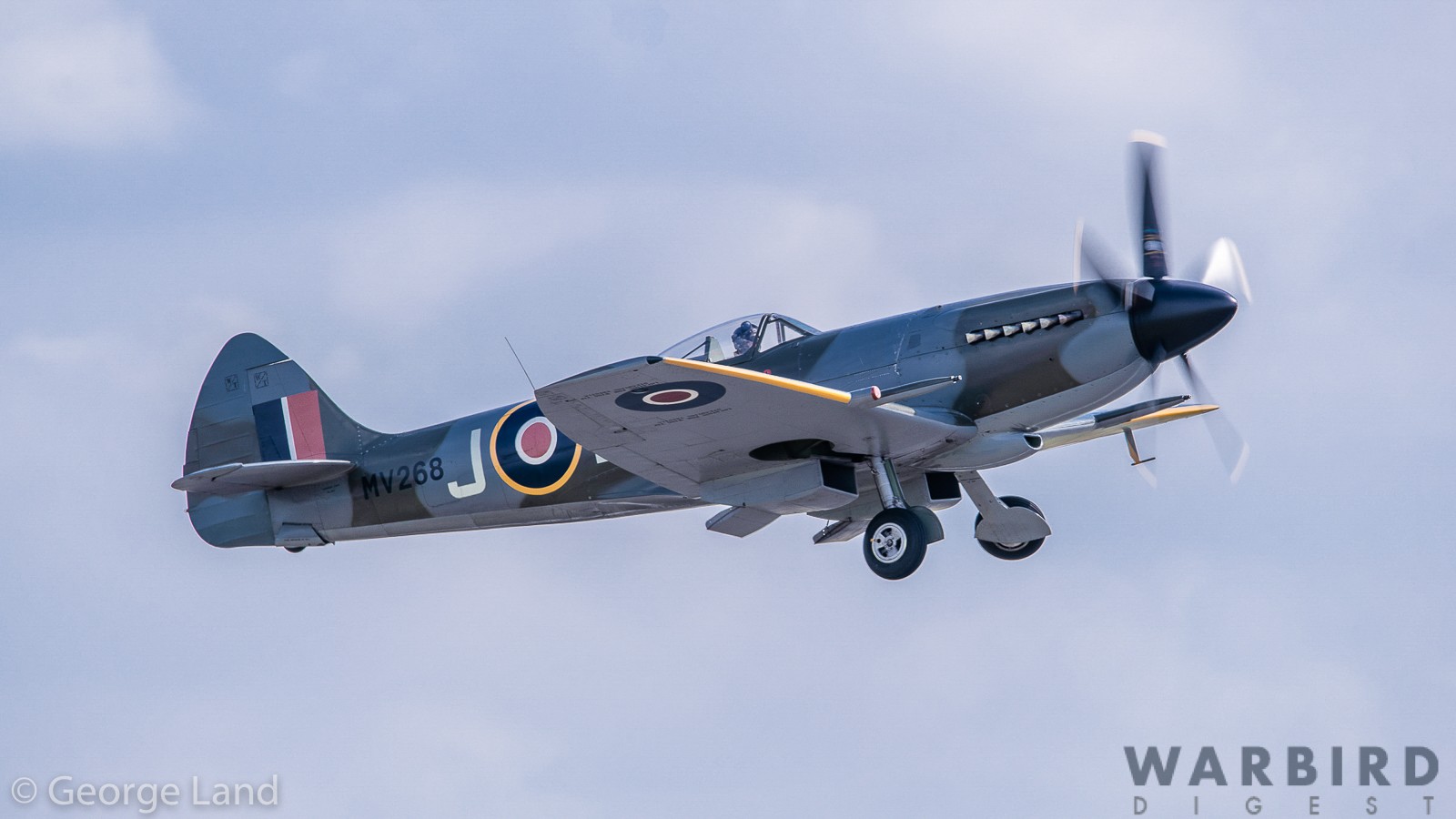
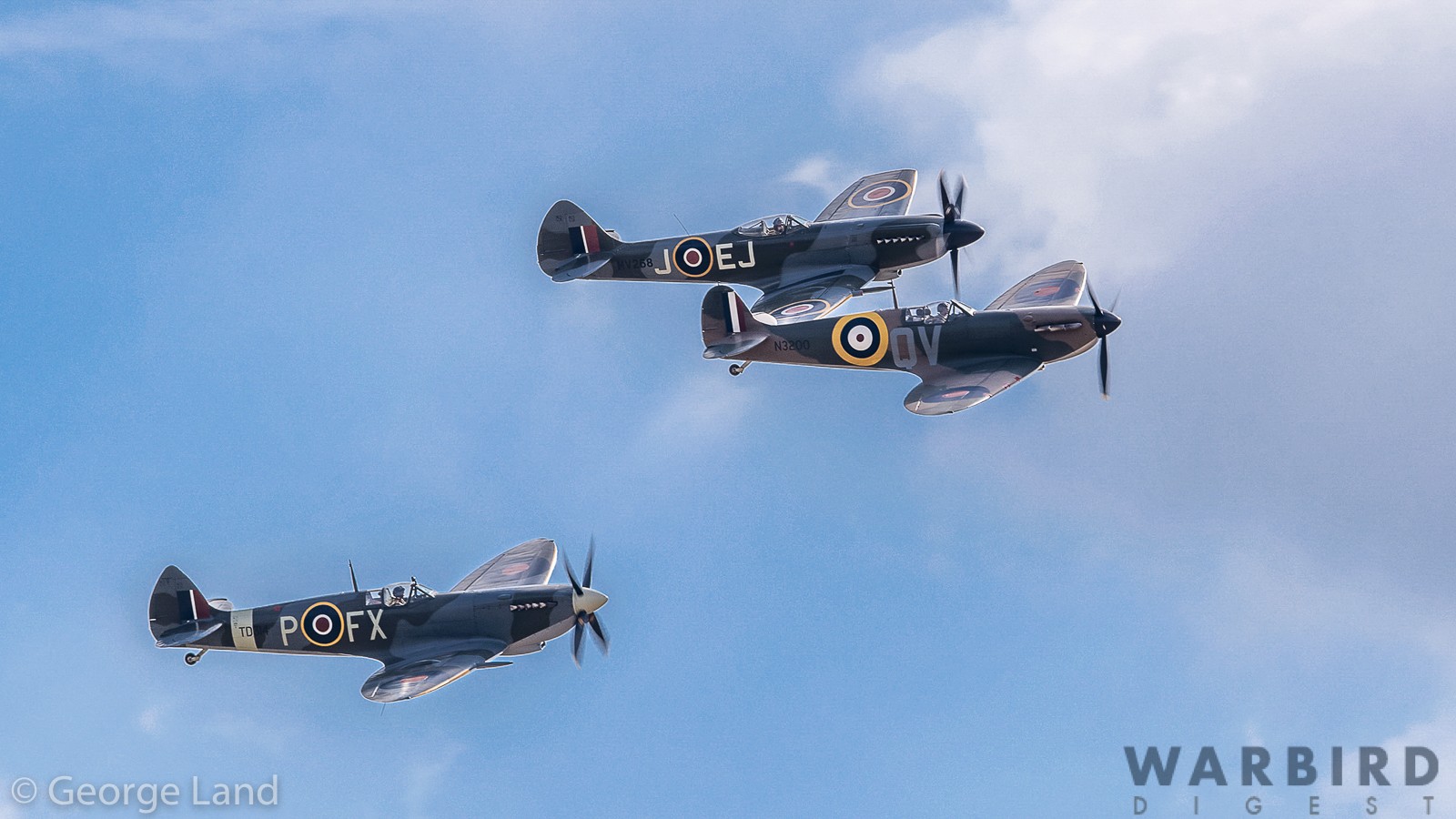
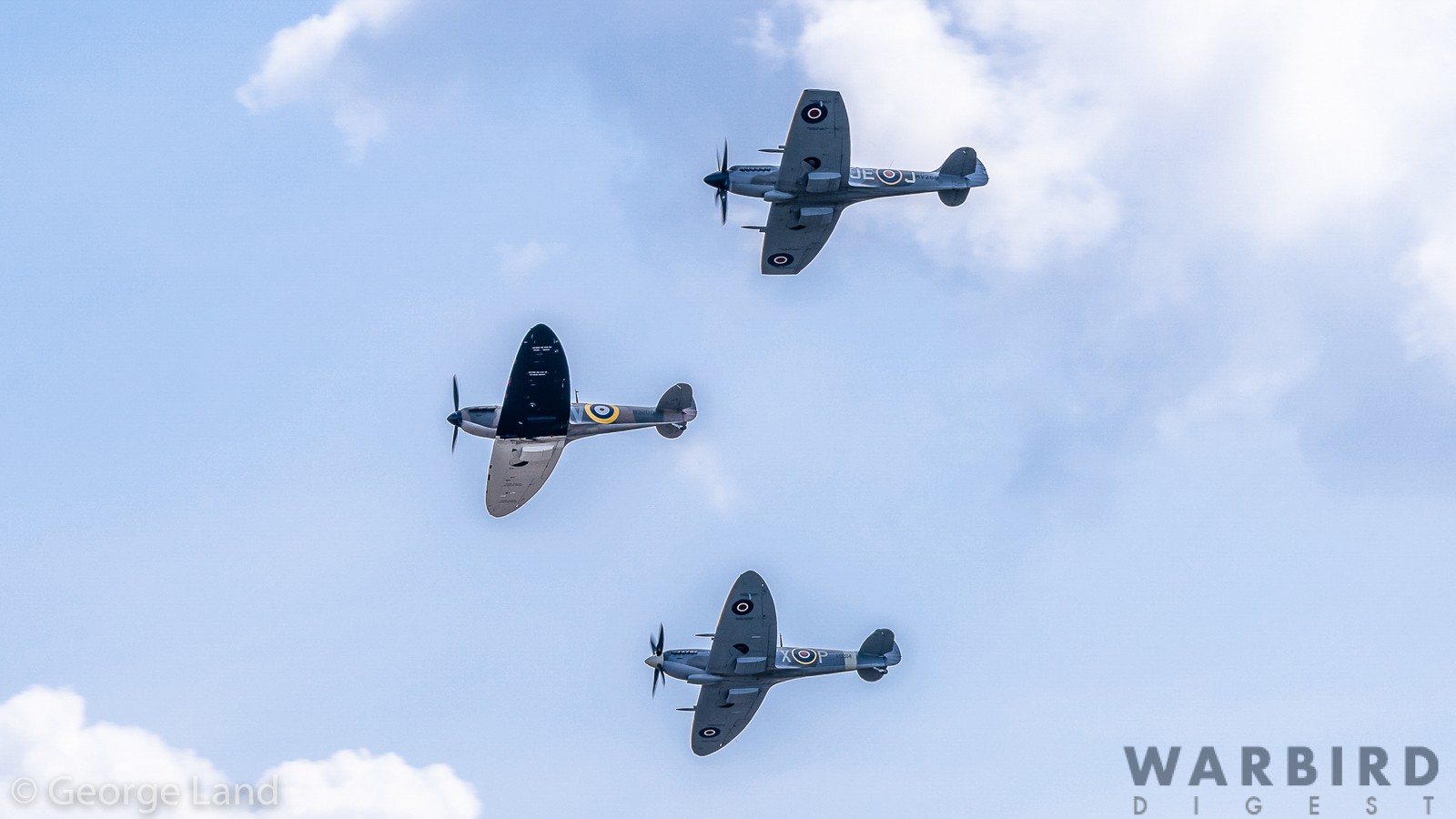
The show’s opening act represented the Spitfire’s development from the early days of WWII through to its close. The three ship formation featured the Battle of France combat-veteran Spitfire Mk.Ia (N3200) powered by a silky-smooth Merlin III (1030hp), to the throaty growl of the mid-war Mk.IX, represented by HF Mk.IXe TD314 and its 1720hp Merlin 70, through to the thunderous roar from the Griffin 65 (2050hp) powering the late-war Spitfire FR Mk.XIVe (MV293).
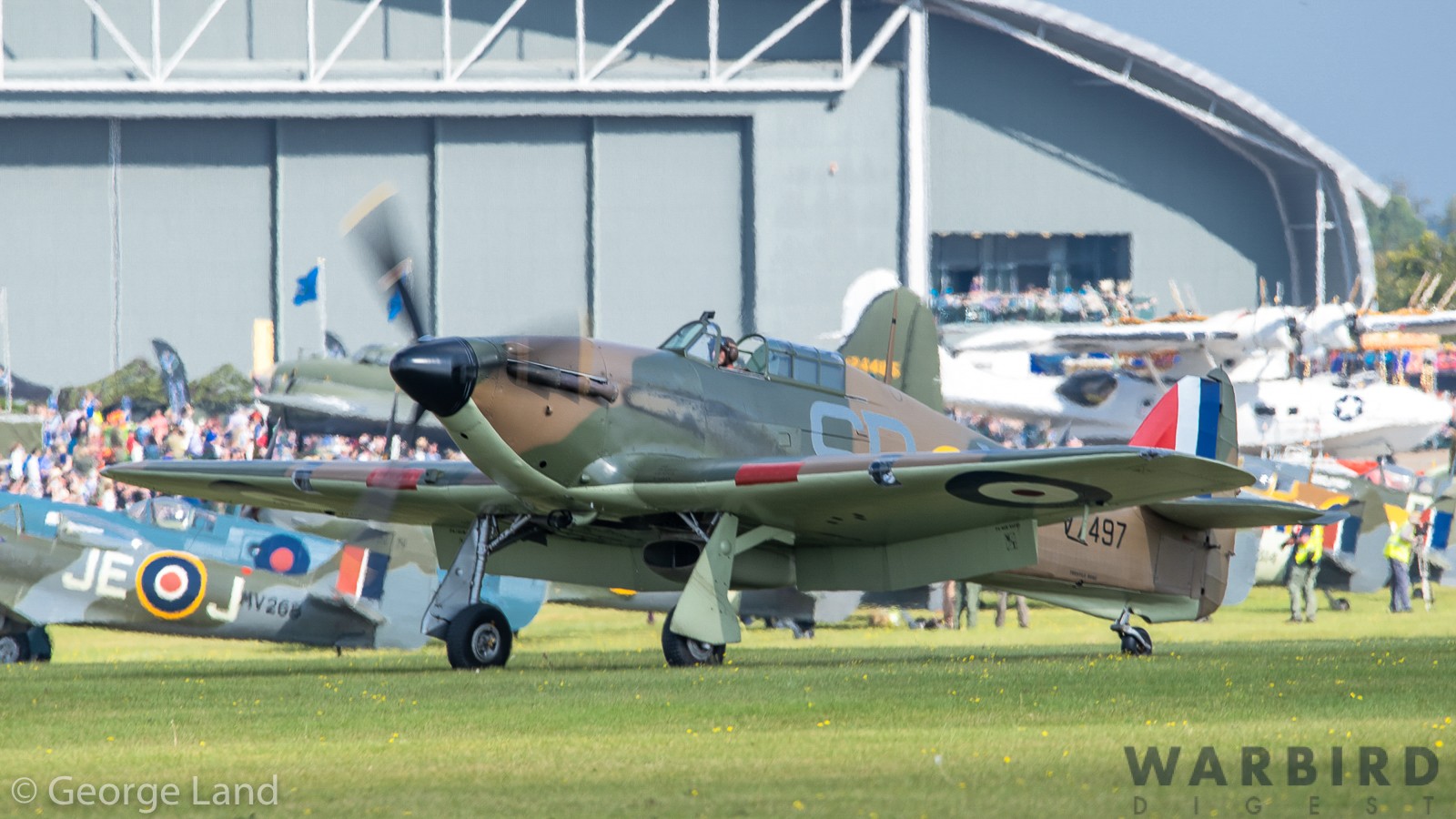
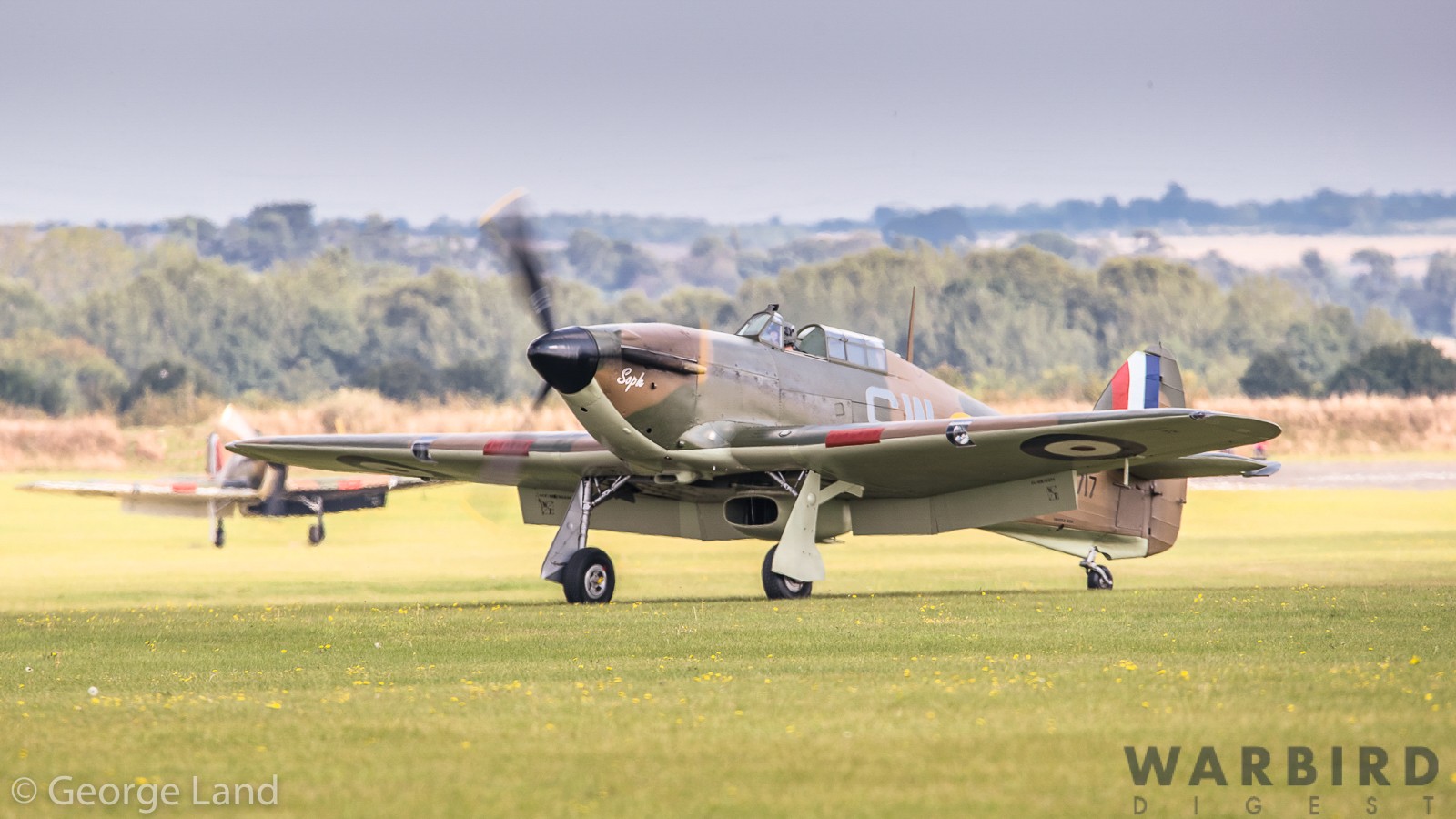
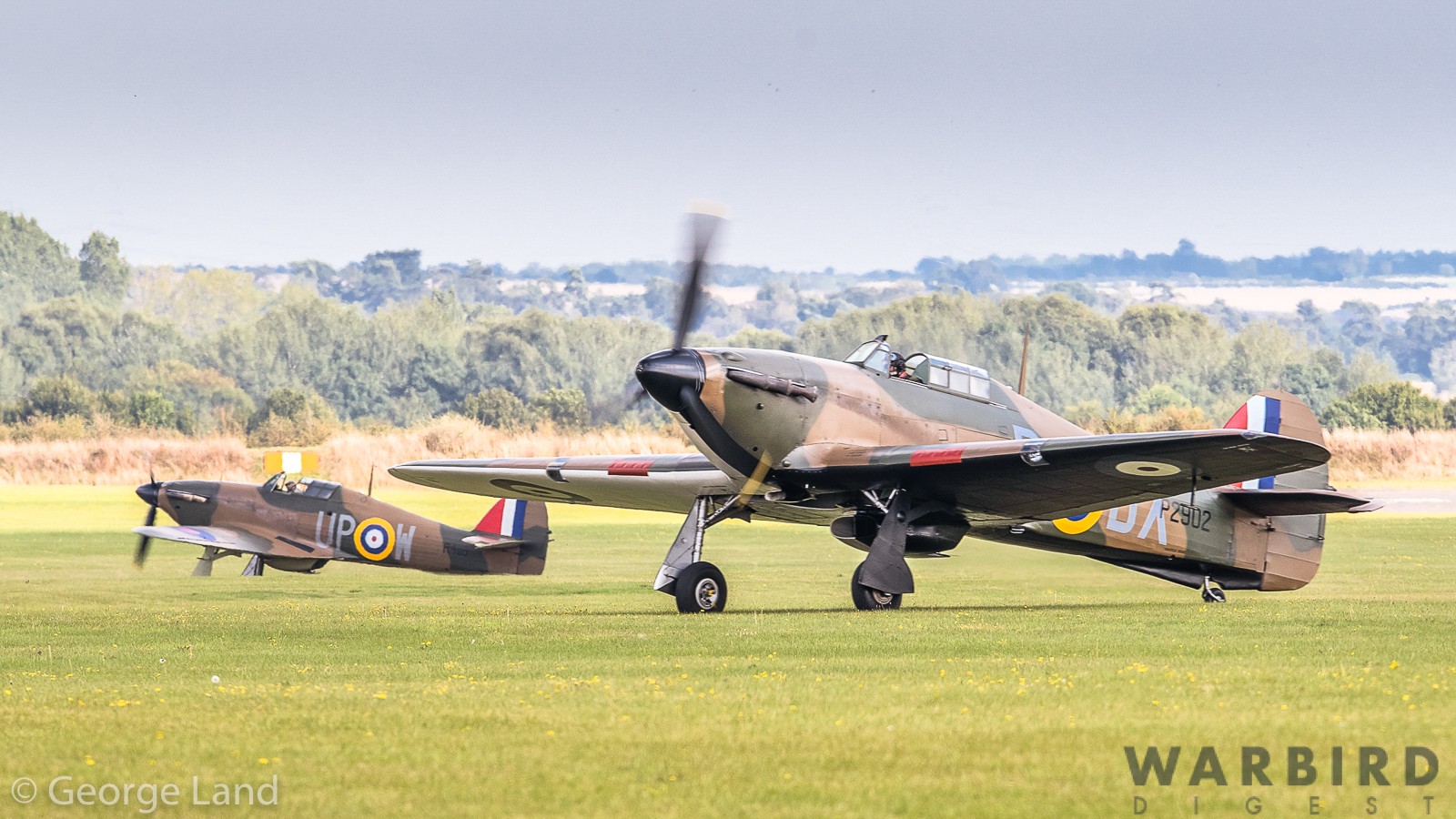
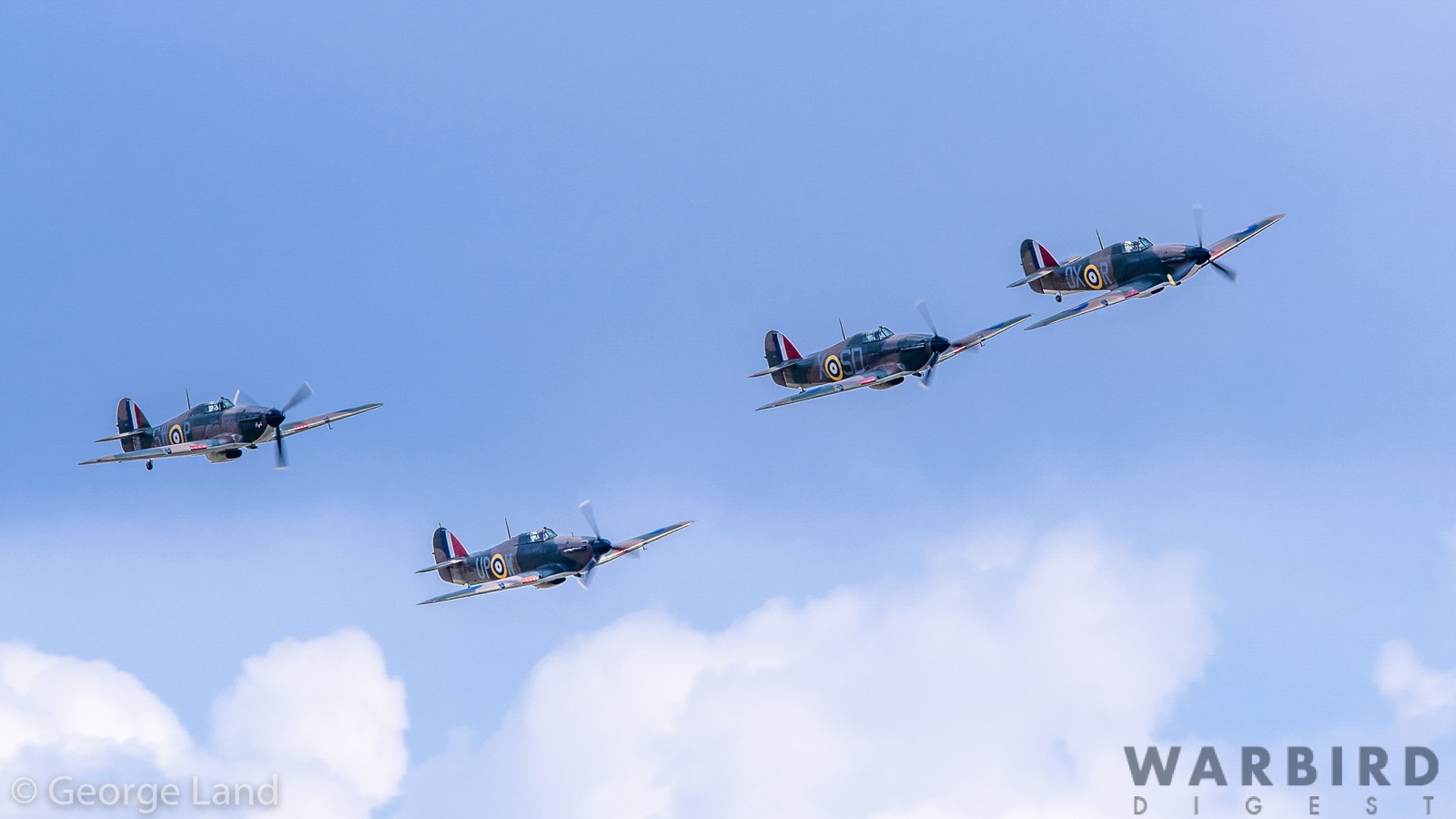
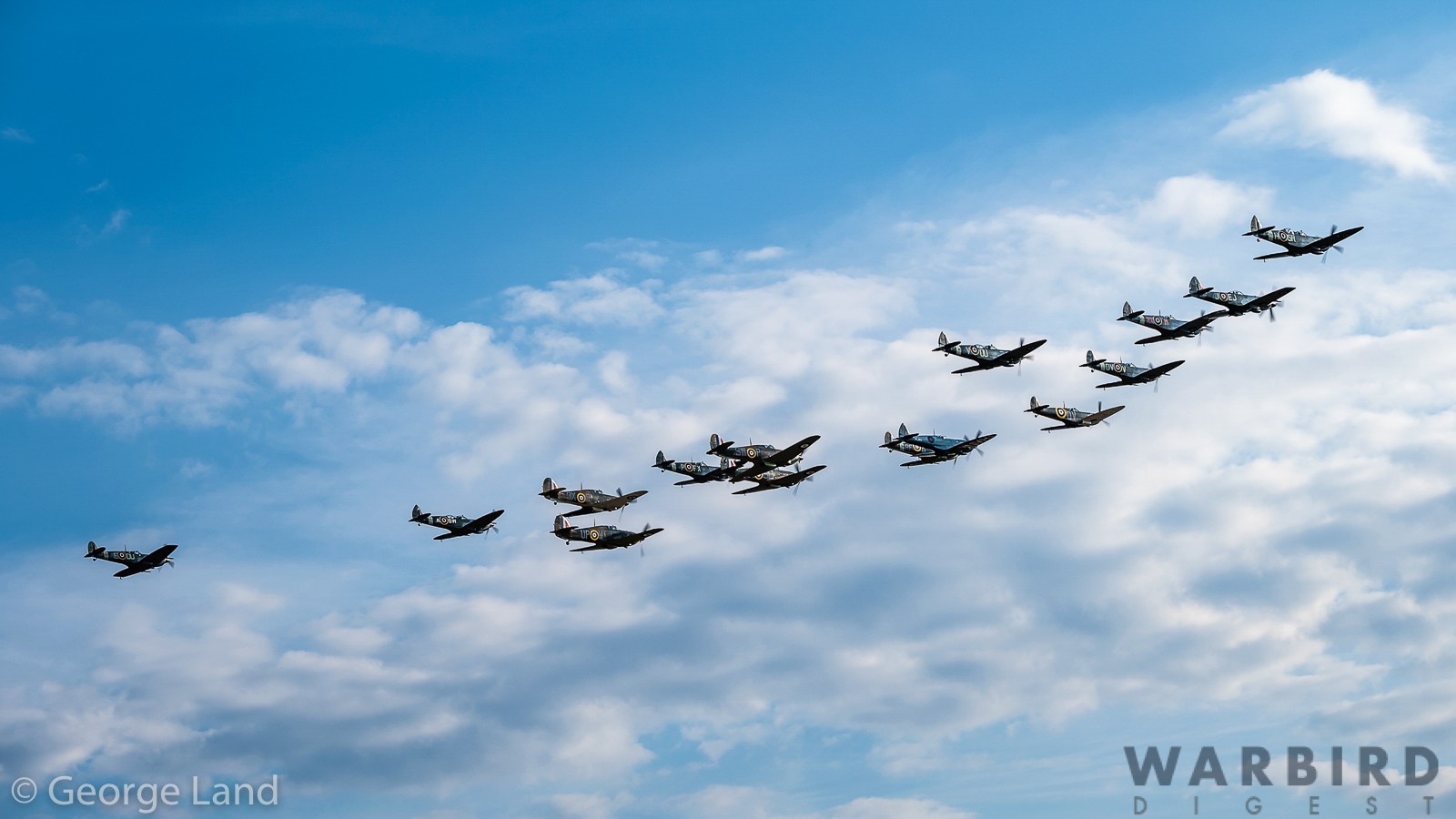
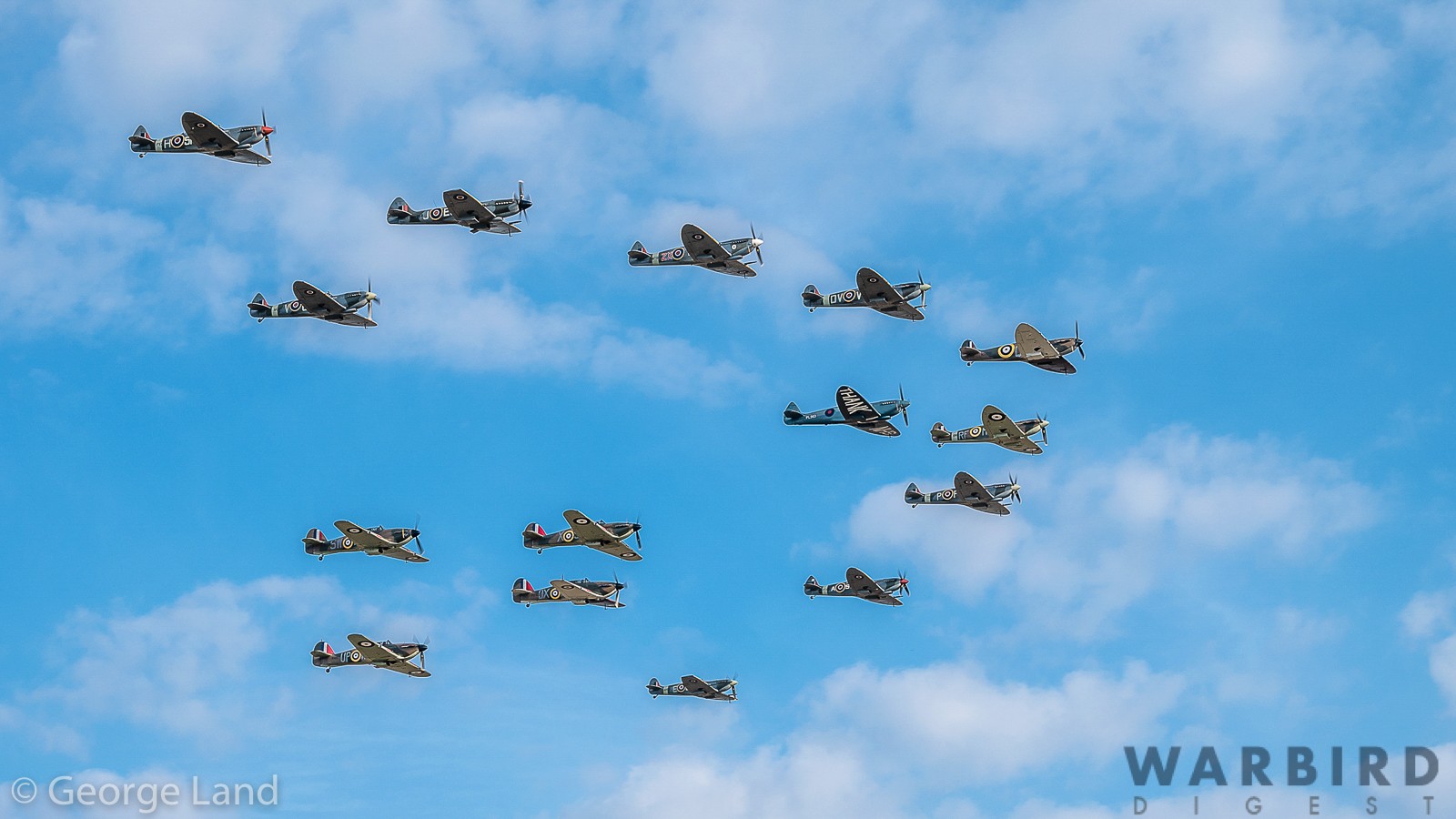
Following the Spitfire trio came a four-ship featuring the Hawker Hurricane Mk.I, arguably the most important of the British types serving during the Battle of Britain, as they were more numerous, and had the lion’s share of victories in that stage of the war. Being incredibly complex to restore in comparison to the Spitfire, airworthy Hawker Hurricanes are significantly rarer. Indeed, it wasn’t that long ago when you could count the number of airworthy examples on just one hand, but the type has experienced a slow-but-steady renaissance over the past couple of decades, with a dozen or so now flying. To see four of them at the same air show is still a remarkable feat though! These two opening formations later starred in the massed ‘Balbo’ for a Big Wing fly past featuring fifteen fighters – eleven being Spitfires while the other four were Hurricanes.
Between the opening and closing acts, the show featured an interesting and highly varied collection of warbirds and other types of fixed-wing and rotary aircraft…
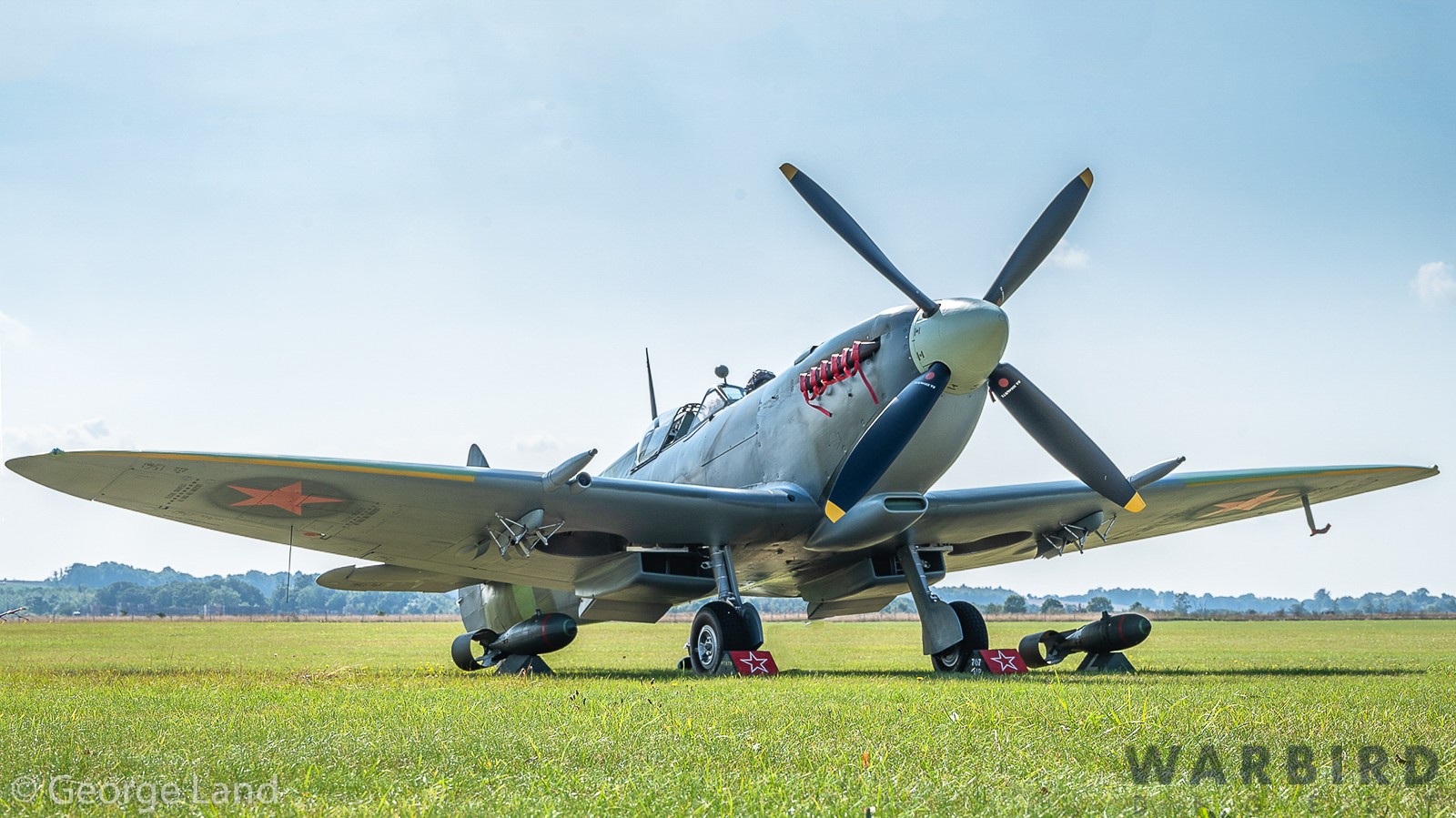
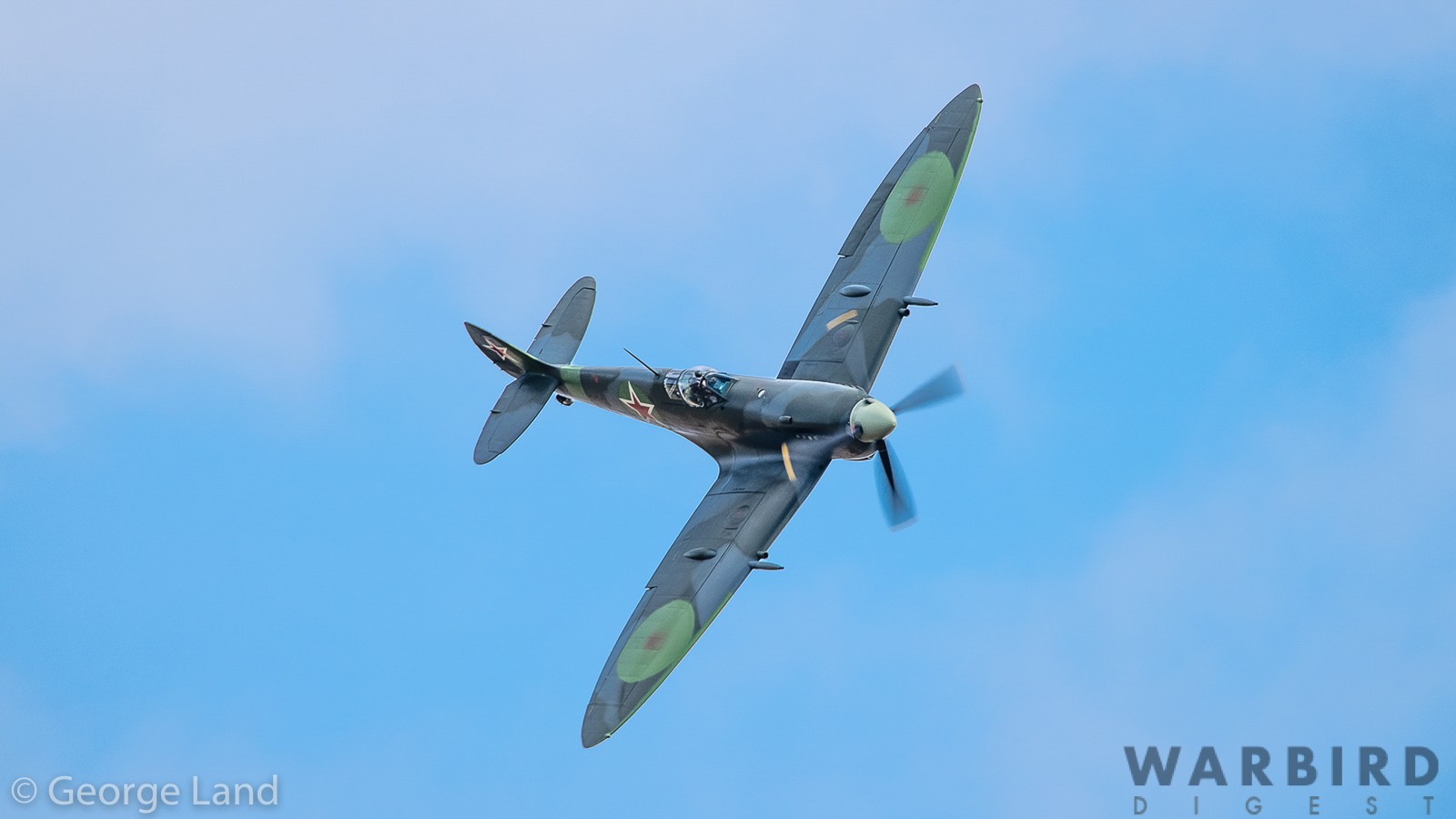
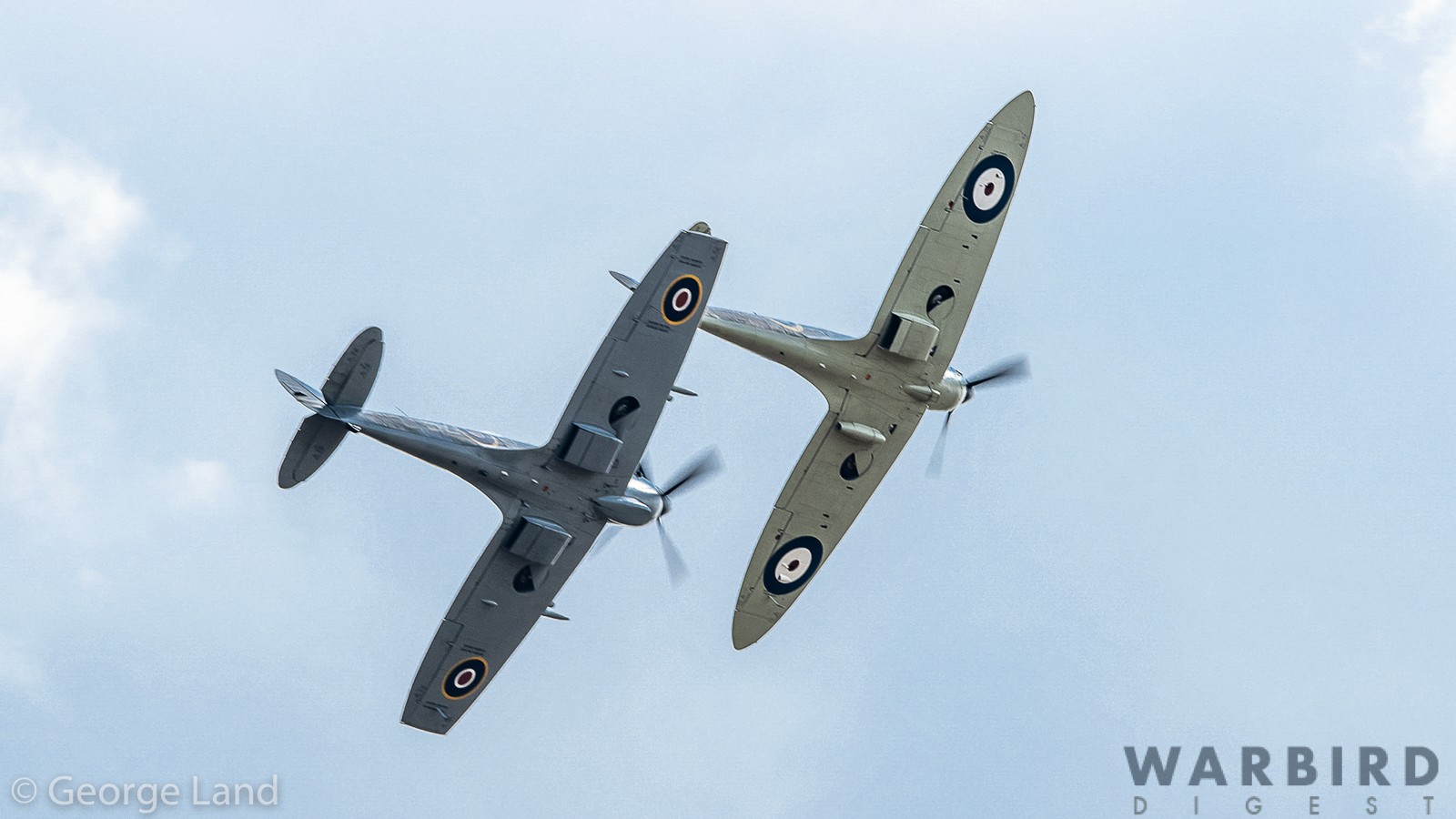
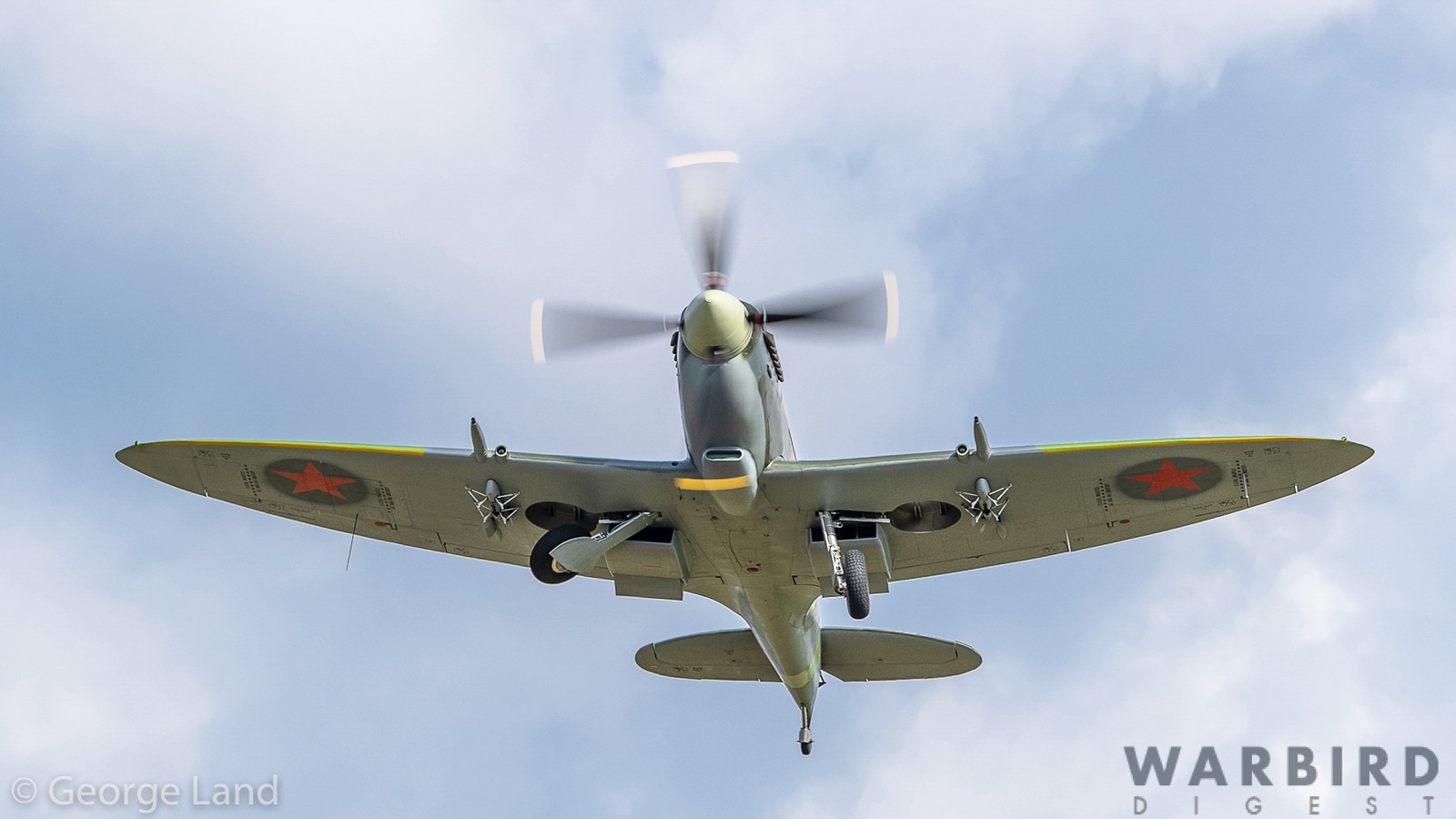
After aerial demonstrations by privately-owned Spitfires and Hurricanes, two Spitfires from the Royal Air Force’s Battle of Britain Memorial Flight made an appearance. This was closely followed by the uniquely-schemed ‘Russian’ Spitfire Mk.IX PT879 wearing the colors it wore while serving in the Soviet Air Force during World War II.
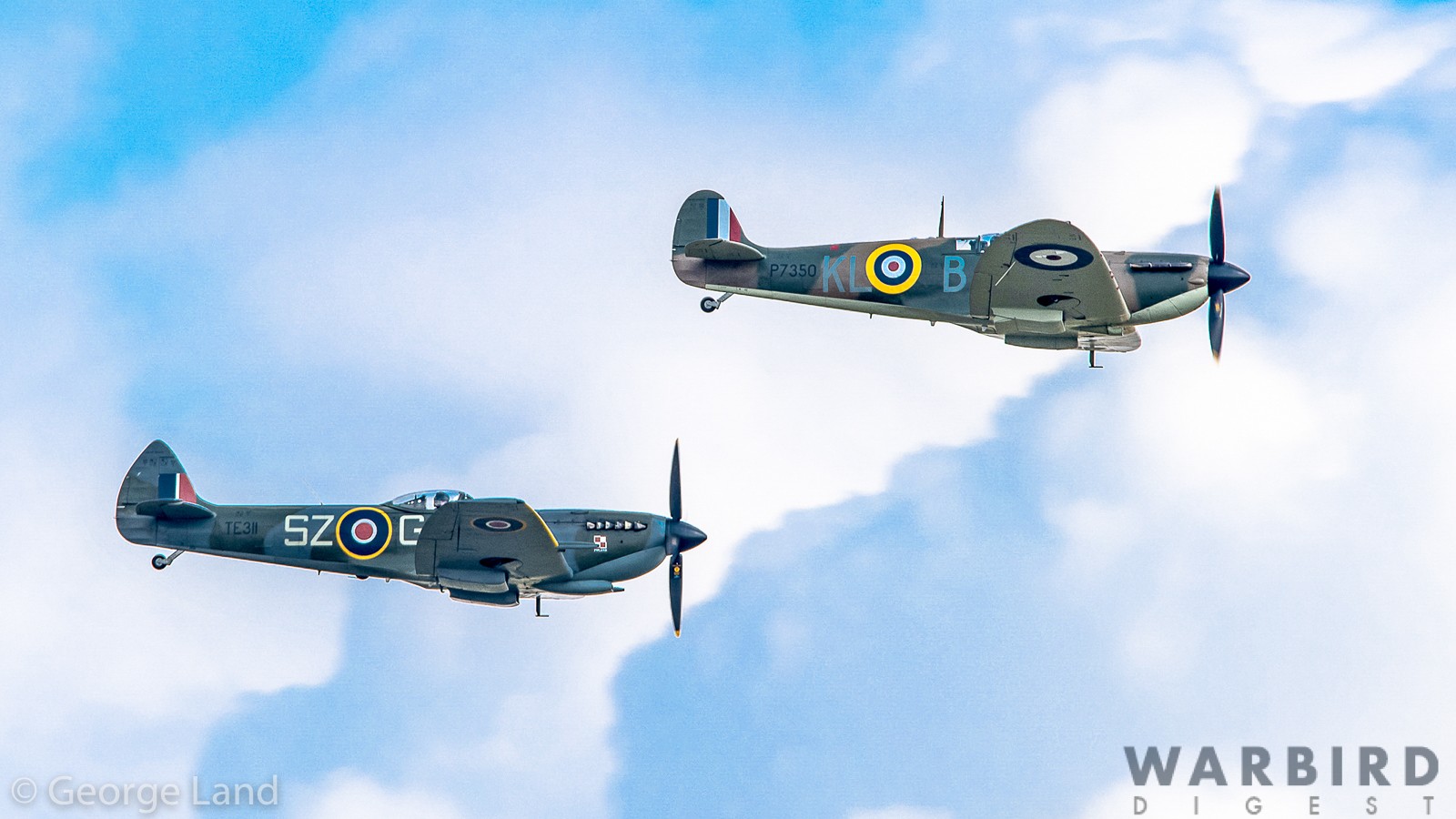
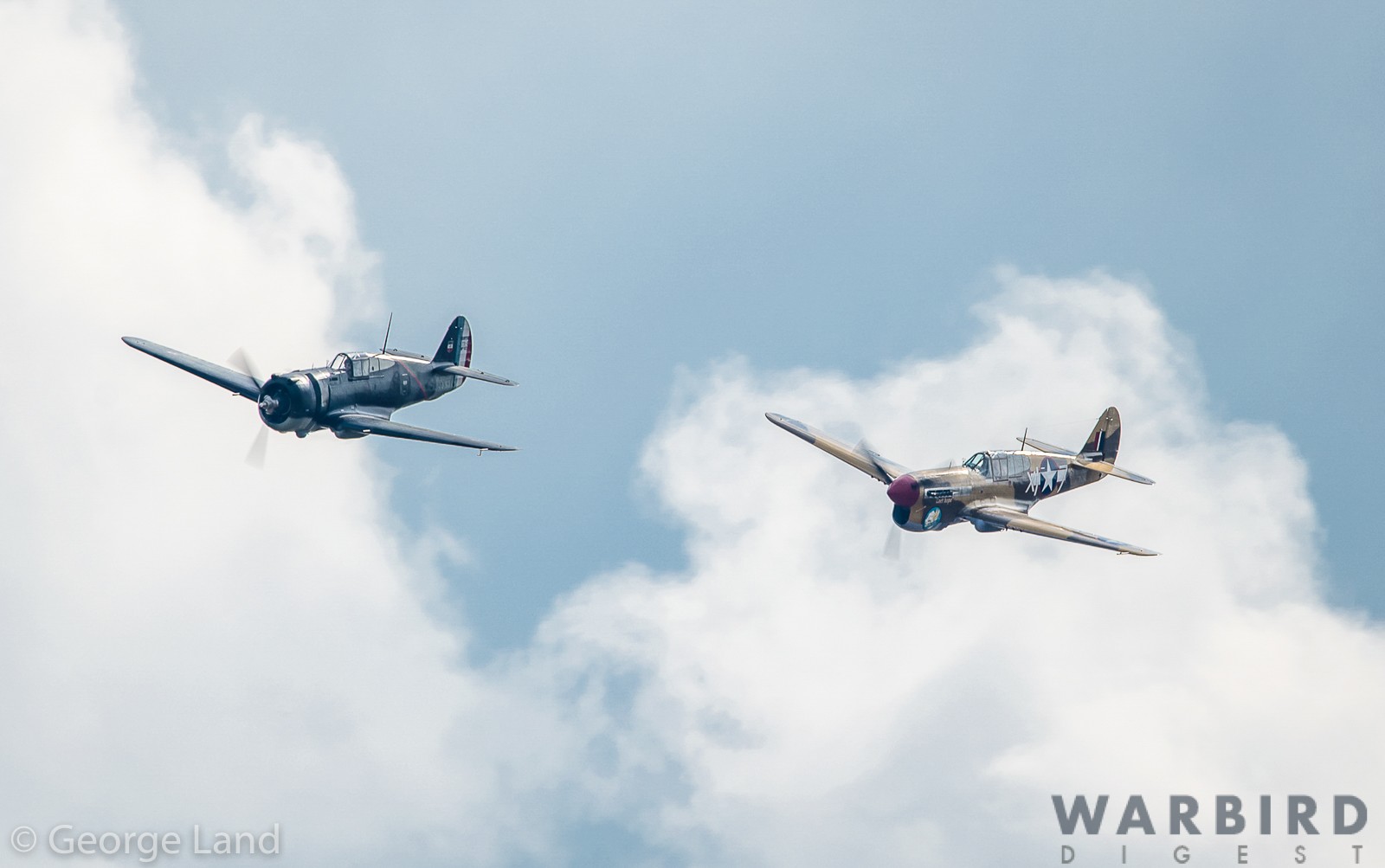
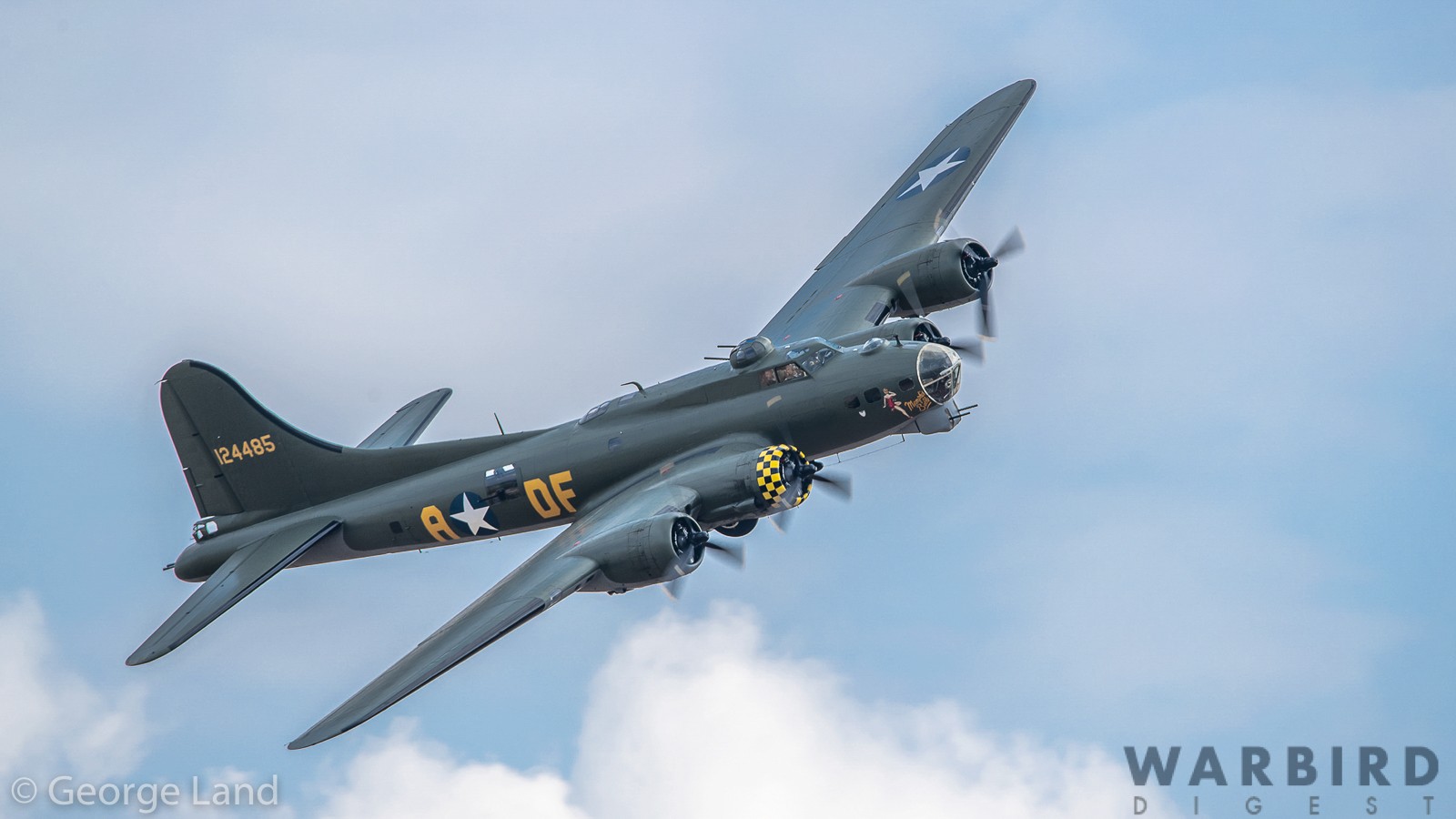
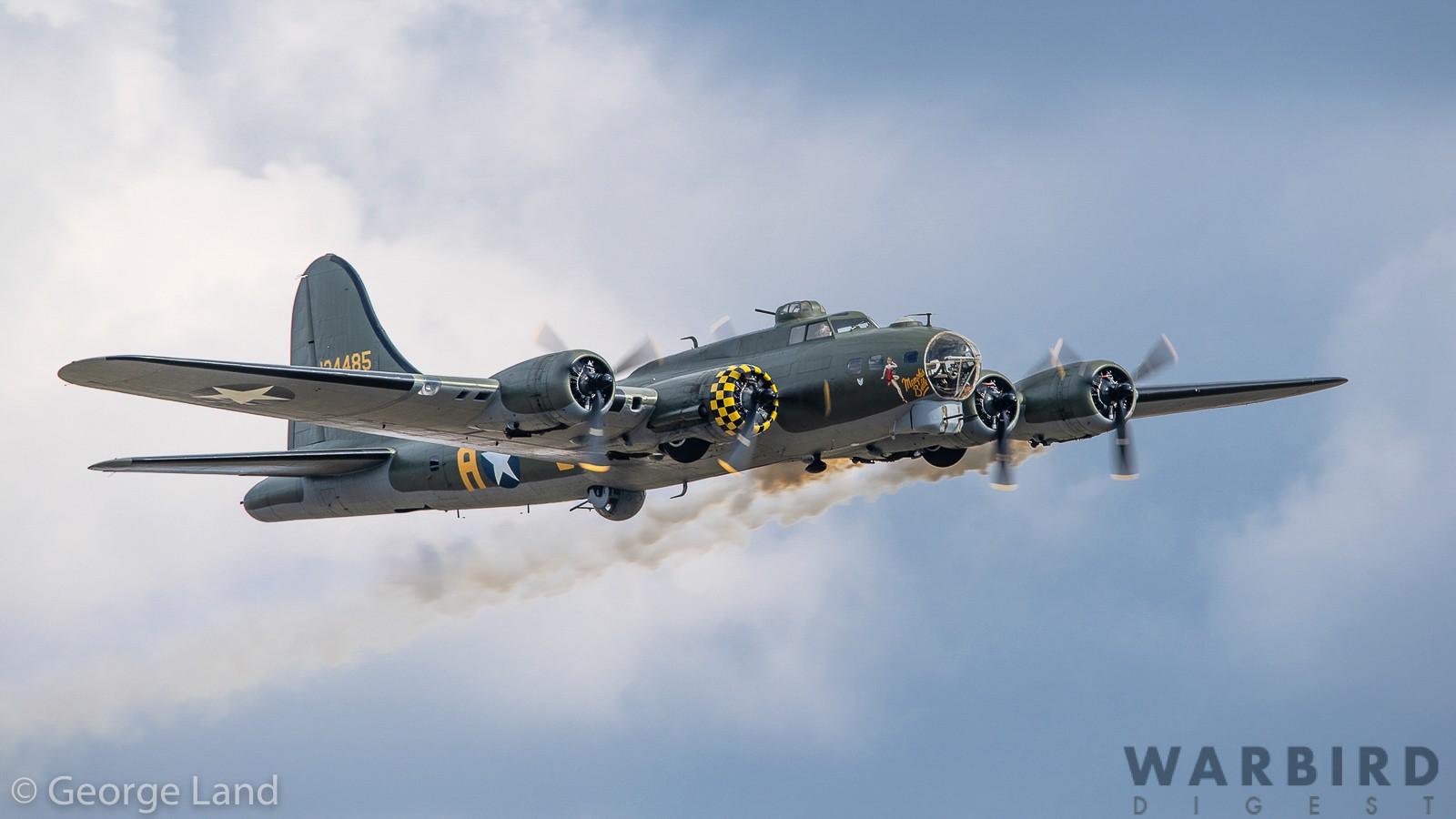
Following the Russian Spitfire’s solo came a selection of American types, which featured the The Fighter Collection’s ultra-rare Curtiss H-75 Hawk and Merlin-engined Curtiss P-40F Warhawk, along with the B-17 Charity Trust’s Boeing B-17G Flying Fortress affectionately as Sally B. The latter aircraft is the only example of the breed presently flying outside the United States and is a crowd favorite at her home base in Duxford (and elsewhere!).
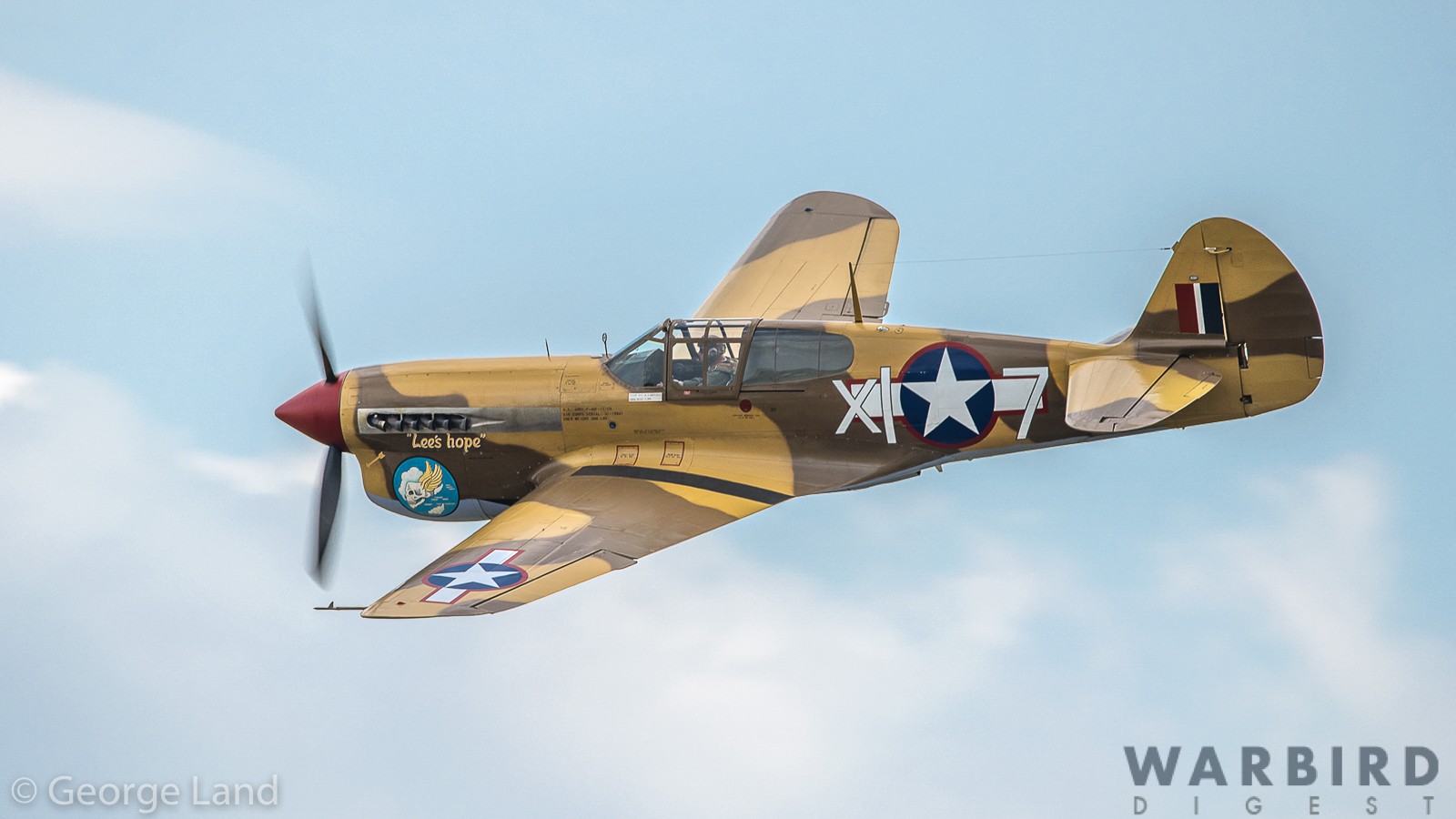
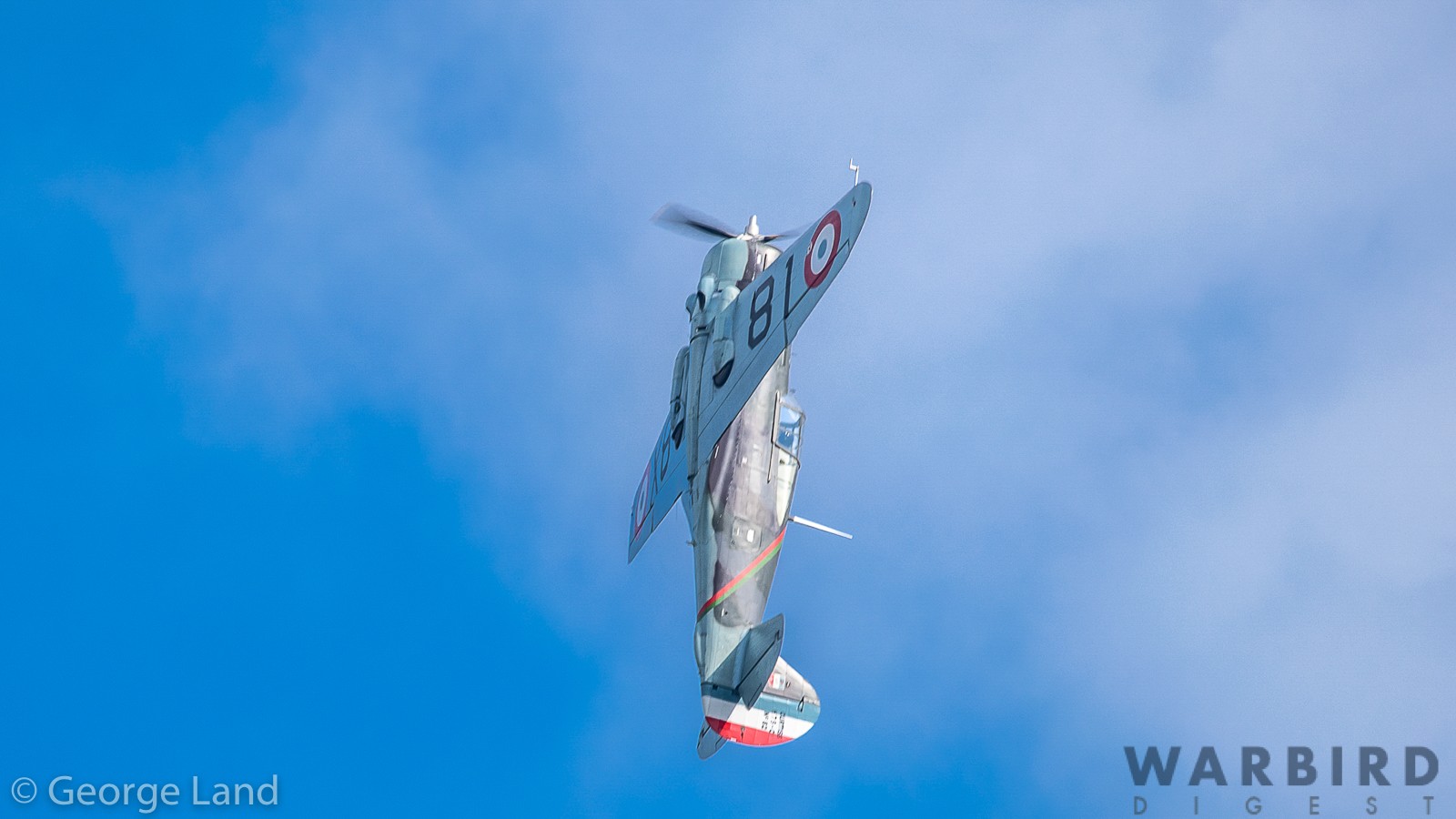
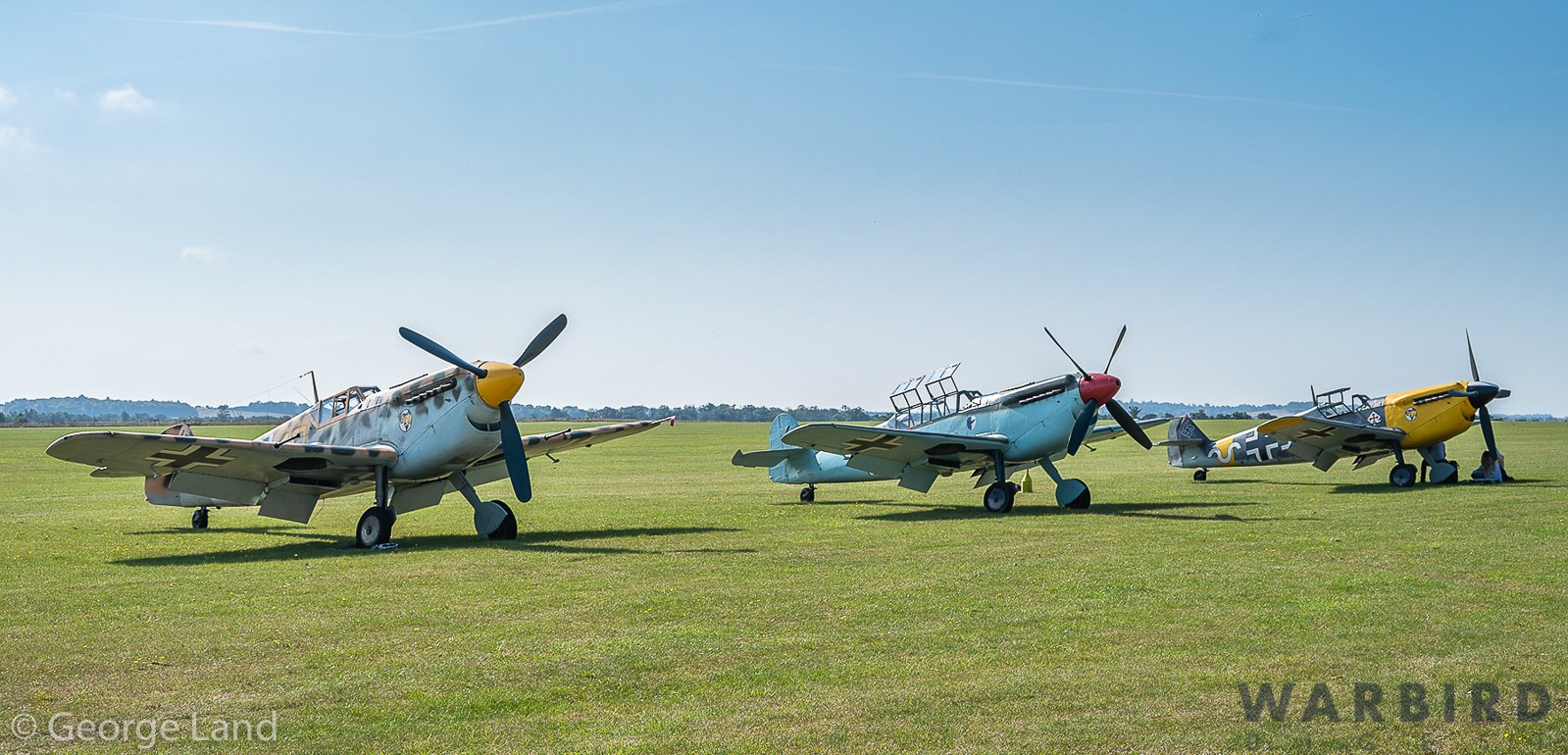
Keeping up with the theme of bombing raids over Europe, the next act featured three Hispano Bouchons (representing Lutfwaffe Bf 109s) beating up the field, only to fall afoul of the “Little Friends” portrayed by the Republic P-47D Thunderbolt Nellie and two P-51D Mustangs, Contrary Mary and Miss Helen. Both Mustangs and Thunderbolts were based at Duxford during World War II.
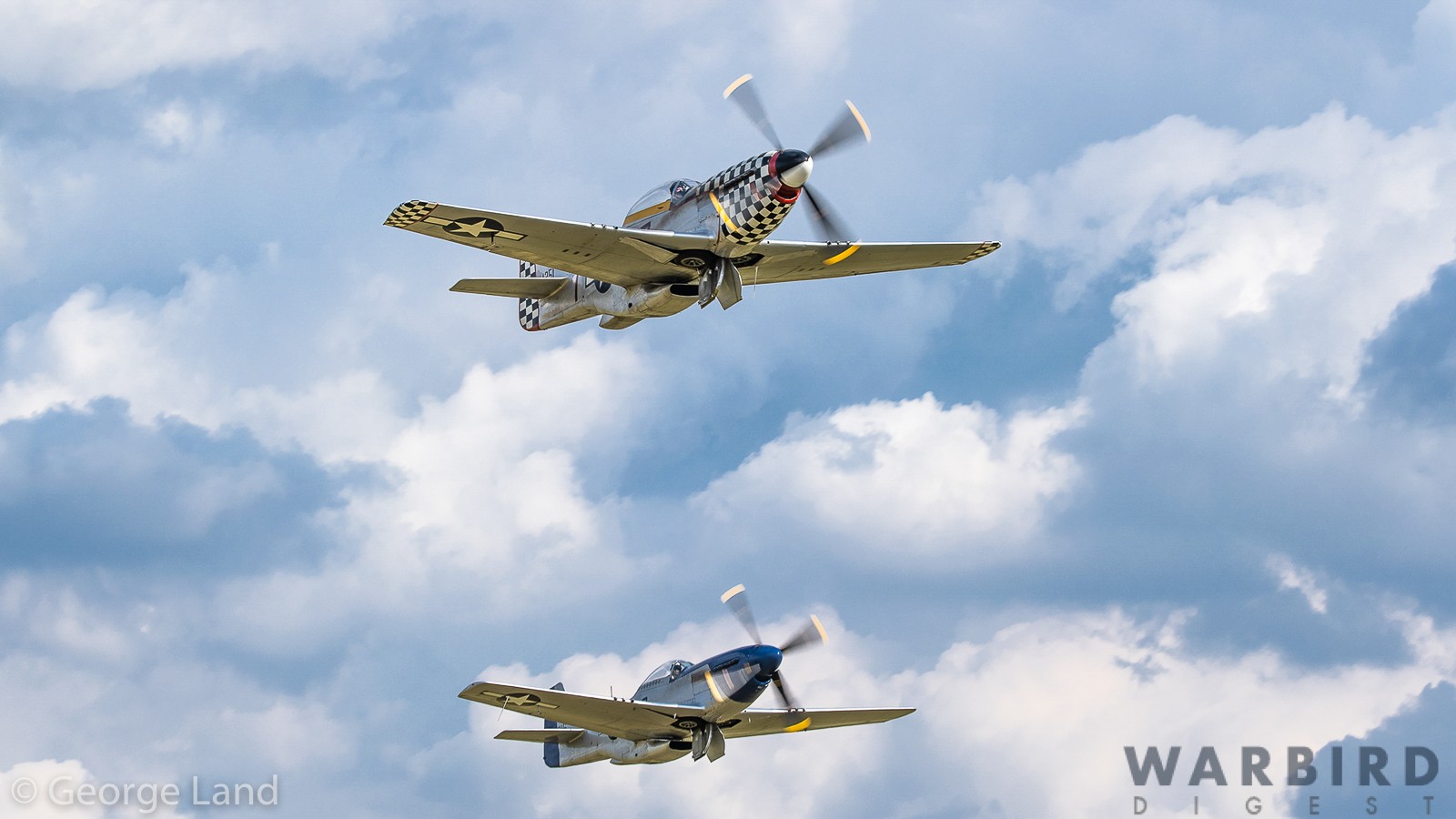
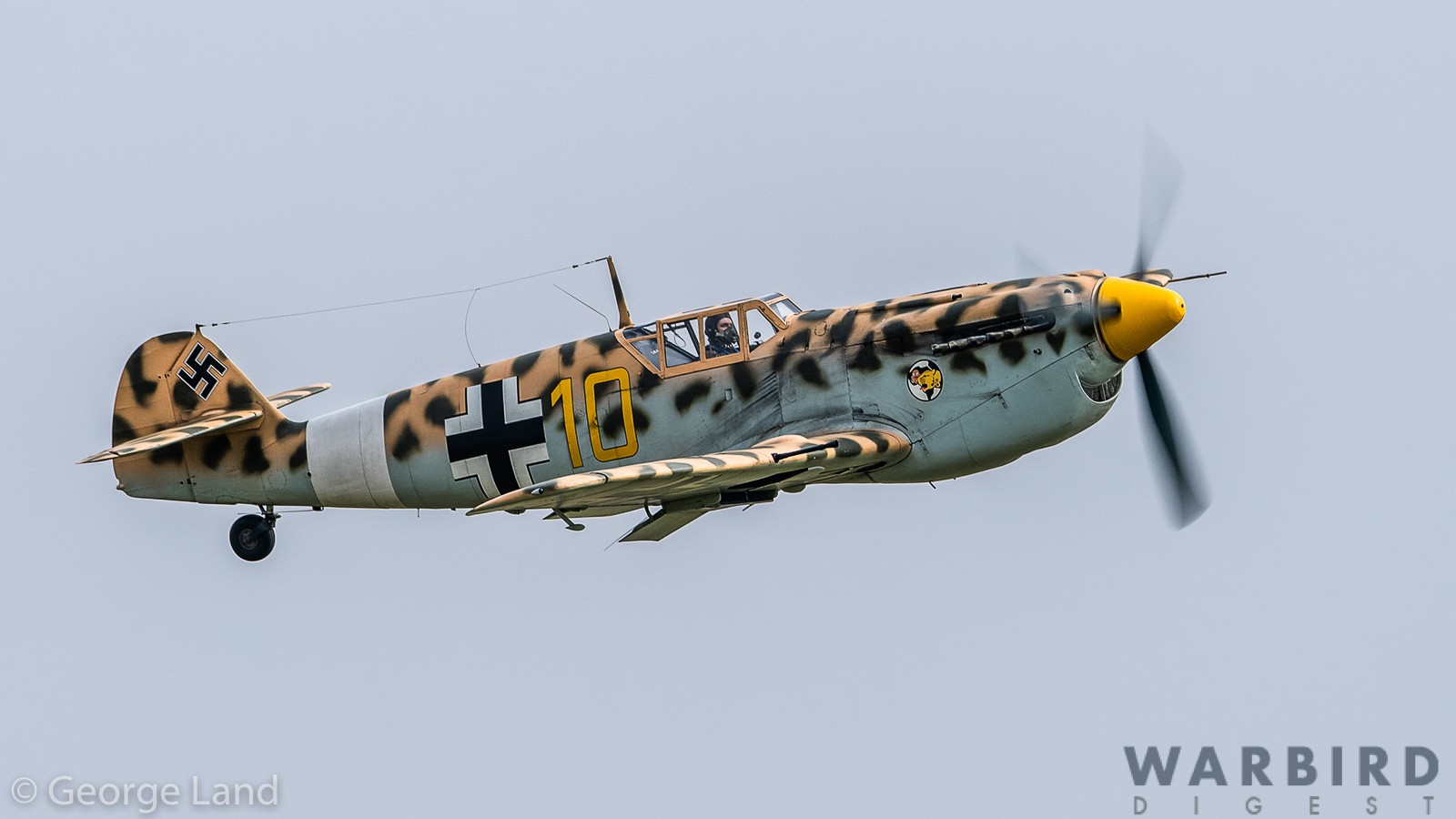
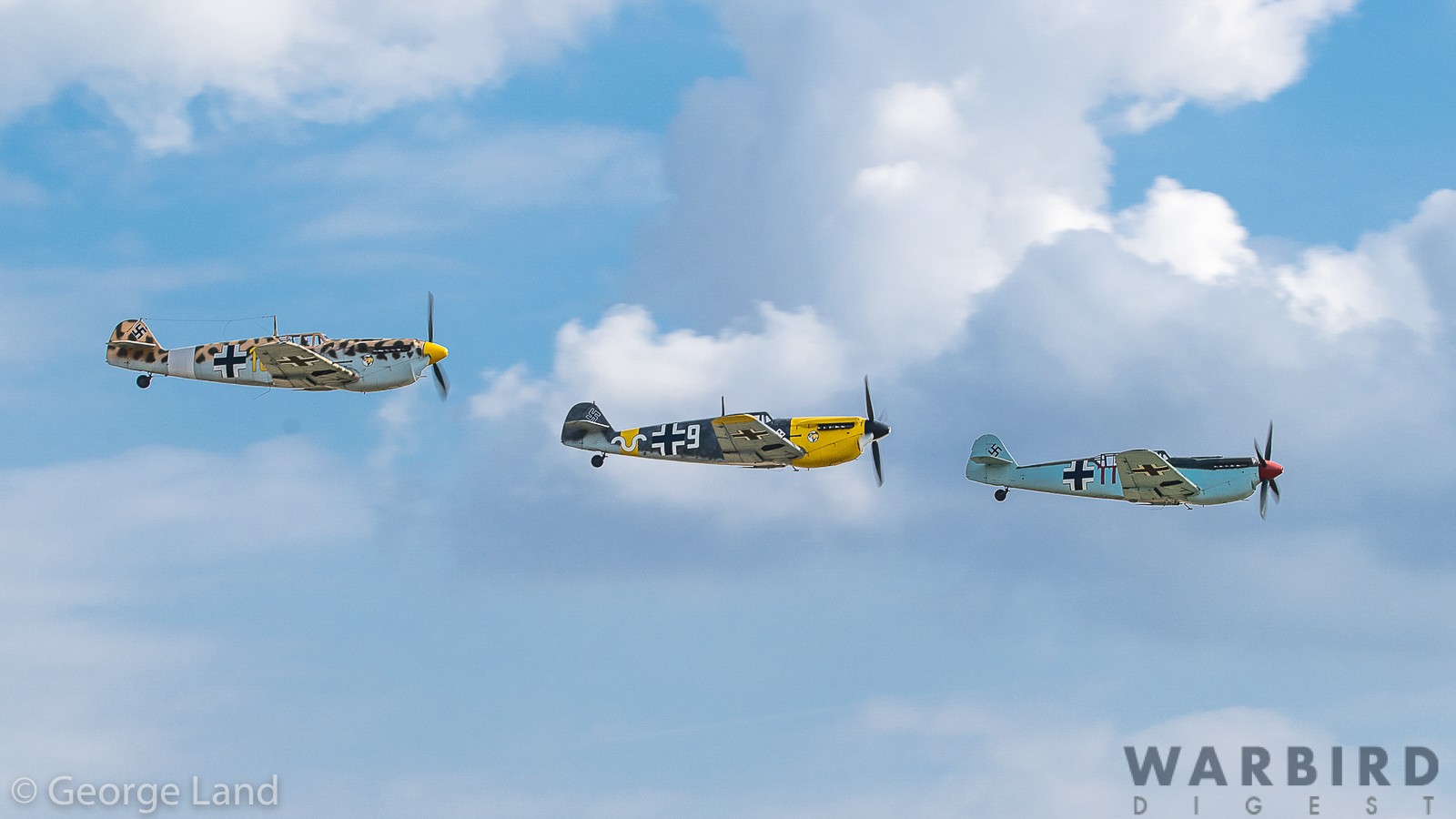
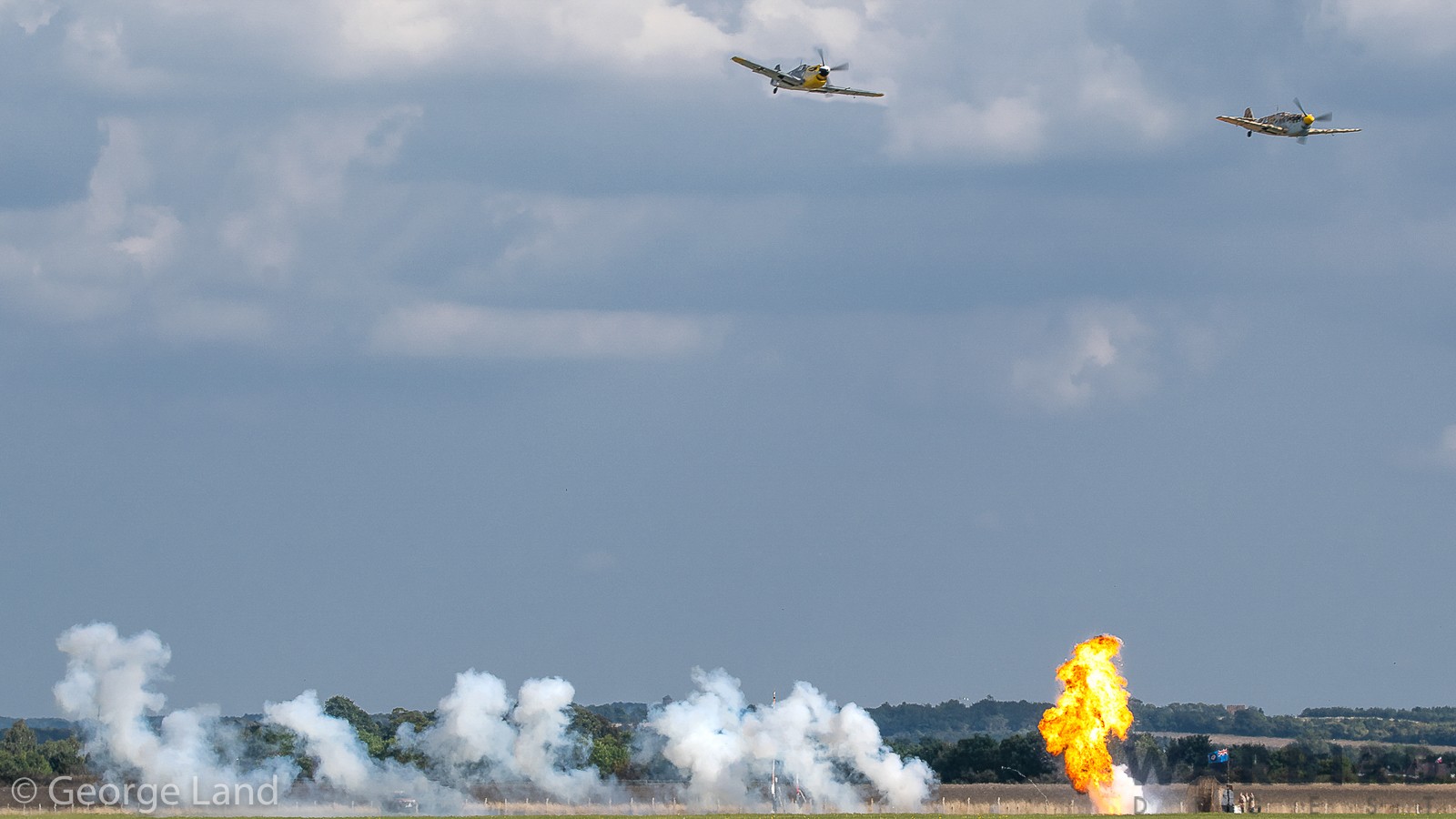
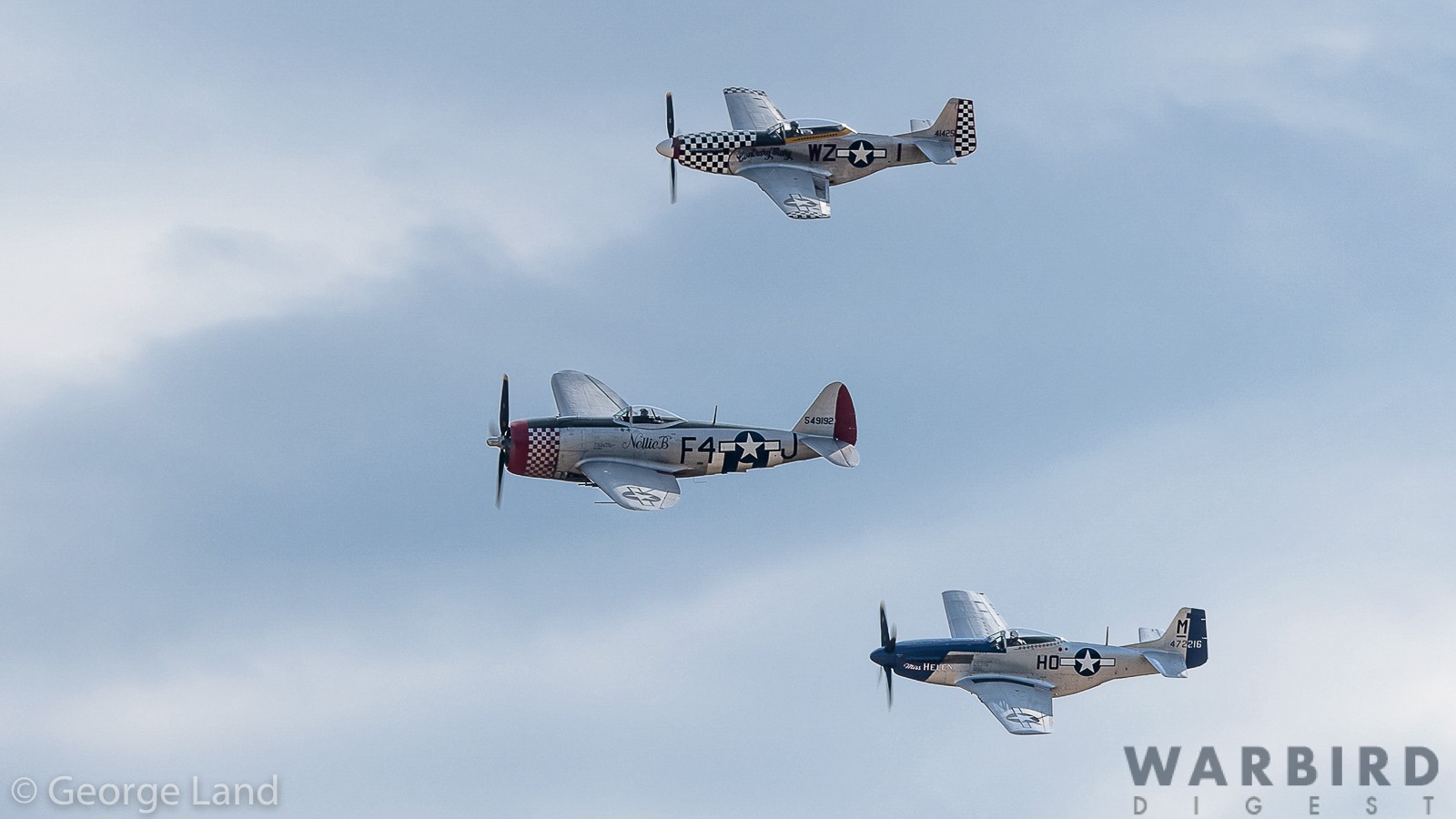
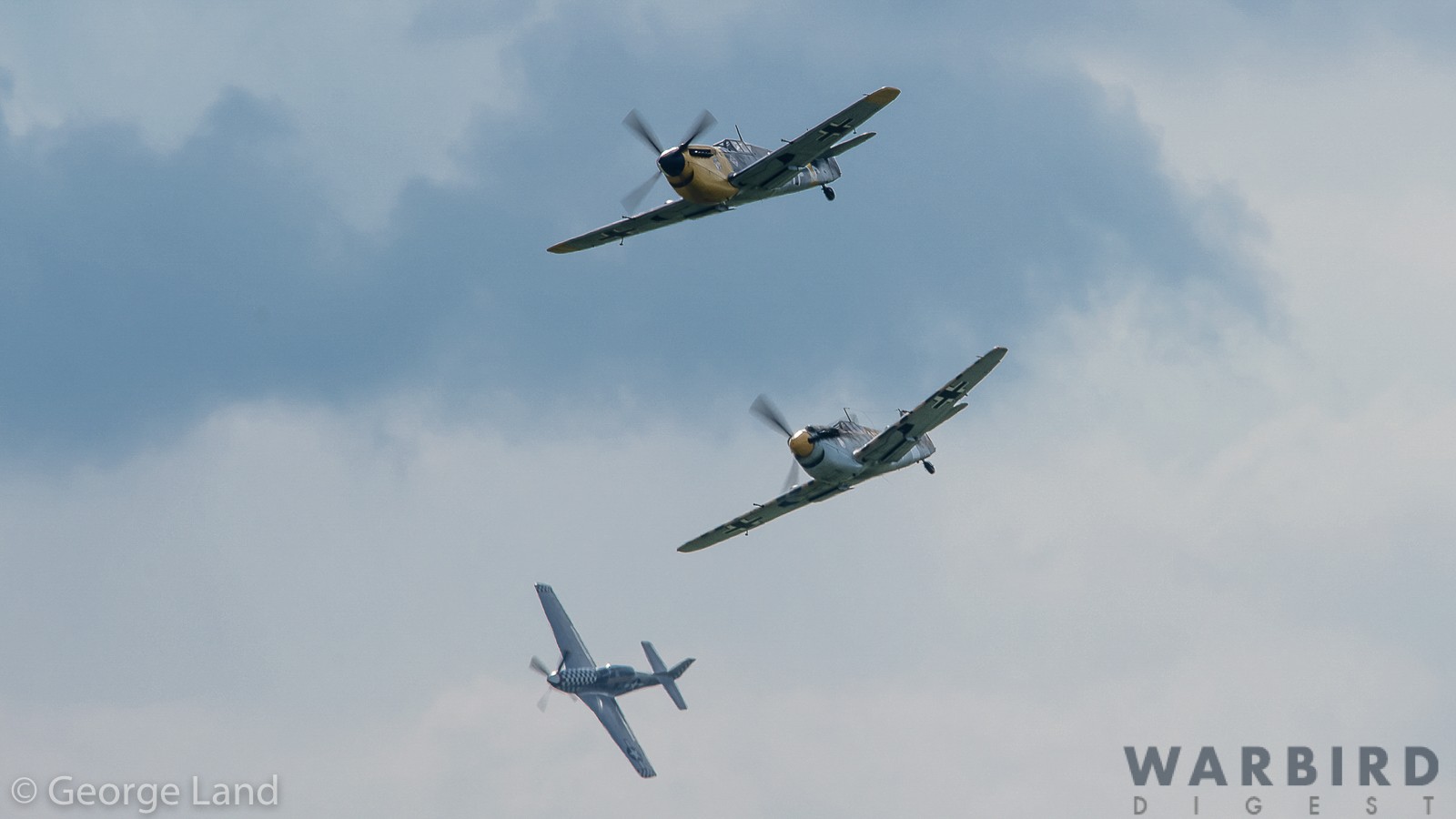
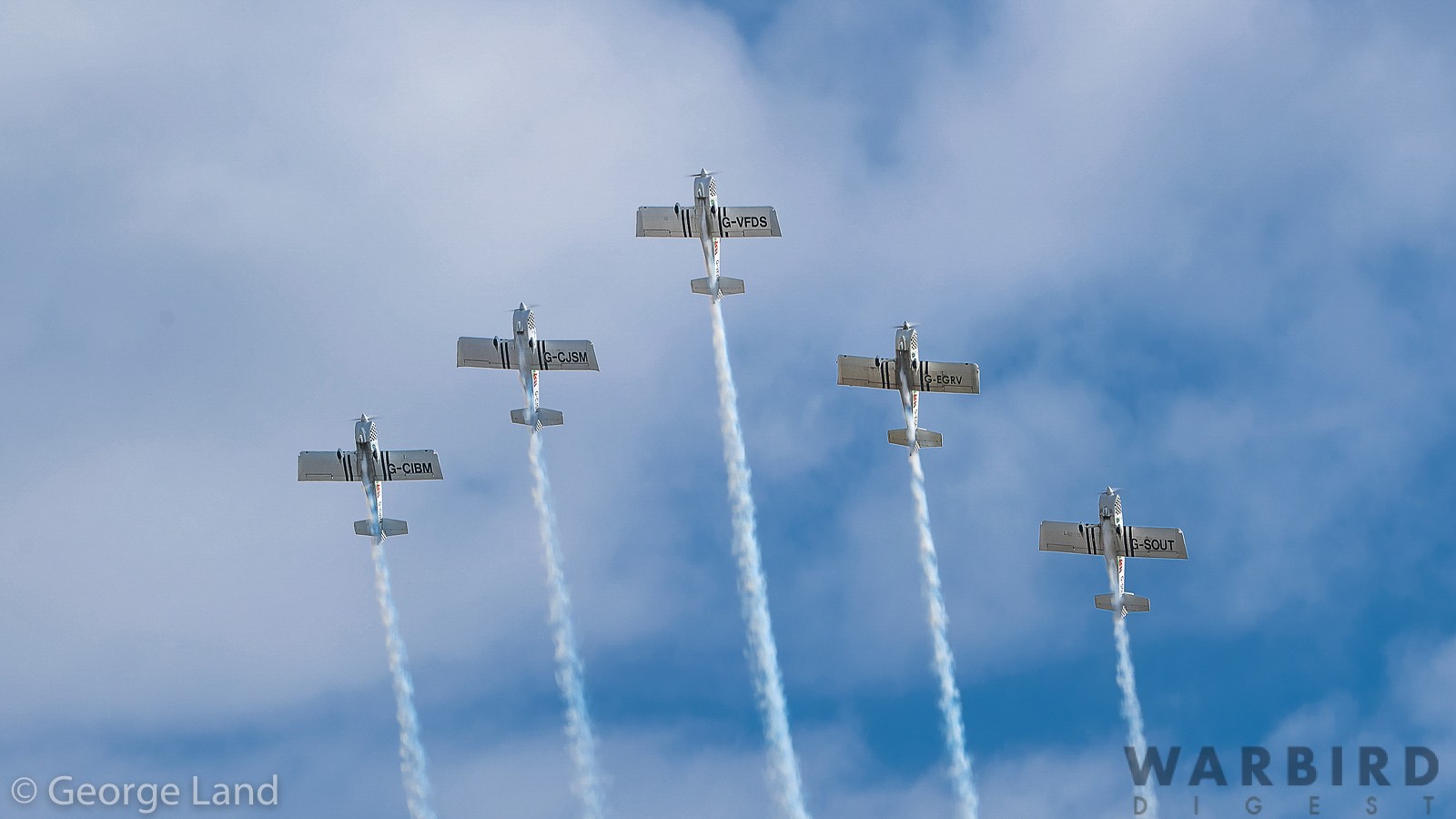
Following the adrenaline of the warbird tail-chase came a break from the WWII theme which included a formation aerobatics performance from Team Raven, who took to the air in their flight of five Vans RV8s.
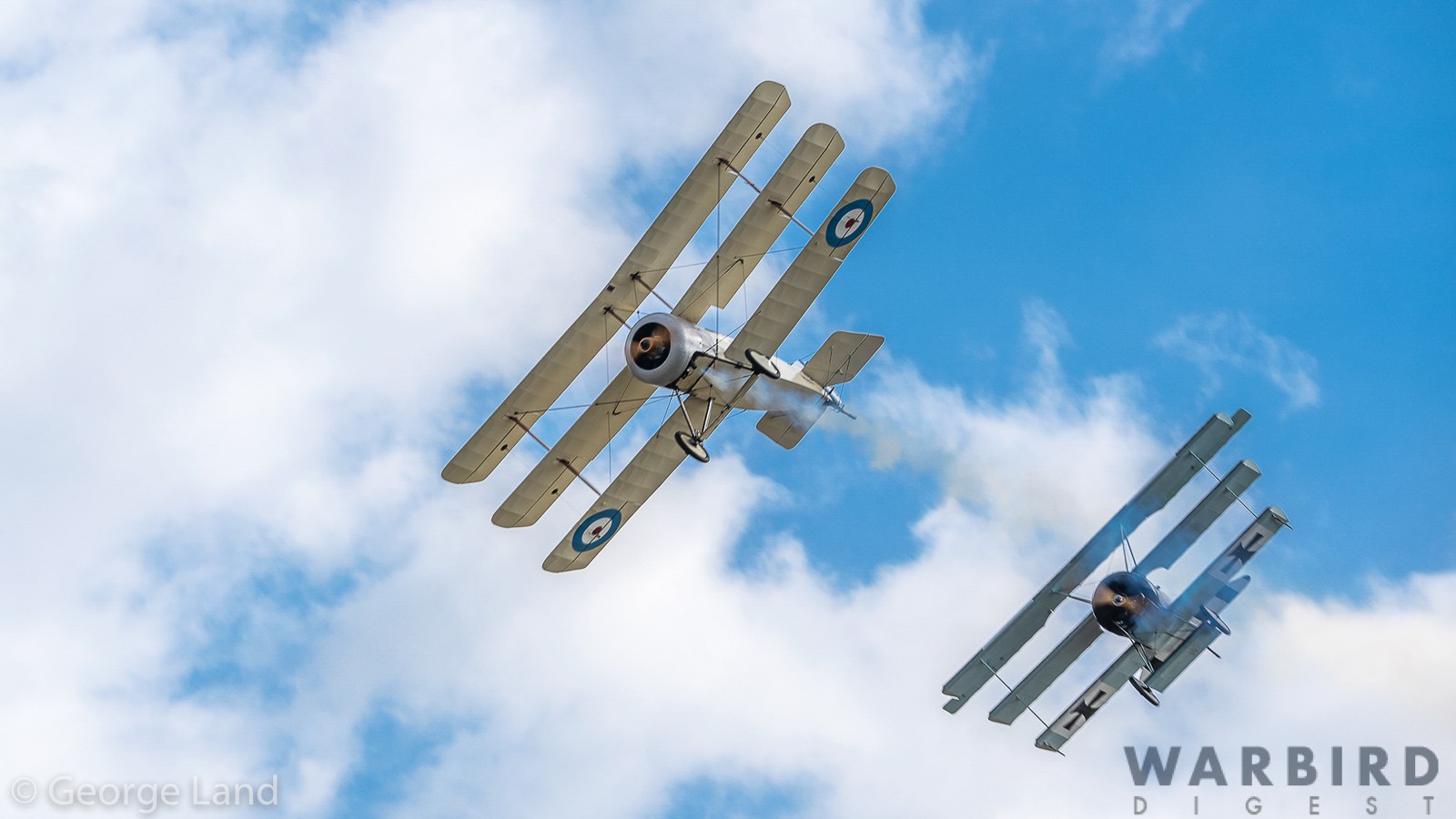
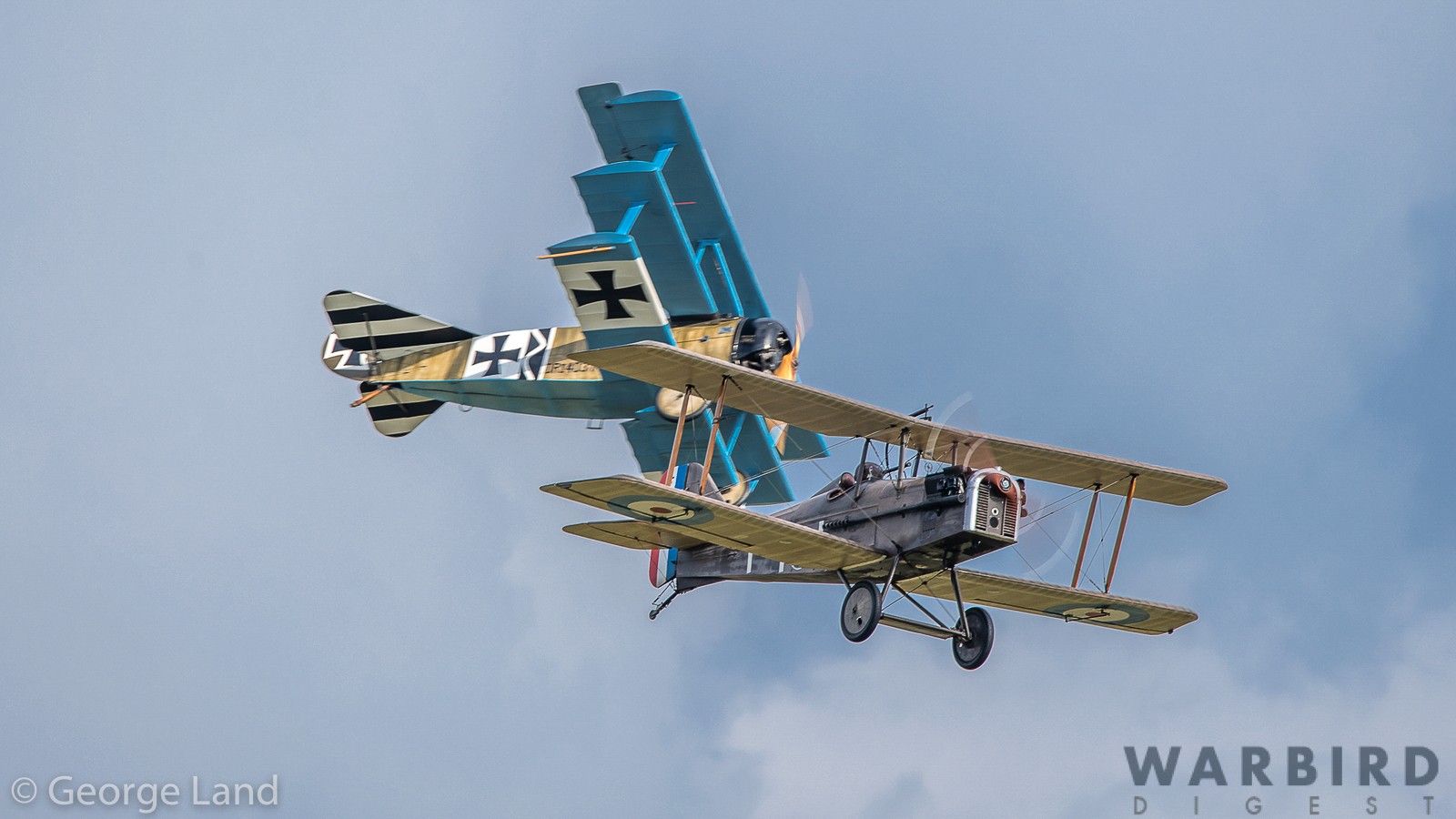
The Great War Display Team then took to the skies with six of their WWI-era fighters. These scaled replicas of a Fokker Dr.I and Sopwith Triplane along with a brace of Royal Aircraft Factory SE5As and Junkers CL.Is offered an extremely entertaining representation of what it may have been like to witness an aerial battle above the trenches during World War I.
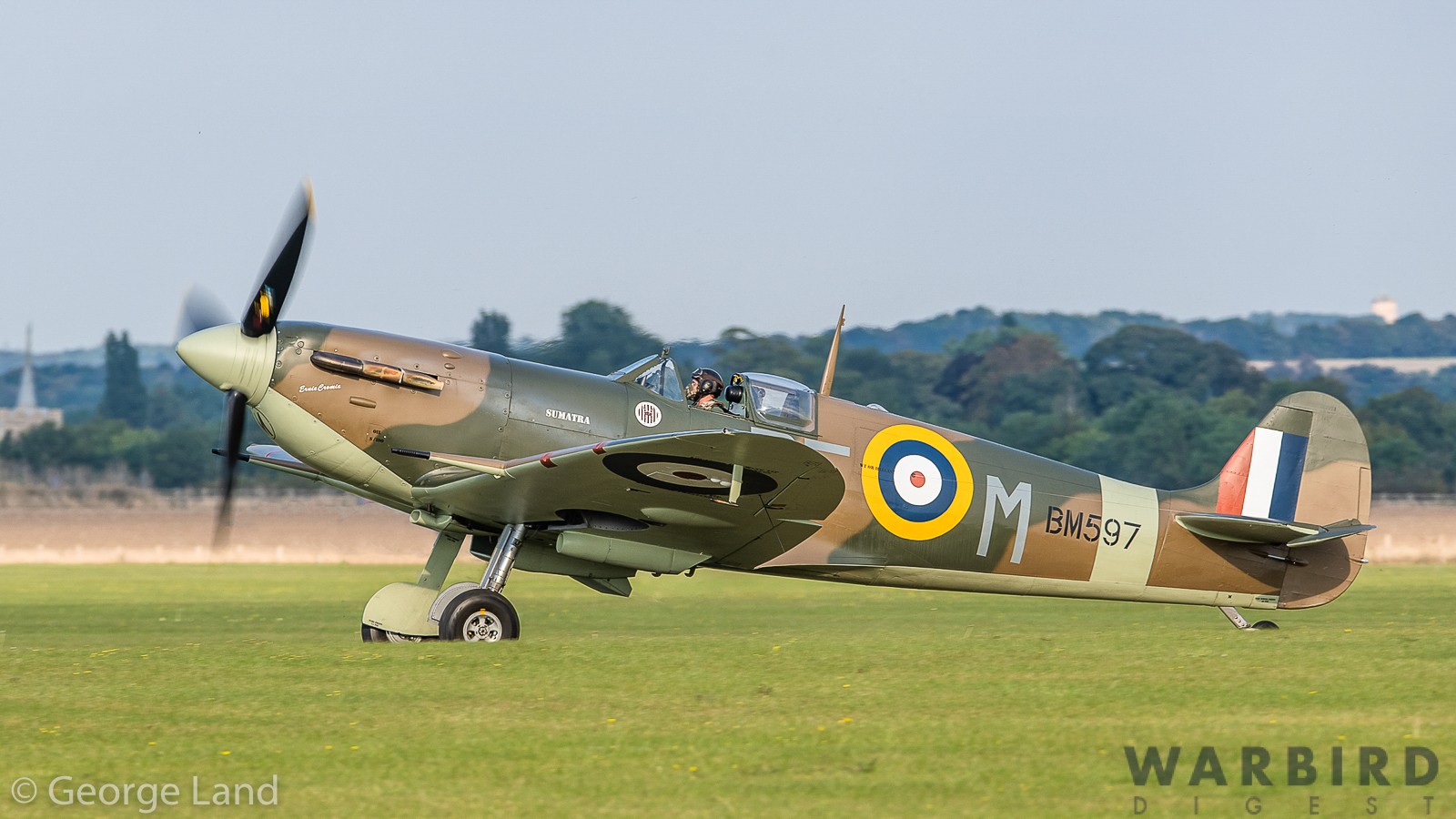
The show returned next to its World War II theme with a solo performance from Supermarine Spitfire Mk.V BM597, resplendent it its livery commemorating Flying Officer Wiktor Strzembosz of No.303 (Polish) Squadron. Sadly, Strzembosz lost his life over France during a mission to escort three Short Stirling bombers on July 8th, 1941.
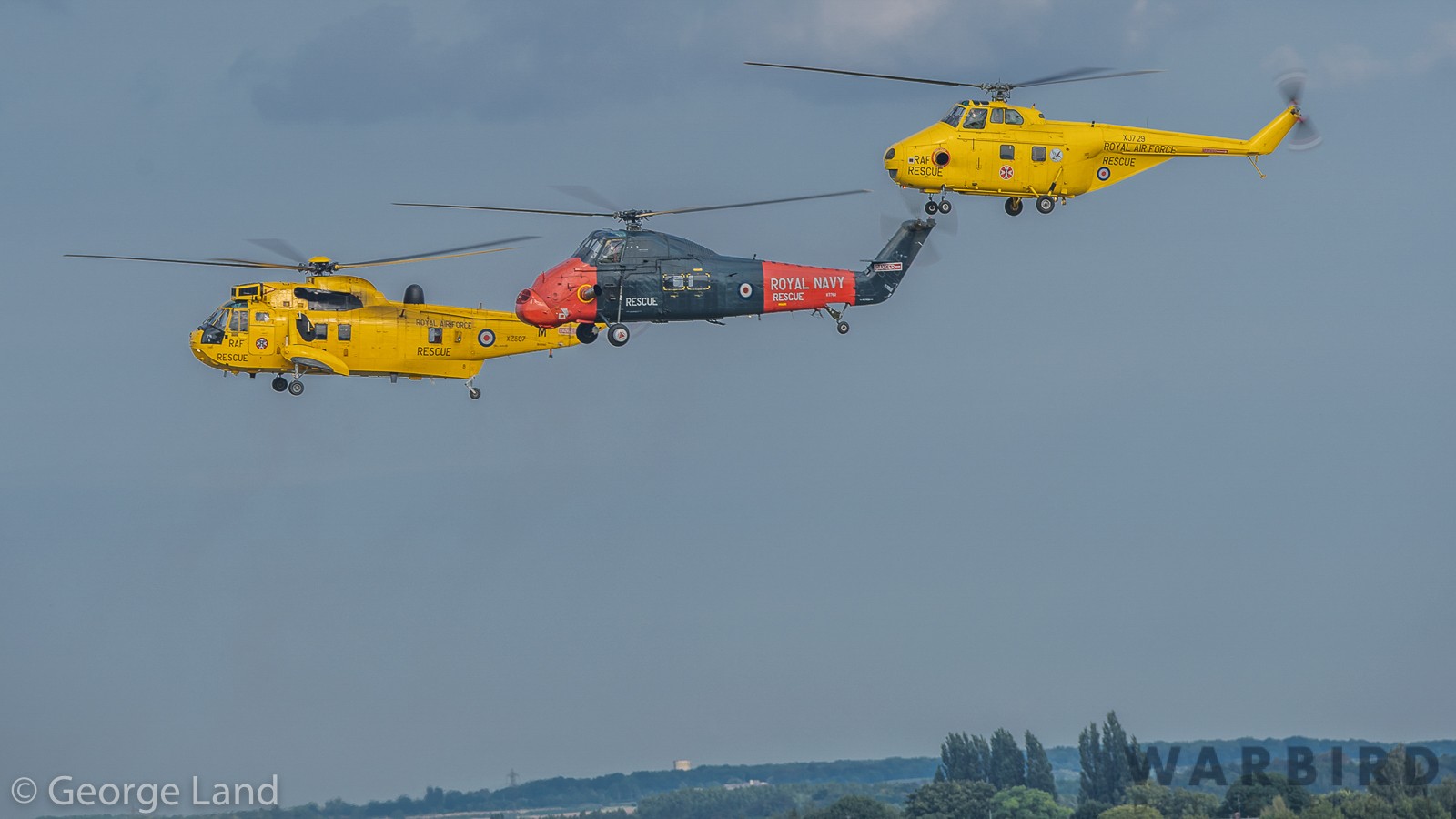
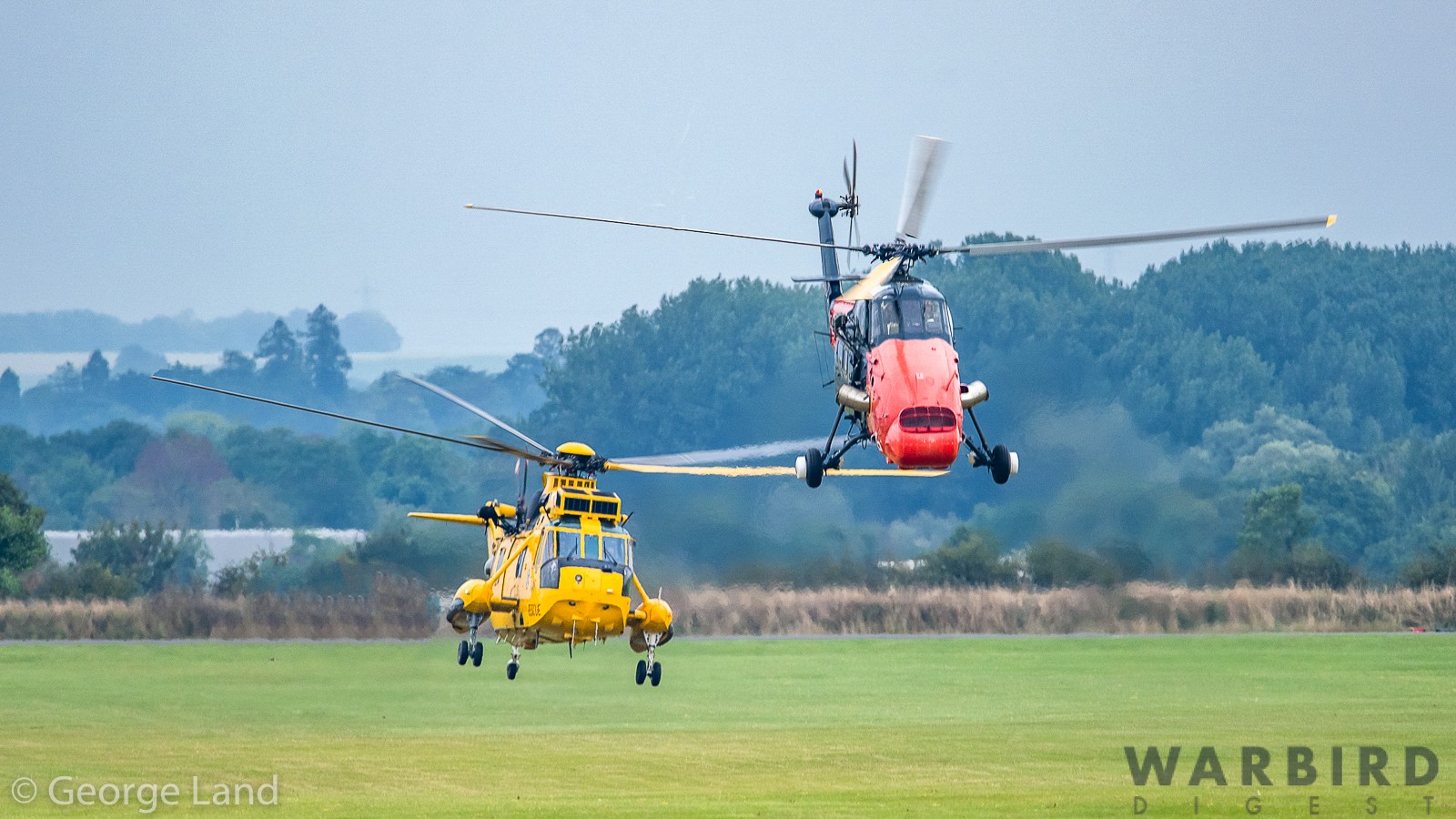
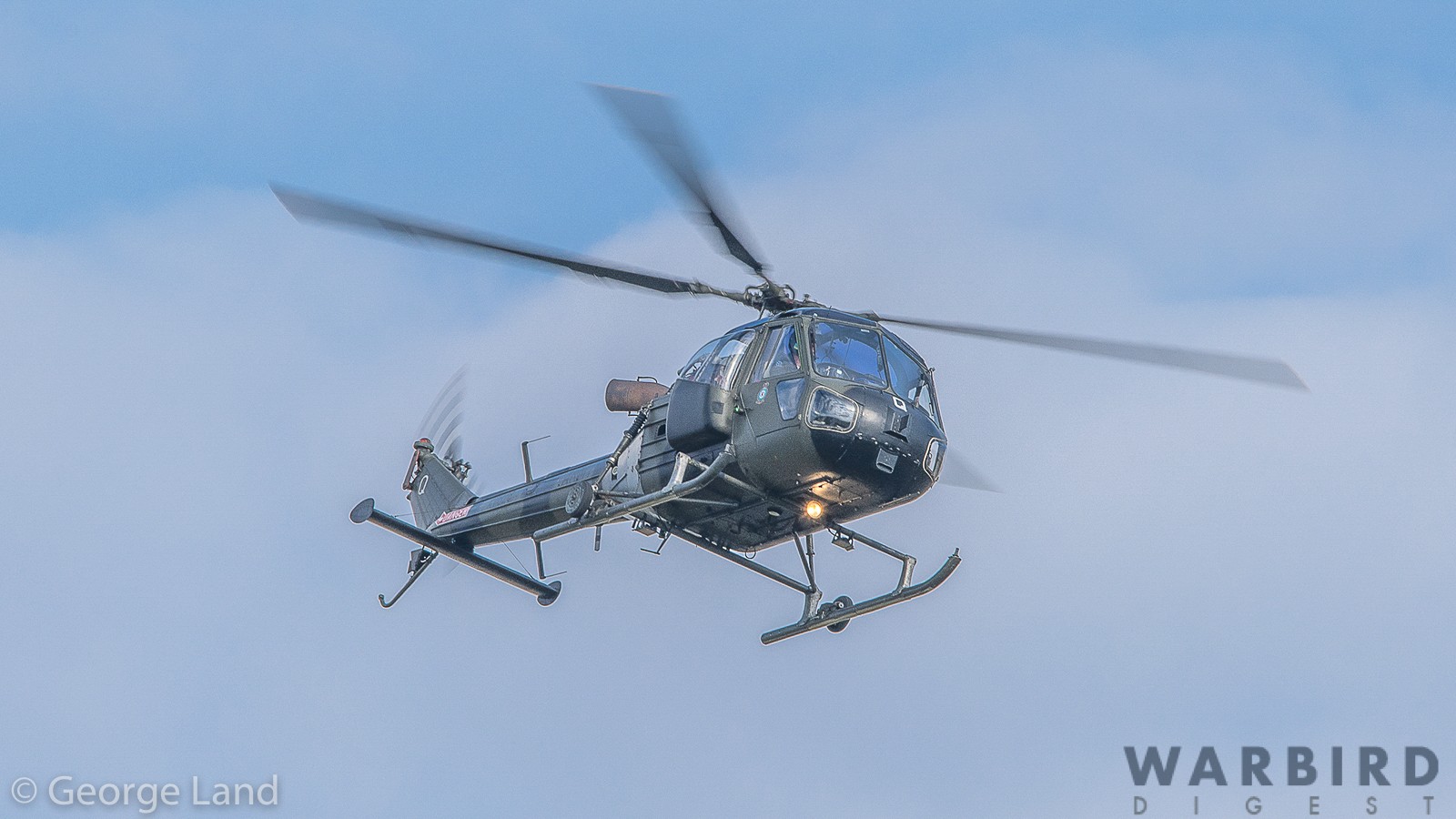
What followed the Spitfire solo display was quite a contrast to the usual Duxford display, but a welcome one none-the-less. Three vintage military rotary wing aircraft made an appearance, part of the remarkable Historic Helicopters collection based in Chard, Somerset. The three aircraft on show, Westland Whirlwind HAR.10 XJ729, Wessex HU.5 XT761 and Sea King HAR.3 XZ597, represent types which were long stalwarts of Britain’s armed forces, but it has been many years since their operational days. As such, it was wonderful to see them in the skies again. Their performance was followed by several vintage types representing the British Army Air Corps, these all being based with the Historic Army Aircraft Flight at Army Aviation Centre Middle Wallop in Hampshire. The participating airframes included de Havilland Canada DHC-2 Beaver AL.1 XP820, Auster AOP.9 XR244, Westland Sioux AH.1 XT131 and Westland Scout AH.1 XT626.
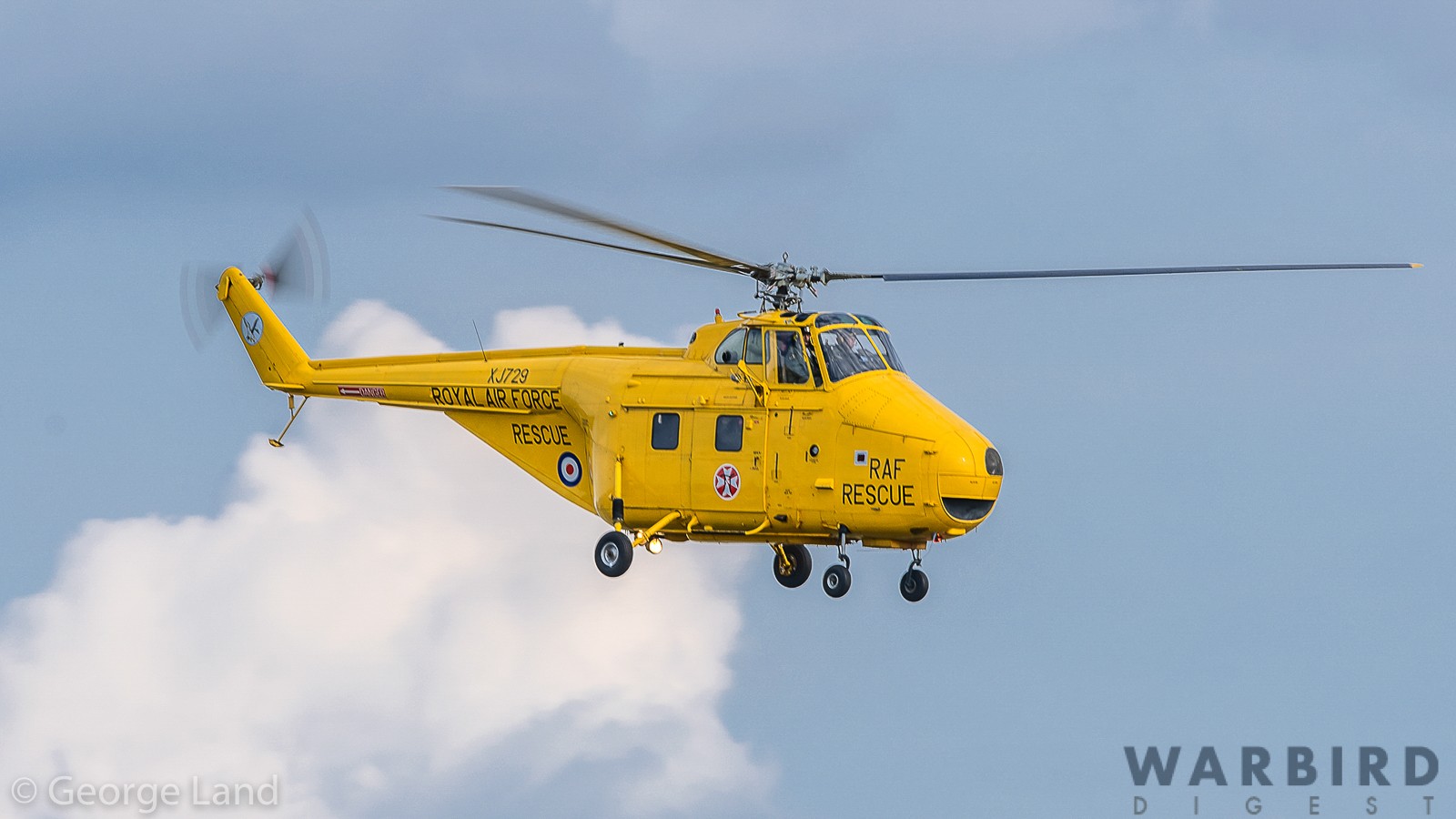
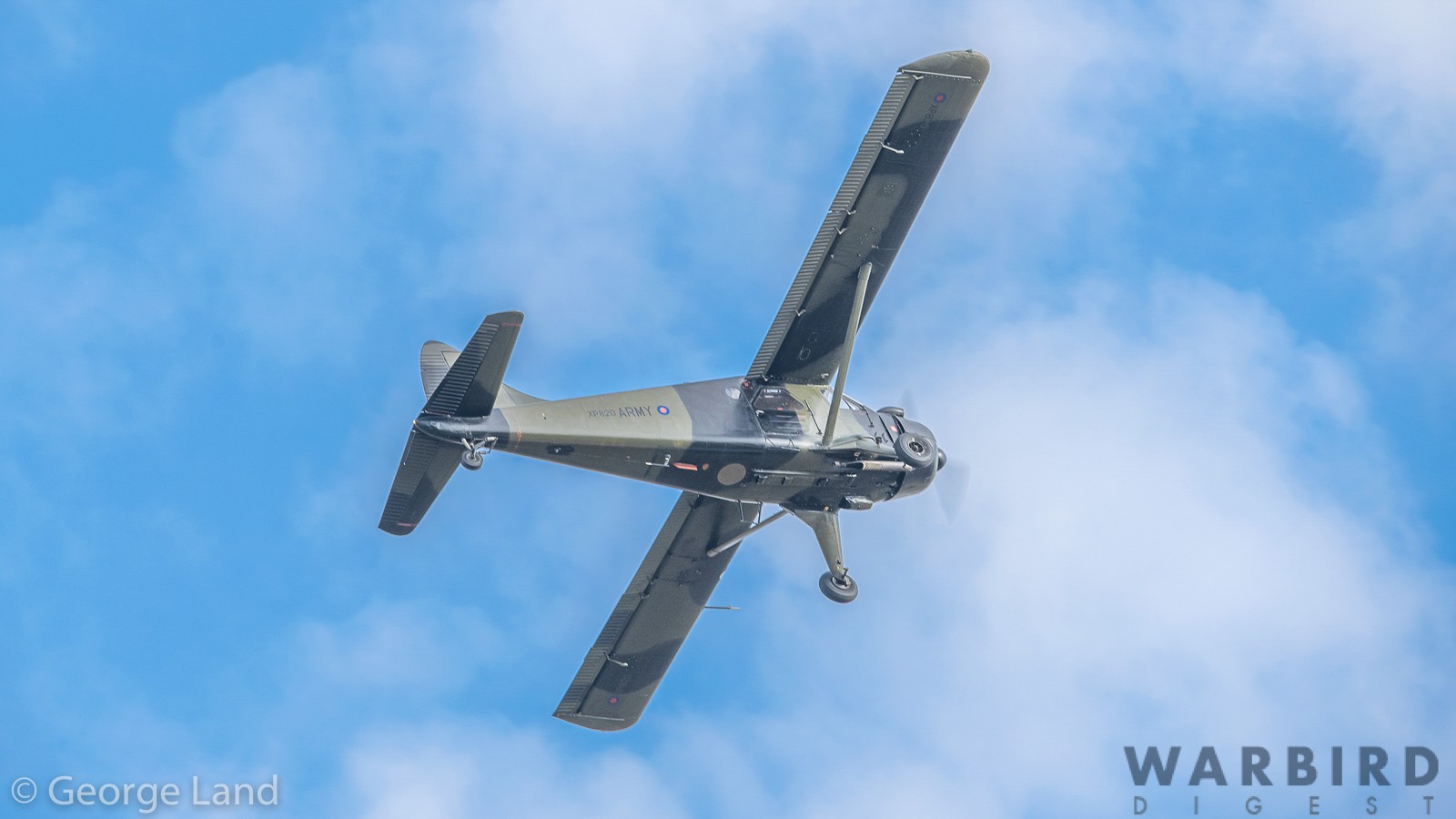
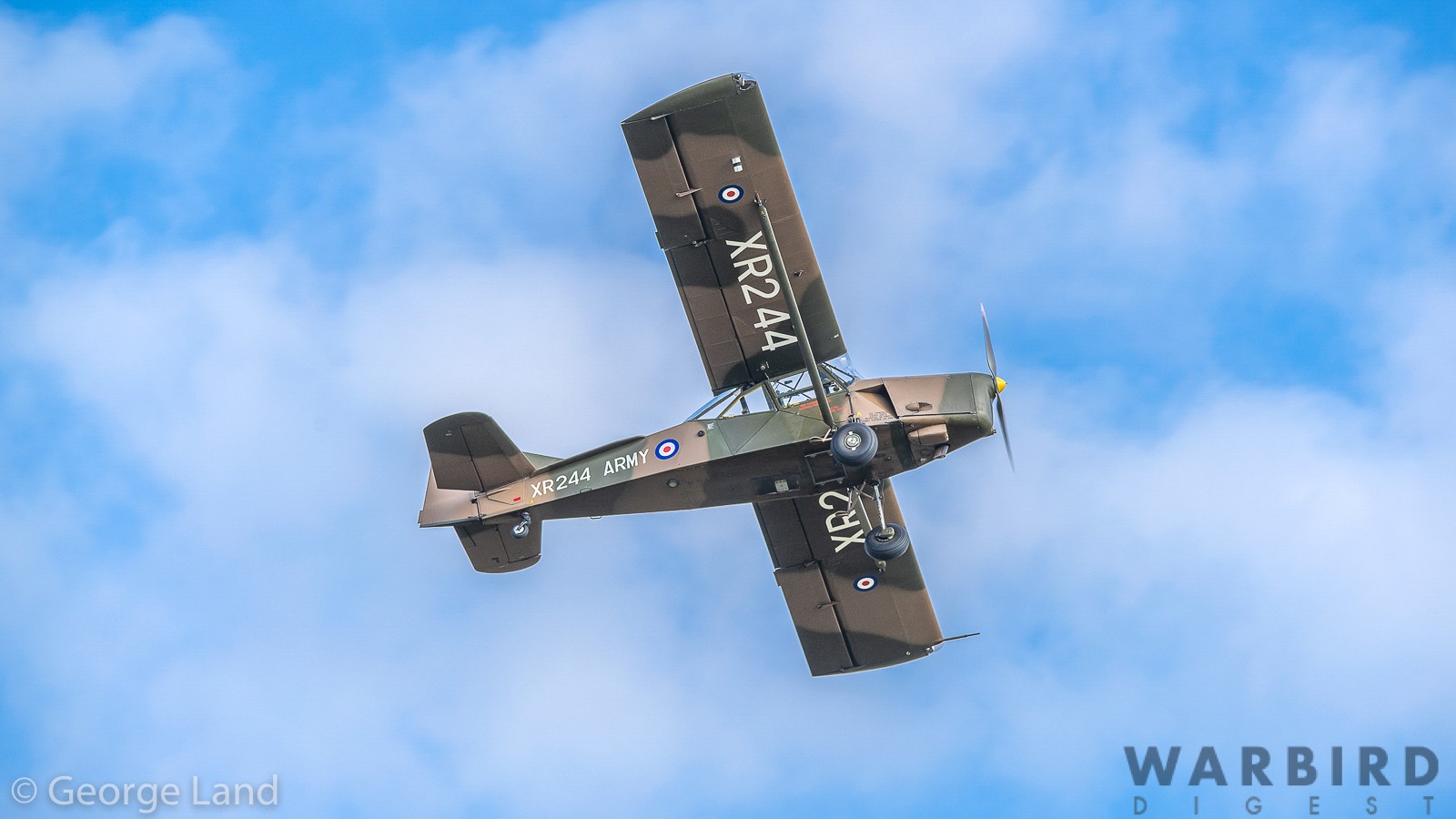
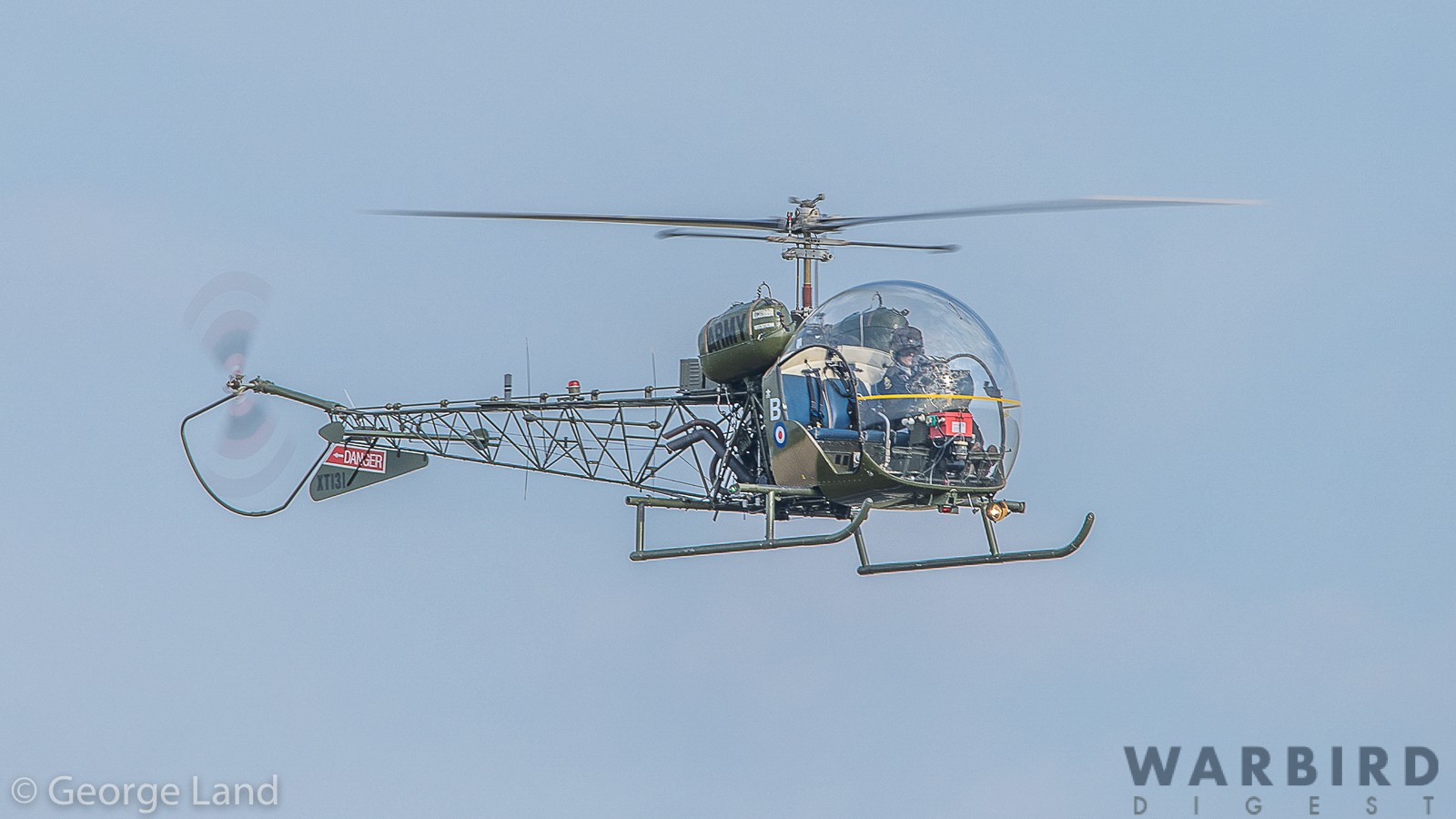
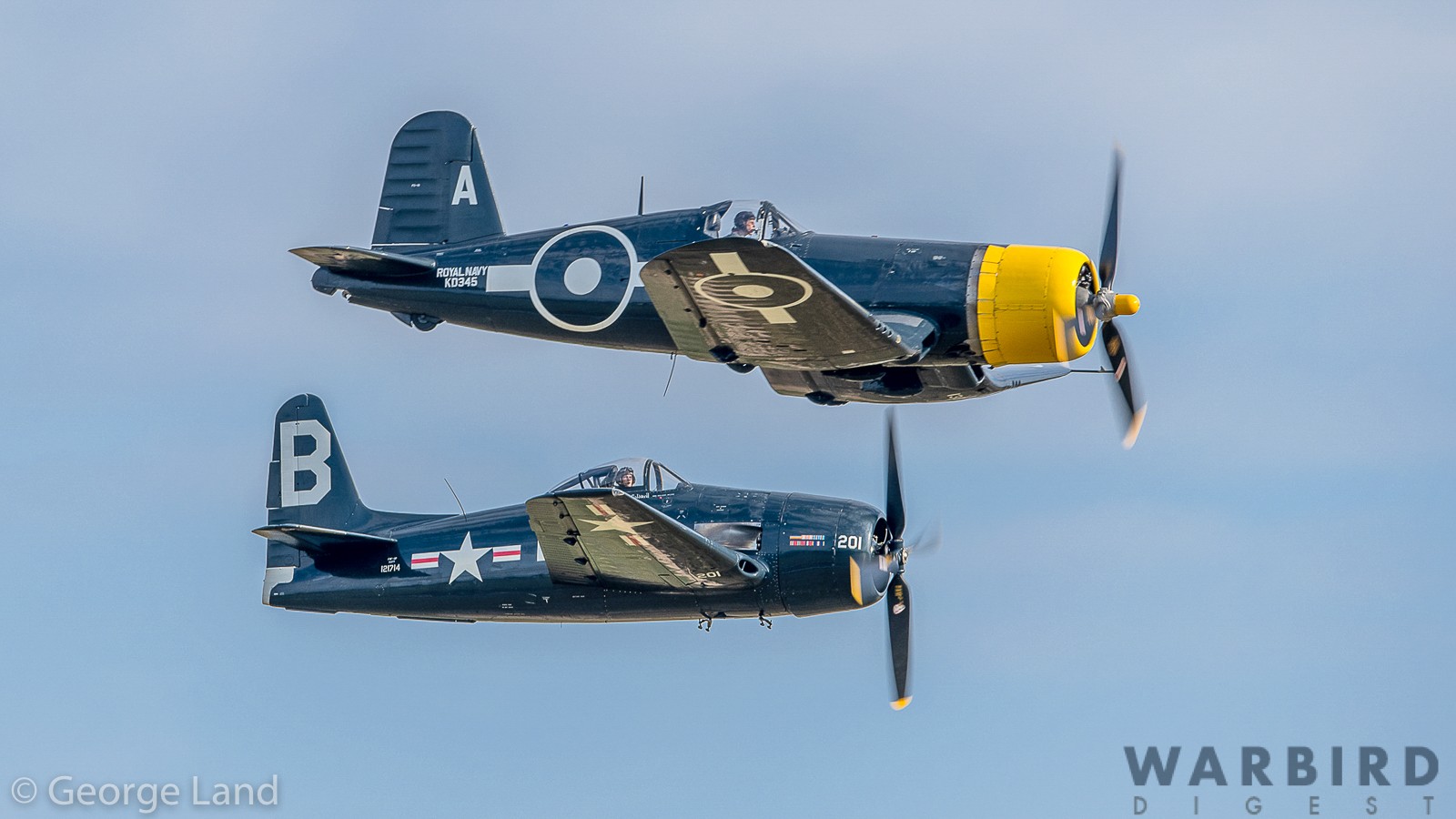
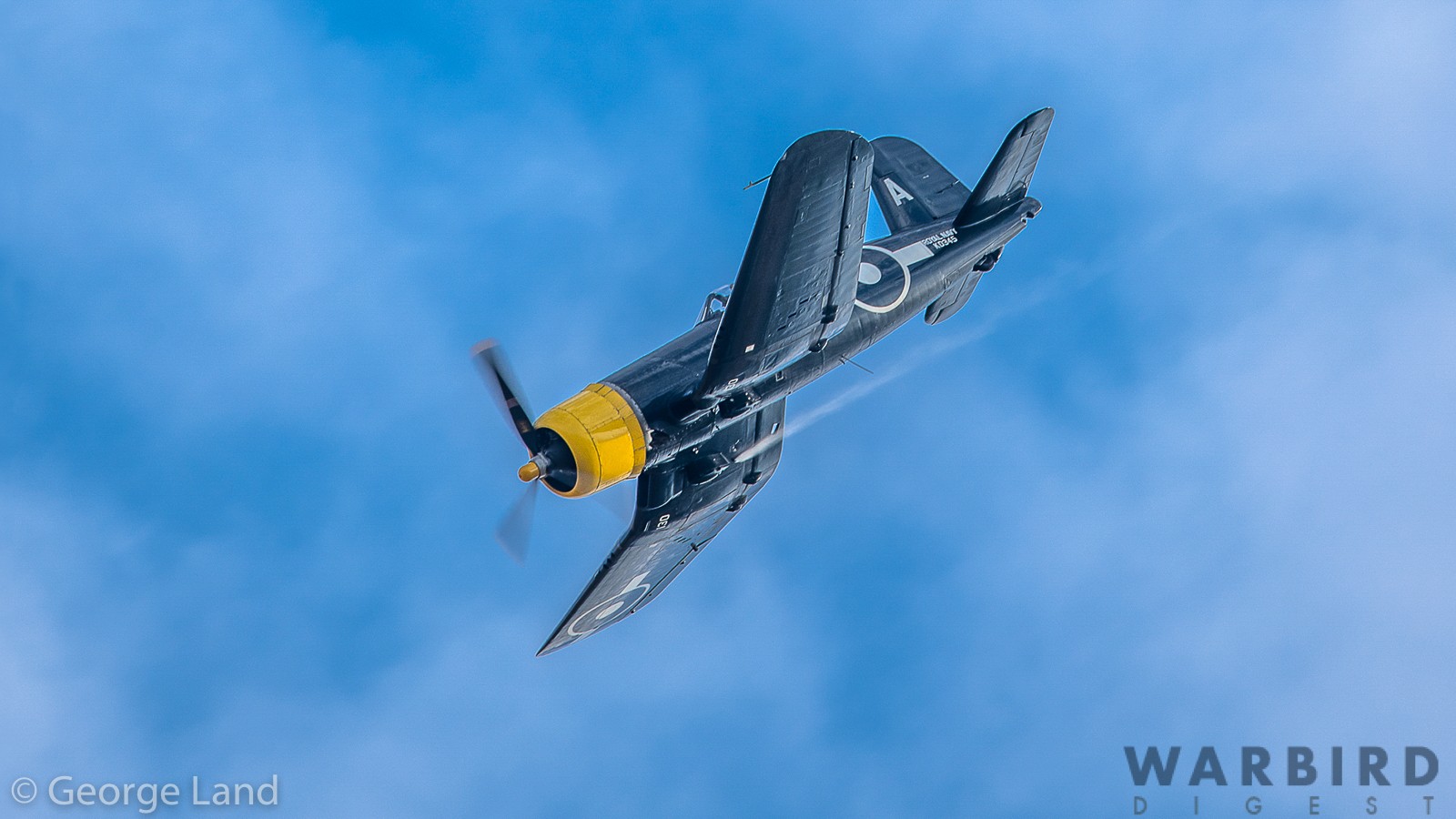
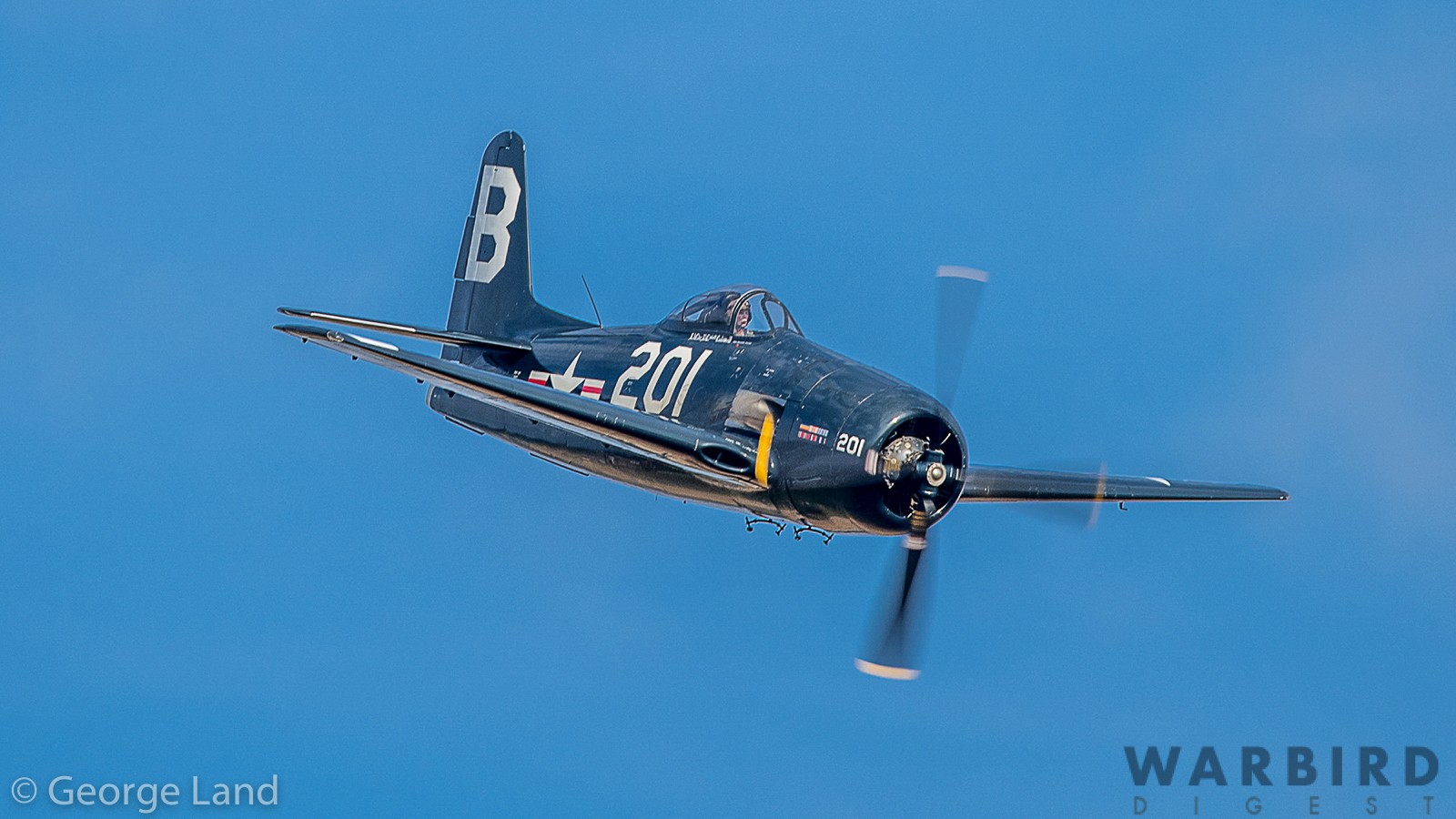
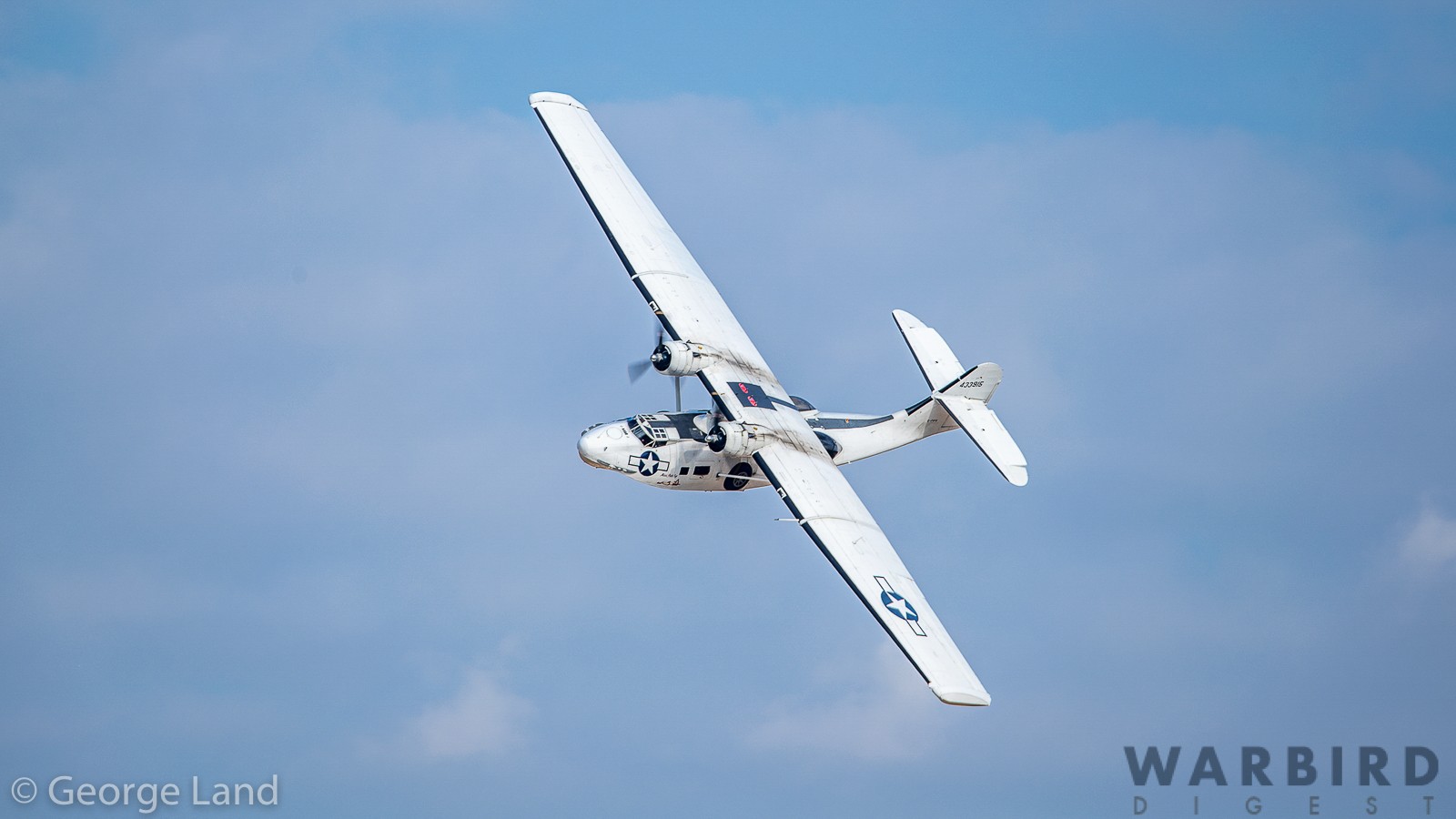
The next segment featured naval aircraft, which included Duxford-based Plane Sailing’s magnificent Canadian Vickers Canso A (essentially a Canadian-built Consolidated PBY-5A Catalina) and two legendary flat top fighters belonging to The Fighter Collection: Goodyear FG-1D Corsair BuNo.88297 and Grumman F8F-2P Bearcat BuNo.121714.
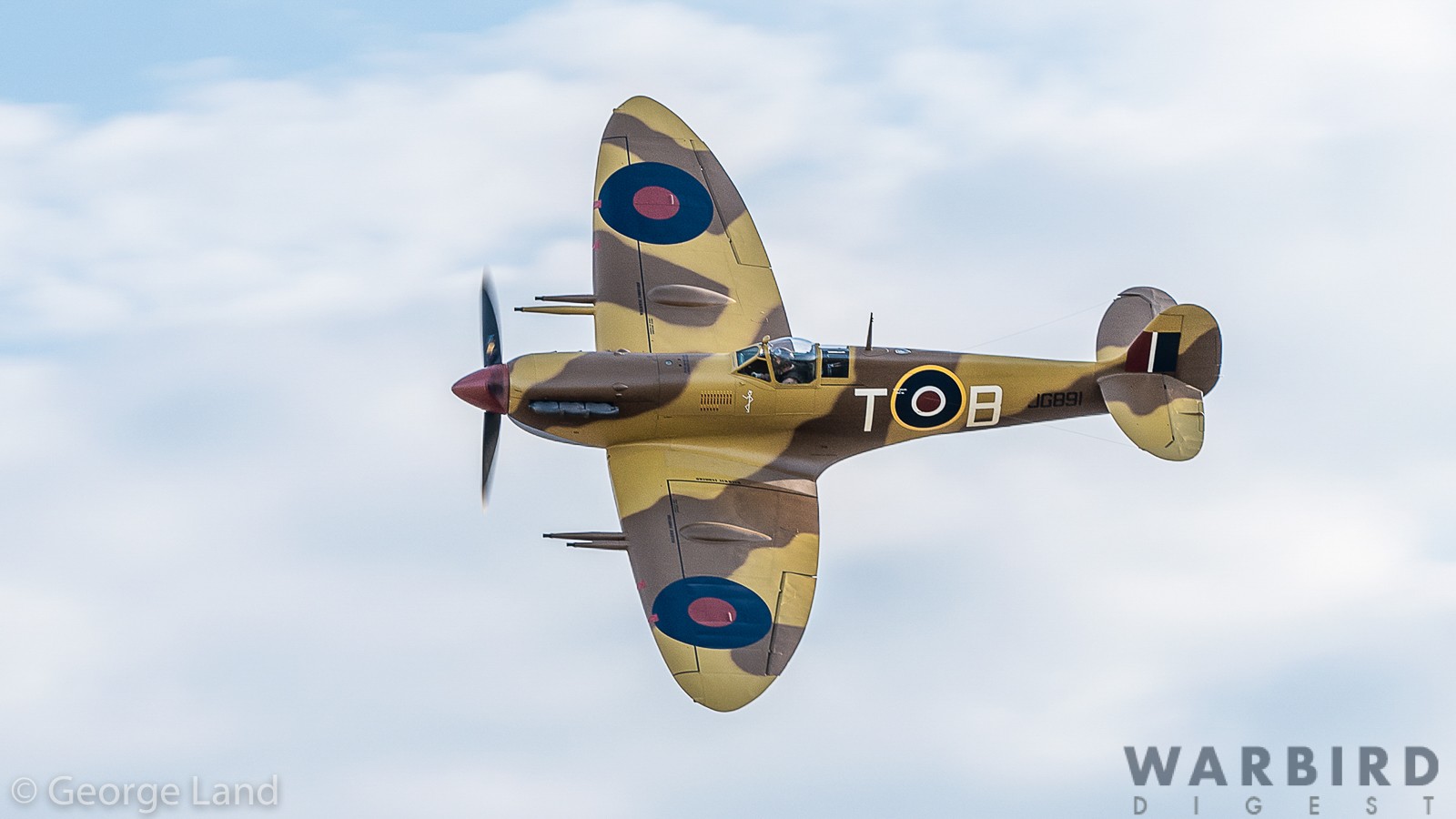
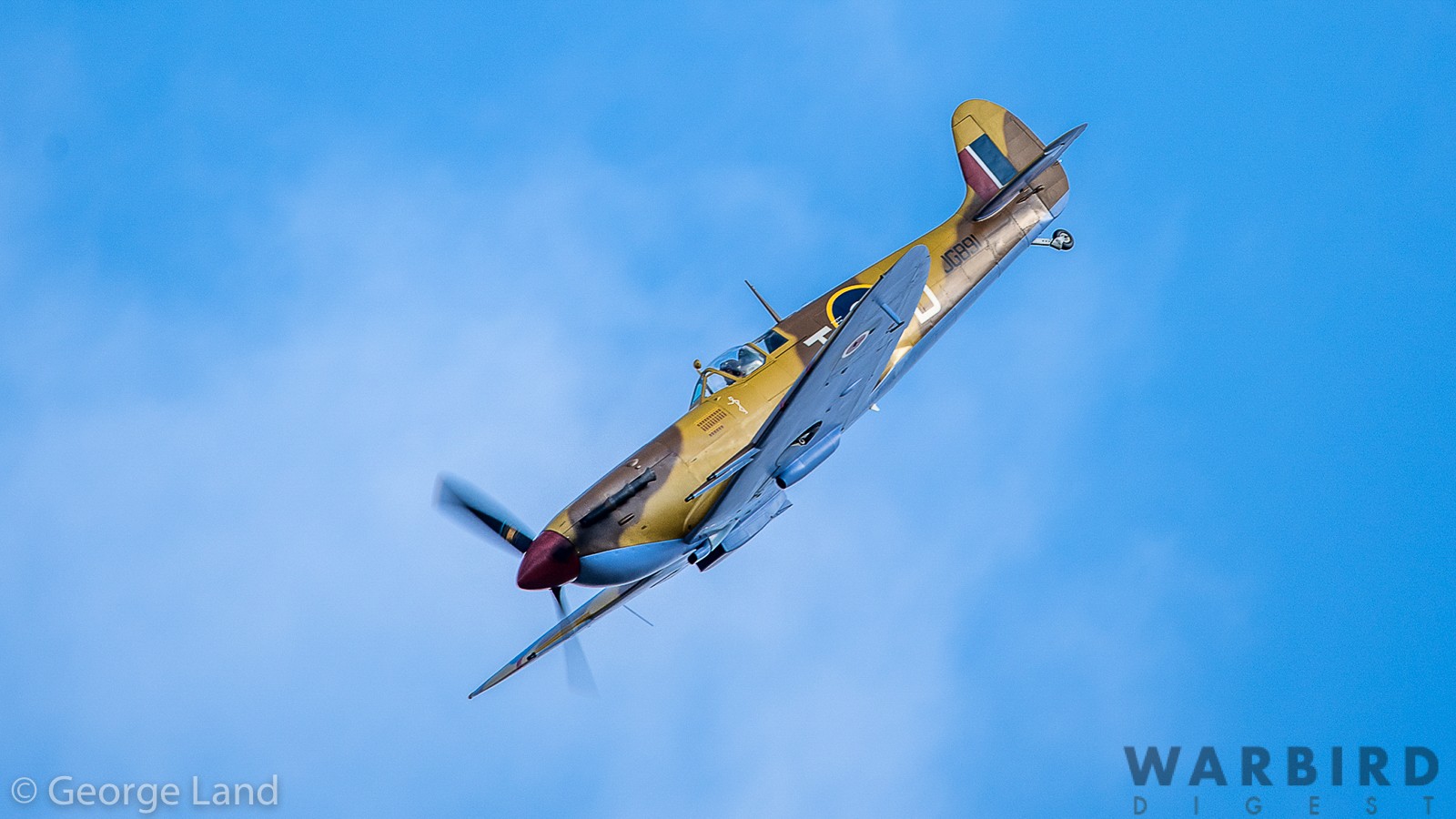
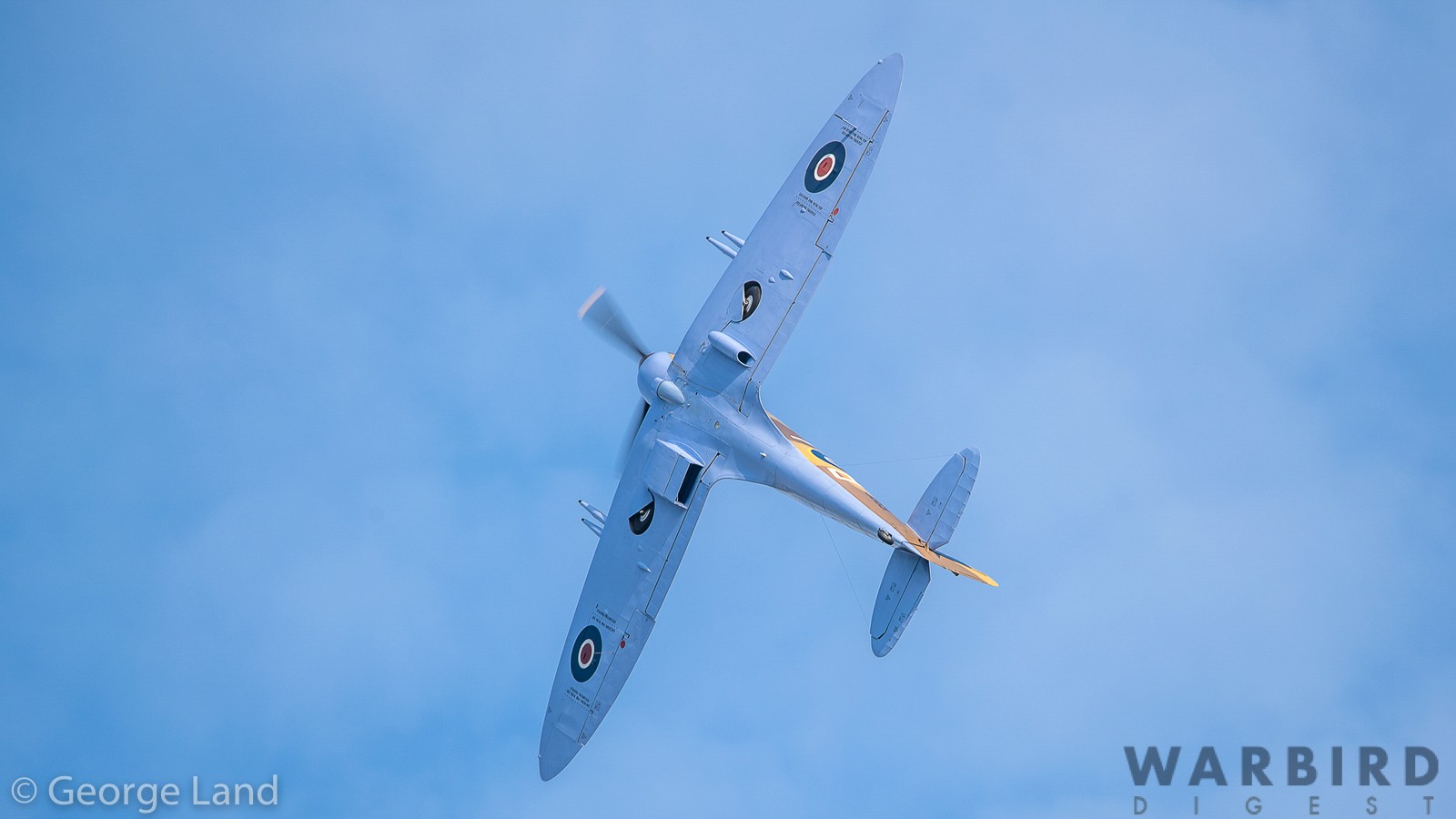
The air show’s penultimate offering featured Duxford’s traditional ‘Balbo’ formation. However, rather than a massed formation of everything on hand, this Balbo featured only the Spitfires and Hurricanes. Mimicking a ‘Big Wing’ operation from WWII, the formation comprised eleven Spitfires and four Hurricanes, while a solo “Joker routine” took place when the formation was away from show-center. This solo “Joker” routine was extraordinary, one of the best such displays over Duxford in some time. It featured Spitfire Mk.V JG891, painted to represent a Malta-based aircraft of No.249 Squadron flown by Flt/Sgt John “Jack” G Hughes (RCAF).
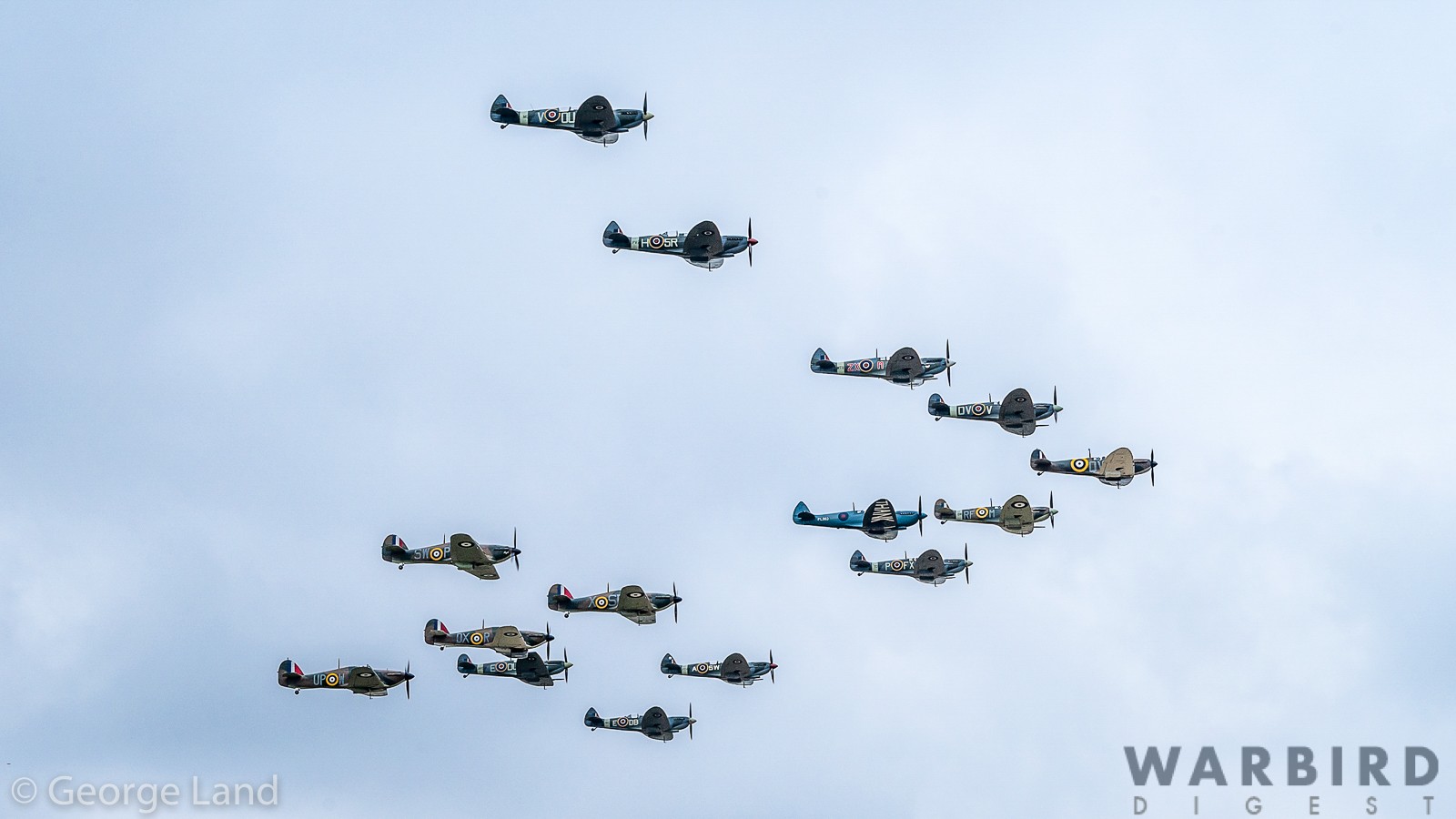
The fighters which featured in the ‘Big Wing’ included the following:
- Spitfire F.Mk.1A N3200 QV (Sqd/Ldr Geoffrey Stephenson, No.19 Squadron, RAF Duxford)
- Spitfire F.Mk.Vb BM597 RF-M (Flying Officer Wiktor Strzembosz No.303 (Polish) Squadron, Tadeusz City of Warsaw)
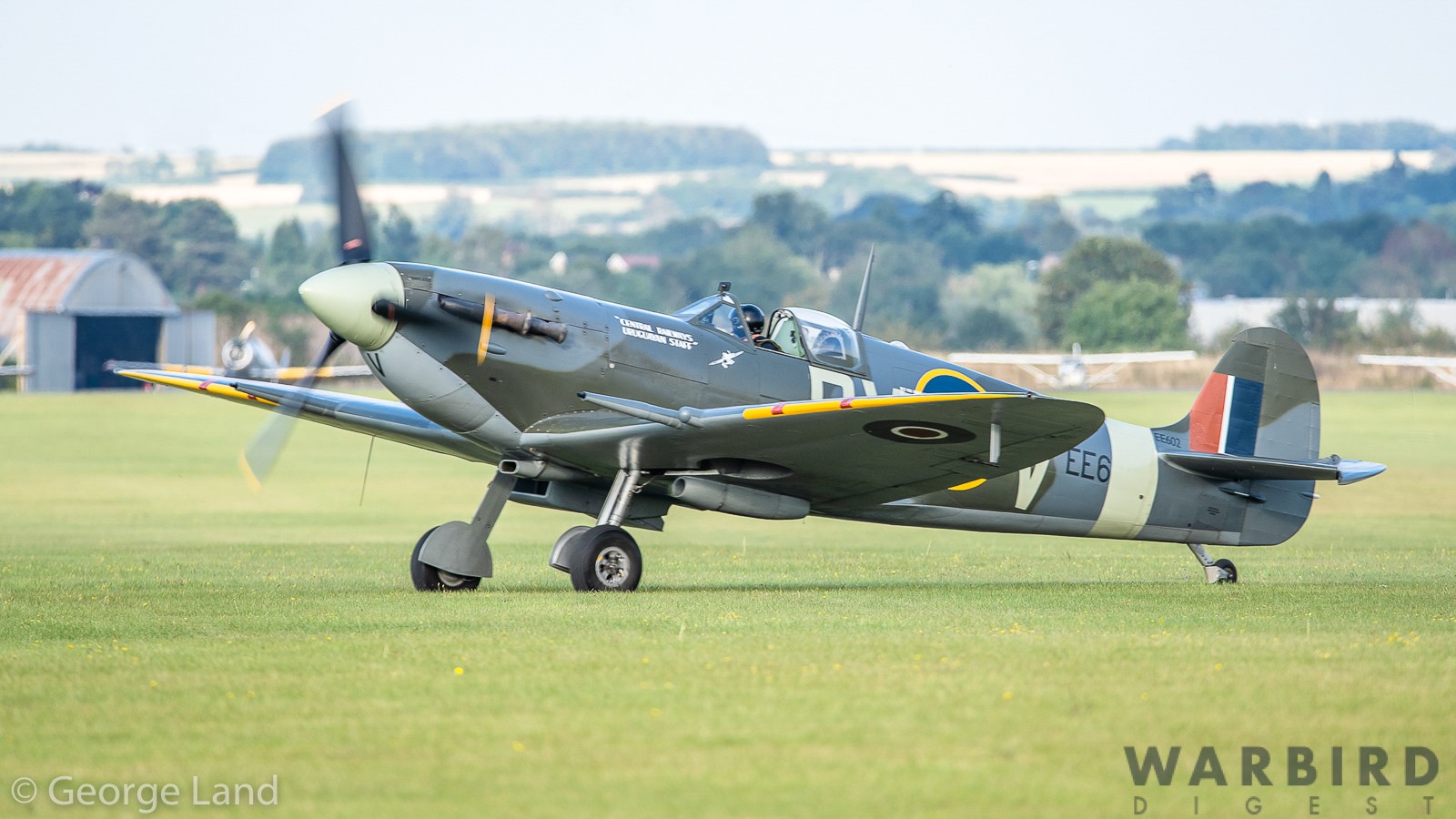
- Spitfire F.Mk.Vc EE602 DV-V Mabel (No.129 (Mysore) Squadron RAF)
- Spitfire L.F Mk.Vc AR501 DU-E (No.310 (Czechoslovak) Squadron RAF)
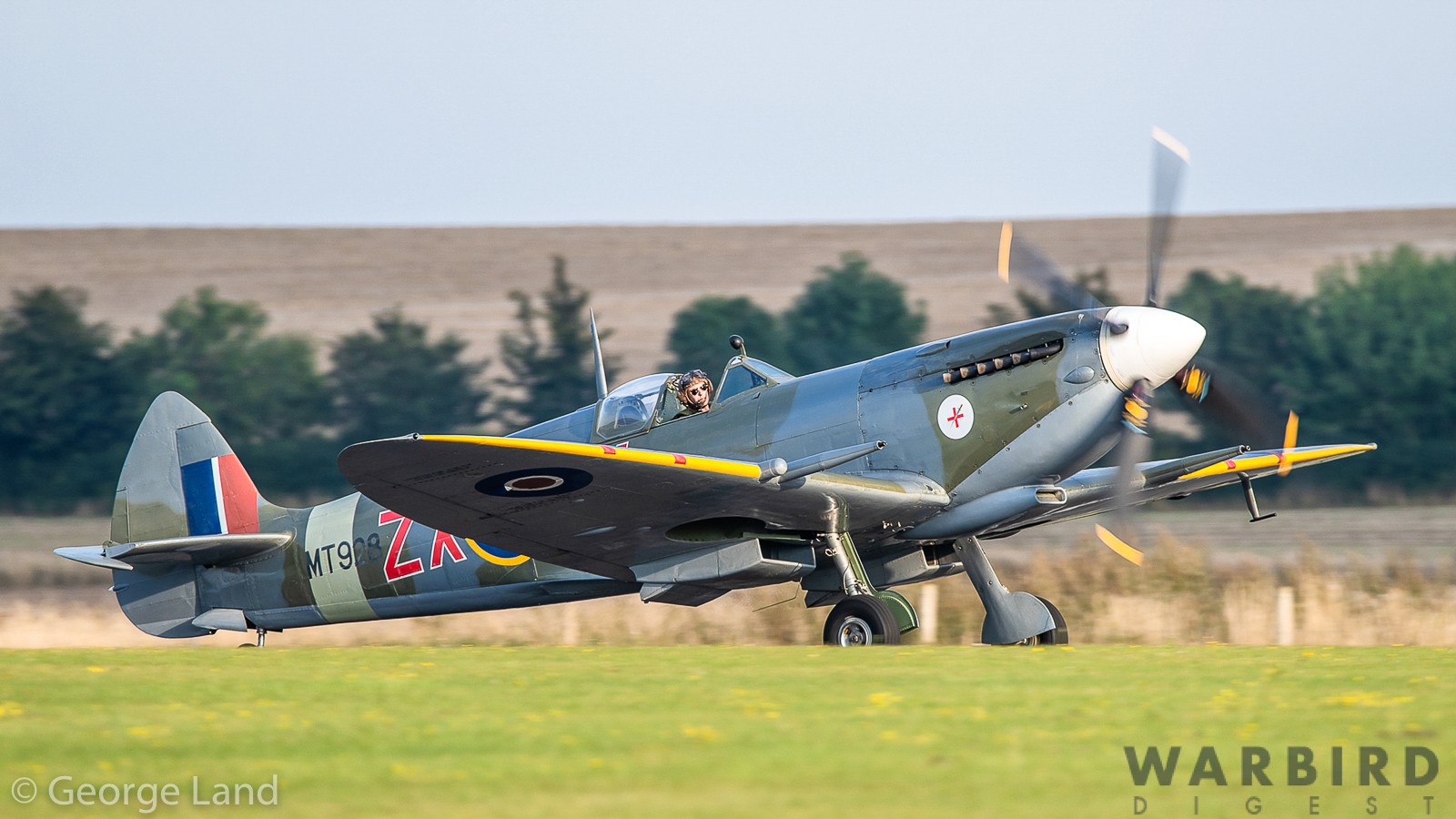
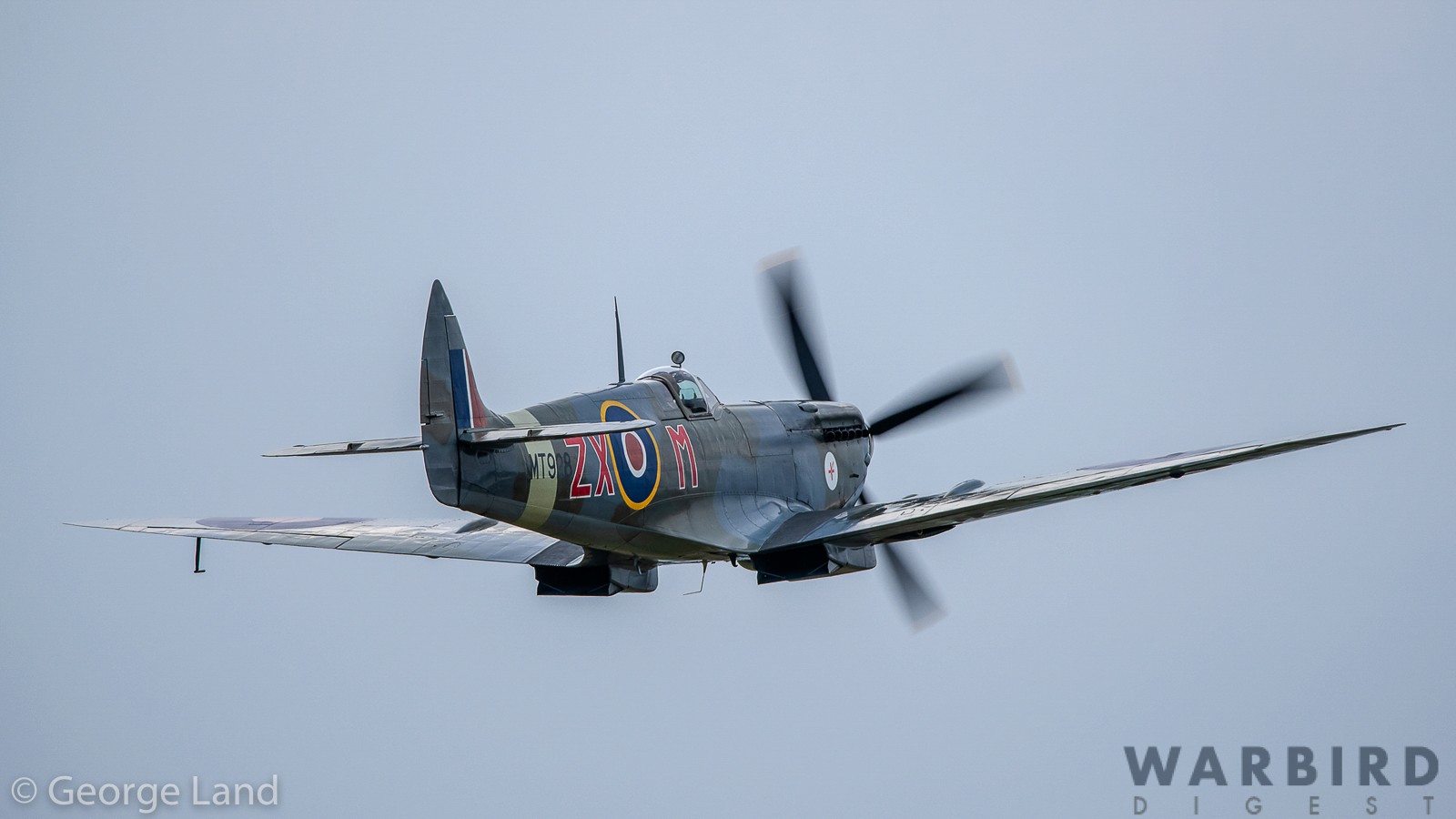
- Spitfire H.F.Vlllc MV154 as MT928 ZX-M (Sqdn/Ldr G.R.S.McKay No.145 Squadron , RAF Middle East Command Italy)
- Spitfire H.F.Mk lXe TD314 FX-P (No.234 (Madras Presidency) Squadron, RAF Bentwaters)
- Spitfire Tr.9 (L.F.lX) PV202 5R-H (No.33 Squadron RAF 2nd Tactical Air Force)
- Spitfire Tr.9 (L.F.lXc) ML407 OU-V (F/O. Johnnie Houlton, No.485 Squadron RNZAF, 145 Wing, 2nd Tactical Air Force)
- Spitfire Tr.9 (L.F.lXe) NH341 DB-E Elizabeth (Flt Lt Hugh Charles Trainor, No.411(Grizzly Bear) Squadron RCAF, Airfield B4 Beny sur Mer Normandy) SUNDAY ONLY
- Spitfire Tr.9 (L.F.lXe) PT462 SW-A (No.253 Squadron, Mediterranean Air Command, Middle East Command Italy, RAF)
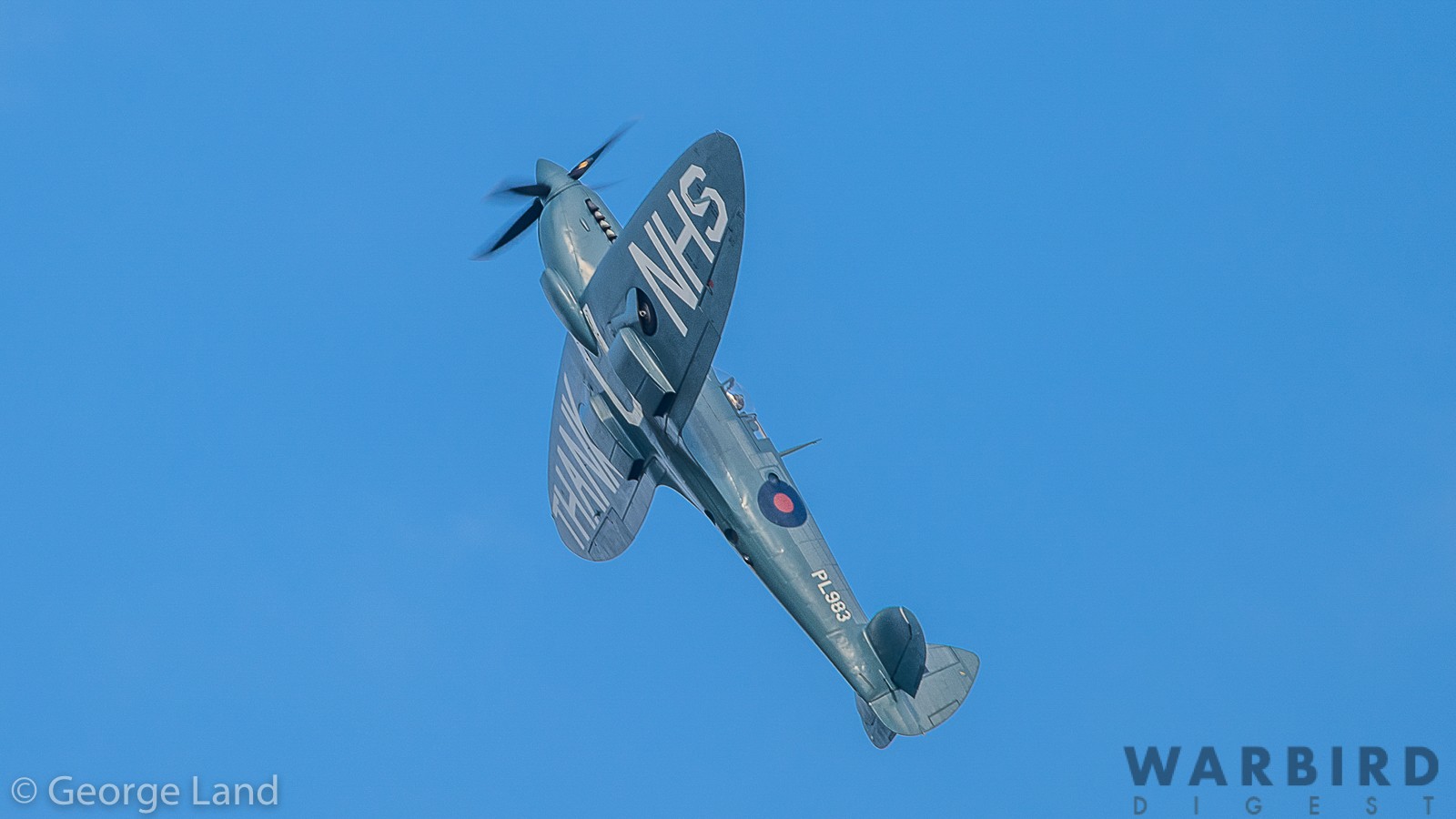
- Spitfire P.R.Xl PL983 L (No.4 Squadron RAF, c/w THANK U NHS under wing)
- Spitfire F.R.Mk.XlVe MV293 as MV268-JE-J (AVM Johnnie Johnson, No.443 Squadron, 127 Wing RCAF, 2nd Tactical Air Force, RAF) SATURDAY ONLY
- Hurricane Mk.1 P3717 SW-P Soph/Hugh (P/O W.M.C Samolonski No.253 Squadron RAF)
- Hurricane Mk.1 R4118 UP-W (P/O Bob Foster, No.605 (County of Warwick) Squadron, RAF, 1942)
- Hurricane Mk.1 V7497 SD-X (P/O E B Rogers SD-X No.501 (County of Gloucester) Squadron RAuxAF, Kenley)
- Hurricane Mk.1 P2902 DX-R (Pilot Officer (later Sdn/Ldr Kenneth McGlashan AFC), No.245 Squadron, RAF)

Supermarine Spitfire H.F.Vlll MV154 painted to represent MT928 from the time that aircraft was flown in Italy as ZX-M by Sqdn Ldr G.R.S.McKay in No.145 Squadron RAF Middle East Command. (photo by George Land)
Supermarine Spitfire F.Mk Vc EE602 taxies in after the Big Wing display ended. A combat veteran with over 100 missions, including the escort home of B-17F Memphis Belle on the homeward stretch of her 25th mission, this aircraft is painted to represent the time she flew as DV-V with No.129 (Mysore) Squadron, RAF. A prensentation Spitfire, her WWII construction was sponsored by Central Railways Urugayan Staff. (photo by George Land)
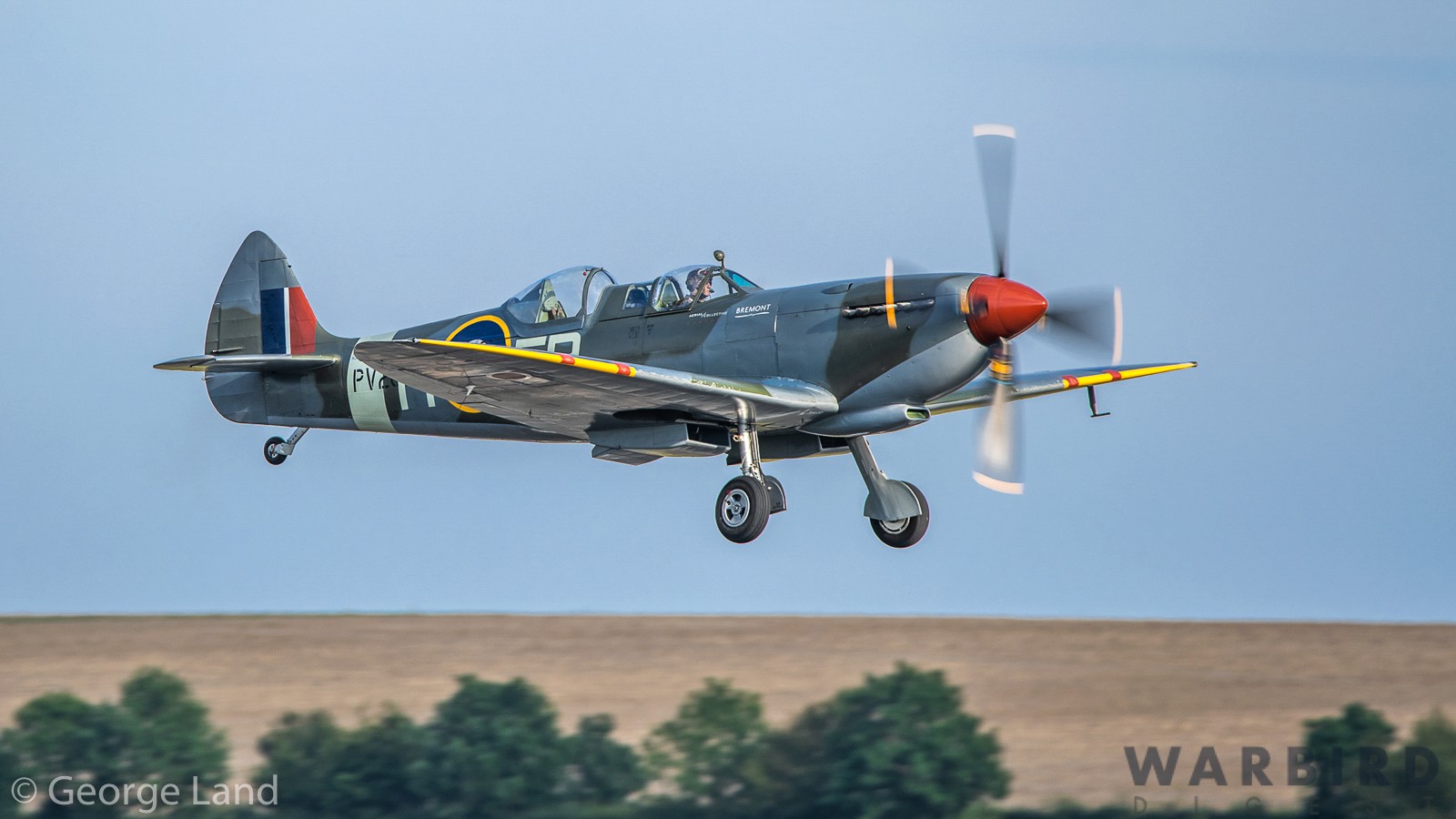
Supermarine Spitfire Tr.9 PV202 taking off. The aircraft is a rare original two-seat trainer variant of the famed British WWII fighter. While just a handful of Tr.9s were built officially, a significant number of new-build conversions are now flying, since the two-seater offers experience rides for non-pilots and those who wish to convert to the type. The aircraft is presently marked to represent 5R-H which served with No.33 Squadron, 2nd Tactical Air Force. (photo by George Land)
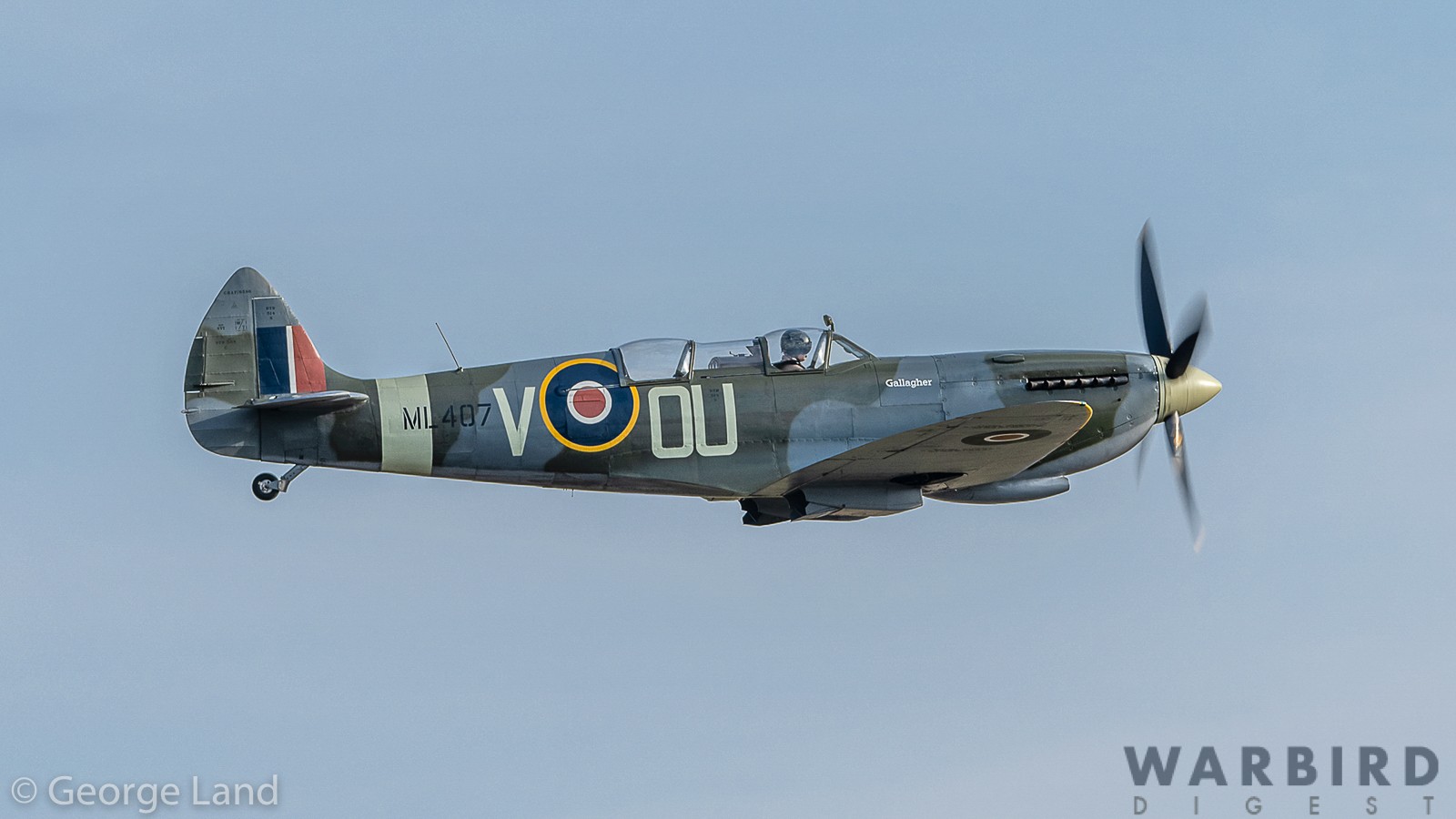
Caroline Grace’s former Irish Air Corps Supermarine Spitfire Tr.9 ML407. This aircraft, when still a stock Mk.IX saw considerable combat during WWII. She is currently painted to represent an example flown by F/O Johnnie Houlton in 485 Squadron (New Zealand), 145 Wing, 2nd Tactical Air Force. (photo by George Land)
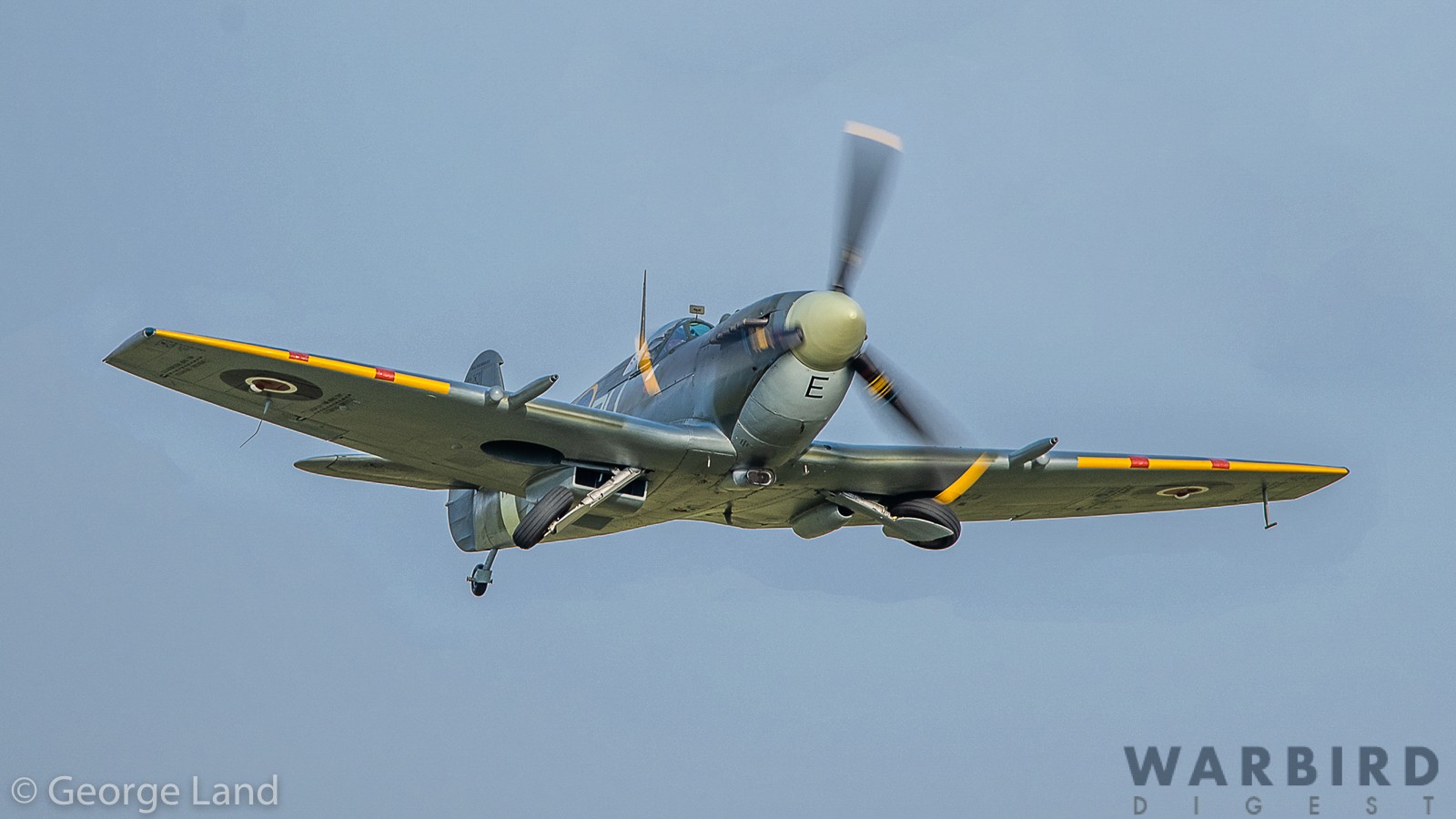
The Shuttleworth Collection’s magnificent Supermarine Spitfire L.F.Mk.Vc AR501 (actually license-built by Westland Aviation) is painted to represent an example from No.310 (Czech) Squadron RAF. (photo by George Land)
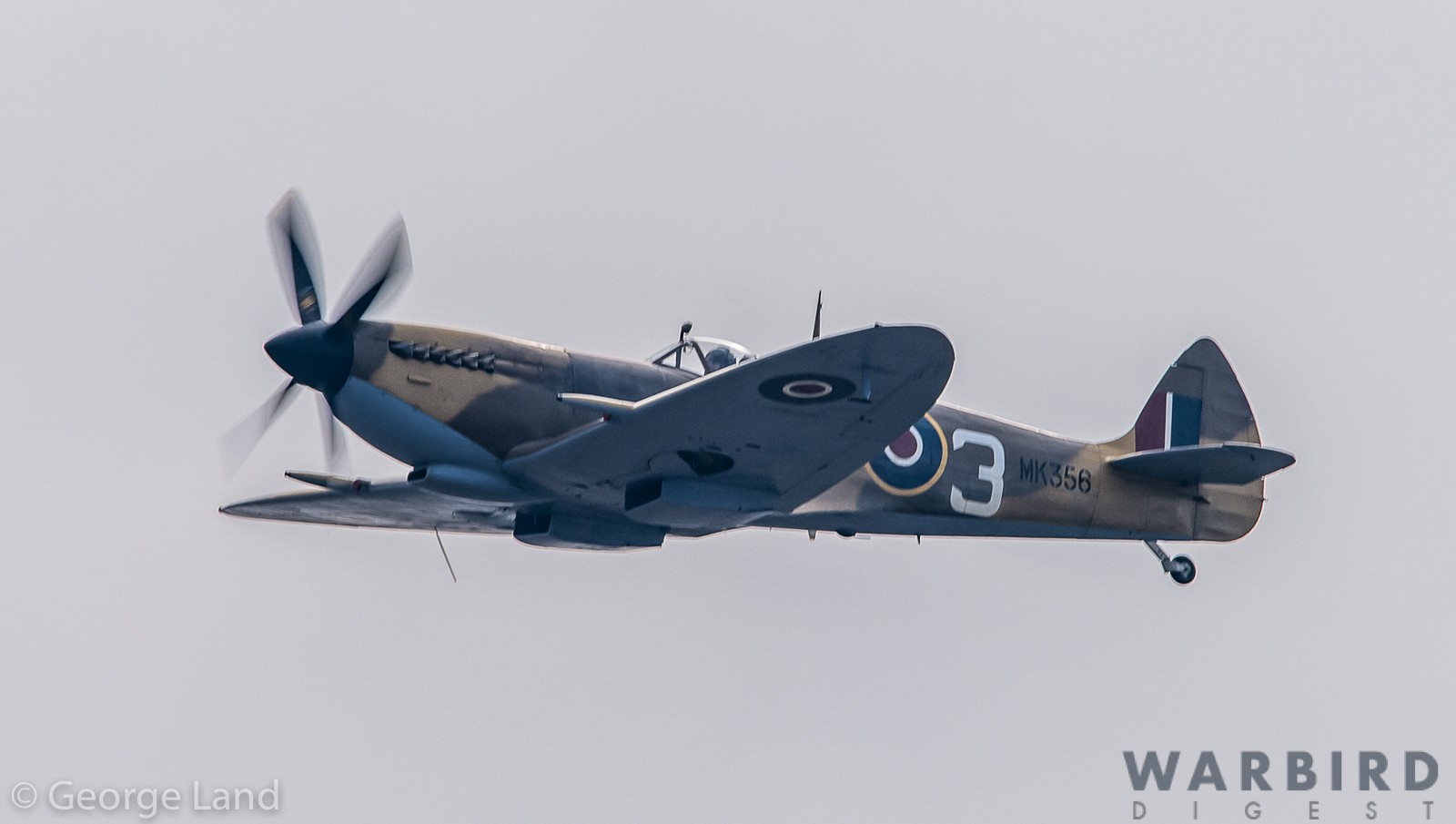
The Battle of Britina Memorial Flight’s Supermarine Spitfire LF MkIXe MK356 wearing the markings for LF lXc EN152 of No.92 (East India) Squadron with the Desert Air Force in Tunisia during 1943. (photo by George Land)
MaxAlpha Aviation’s Supermarine Spitfire HF Mk.Vlll MV154 is usually based at Bremgarten Airfield in Eschbach, Germany. (photo by George Land)
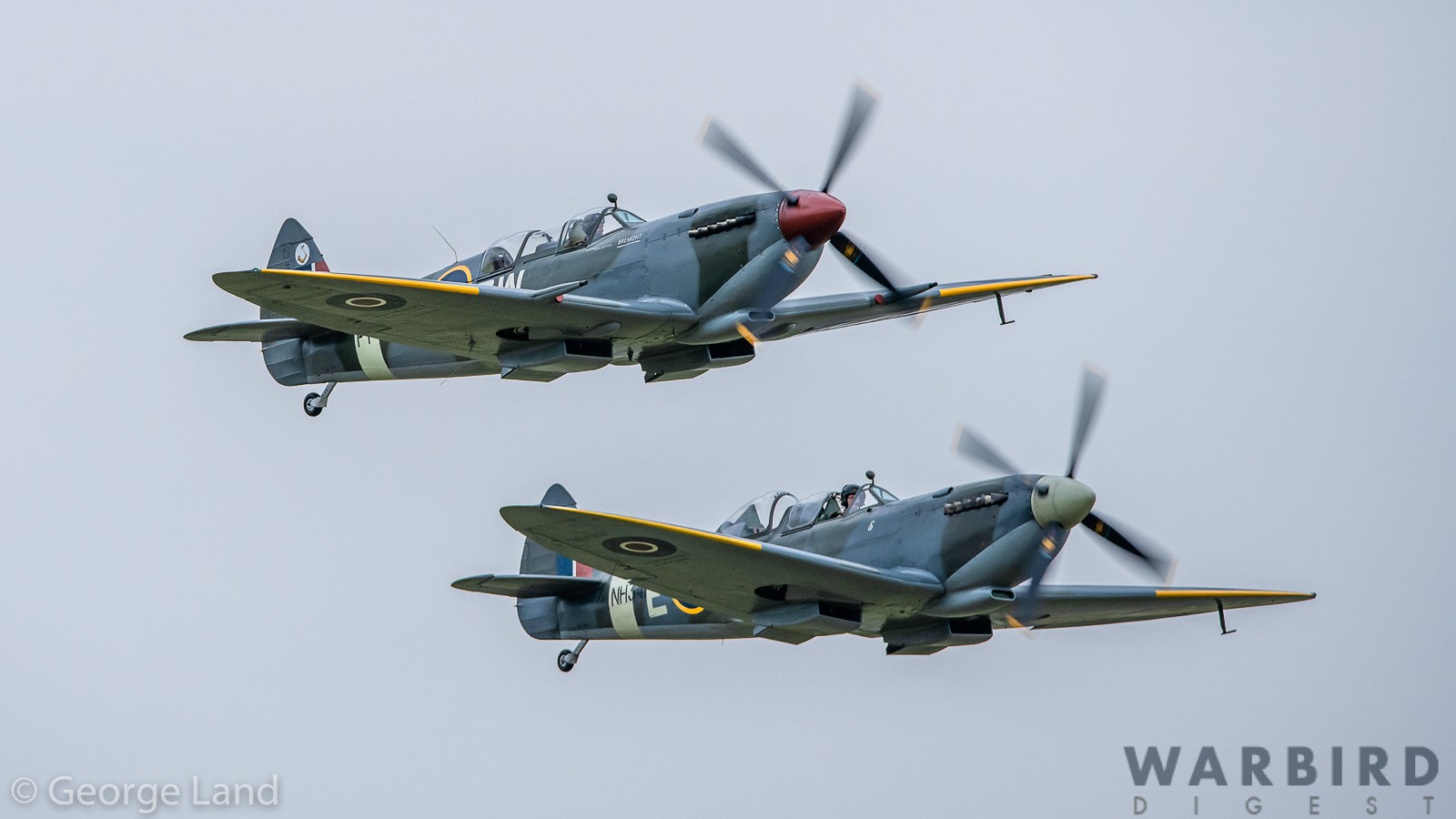
The two Spitfire Tr.9s in formation PT462 in the foreground with NH341 off its port wing. Both of these airframes are modern two-seat conversions of the standard Spitfire Mk.IX airframe into Tr.9 guise, although only NH341 sports the more authentic Tr.9 canopy configuration, while PT462’s is the result of a design change initiated by the late Nick Grace with his restoration of Spitfire Tr.9 ML407 during the 1980s. (photo by George Land)
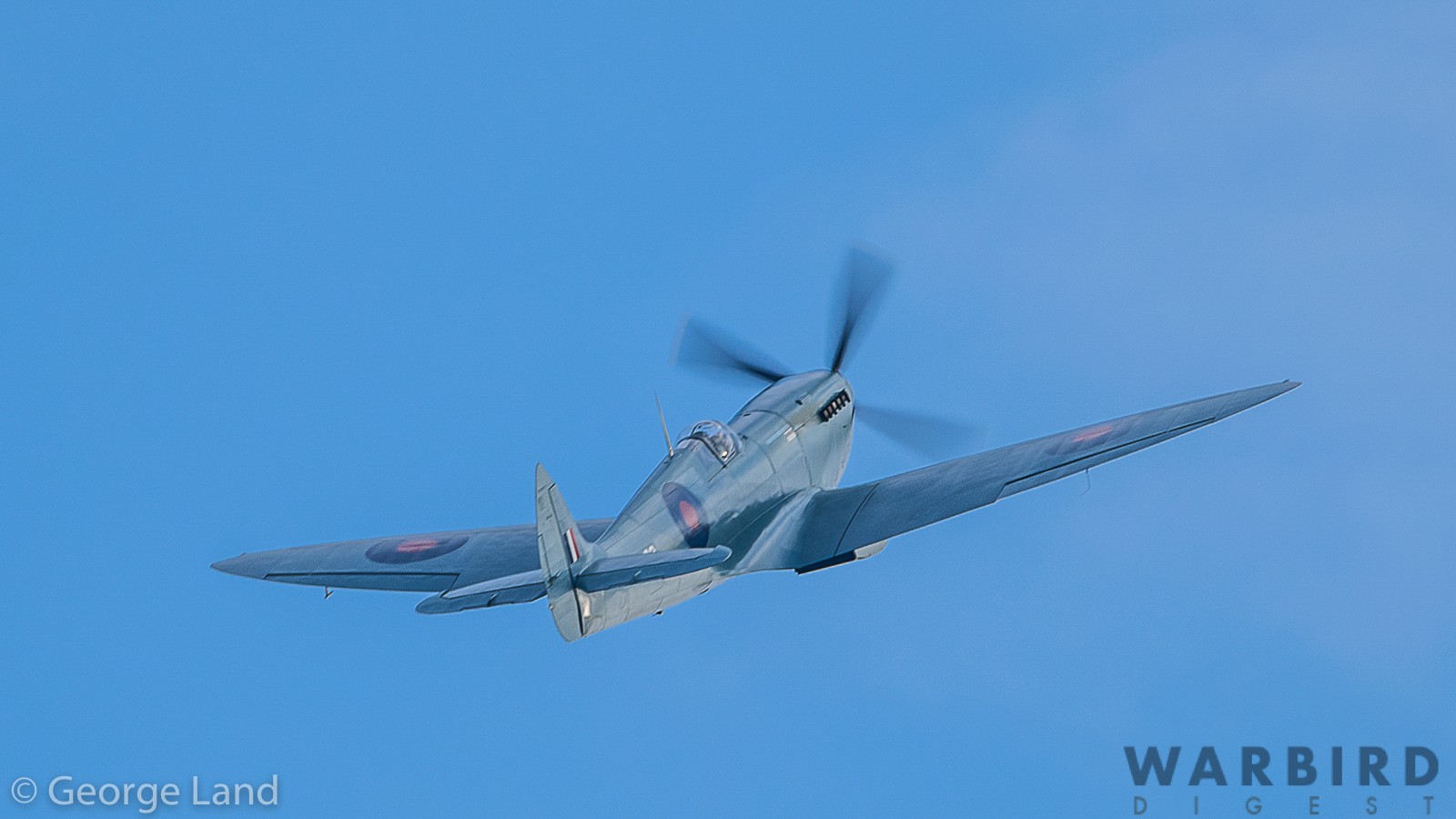
The show closed with another Spitfire solo performance from the Aircraft Restoration Company’s PR Mk.XI PL983, which carries an under-wing salute to the amazing people of Britain’s National Health Service in honor of their sterling service during the Pandemic.
Overall, the air show was a very well organized affair with plenty of variety and content, and the aircraft were flown with amazing skill. The author wishes to extend a hearty congratulations to the personnel at Imperial War Museum Duxford for their endeavors – this show was needed by all whom attended!





Clearly the photo of the B-17 is not the Sally-B but rather the “Movie Memphis Belle” that used to reside at the National Warplane Museum in Geneseo, NY for parts south and now west. Surprised the caption was prepared when the aircraft’s name is clearly visible.
The B-17 in question is G-BEDF, ‘Sally B’ based, and seen here flying in the UK in 2021. It wears the ‘Memphis Belle’ nose art on the starboard side as a continuing tribute from when it was working in the film. The former David Tallichet B-17 ‘The Movie Memphis Belle’ N3703G, in the USA in the 2020s, also doesn’t have the chin turret. The lesson here is not to assume nose art defines the aircraft – or is unique.