


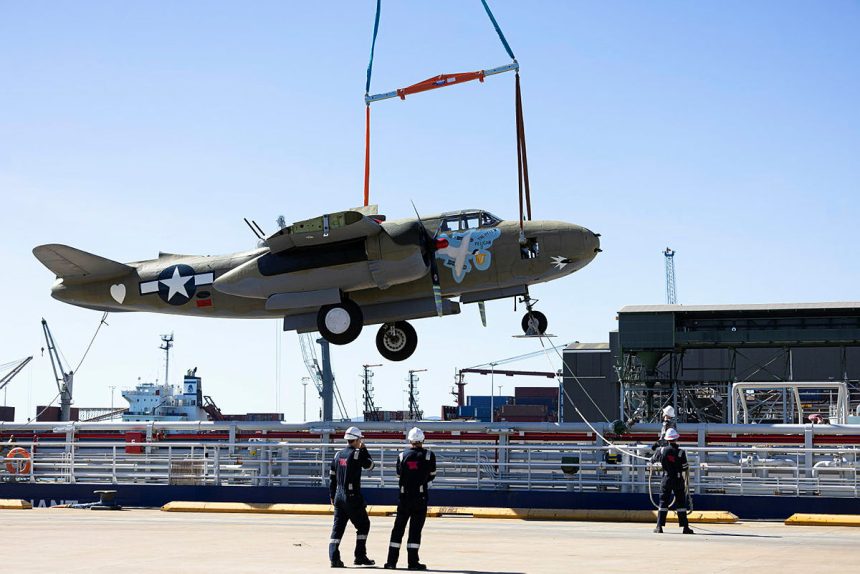

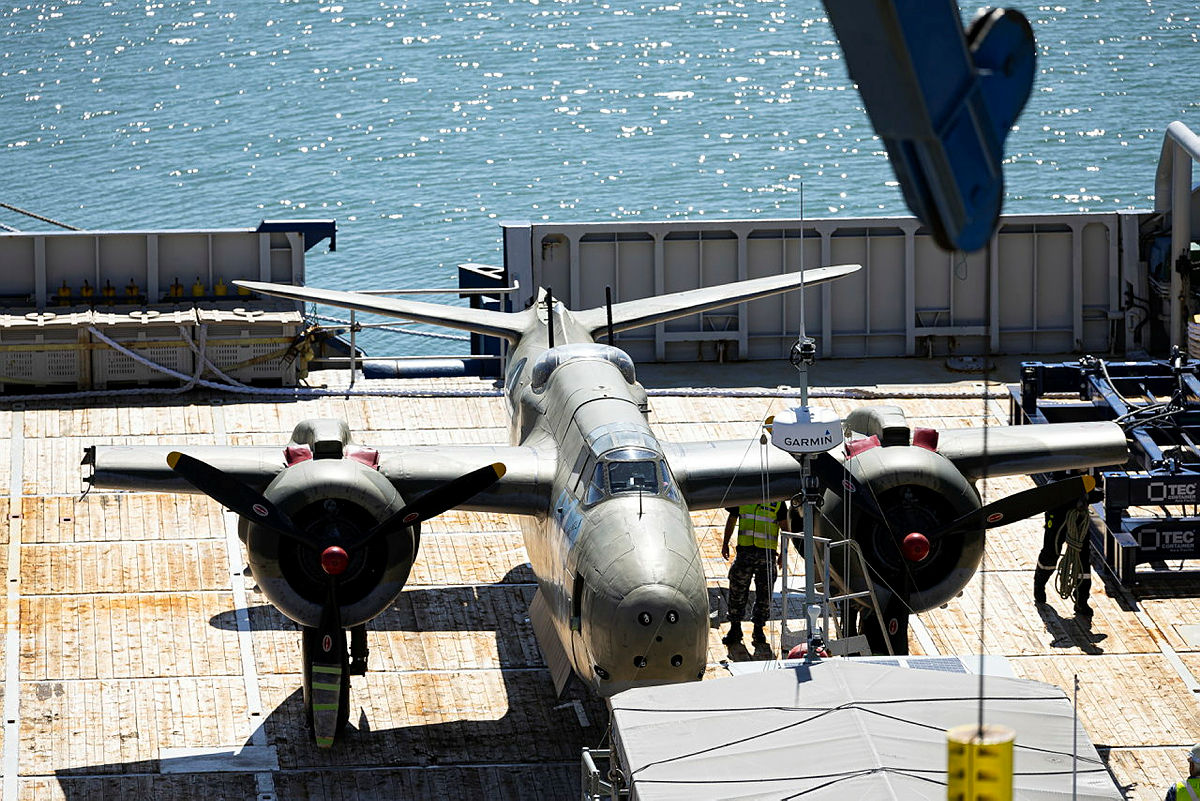
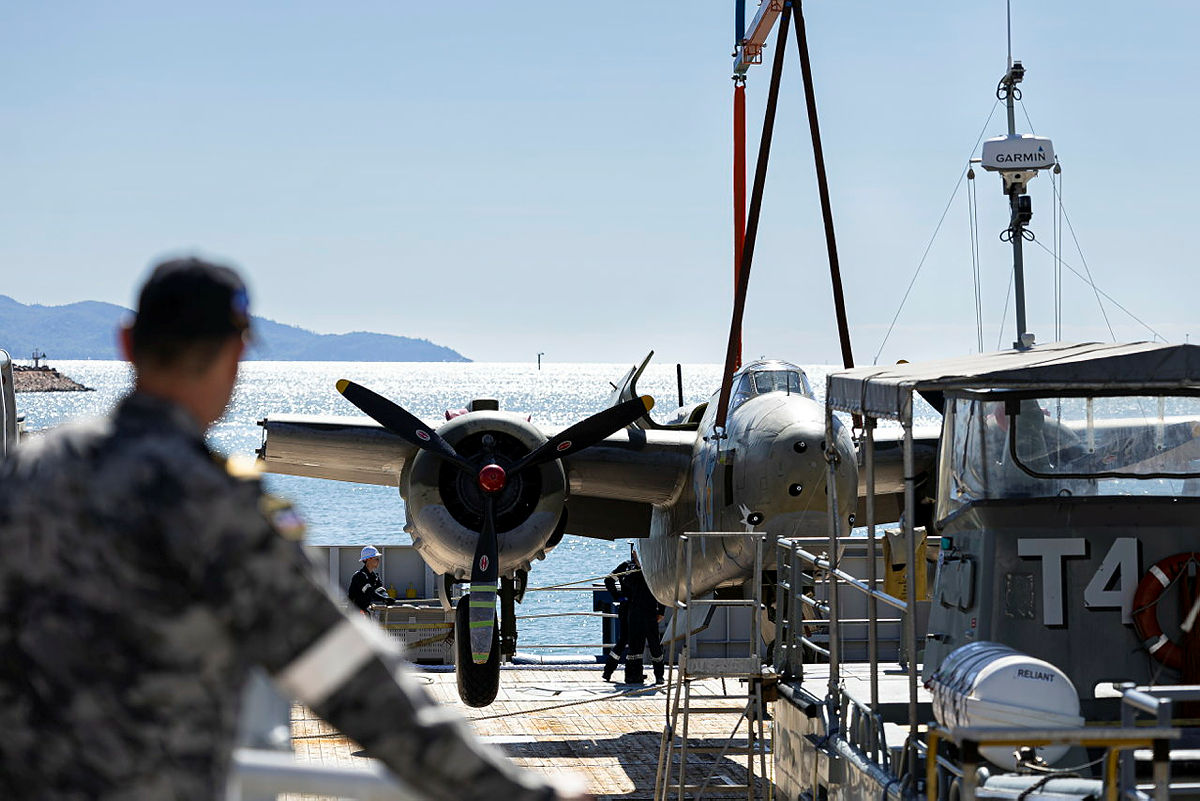
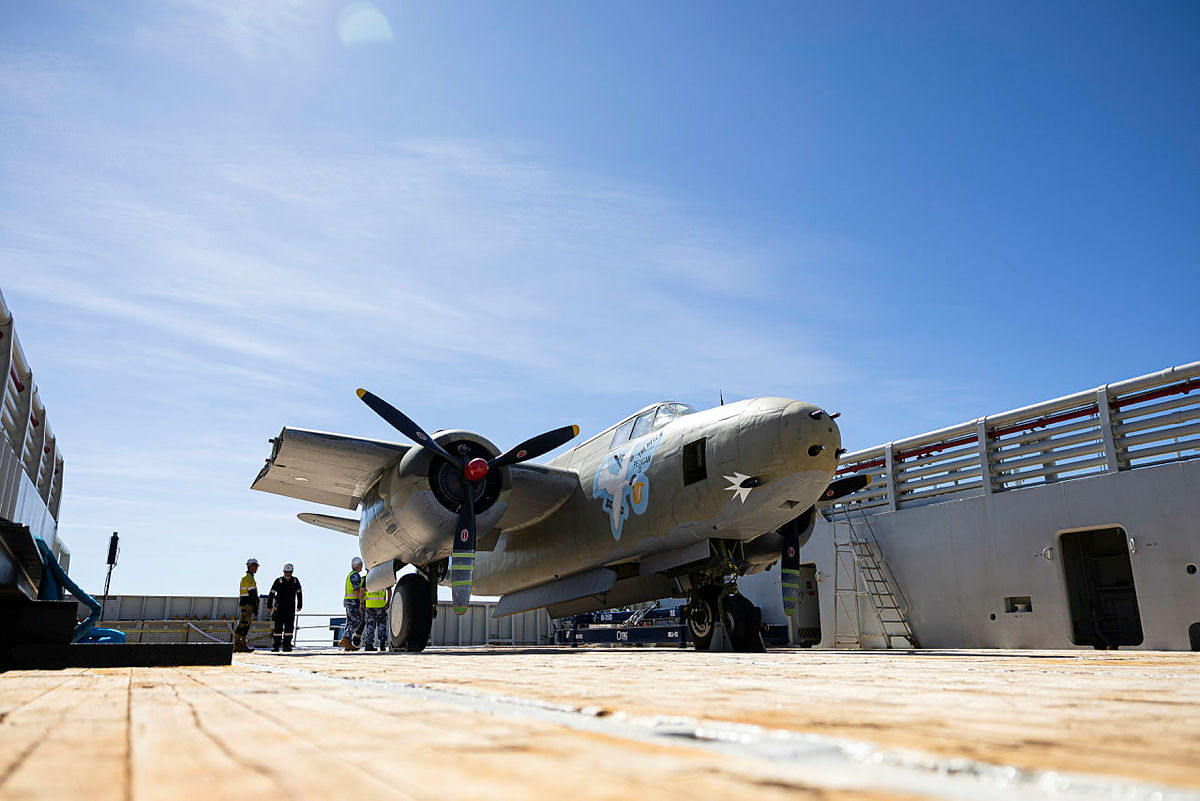
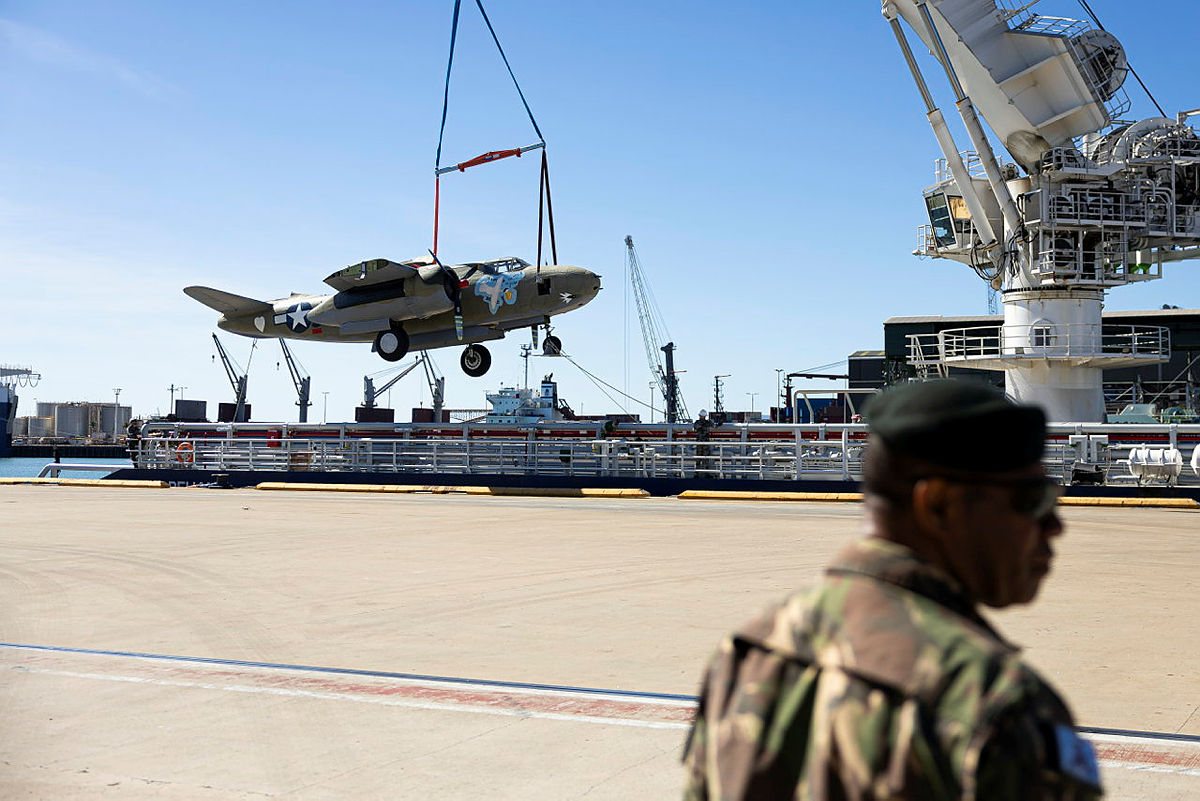
Nearly 80 years after disappearing into the jungles of Papua New Guinea, a restored Douglas A-20 Havoc (s/n 42-86786) bomber—Hell’n Pelican II—is returning to the nation where it crash-landed during World War II. Recently, the aircraft was loaded onto the Royal Australian Navy’s ADV Reliant in Townsville, Queensland, following overland transport from RAAF Base Amberley. After a three-day sea voyage, it will be unveiled at the PNG National Museum and Art Gallery in Port Moresby.
Thanks to Pacific Wrecks, we are able to trace the history of this rare aircraft. Built at Douglas Aircraft’s Long Beach, California facility, the bomber was delivered to the U.S. Army Air Forces on September 1, 1943. Shipped to Australia for assembly, it was deployed to New Guinea later that year. In April 1944, Hell’n Pelican II was forced to crash-land in Madang Province after a severe weather event disrupted a mission and depleted its fuel. The crew—Captain Charles Davidson and Sergeant John McKenna—spent over two weeks evading Japanese patrols as they trekked through dense jungle to safety. During their escape, the downed aircraft was strafed by enemy fighters. Click HERE to visit Pacific Wreck‘s page about this aircraft.
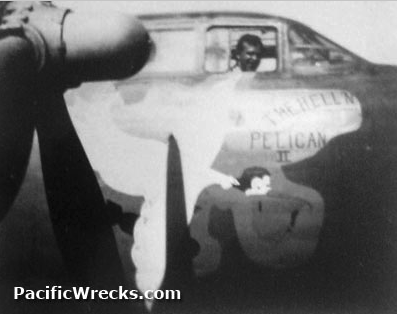
The intact wreck became a known landmark in the jungle. In late 1944, an ANGAU officer reported that its squadron insignia and nose art were still clearly visible. Over time, however, the jungle began to reclaim the site, and by the 1960s, local youths had scavenged parts from the airframe.
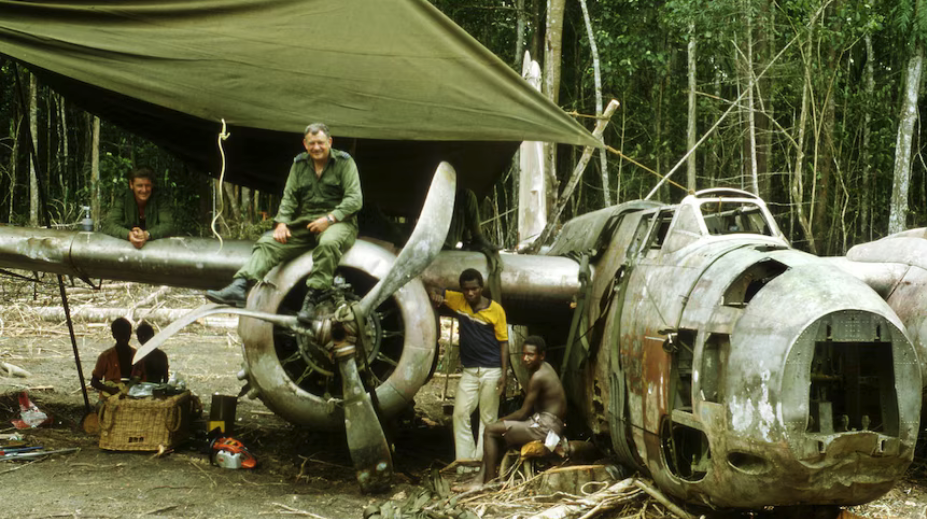
In 1976, the wreck was rediscovered by war historian Michael Claringbould. In 1984, a recovery operation—supported by the Australian Defence Force—used a Chinook helicopter to airlift the aircraft from its remote location. It was transported by sea to Brisbane, where it underwent an extensive restoration effort from 1984 to 1996. Led by Denis Doggett under RAAF supervision, the project relied on parts from six other A-20 airframes.
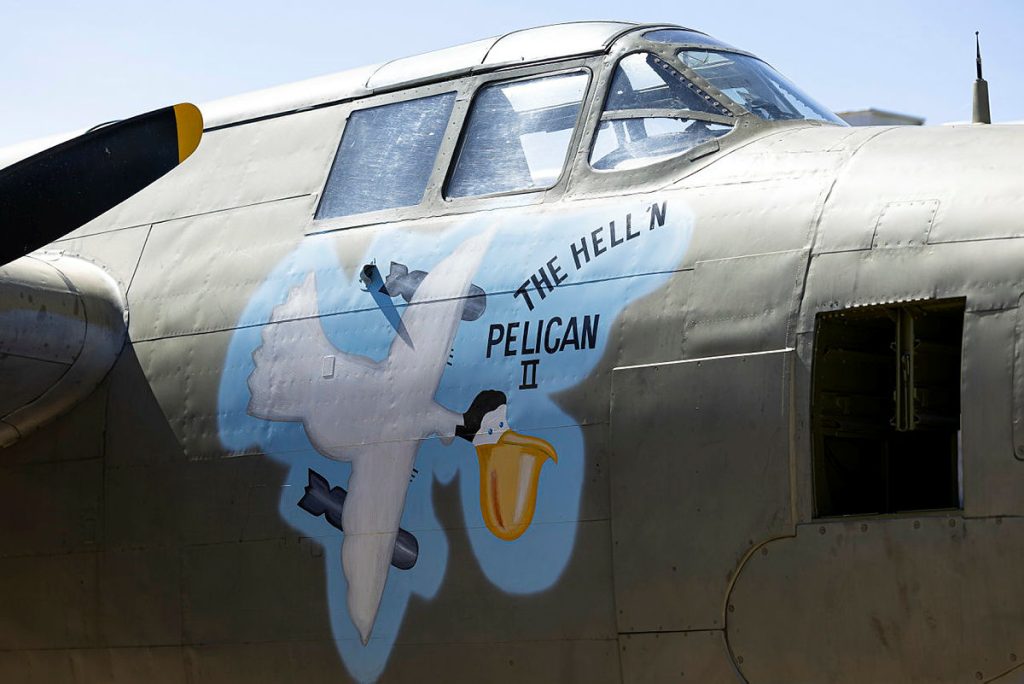
The work culminated in a ceremonial handover to the Papua New Guinea government on September 12, 1996, with original pilot Charles Davidson and his wife in attendance. Remarkably, the aircraft’s structure had been well preserved by the swampy terrain, which helped protect it from corrosion. The plane’s distinctive nose art—a pelican—was a personal emblem of the pilot and was carefully restored along with other original markings.
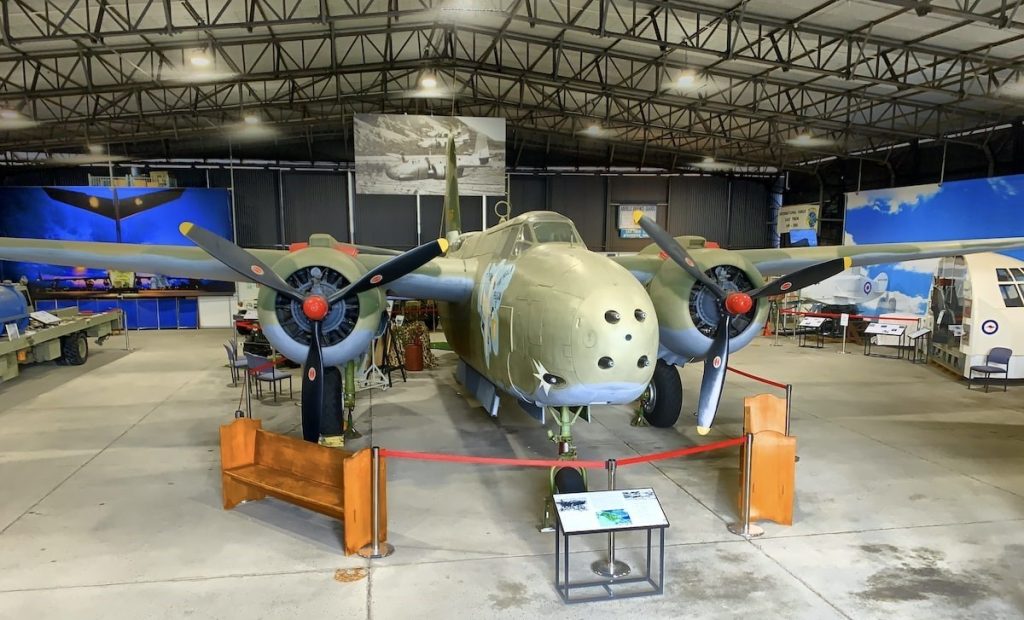
The Douglas A-20 Havoc was developed as a fast, versatile light bomber. Approximately 7,500 were built during World War II, and the aircraft saw widespread service with U.S., UK, Australian, and Soviet forces. In Commonwealth service, the A-20 was commonly referred to as the Boston bomber. The return of Hell’n Pelican II marks the first time a fully restored American WWII bomber has been repatriated to Papua New Guinea. A purpose-built shelter at the PNG National Museum and Art Gallery will now house the aircraft, serving as a powerful symbol of wartime sacrifice and the enduring alliance between Papua New Guinea, Australia, and the United States.


 Vintage Aviation News
The journey began in Queensland, Australia, where the bomber was reassembled at the Royal Australian Air Force Base Amberley in the 1980s.