


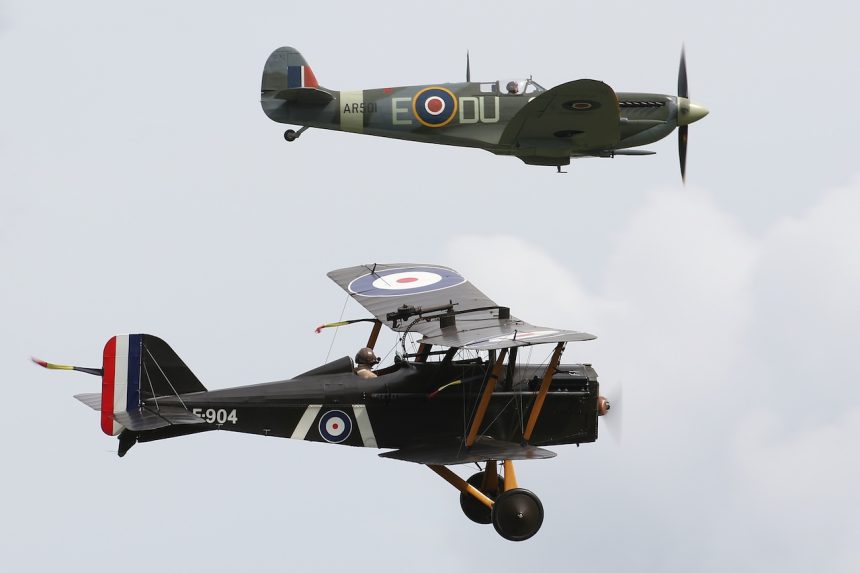

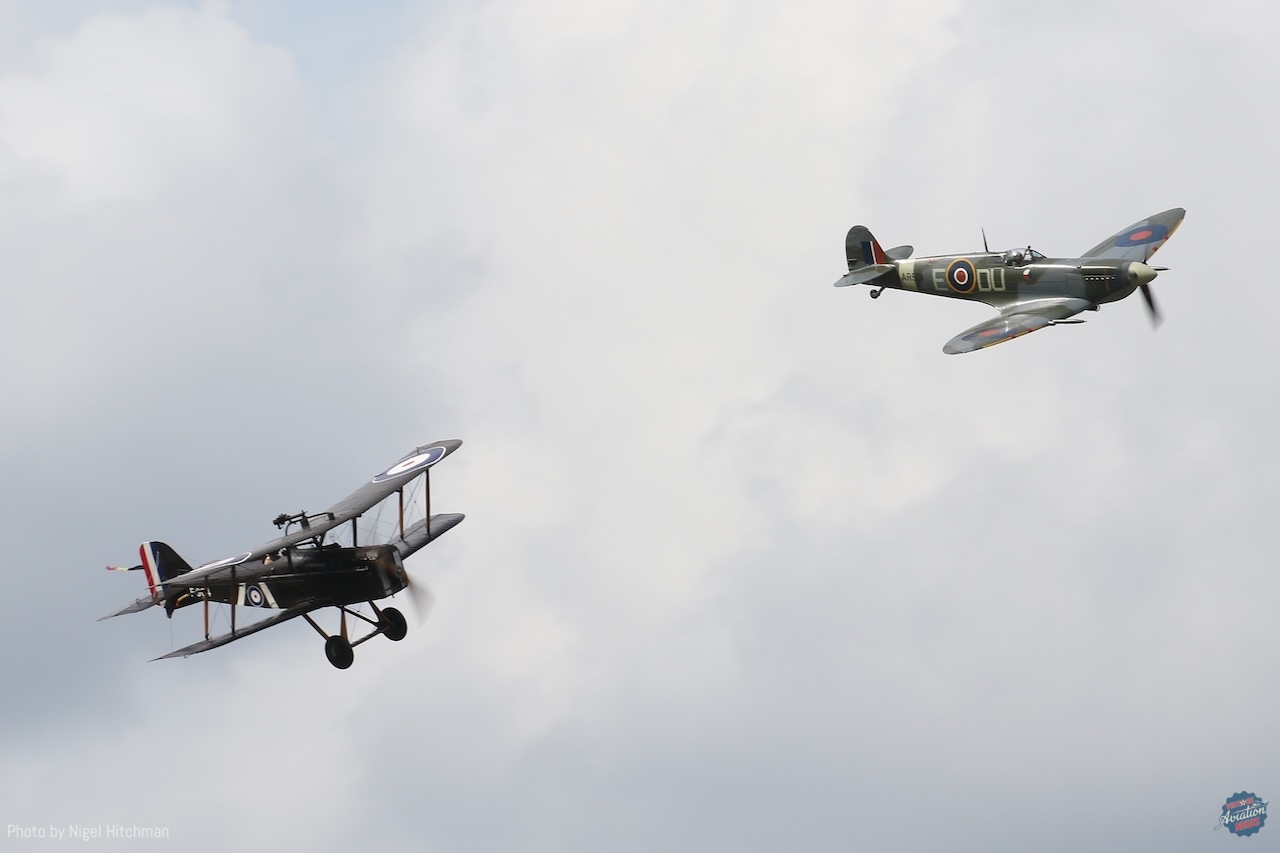
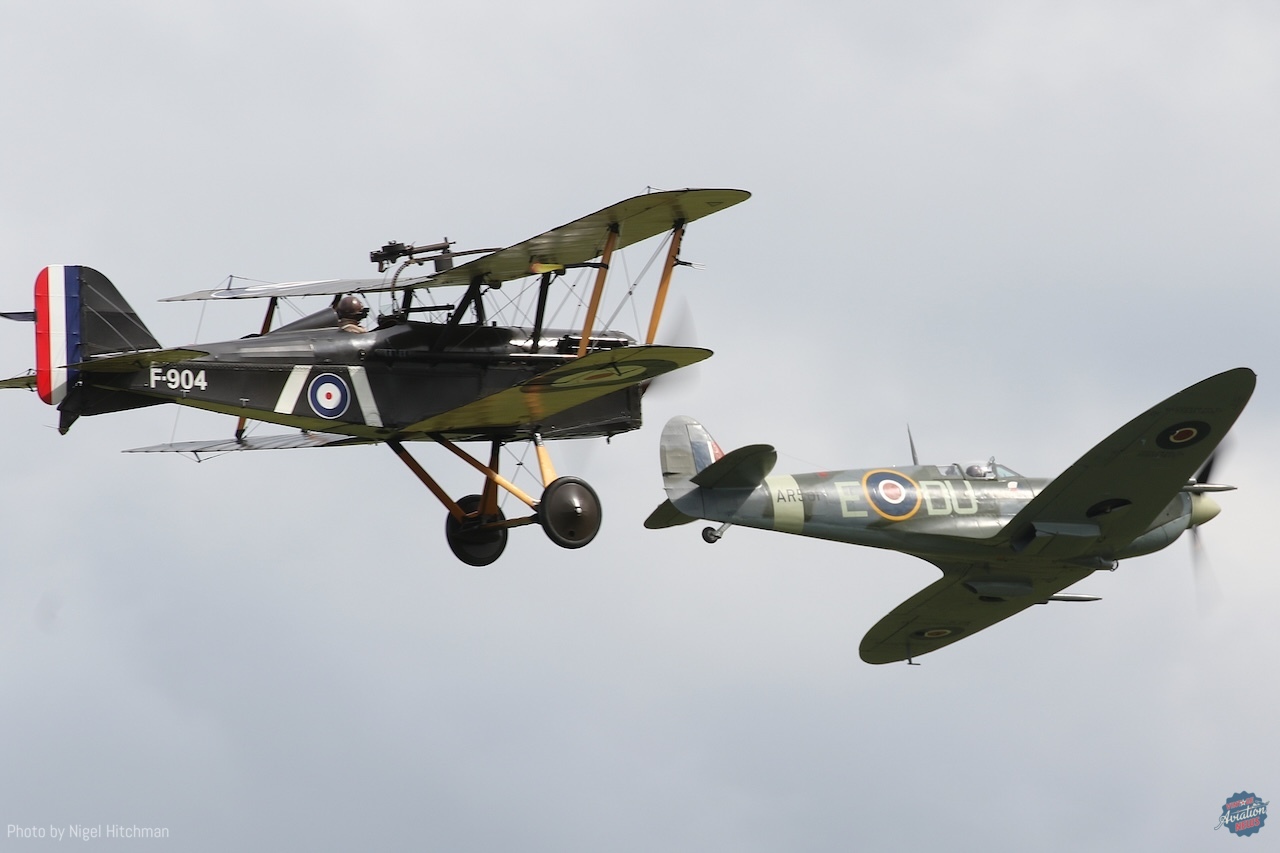
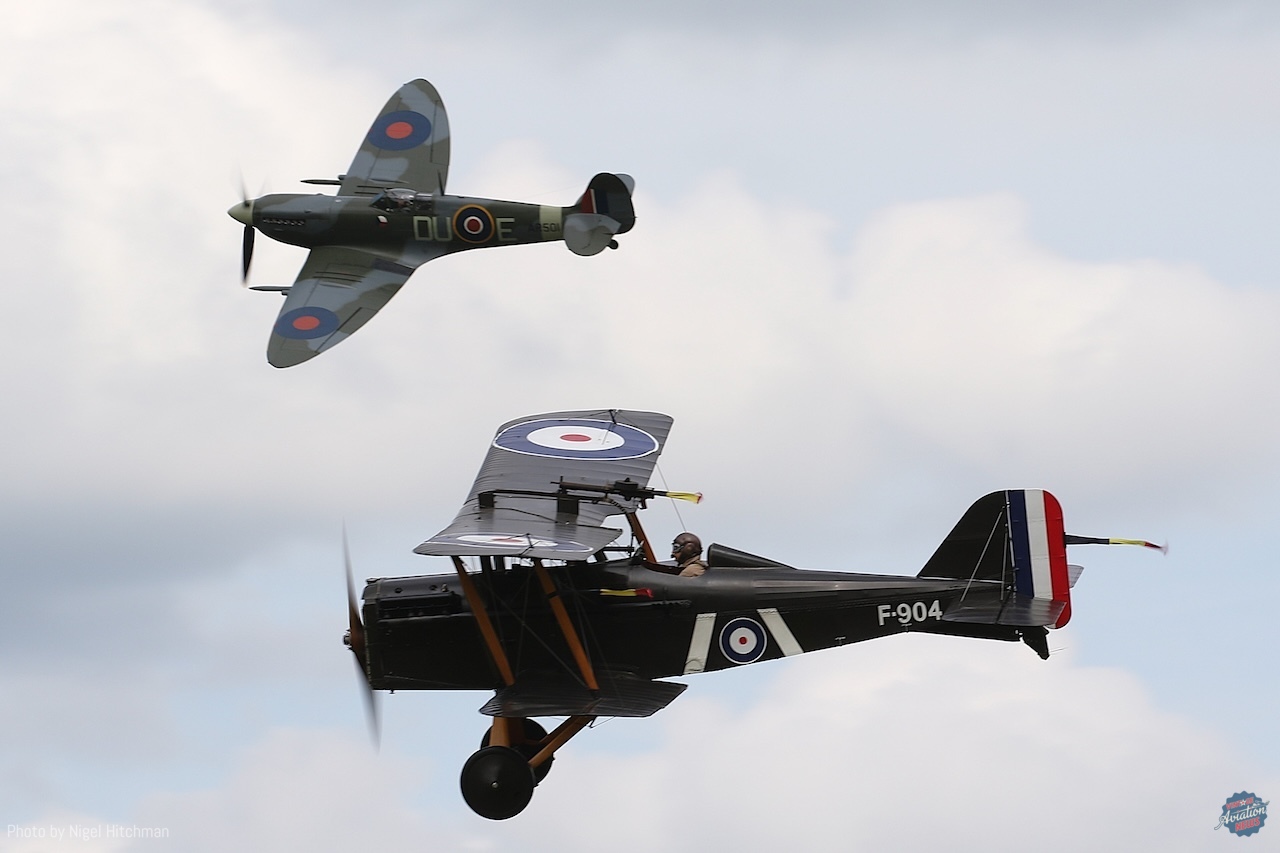
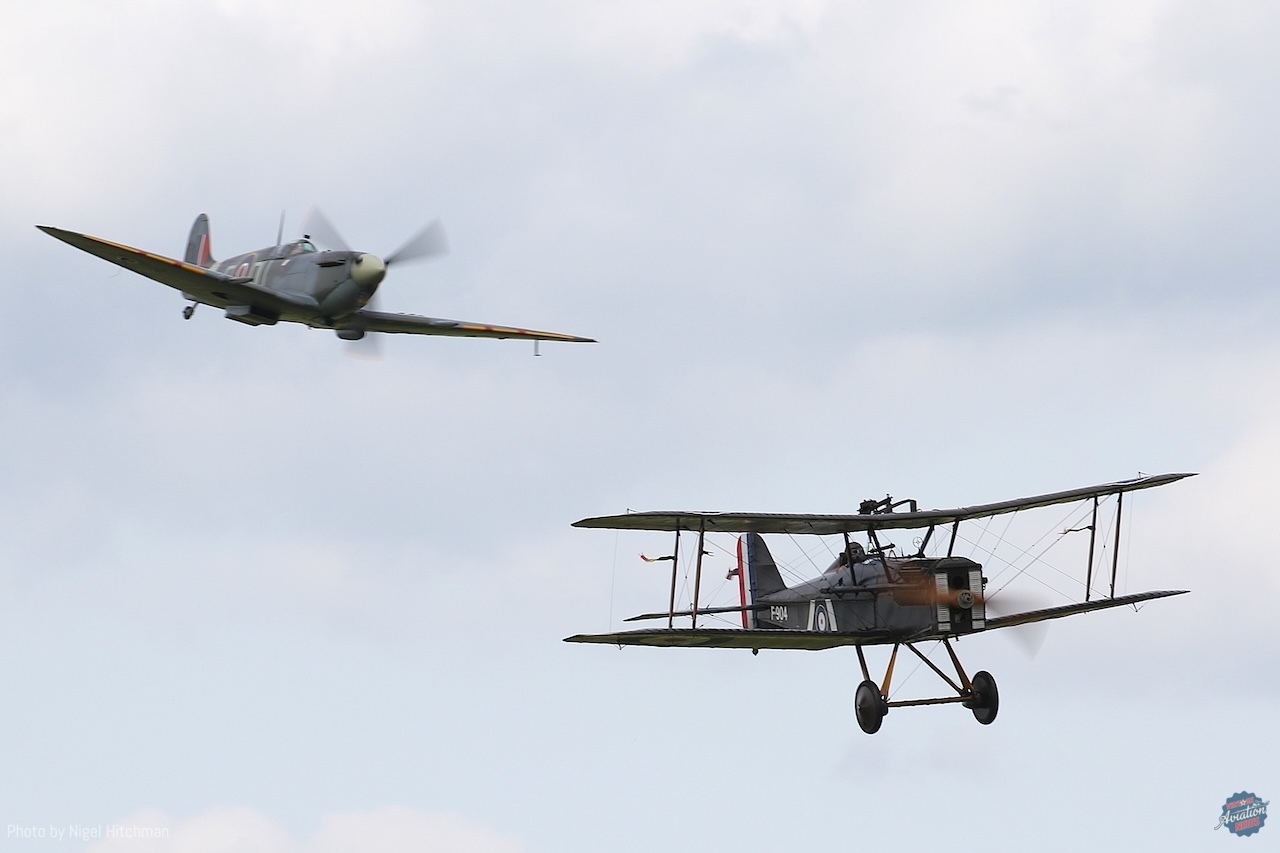
The Shuttleworth Military Airshow once again delivered an excellent experience at Old Warden, Bedfordshire, showcasing a compelling mix of military aircraft from the Collection and a number of distinguished visiting participants. As is often the case at Shuttleworth, the event stood out for its innovation and creative pairings, highlighted by the remarkable formation of the Collection’s Supermarine Spitfire Mk.V AR501 flying alongside their RAF SE5a F904—perhaps for the very first time. It’s a rare and stirring sight to witness a genuine World War I combat veteran in the air with its World War II counterpart, a moment that proved to be a favorite for many in the crowd. Despite their vastly different performance characteristics, the pilots cleverly coordinated the formation: the SE5a circled in a tight radius near the crowd while the Spitfire flew a wider, slower arc. The result gave the illusion of formation flying during the flypasts along the crowdline. It was a brilliant concept, well executed, and hopefully a format that will be repeated with other historic pairings.
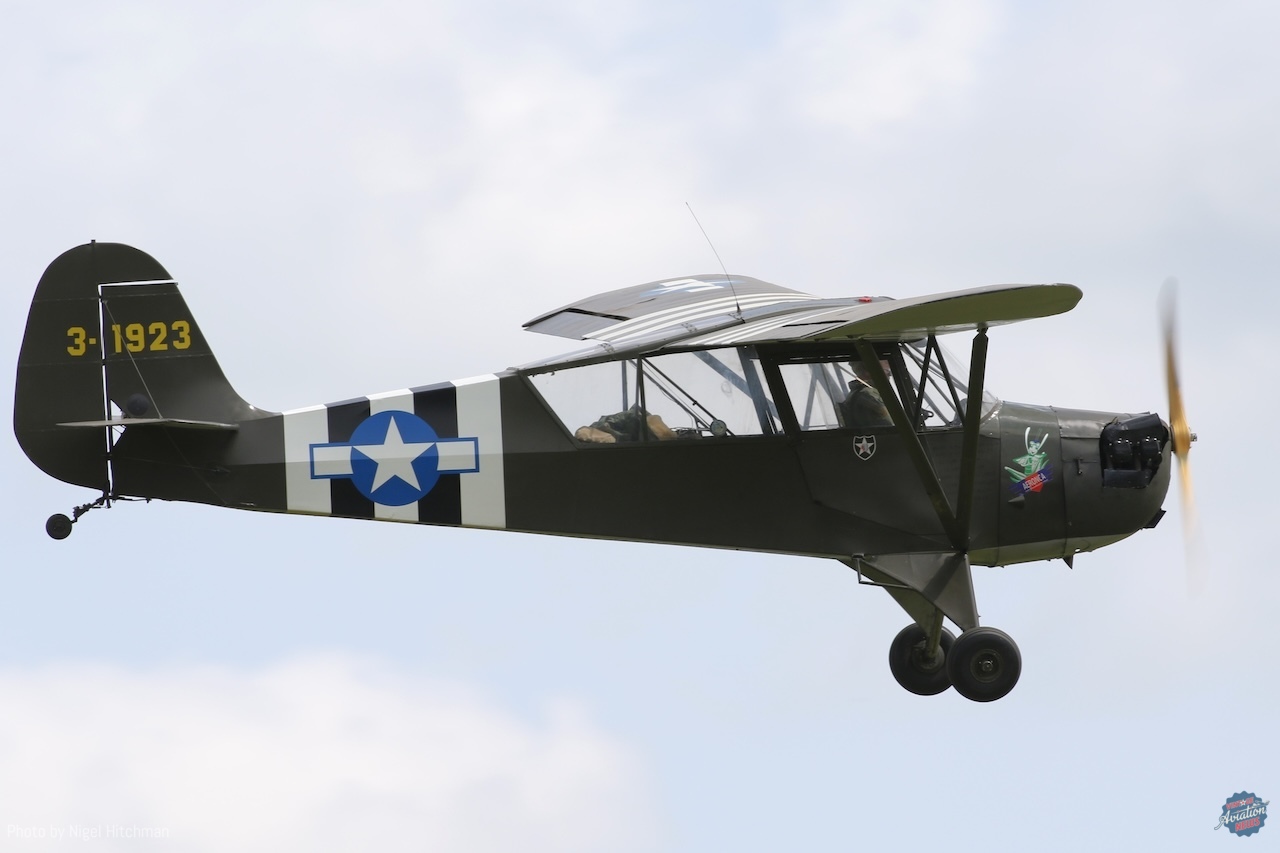
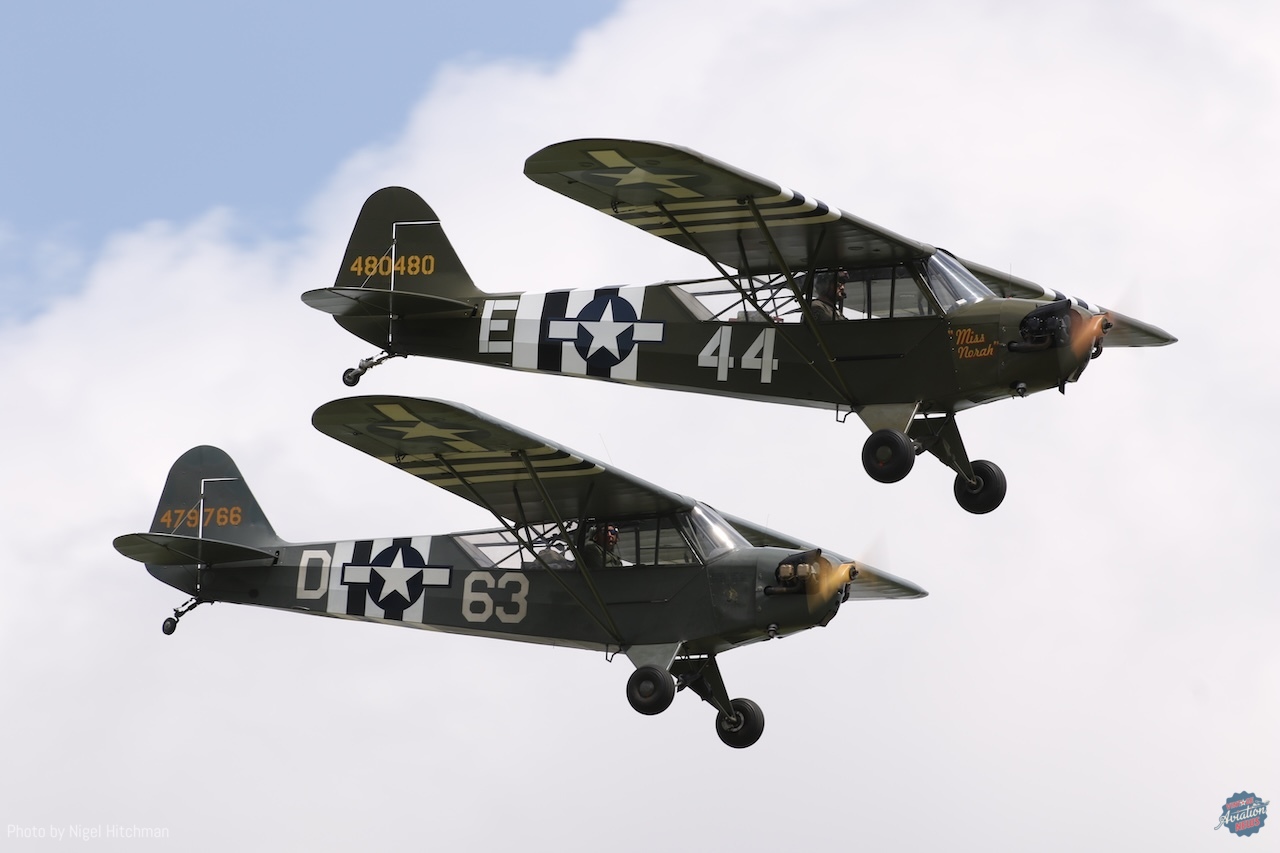
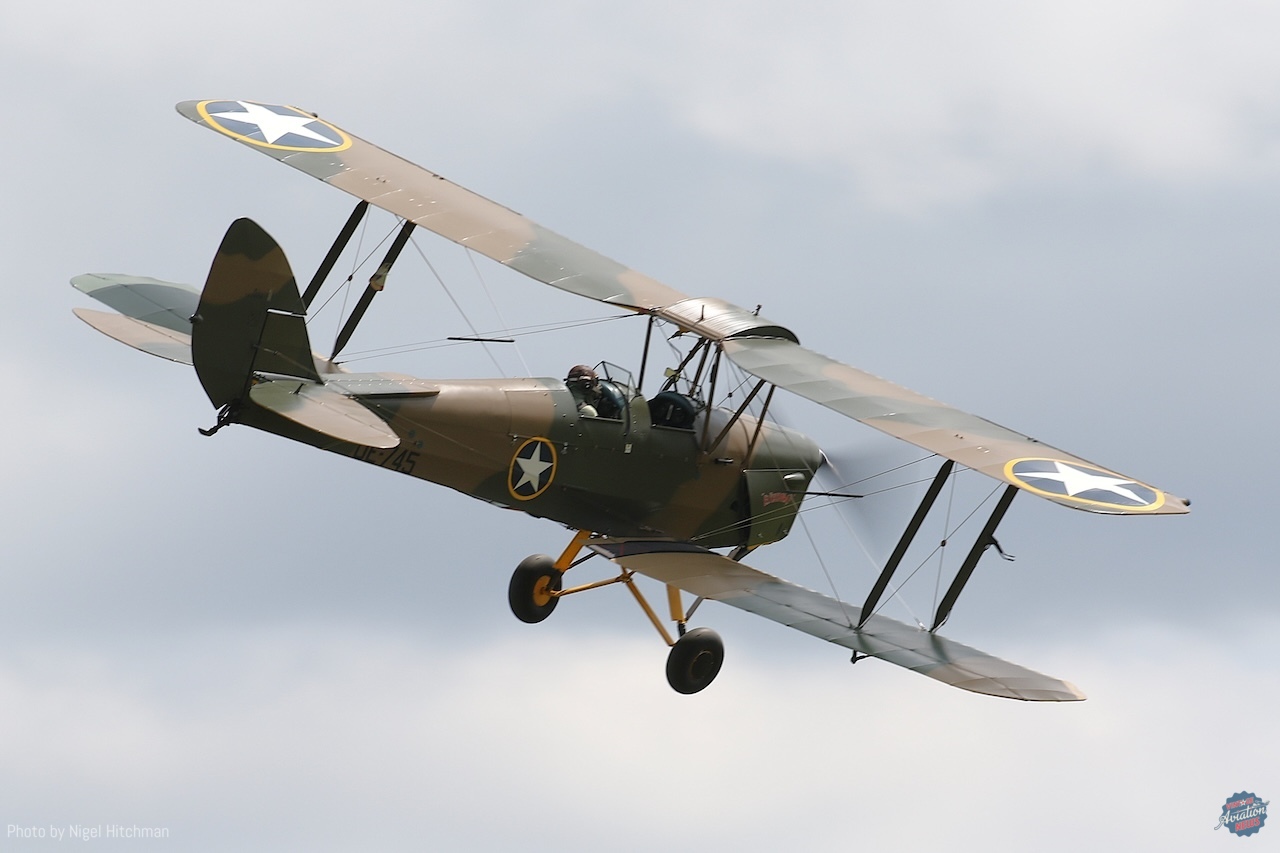
The show opened with a flypast from the Battle of Britain Memorial Flight’s Spitfire Mk.IIa P7350—one of the oldest airworthy Spitfires and the only one still flying to have seen combat during the Battle of Britain. This was followed by a debut display at Old Warden from “GI Flight,” a formation of four U.S. Army Air Forces training and liaison aircraft. The group featured two familiar Piper L-4 Cubs (G-BECN/480480/44-E and G-BKHG/479766/63-D), joined by an Aeronca O-58 (G-BRHP/3-1923) and a de Havilland DH.82A Tiger Moth (G-BTOG/DE745) painted in USAAF colors—echoing the Tiger Moths loaned to U.S. forces in England during WWII.

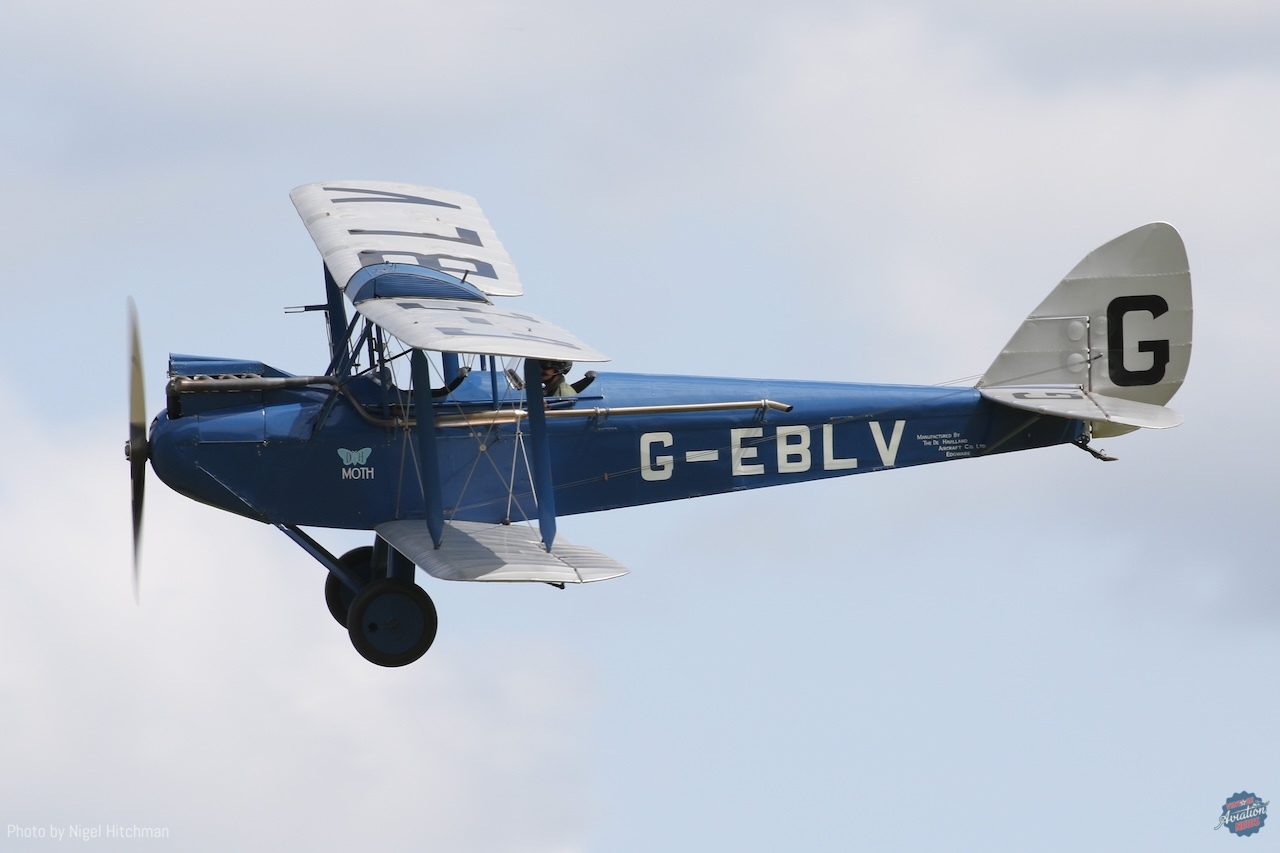
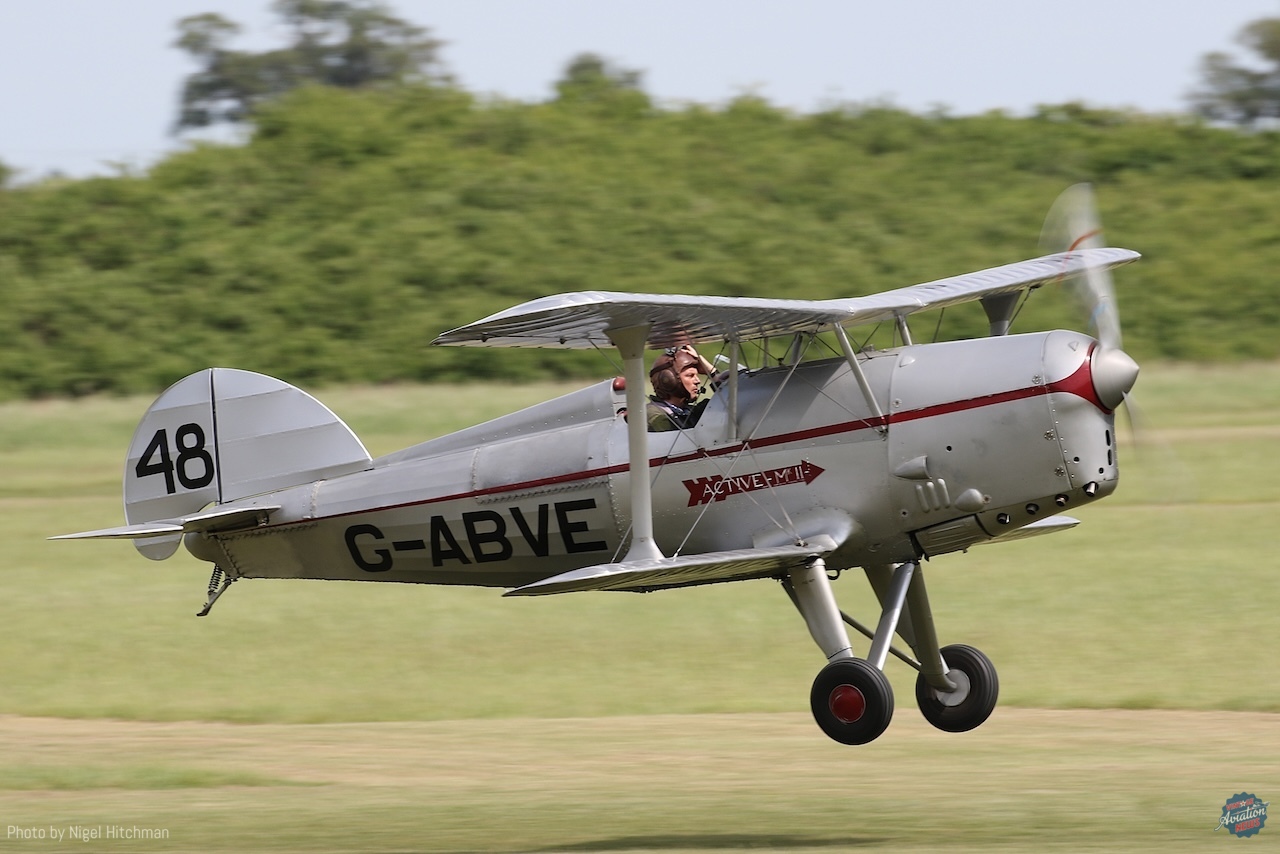
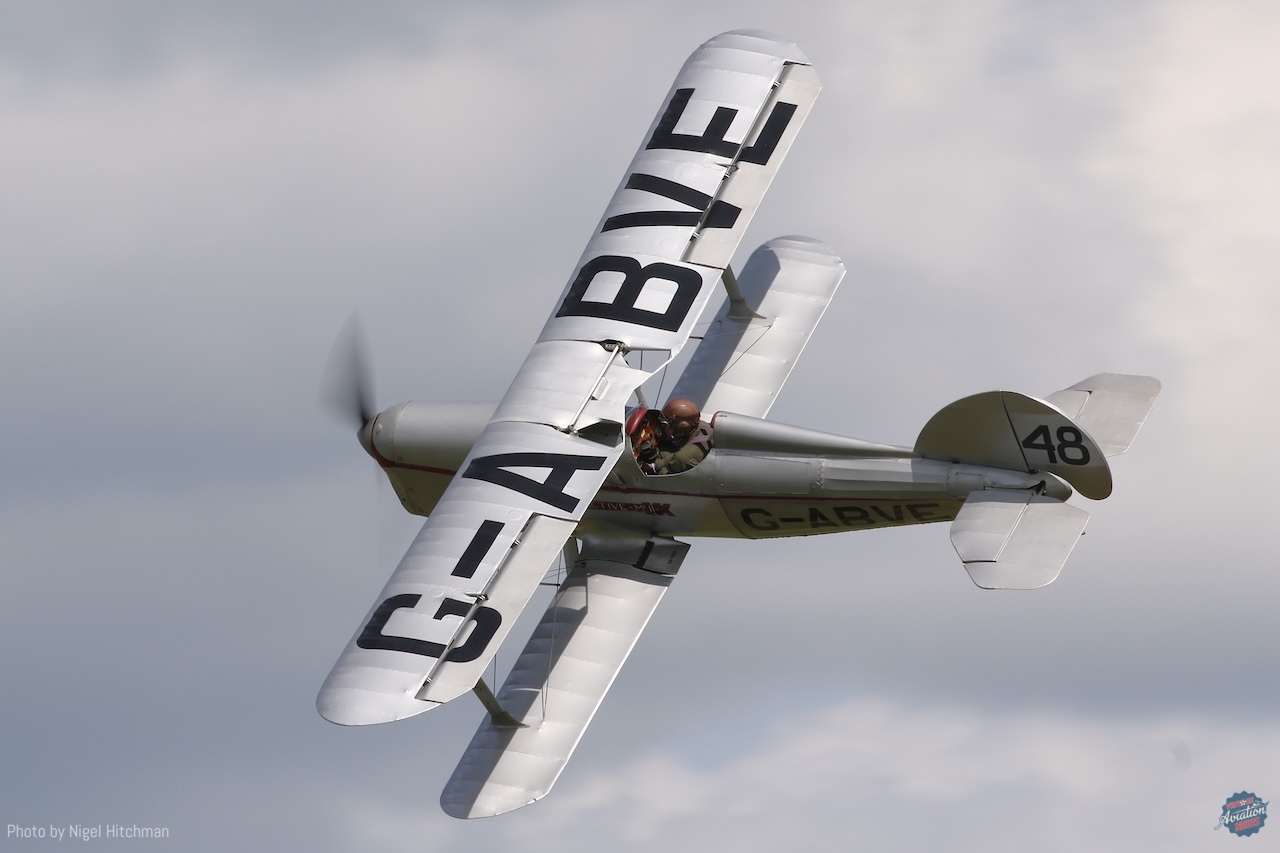
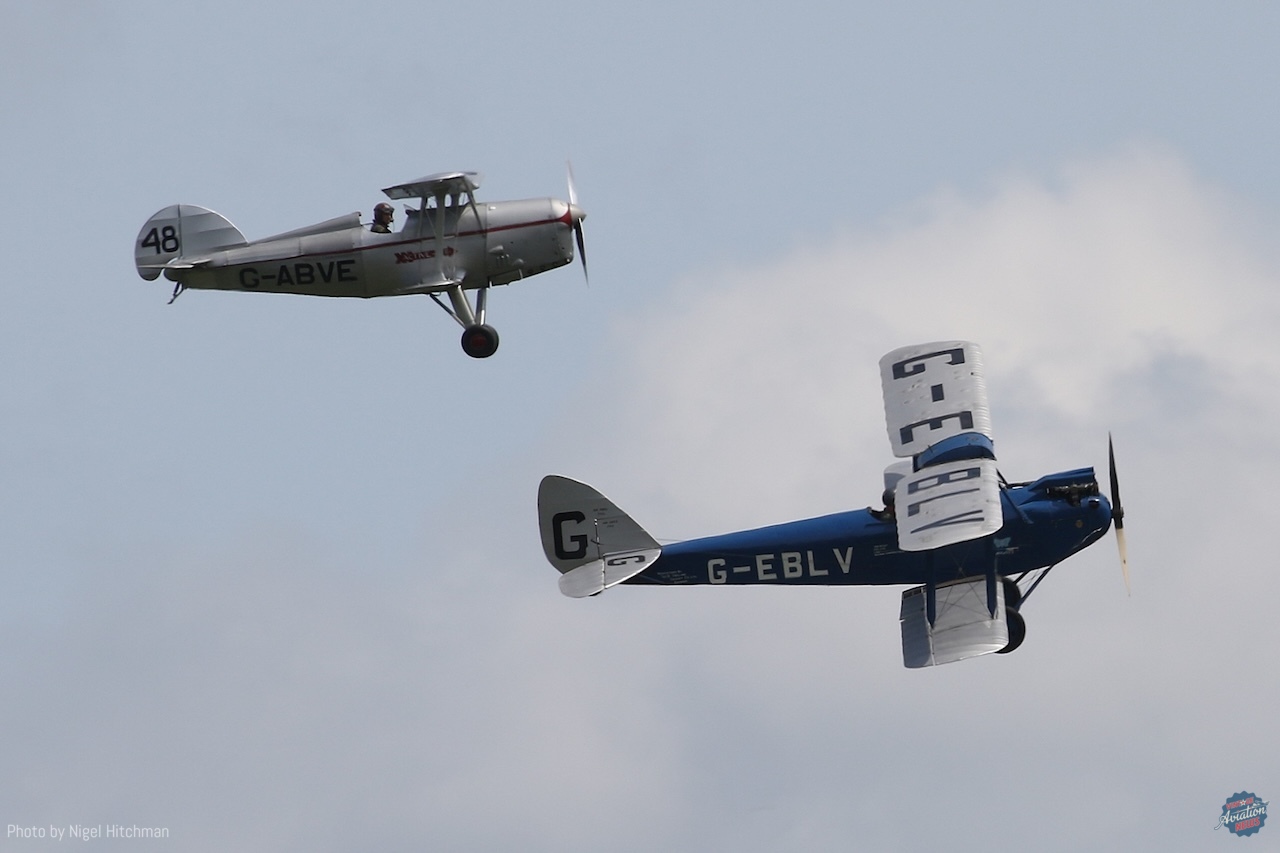
A touching tribute followed for former Shuttleworth pilot and test pilot Desmond Penrose, who passed away recently at the age of 95. A Shuttleworth display pilot from 1964 to 2005, Penrose also owned and flew the Arrow Active G-ABVE for much of that time. His former aircraft flew in formation with the world’s oldest DH.60 Moth, G-EBLV, which Penrose once flew while it was under the care of British Aerospace. Now part of the Shuttleworth Collection, this pairing made for a moving homage—only the second time the Arrow Active had flown at Old Warden since Penrose sold it in the early 2000s.
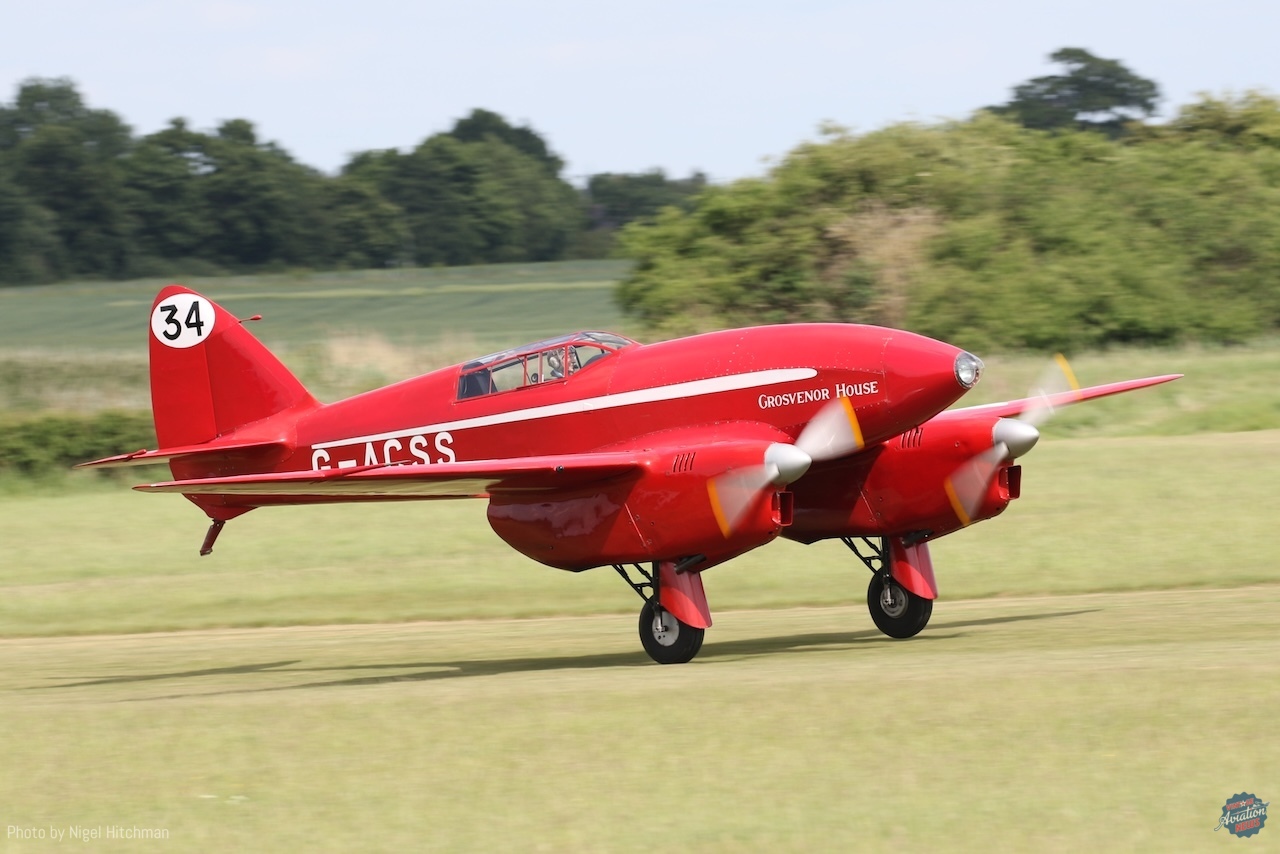
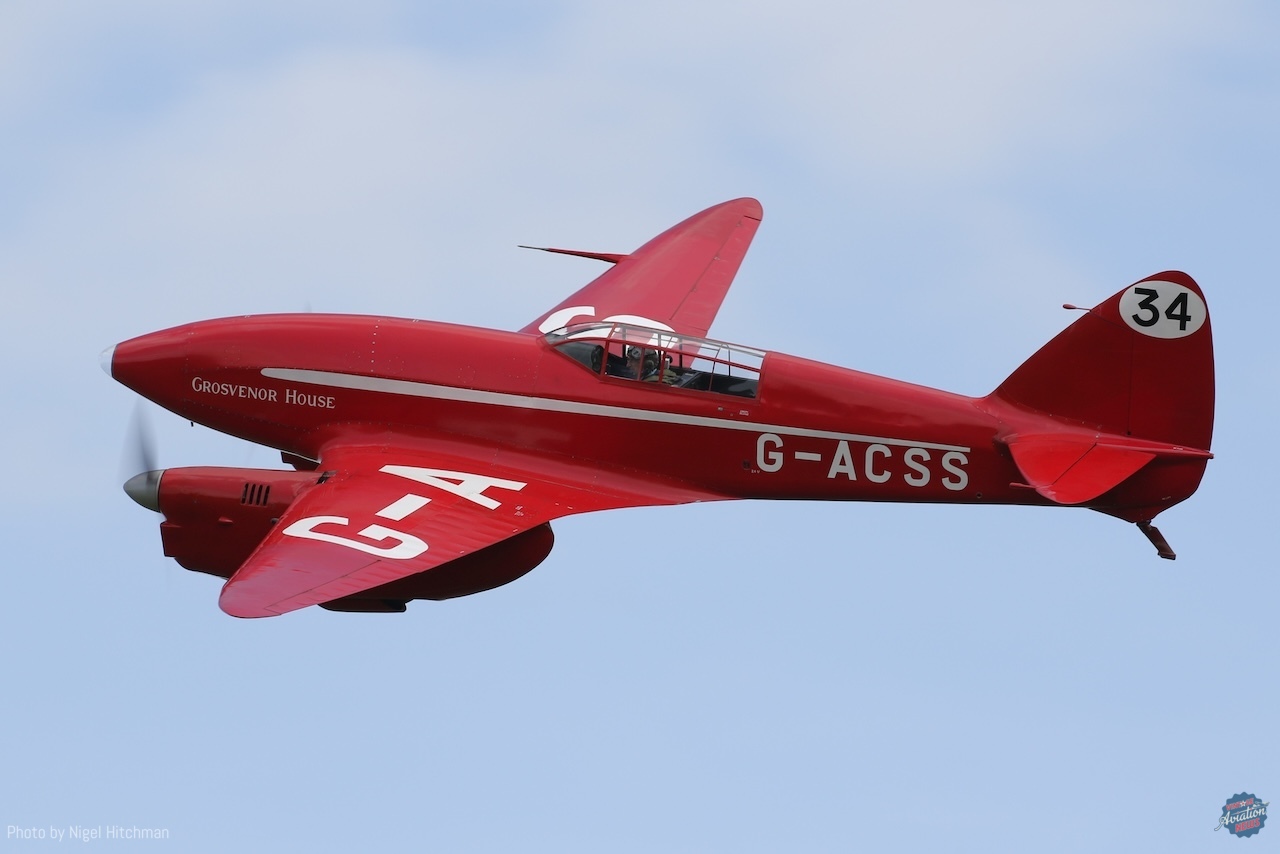
The legendary 1934 MacRobertson Trophy-winning DH.88 Comet racer G-ACSS followed with a typically thrilling display. Then came a rare treat: a glider aerobatic display by the 1948 Czech Letov LF-107 Lunak—an elegant, purpose-built aerobatic glider of which only 75 were made before the factory was converted for MiG production. Around nine examples are still airworthy today.

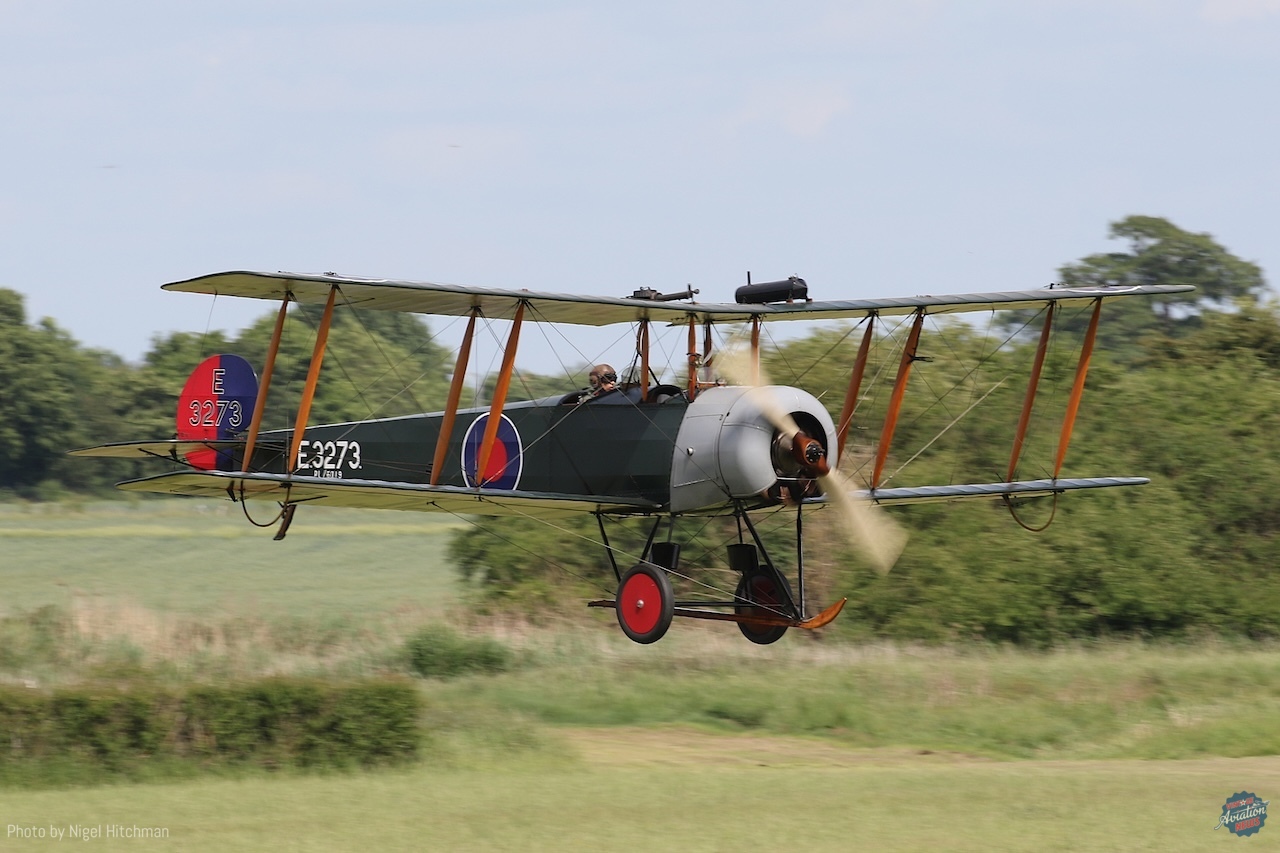
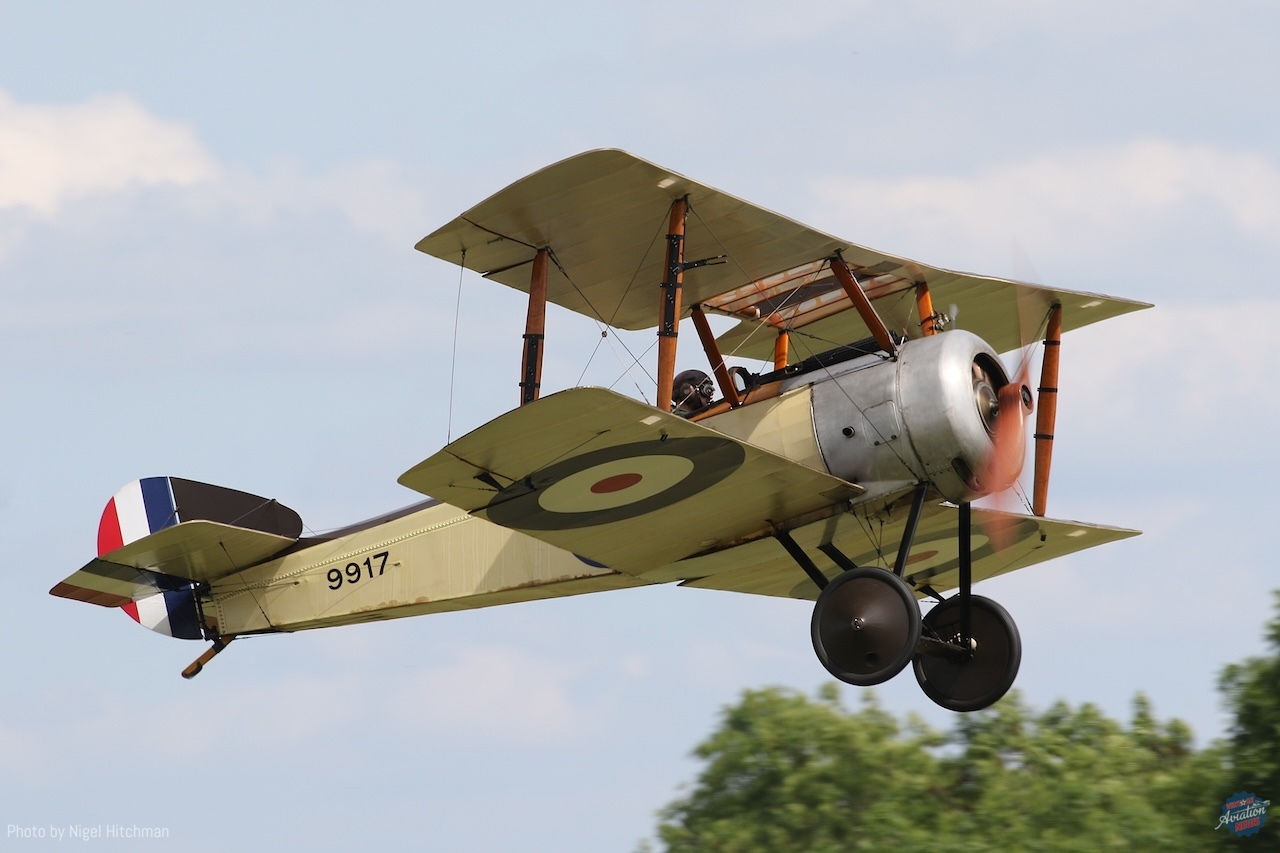
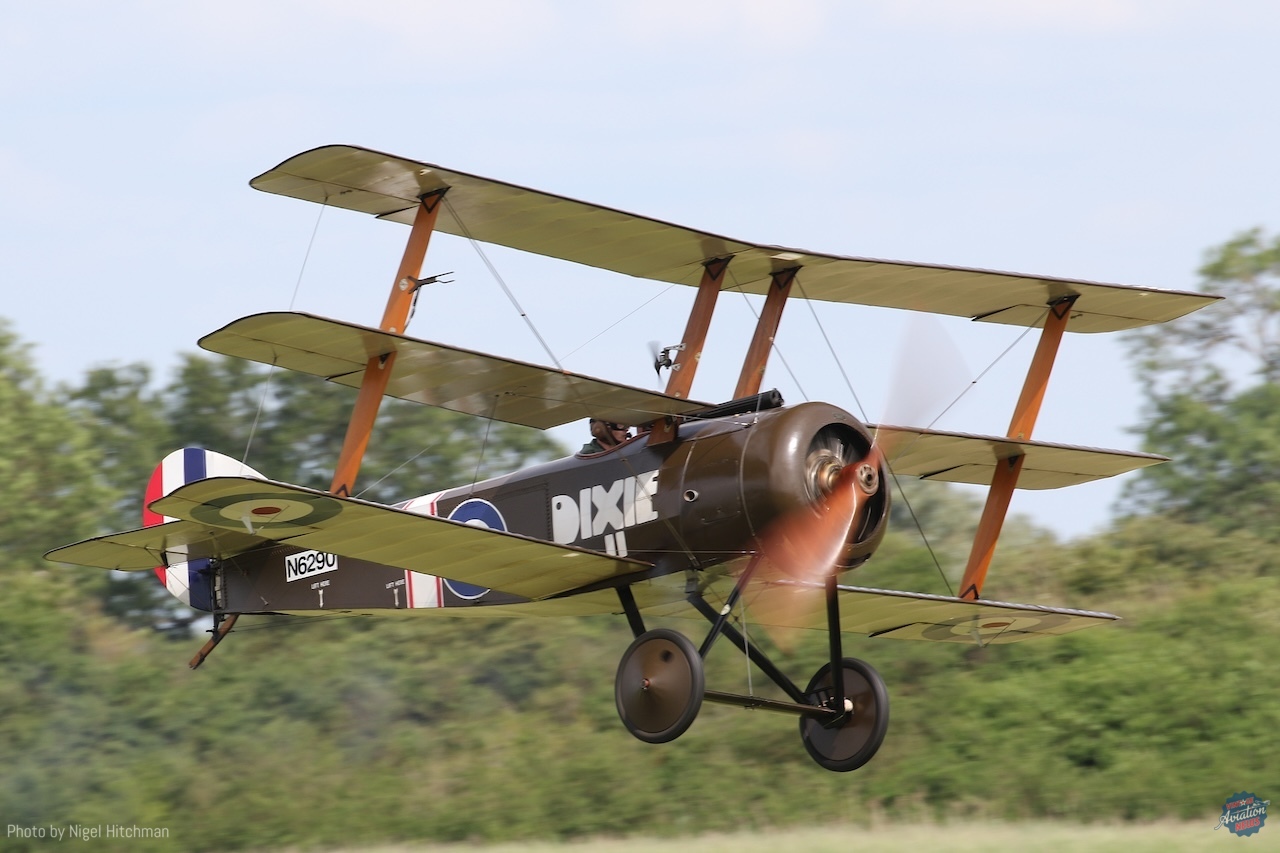
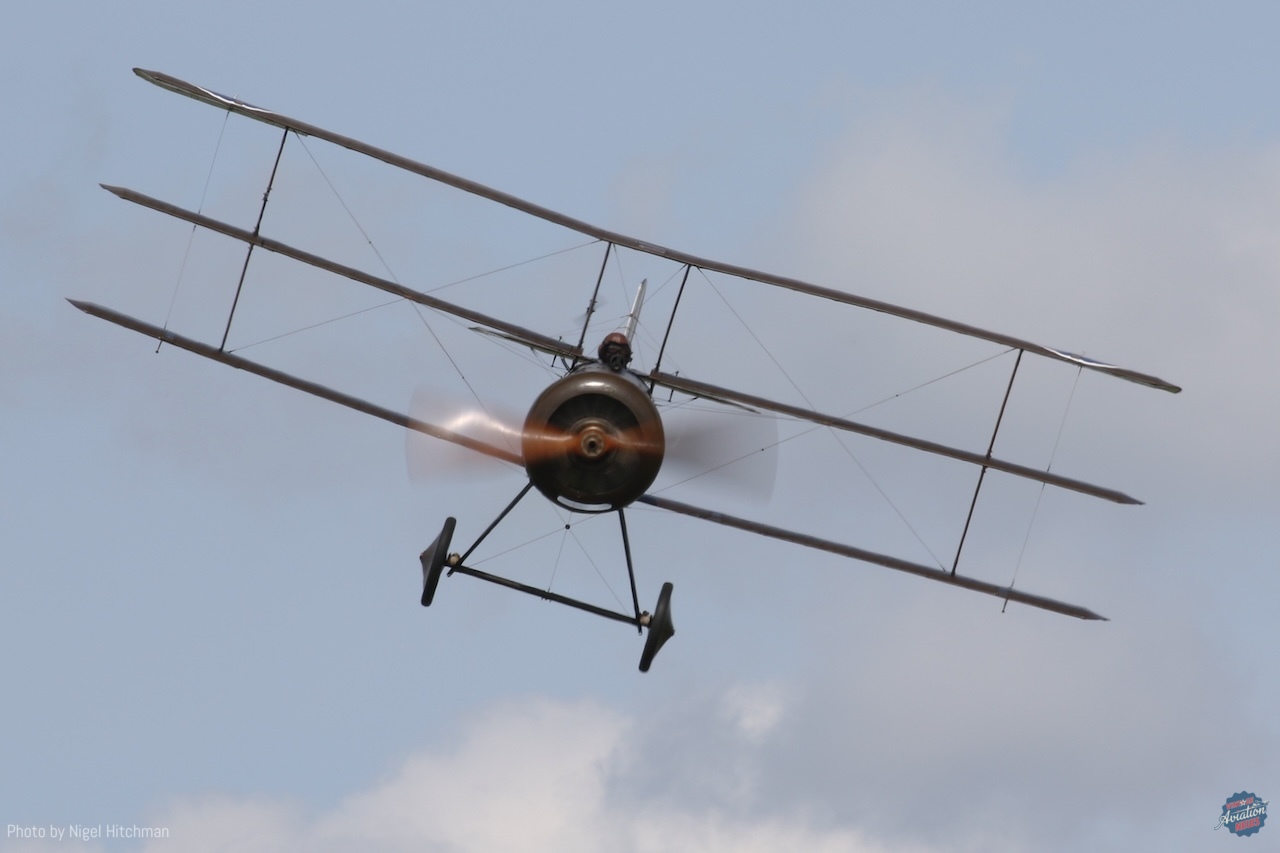
Next came three of the Collection’s WWI rotary-engined aircraft flown in succession: the Royal Flying Corps Sopwith Pup (G-EBKY “9917”), the Royal Naval Air Service Sopwith Triplane replica (G-BOCK “N6290”), and the RAF Avro 504K (G-ADEV/E3273). The sights, sounds, and unmistakable scent of burnt castor oil added to the atmosphere.
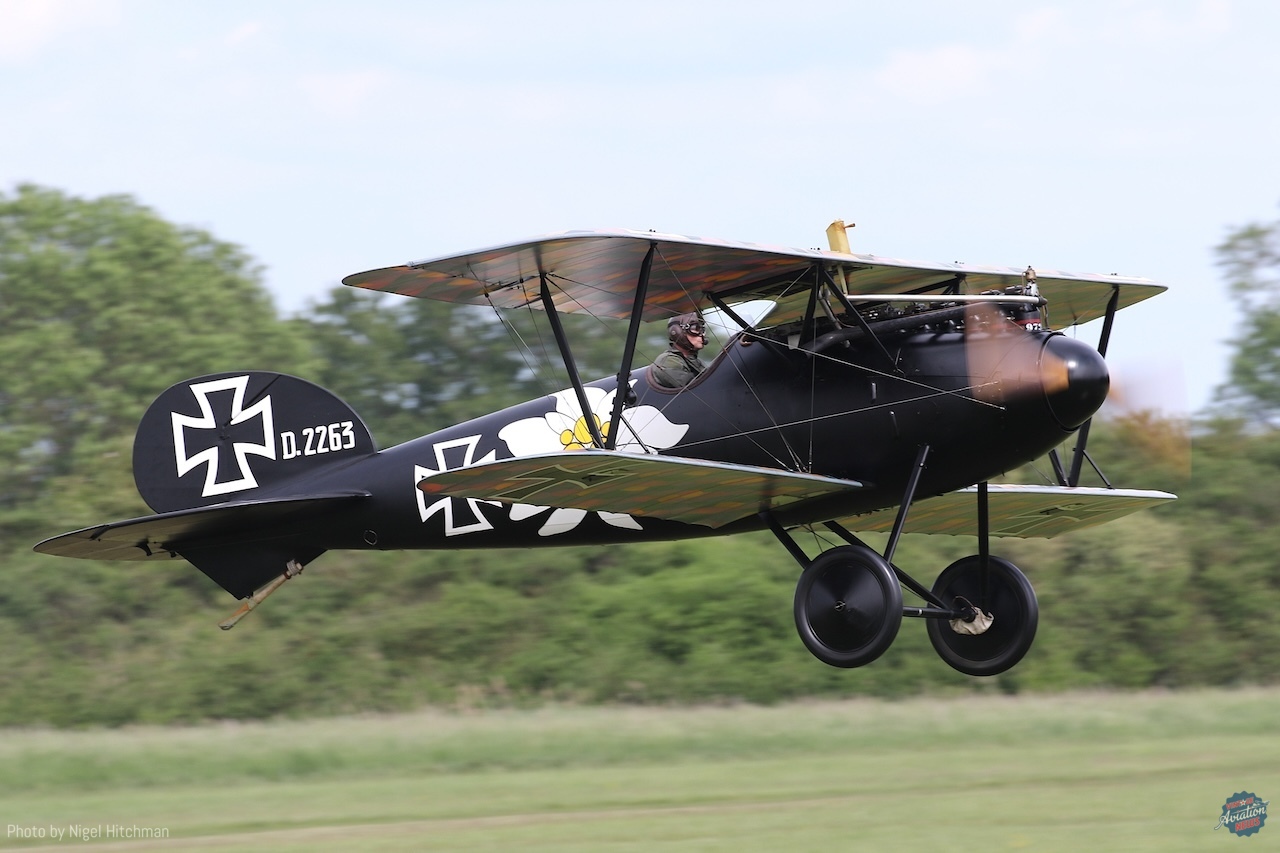
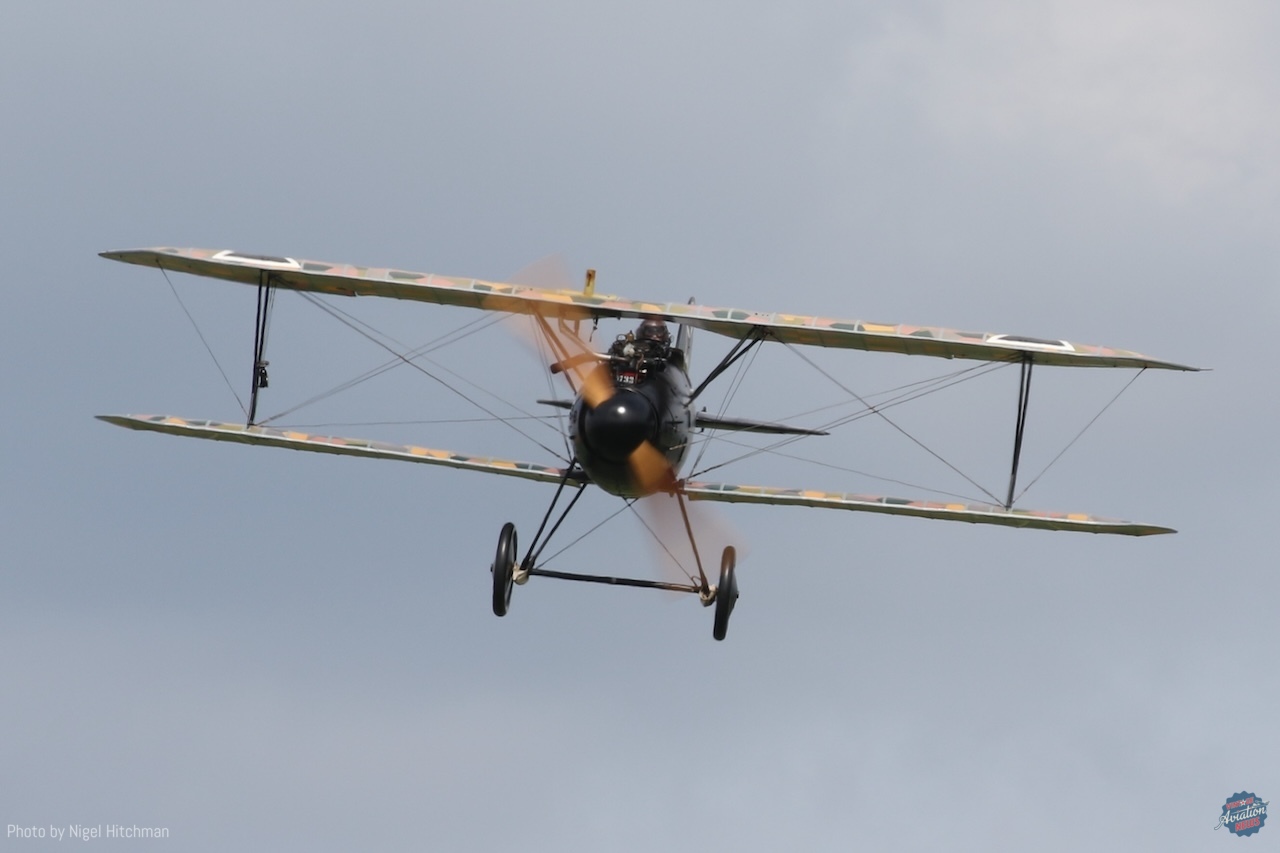
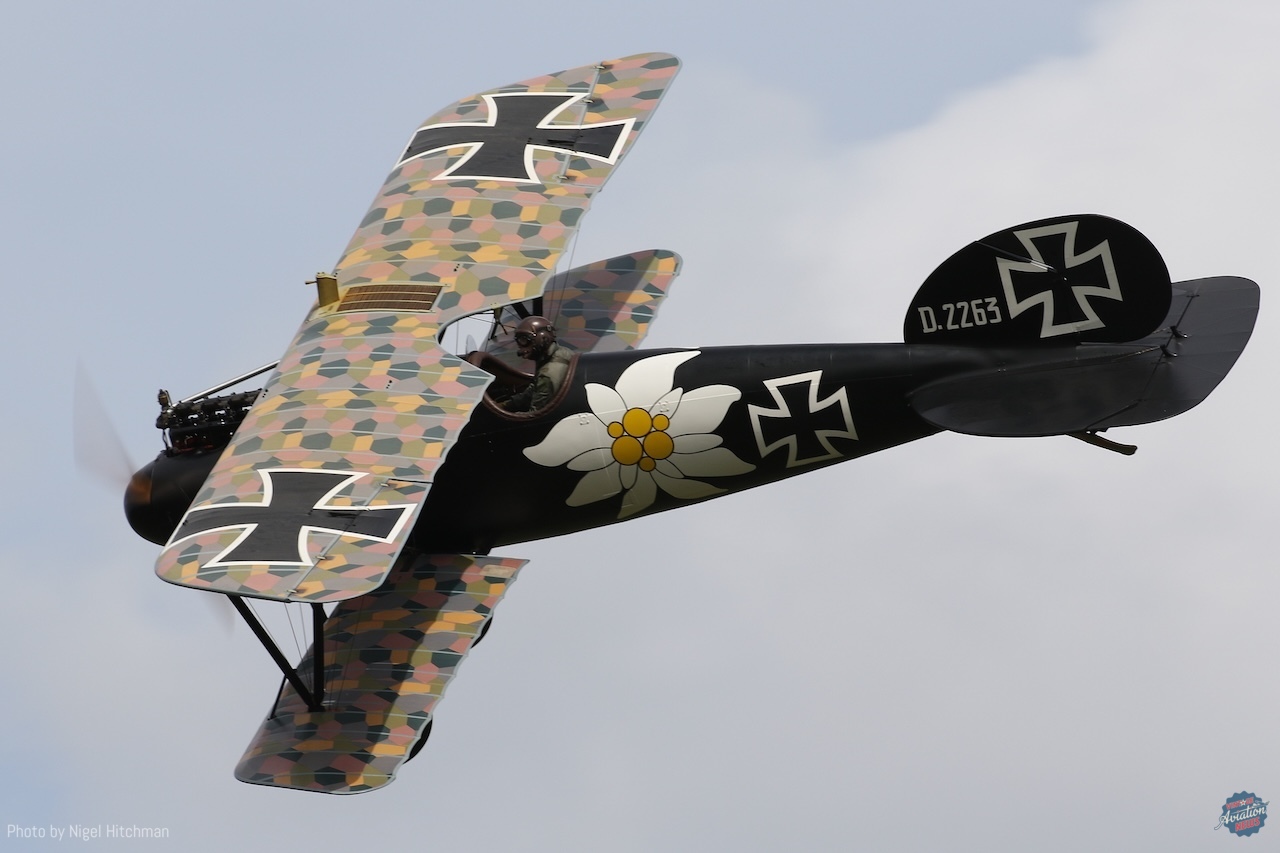
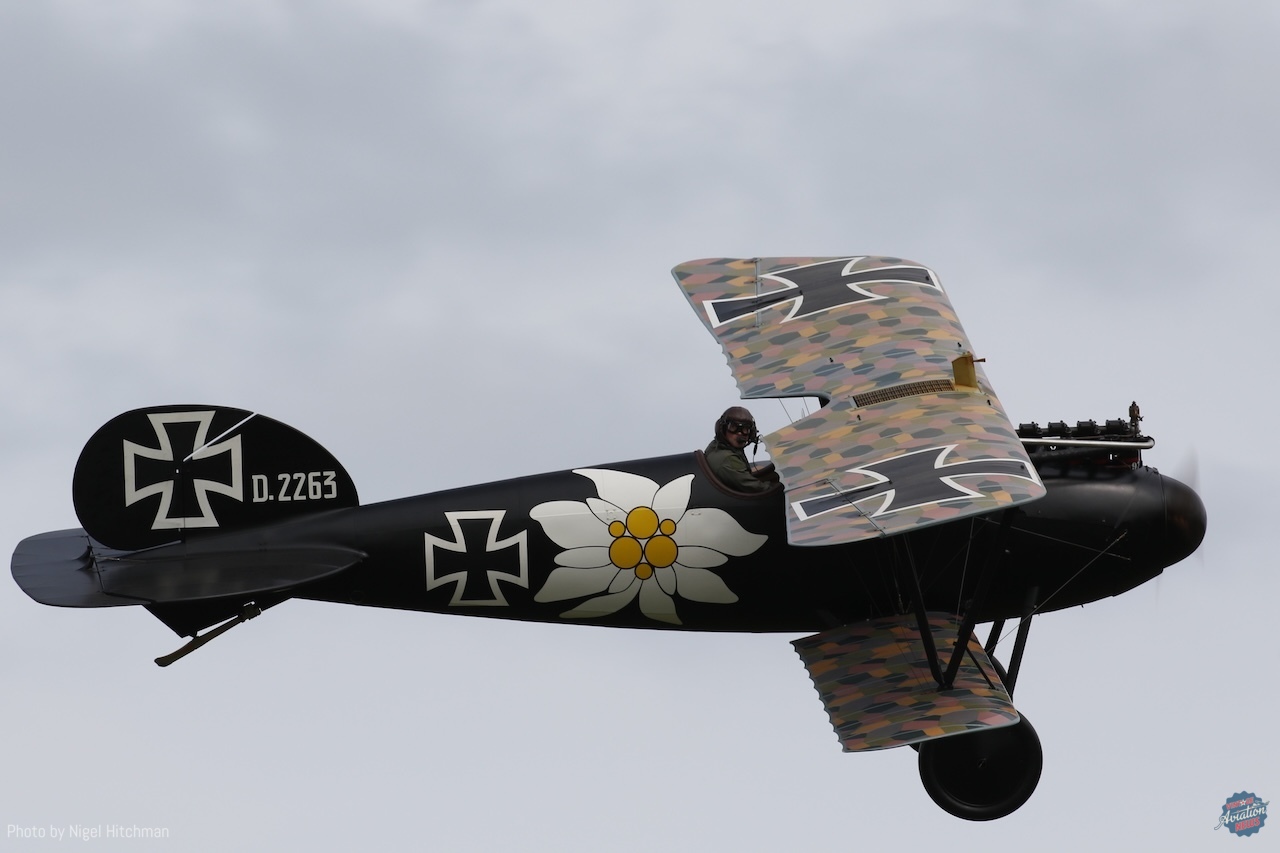
Representing the Central Powers, the TVAL-built Albatros D.Va replica (G-WHAT/D.2263), operated by the WWI Aviation Heritage Trust from Stow Maries Aerodrome, made only its second Shuttleworth appearance. It was a highlight to see and hear it in flight, powered by a reproduction Mercedes D.III engine. Soon after, the RAF SE5a F904 took off in pursuit, engaging in several mock tail-chases before performing its solo display and joining the Spitfire for their unique flypasts.


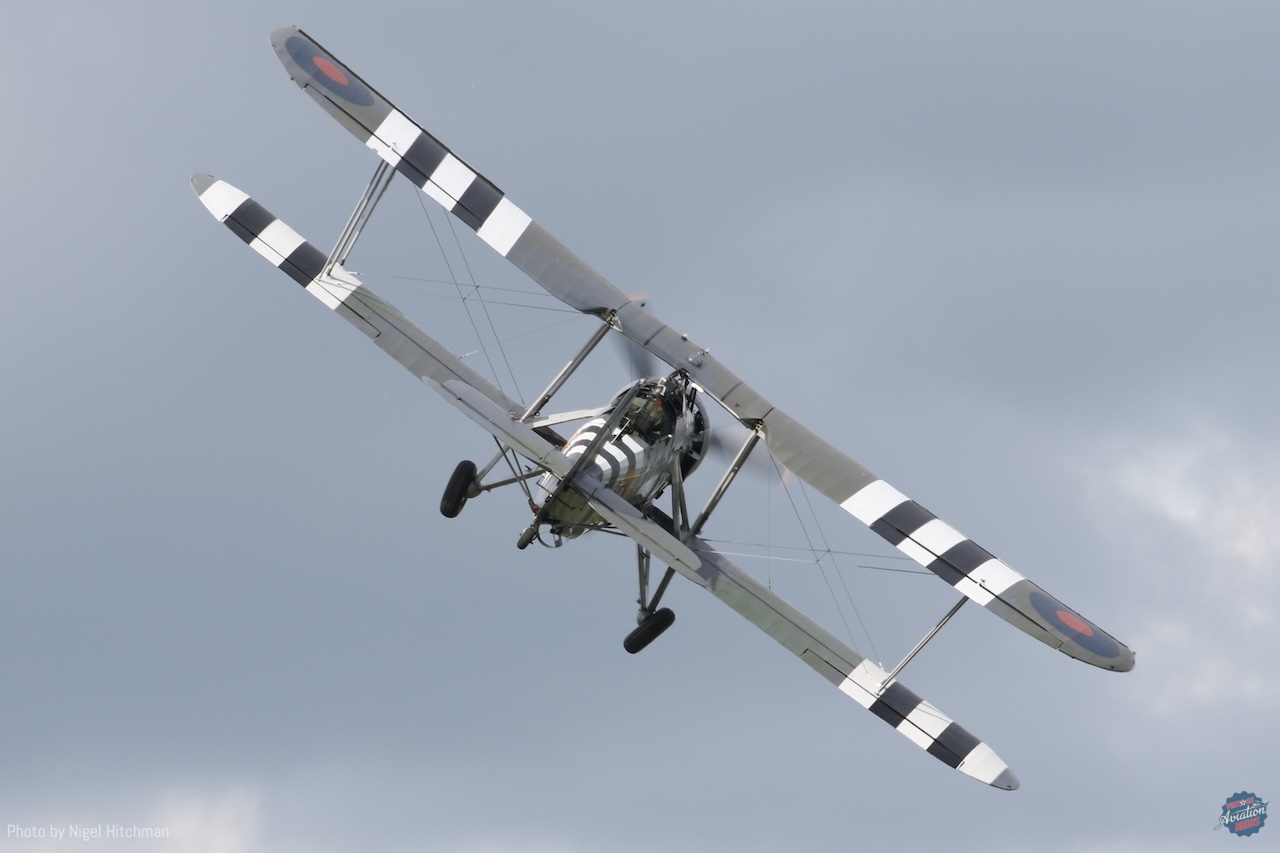
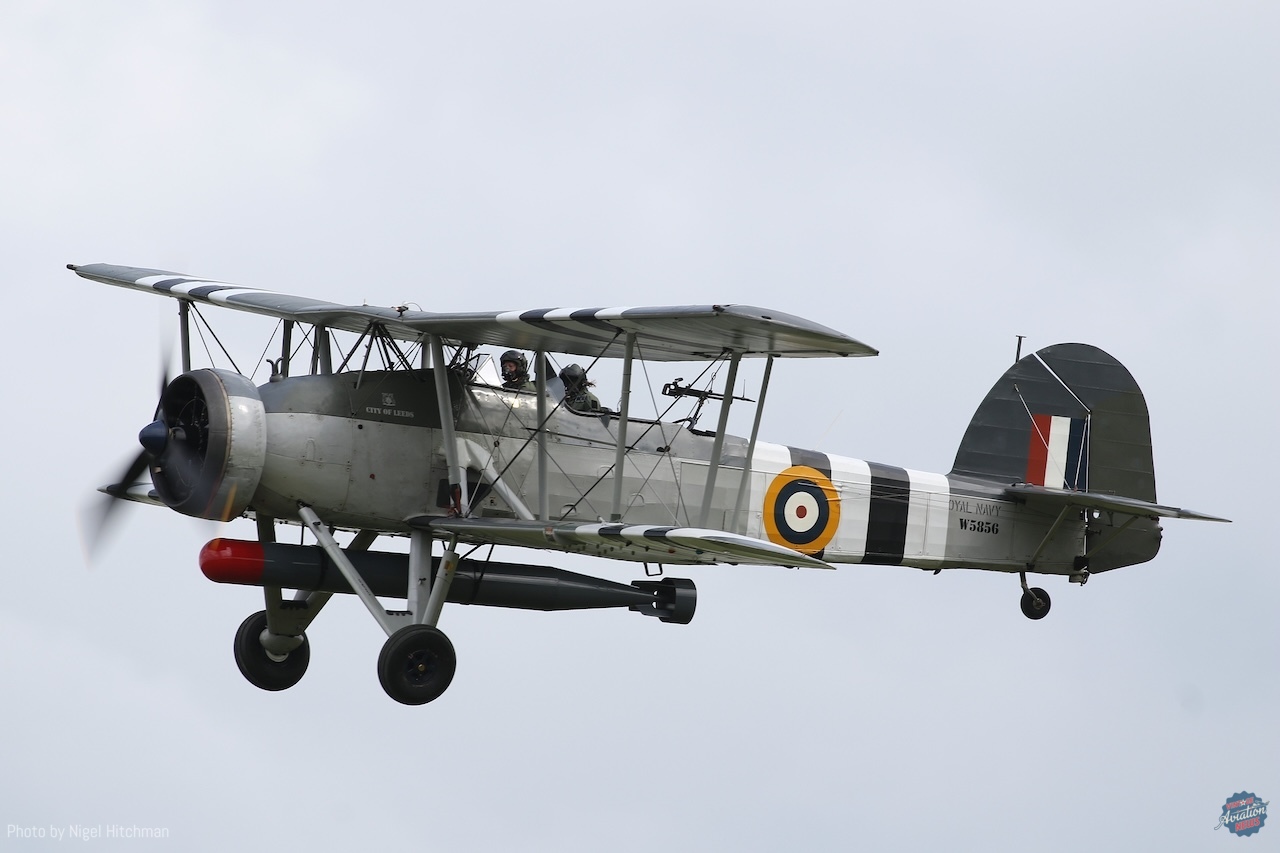
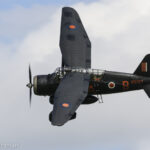
Following the Spitfire’s own solo routine, a selection of RAF training aircraft took to the sky, including two Miles Magisters, a Tiger Moth, and a Blackburn B.2. This led into the Royal Navy segment, headlined by Navy Wings’ Fairey Swordfish TSR.1 (G-BMGC/W5856), which gave an excellent and evocative performance.
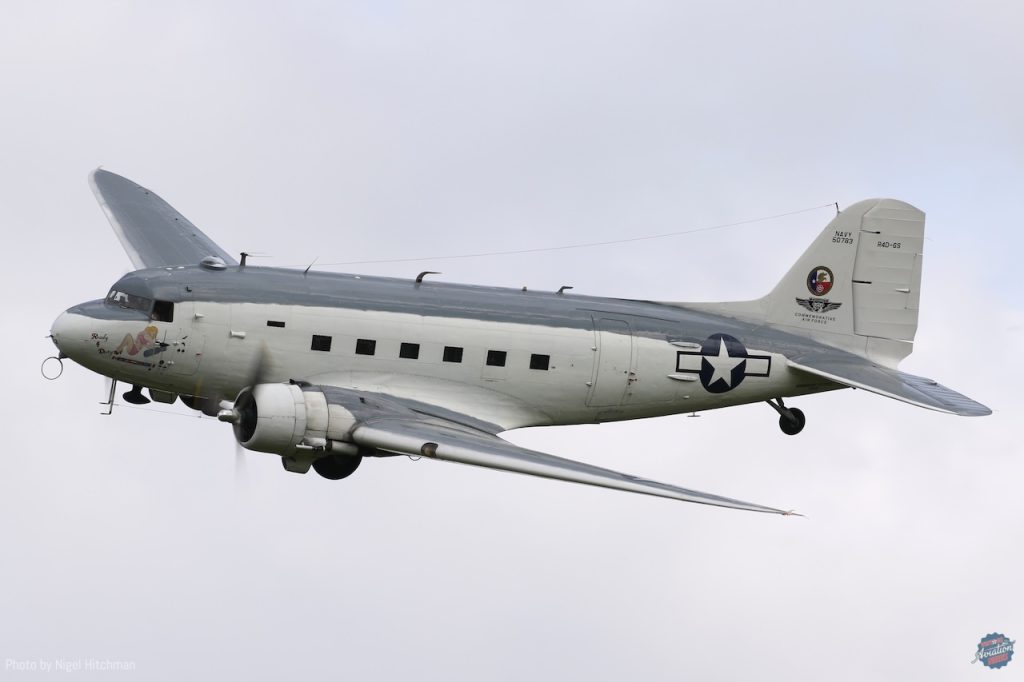
A notable highlight came with the UK display debut of the Commemorative Air Force’s Douglas R4D-6S “Ready 4 Duty” (N151ZE/50783), flown by the Dallas/Fort Worth Wing. Previously seen only as a static exhibit, the aircraft now has full UK CAA display authorization, allowing it to appear here and at the Midland Air Festival, as well as other events—including a return to RIAT in July, where it was last seen in 1985.
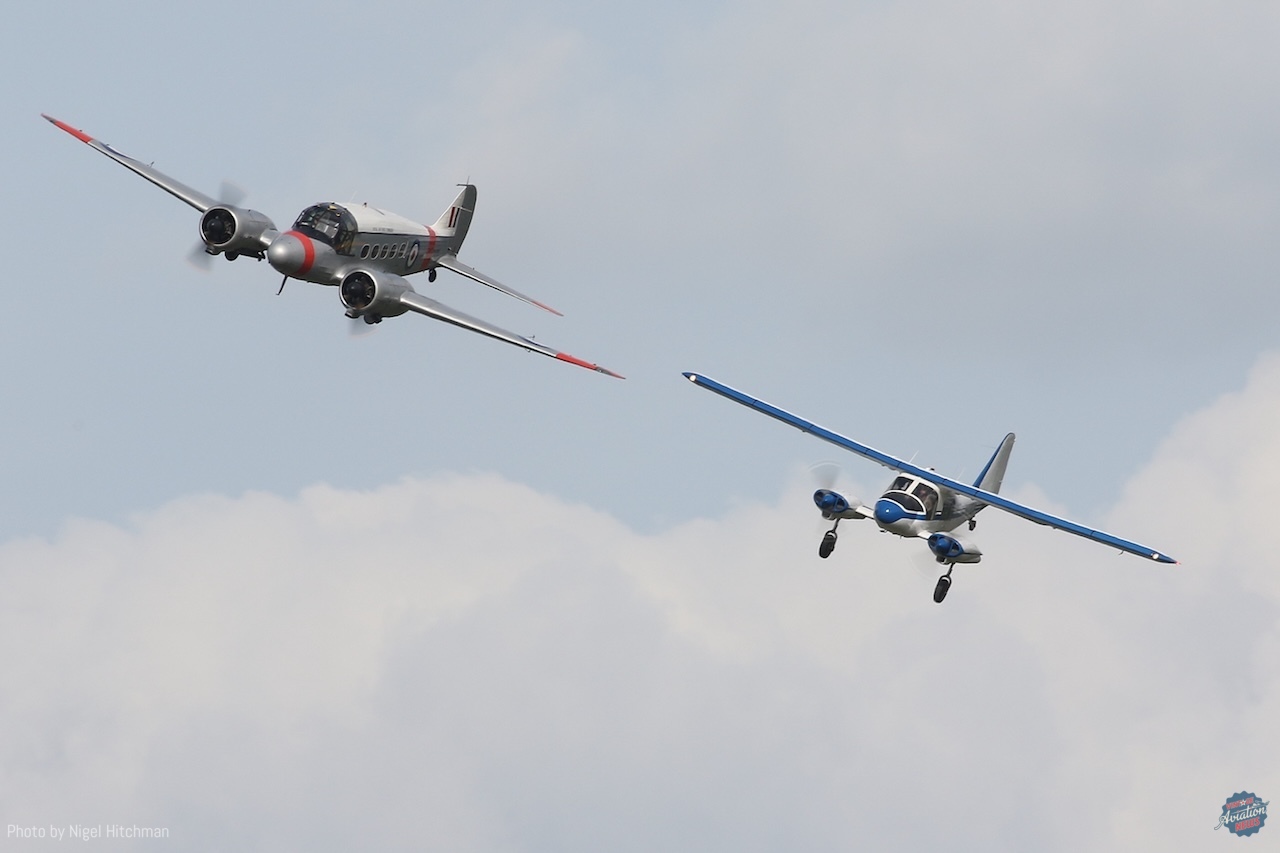
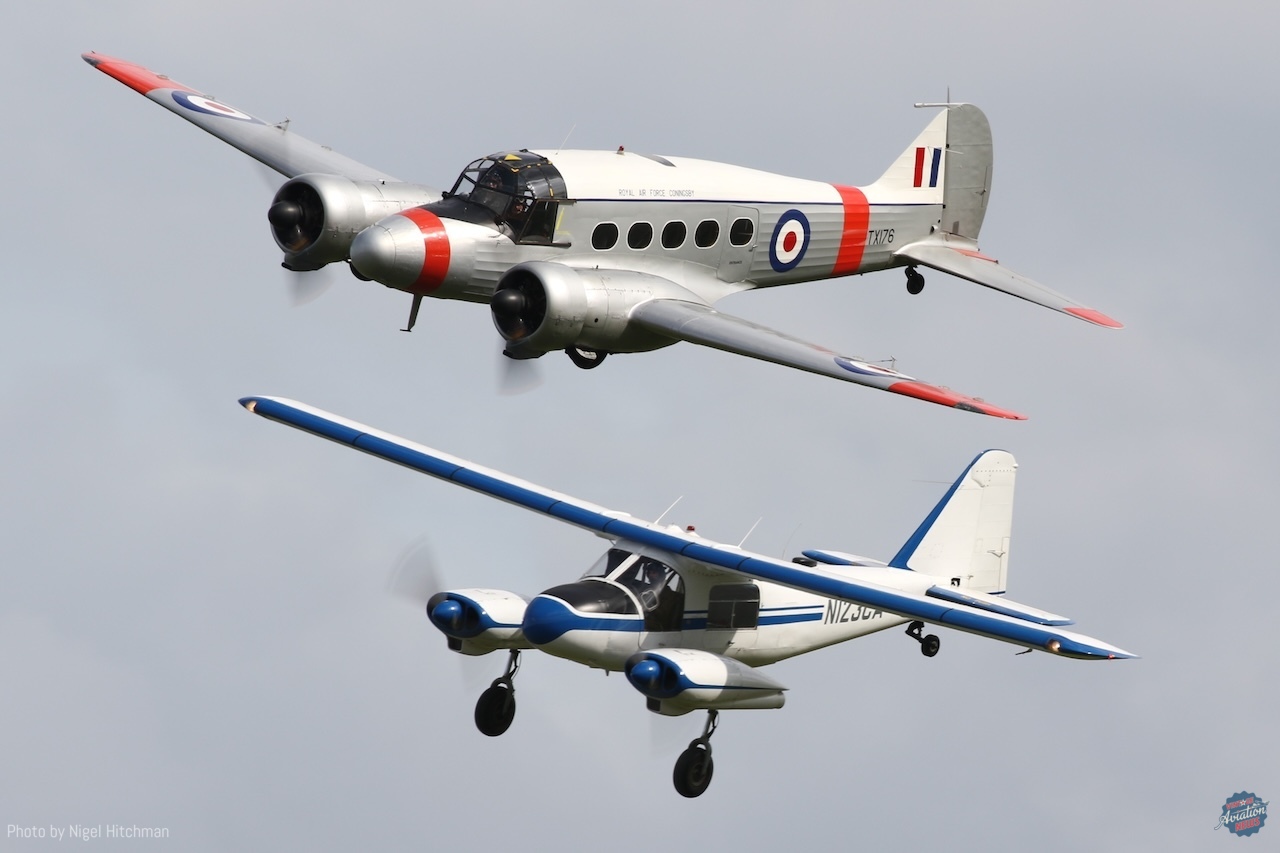
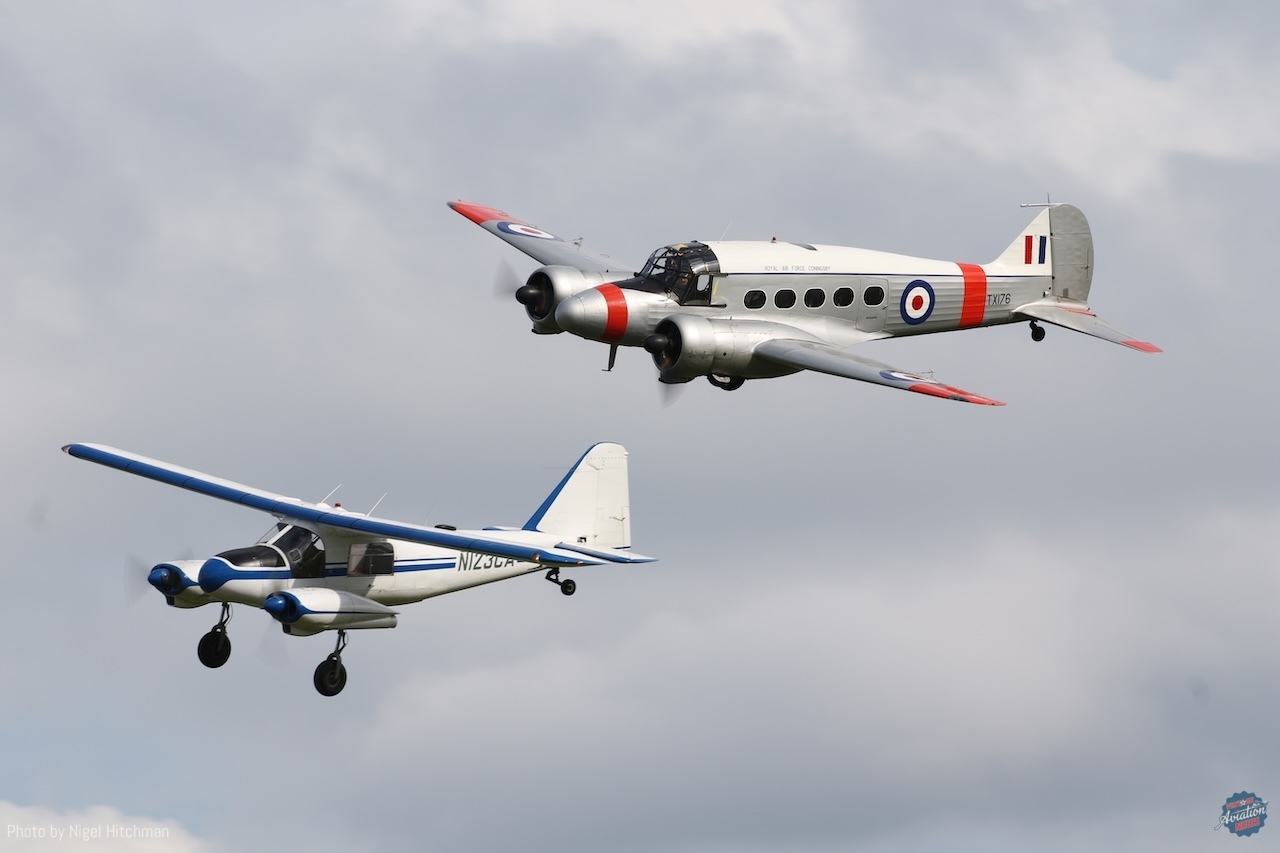
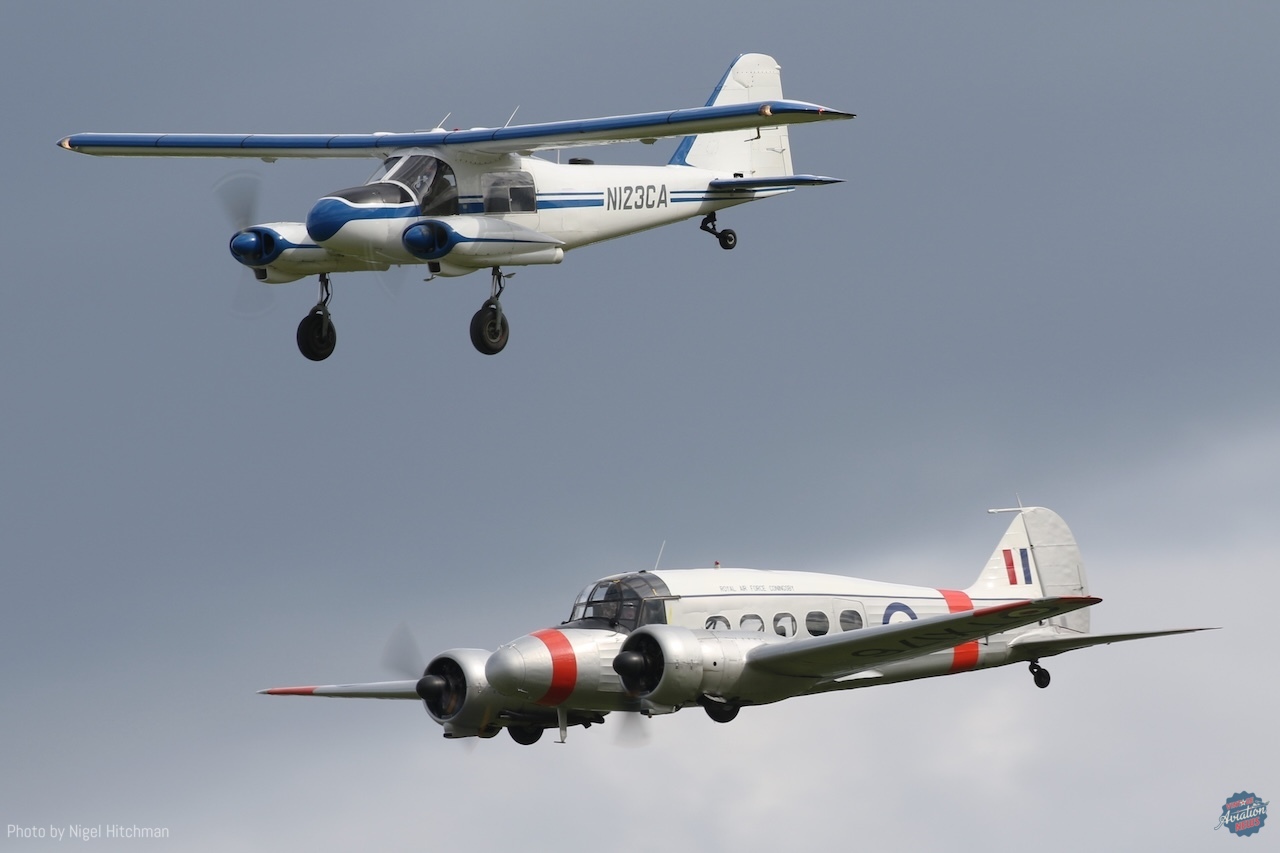
There had been high hopes that the newly acquired Avro Anson Mk.I OO-ANS/K6183 (formerly ZK-RRA/MH120), restored in New Zealand by Bill Reid and now operated by RAF Squadron Czechoslovakia, would make its European display debut. With reassembly completed at FAST Aero in Belgium, it only required a test flight and final paperwork. Unfortunately, strong crosswinds delayed the test flight, and the display was cancelled the day prior. Ironically, the test flight was completed on the day of the show. Had it flown, it would have joined the Shuttleworth Collection’s Avro XIX in what would have been a rare sight—two Ansons flying together. In its place, the Dornier Do 28A (N123SA) was brought in as an innovative substitute, flying a formation routine with the Avro XIX, followed by individual displays.
The Bristol F.2b Fighter then took to the air for a solo flight. It was originally scheduled to fly alongside the Bristol M.1C, but the M.1C’s 110hp Le Rhône rotary engine refused to start—despite firing up perfectly the following Monday! The “Battle of France” segment began with the Cambridge Flying Group’s DH.82A Tiger Moth (G-AOEI), built in 1939 and once assigned to 81 Communications Squadron during the British Expeditionary Force campaign. It returned to England just prior to the Dunkirk evacuation.

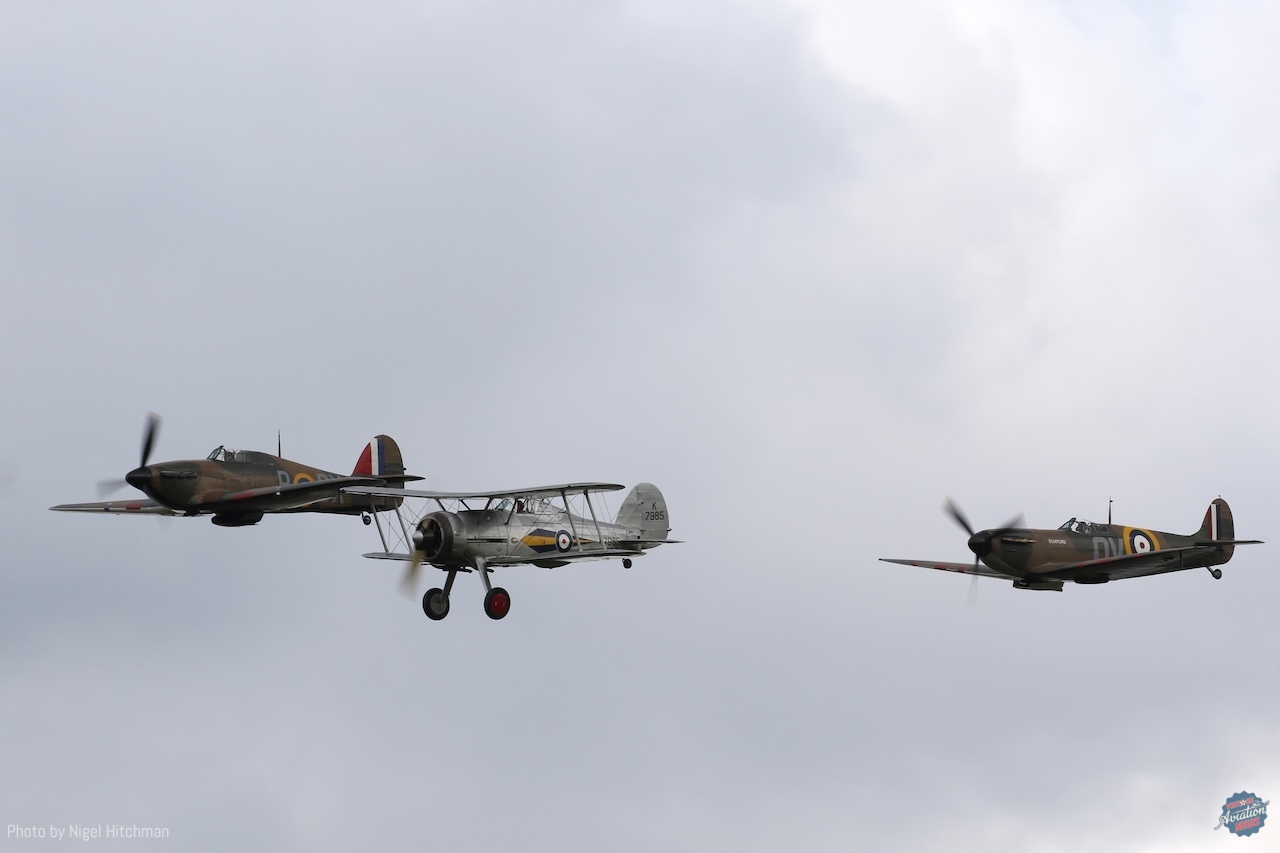
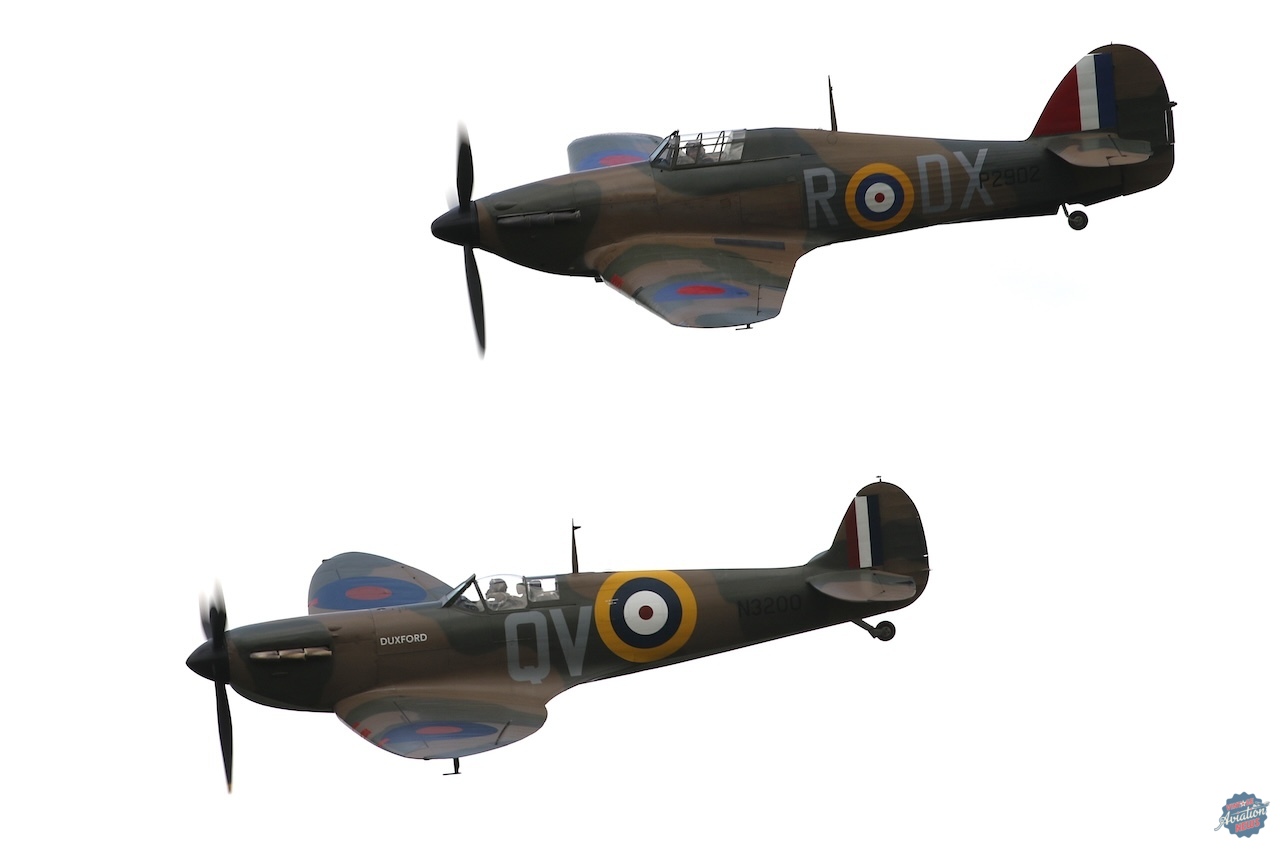
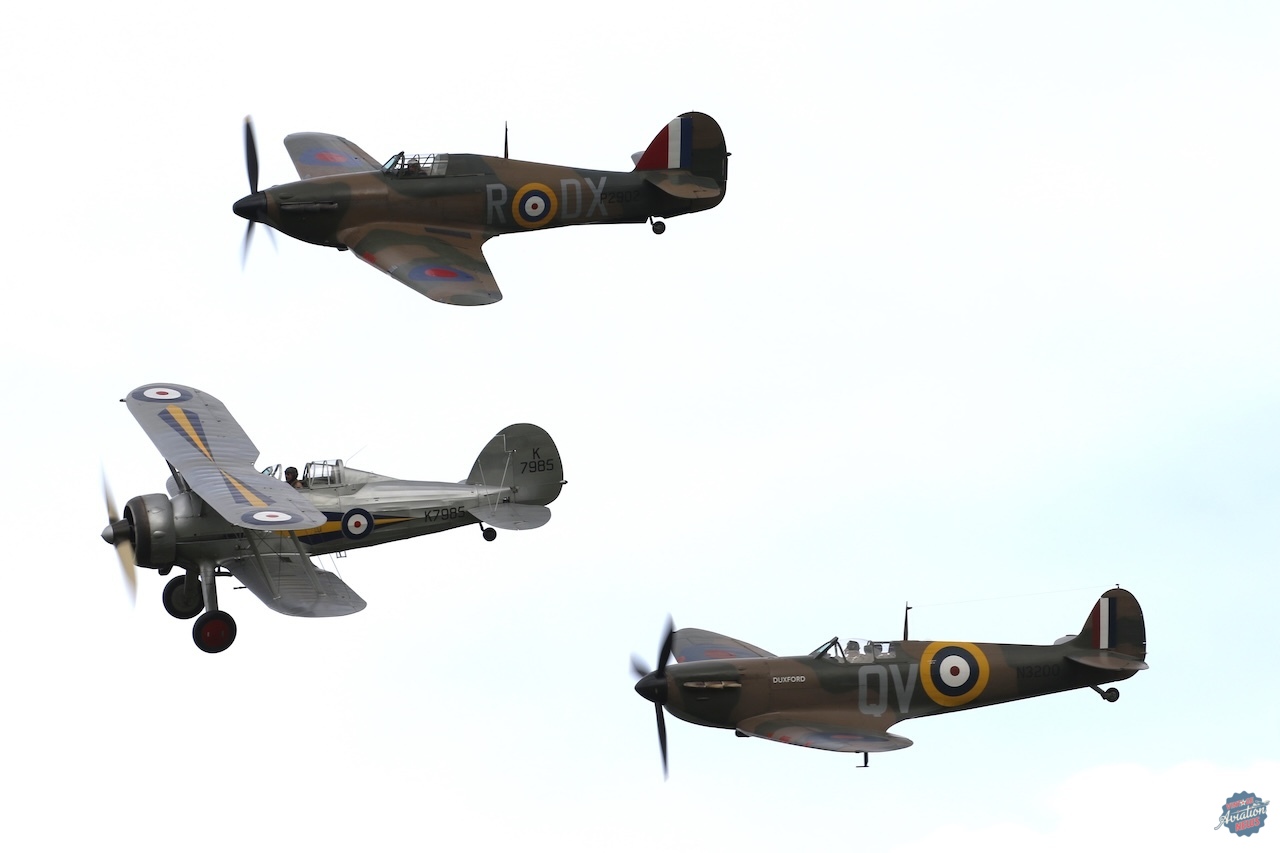
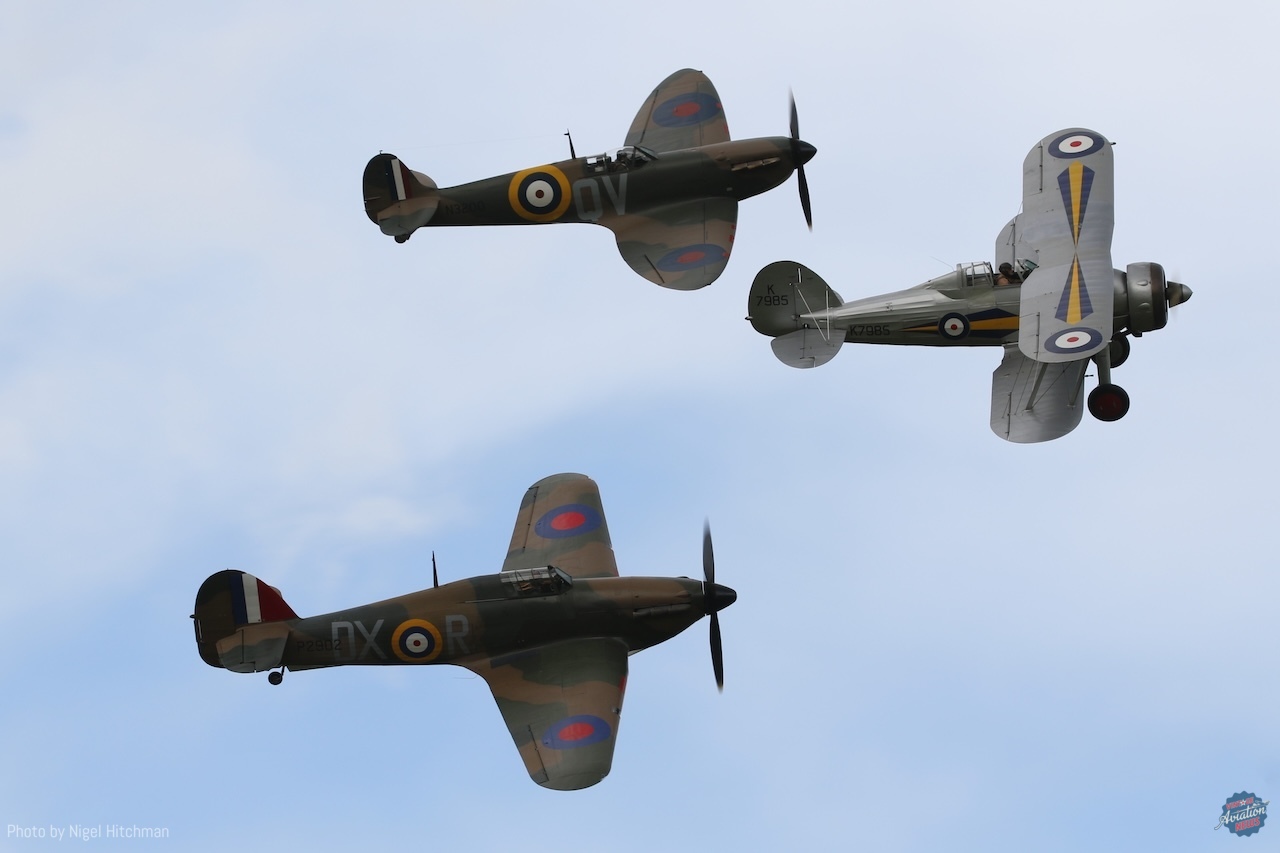
This was followed by a stunning three-ship “Battle of France” formation. Leading the trio was Shuttleworth’s Gloster Gladiator (G-AMRK/L8032), painted to represent Gladiator K7865 flown by New Zealand ace “Cobber” Kain, who scored his victories flying Hurricanes with 73 Squadron during the Battle of France. While this airframe—reportedly the last Gladiator built—didn’t see service in France, many others did. Next was Hawker Hurricane Mk.I G-ROBT (P2902/DX-R), built in 1939 and recovered from the beach at Dunkirk after it crash-landed there on 31 May 1940. It had been in action with 245 Squadron during the British retreat. Restored by Hawker Restorations, it is now operated by Fighter Aviation Engineering/Ultimate Warbirds. The third aircraft in the formation, Supermarine Spitfire Mk.I G-CFGJ (N3200/QV), was delivered to No. 19 Squadron in April 1940. Damaged after downing a Ju 87 Stuka on its first operational mission over France, it crash-landed on the beach at Sangatte. Buried in the sands for decades, it was recovered in 1986, restored, and returned to flight in 2014 before being donated to the Imperial War Museum in 2015. After a break, the evening segment began—a new concept combining the traditional afternoon show with a shorter evening program. Shuttleworth has long offered either an afternoon or an evening show, but combining both into one event was a response to declining attendance at standalone evening displays. The combined format offered the best of both worlds: a full day of flying and a chance for Edwardians to take to the air when winds allowed. Sadly, gusty winds prevented the full Edwardian lineup from flying, so an alternative program was enacted.
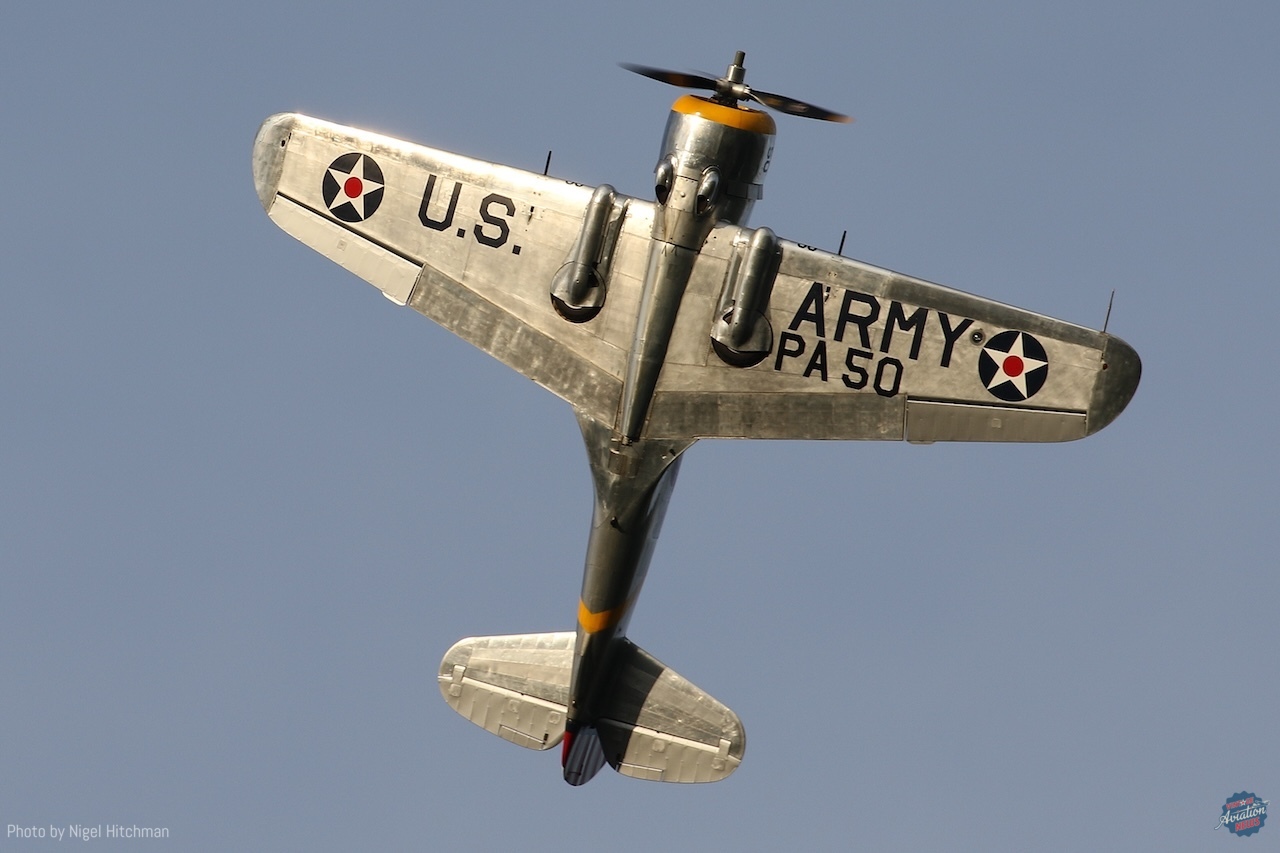
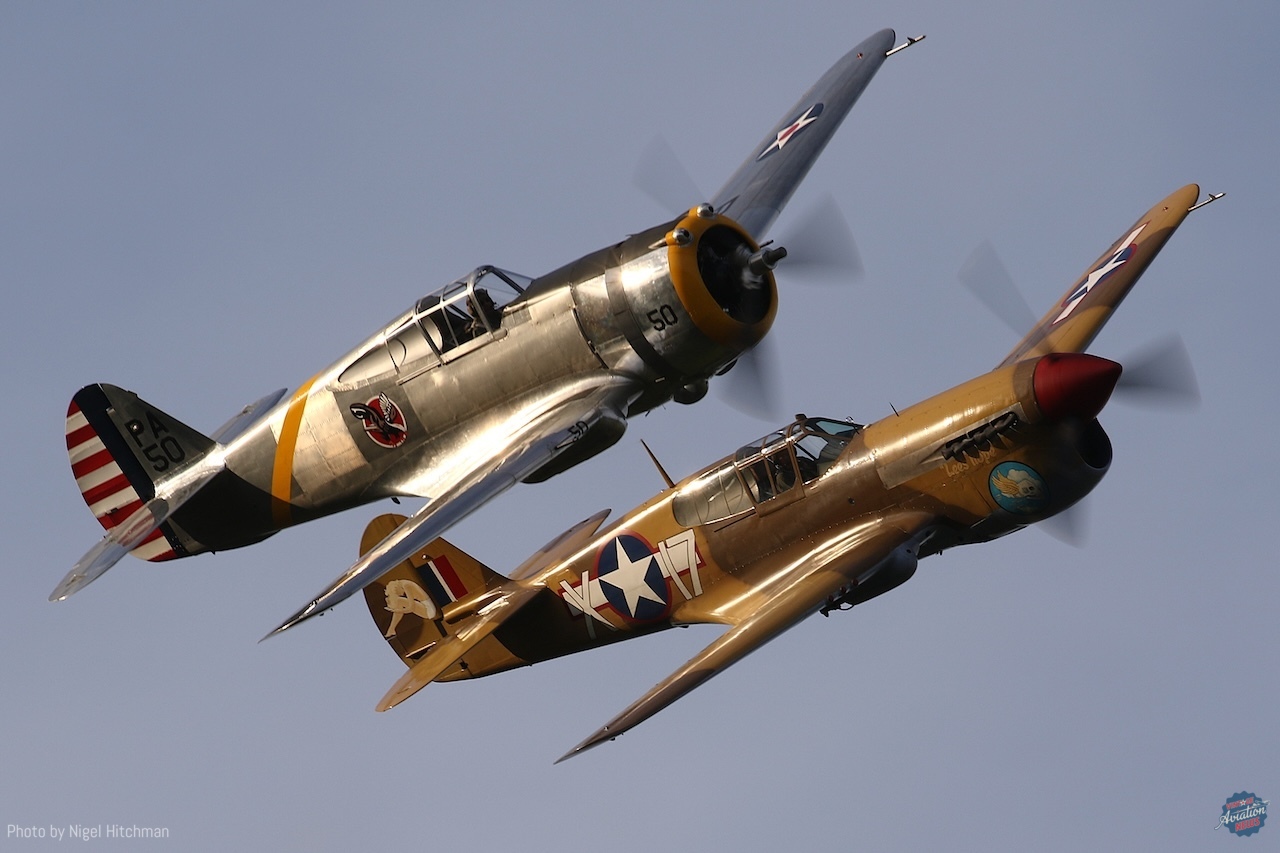
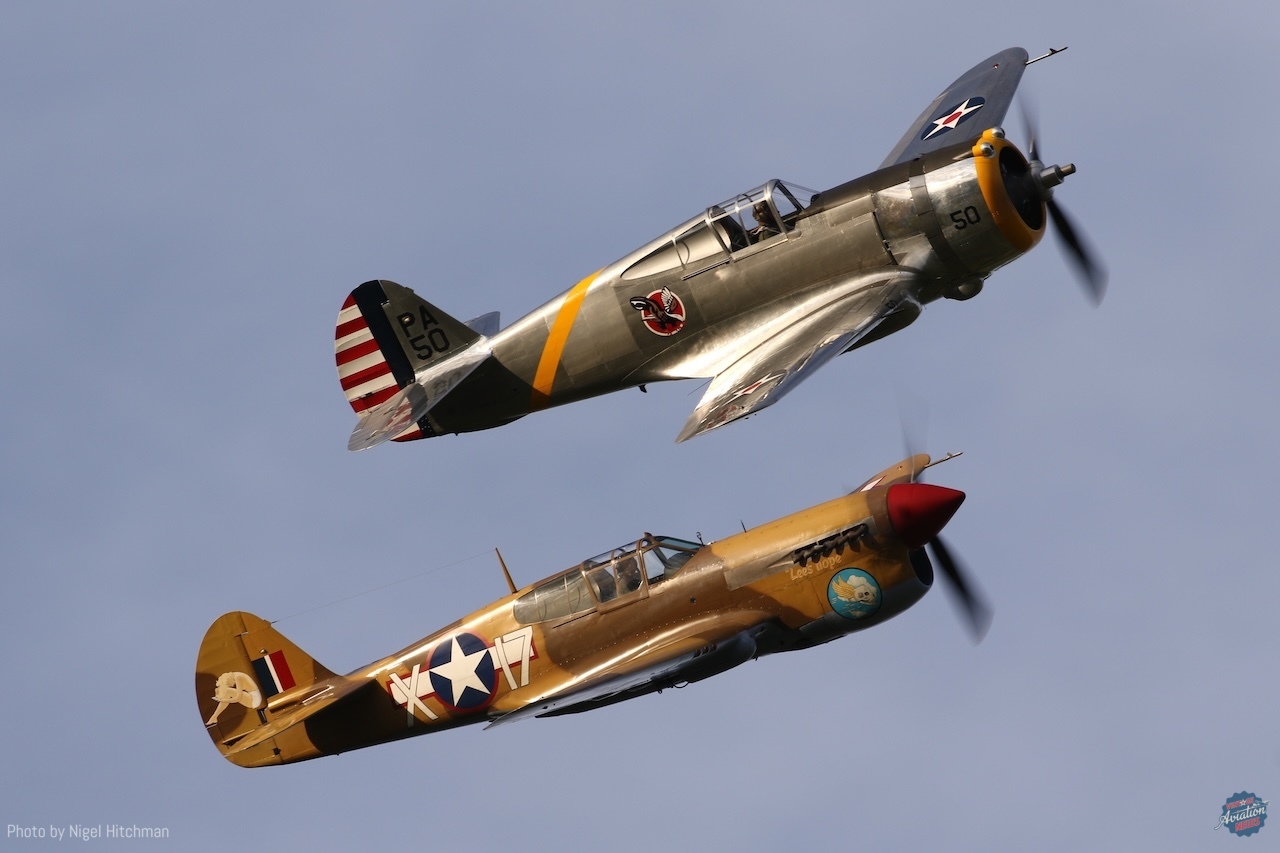
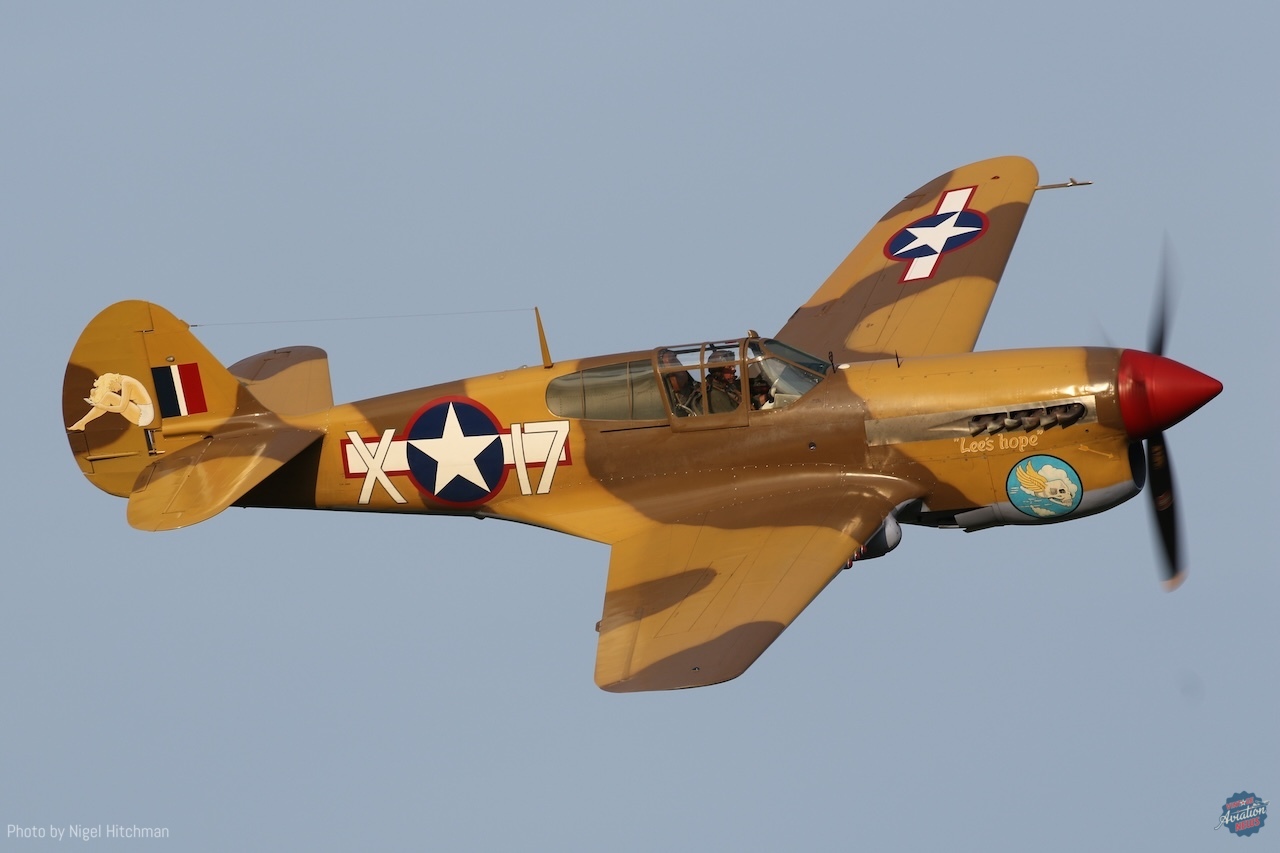
The evening opened with a dazzling appearance by two aircraft from The Fighter Collection at Duxford: the sole flying Curtiss P-36 Hawk (G-CIXJ/PA-50) and the Curtiss P-40F Warhawk (G-CGZP/XI-7), both making their Shuttleworth debut under golden evening light. Then followed the Westland Lysander, which executed a mock field landing and a French Resistance package pickup, before transitioning into an energetic solo display. A whimsical formation followed: the Parnall Elf (G-AAIN), DH.60 Moth (G-EBWD), and DH.82A Tiger Moth (G-ANKT/K-2585), all flying in tight formation while trailing decorative bunting.
The final display was set to be an aerobatic routine by the Spitfire Mk.Vc AR501, but as the wind eased slightly, the team seized the opportunity to roll out the Avro Triplane. Though the Bristol Boxkite remained grounded due to gusts, seeing even one Edwardian fly was a welcome and unexpected bonus. All in all, it was an outstanding day of aviation heritage. With memorable displays from rare and significant aircraft, creative pairings, and a successful trial of the new afternoon/evening format, the event was a triumph. The pause between segments offered time for refreshments and added anticipation for the evening finale. With any luck, future shows will see the weather fully cooperate, especially for the fragile Edwardians. The next Shuttleworth display, the “Festival of Flight,” will take place over the weekend of June 28–29, featuring the same combined format. Already on the program are several exciting debuts, including the first appearance of the de Havilland DH.71 Tiger Moth, a Swiss rotary-powered Nieuport 23, and a number of visiting warbirds, such as the Flying Legends (Germany) F4U Corsair, a Bristol Blenheim, and the Belgian-based CAC Boomerang replica. For more information about the Shuttleworth Collection, visit www.shuttleworth.org.




 Vintage Aviation News