


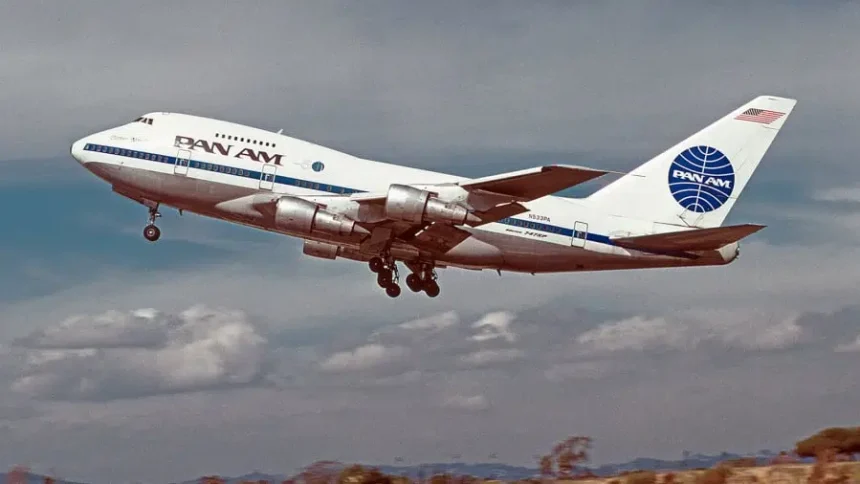

On this day in aviation history, May 3, 1976, Pan American World Airways set a new world speed record for circumnavigating the globe. The record-setting flight was completed by a Boeing 747SP-21 named Clipper Liberty Bell (tail number N533PA), which departed from JFK International Airport in New York with 98 passengers on board.
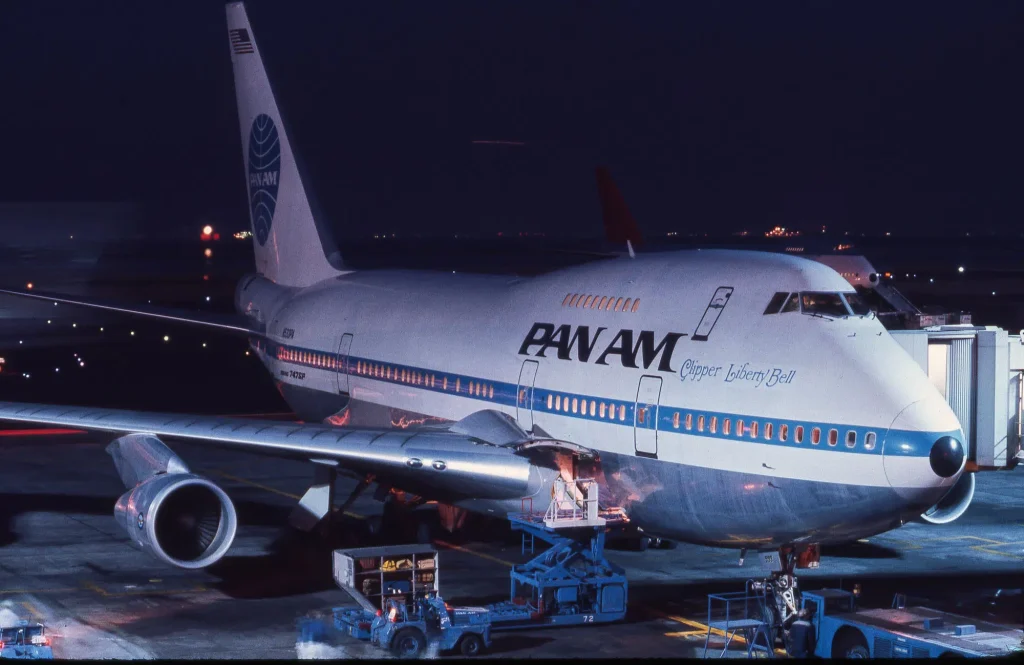
At the controls of the 747SP were Captain and Chief Pilot Walter H. Mullikan, along with Co-Pilots Albert A. Frink and Lyman G. Watt, and Flight Engineers Frank Cassaniti and Edwards Shields. Their first stop was Indira Gandhi International Airport (DEL) in New Delhi, India. After servicing, the aircraft continued to Tokyo International Airport (HND) in Japan before embarking on the final leg back to JFK. Upon landing in New York, the total time for the journey was recorded as 46 hours and 1 second, covering a distance of 23,137 miles. This resulted in an average speed of 502.838 miles per hour—setting a new world speed record for circumnavigation at the time.
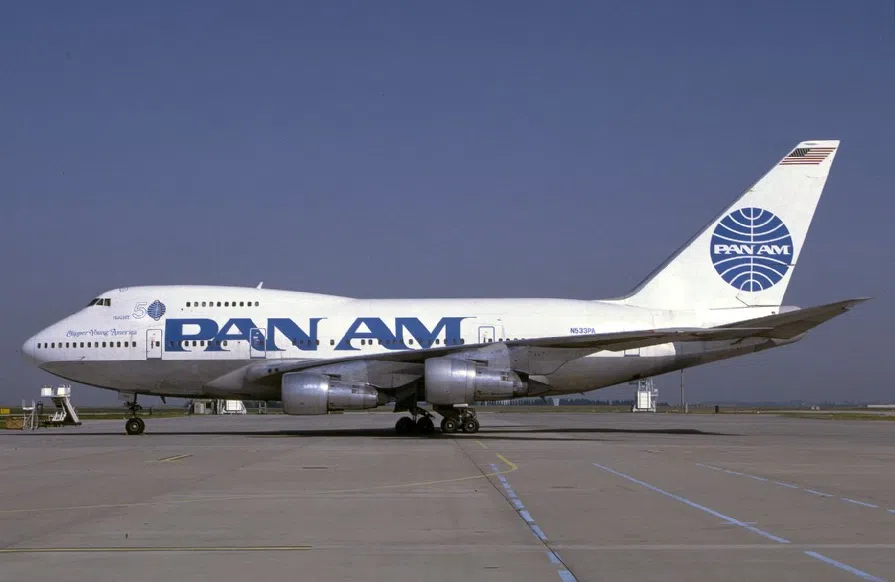
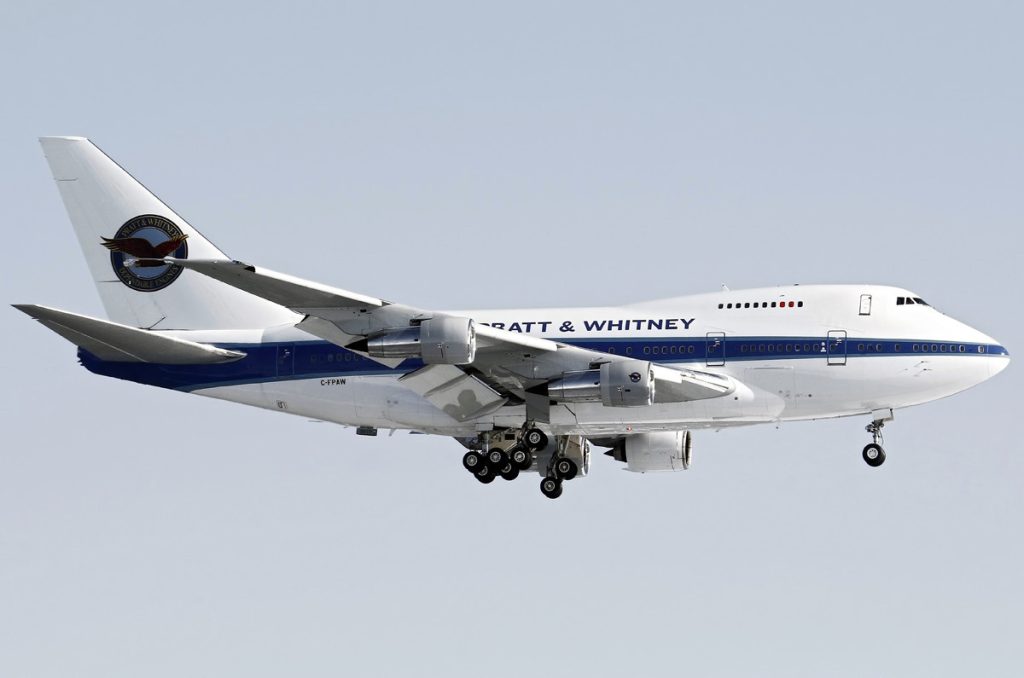
The Boeing 747SP (Special Performance) was a unique, shortened version of the original 747-100, designed for ultra-long-range travel. Its stubbier appearance, due to a reduced fuselage length, allowed for improved range and speed in exchange for lower passenger capacity. The 747SP was powered by either four Pratt & Whitney JT9D-7 engines or four Rolls-Royce RB211-524s. It boasted a top speed of Mach 0.92 (624 mph) and a maximum range of 6,650 nautical miles.

Today, only two 747SPs remain in flight, both operated by Pratt & Whitney Canada as engine testbeds. Eighteen more survive in various conditions, either stored or derelict, scattered across the globe—a reminder of one of the most ambitious variants of the jumbo jet era.