We appreciate the support from readers like you at Foxiz. Through your purchases using the links on our site, you empower us with affiliate commissions.
Back to Its Roots: B-29 Doc Returns to Original Paint Scheme
Historian Adam Estes has uncovered the story behind B-29 Doc’s new paint scheme, revealing it’s not a departure but a return to its roots. The B-29 Superfortress, one of only two flying today, now sports markings that reflect its original identity when it first earned the name Doc—years before its recovery from China Lake and first post-restoration flight in 2016.
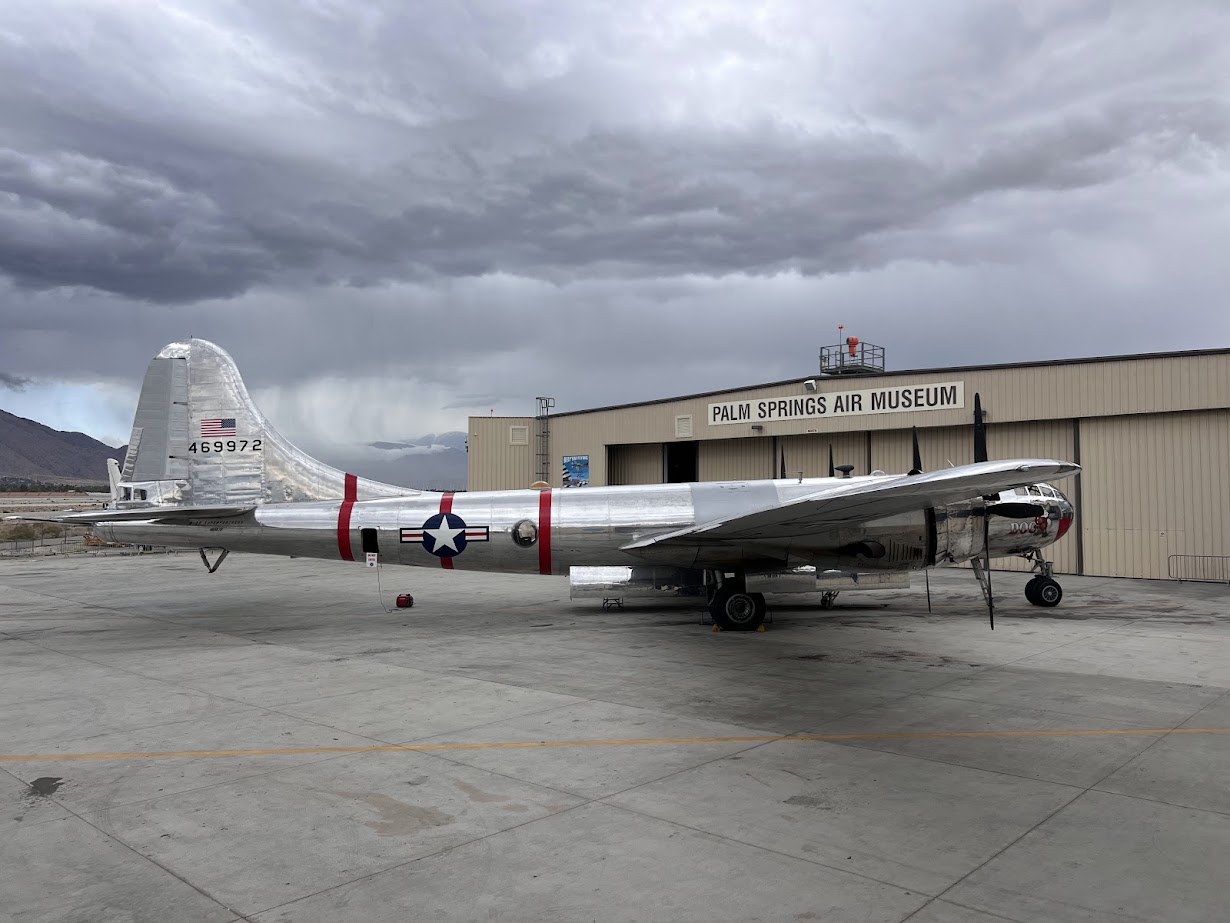
Boeing B-29 Superfortress 44-69972 "Doc" at the Palm Springs Air Museum with its new scheme. (Adam Estes)
SHARE
This spring, the B-29 Superfortress known as Doc, one of only two airworthy B-29s in the world, has been seen sporting a new look alongside the familiar image of the Dwarf from which it gets its name. While it may represent a change for warbird enthusiasts, the new paint scheme actually harkens back to the point when the aircraft first received the name Doc, long before it was recovered from the missile range at Naval Air Weapons Station China Lake, and well before its first post-restoration flight on July 17, 2016.
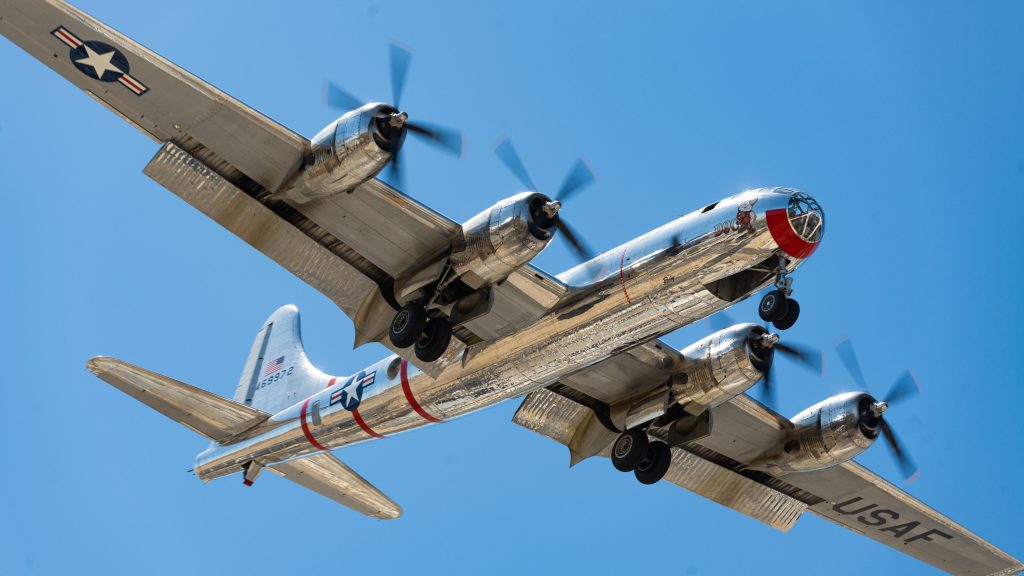
B-29 Doc wearing its new markings to reflect its time with the 1st Radar Calibration Squadron while giving rides at the Palm Springs Air Museum. (Josiah “Jojo” Tucker)
The history of Doc has been told on several sites, including here on Vintage Aviation News, but one key aspect of its time in the US Air Force after WWII reveals the origin for the name “Doc“. After Doc rolled off the Boeing-Wichita assembly line in Kansas as construction number 10865 and was delivered to the US Army Air Force as 44-69972, the aircraft was sent to the Bechtel-McCone Modification Center in Birmingham, Alabama in March 1945 to receive its combat equipment. One month later, 44-69972 was sent to Barksdale Army Airfield, Louisiana, to join the Combat Crew Training Squadron of the 331st Army Air Field Base Unit (AAFBU). Following Japan’s surrender on August 15, 1945, 44-69972 was sent to Pyote Army Airfield, Texas, where the aircraft would be kept in outdoor storage alongside numerous other B-29s. In 1950, the aircraft was placed back into active duty and was flown from Pyote to Kelly Air Force Base in San Antonio to be modified as a trainer variant of the Superfortress, the TB-29.
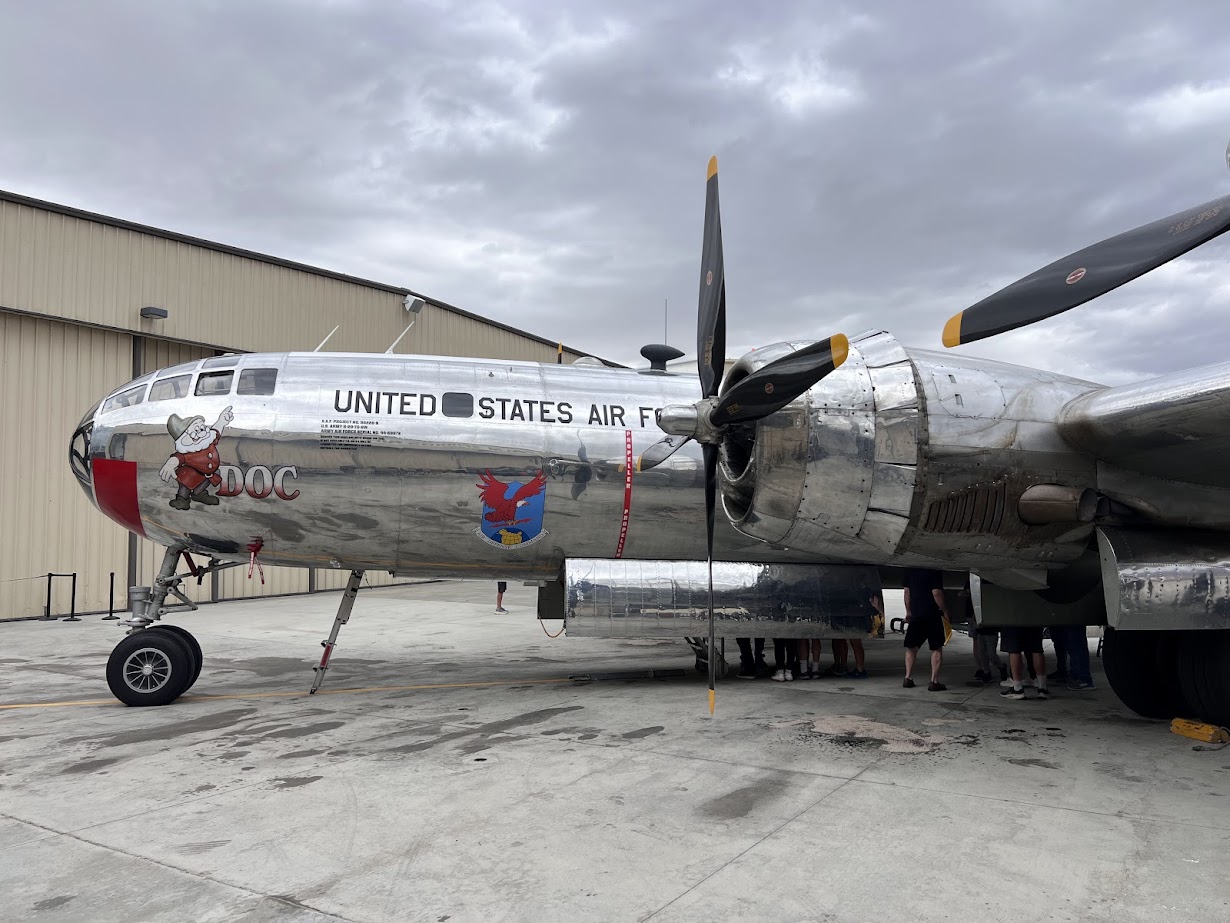
Side profile of B-29 44-69972 in its new scheme at the Palm Springs Air Museum. (Adam Estes)
TB-29 44-69972 was then used for radar calibration testing with the Oklahoma City Air Material Area (OCAMA) at Tinker Air Force Base before being transferred to the 7th Radar Calibration Squadron at Griffiss Air Force Base (now Griffiss International Airport) near Rome, New York in July 1951. Later, the aircraft flew with the 109th and the 1st Radar Calibration Squadrons, also stationed at Griffiss. While assigned to the 1st RCS, which had a total of nine B-29s and a North American B-25 Mitchell in the squadron, TB-29 44-69972 and her fellow Superfortresses were used to fly in front of military radar installations and determine how accurately they could be tracked on radar in an effort to test the effectiveness of the ground equipment. All of these B-29s were painted with distinctive stripes on the fuselage to visually denote their role as calibration test aircraft.
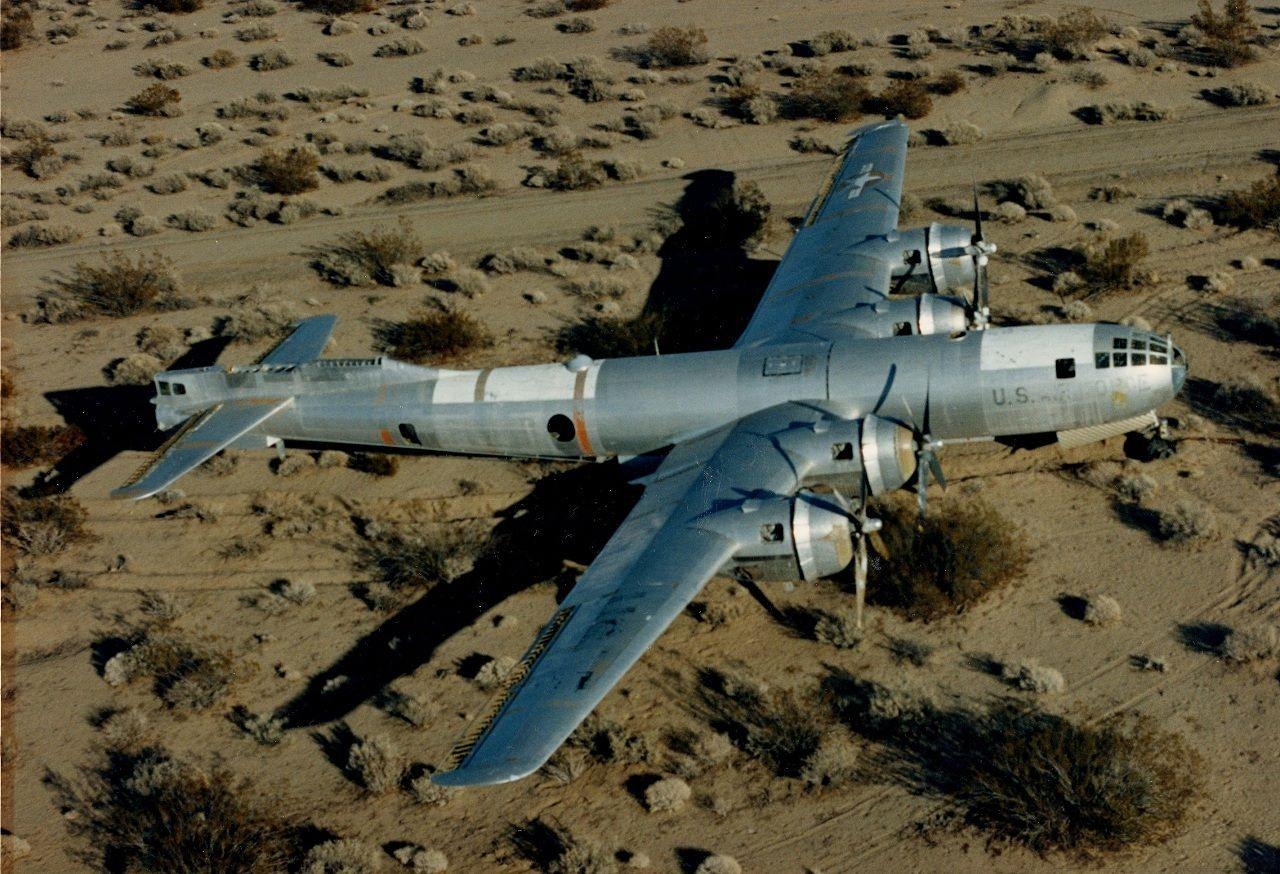
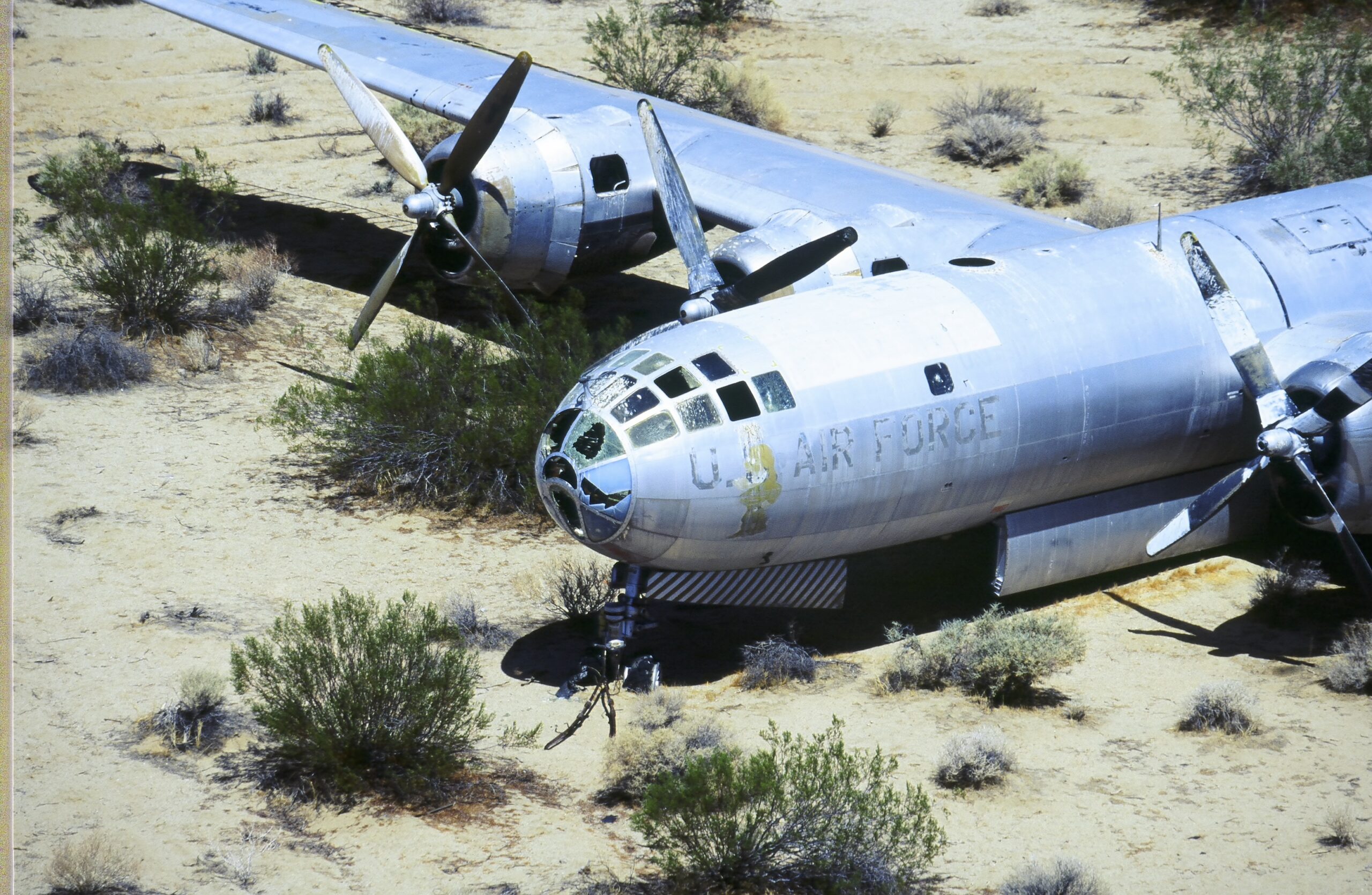
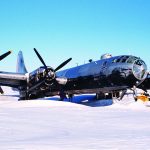
Doc at China Lake with the red stripes clearly visible. (Photo via Tony Mazzolini)
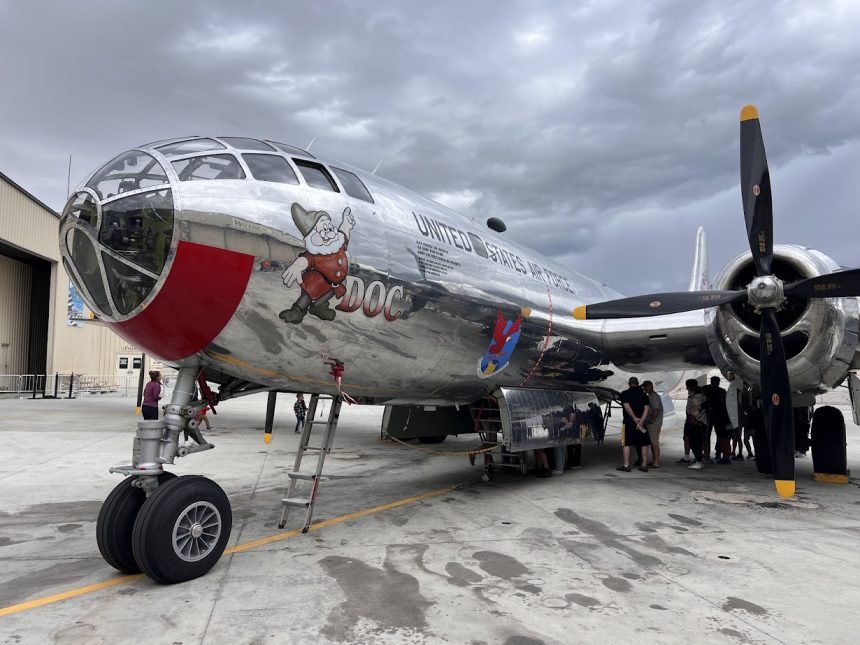
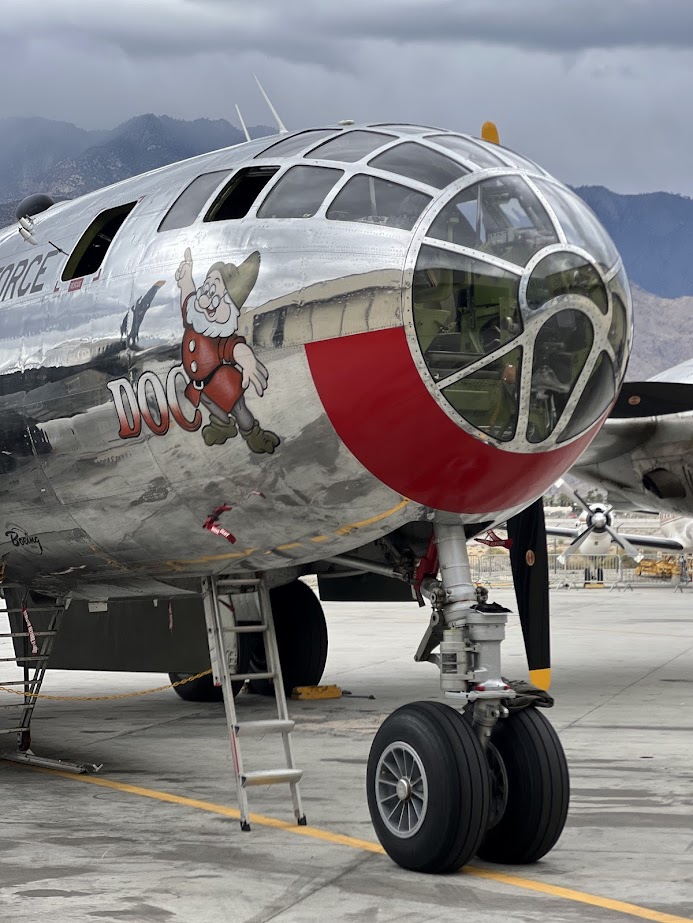
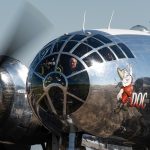
B-29 Doc wearing its new red stripe, along with the familiar image of the Snow White dwarf Doc. (Adam Estes)
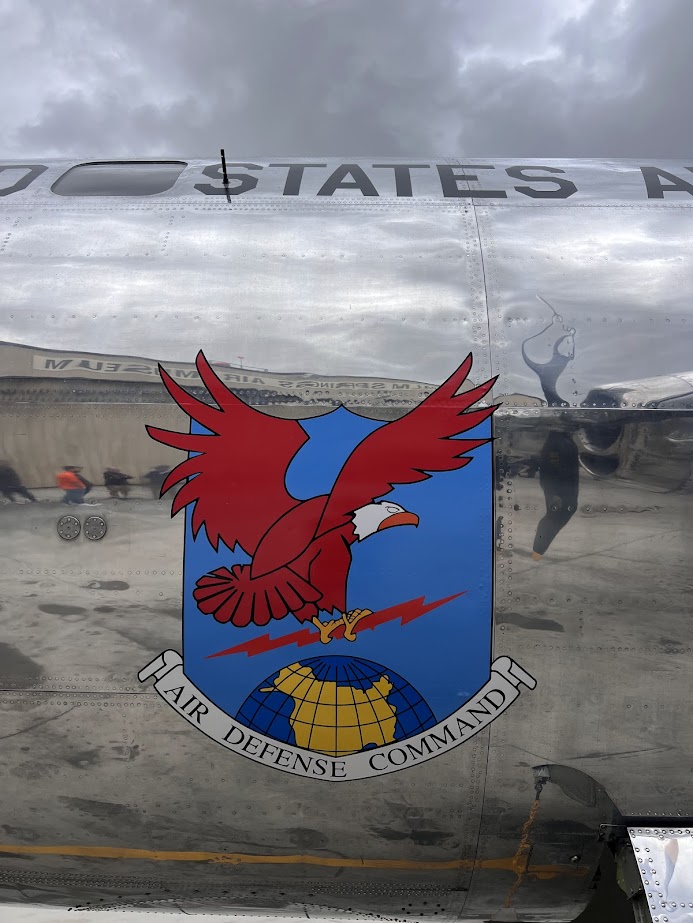
Among the new markings on Doc is the emblem of the Air Defense Command. (Adam Estes)
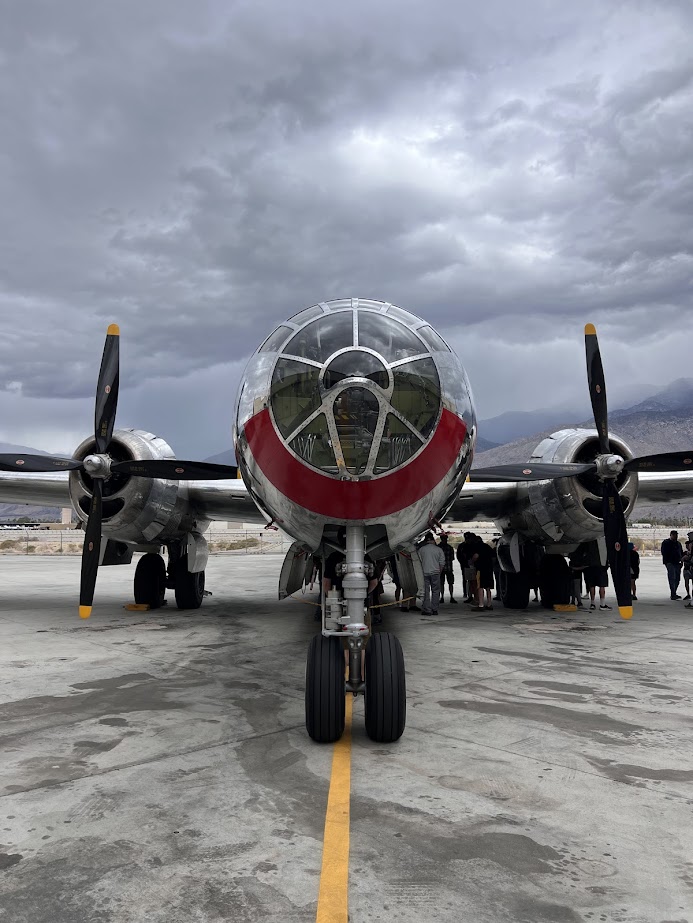
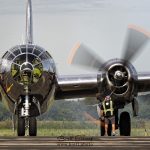
Head on view of Doc with its new red stripe. (Adam Estes)
In an effort to personalize the squadron’s planes, Charlie Pfrimmer, an airman from Montana serving with the 1st Radar Calibration Squadron, painted the unit’s B-29s and B-25. Eight of the nine B-29s in the 1st RCS were painted as Snow White and the Seven Dwarfs, with aircraft 44-69972 becoming “Doc“. The ninth B-29 in the squadron was painted as the Wicked Witch, while the B-25 received the name Rosie’s Rat Race, with a nose art depicting local restaurant owner Rosie Destito wearing the tunic and laurel wreath of a Roman Caesar, standing in a chariot being pulled by five rats. It was also during Doc‘s time at Griffiss, a young technical sergeant in the Air Force, Tony Mazzolini, would see Doc and the rest of the Snow White Squadron of B-29s while on temporary duty to Griffiss from his regular assignments at Stewart AFB, New York.
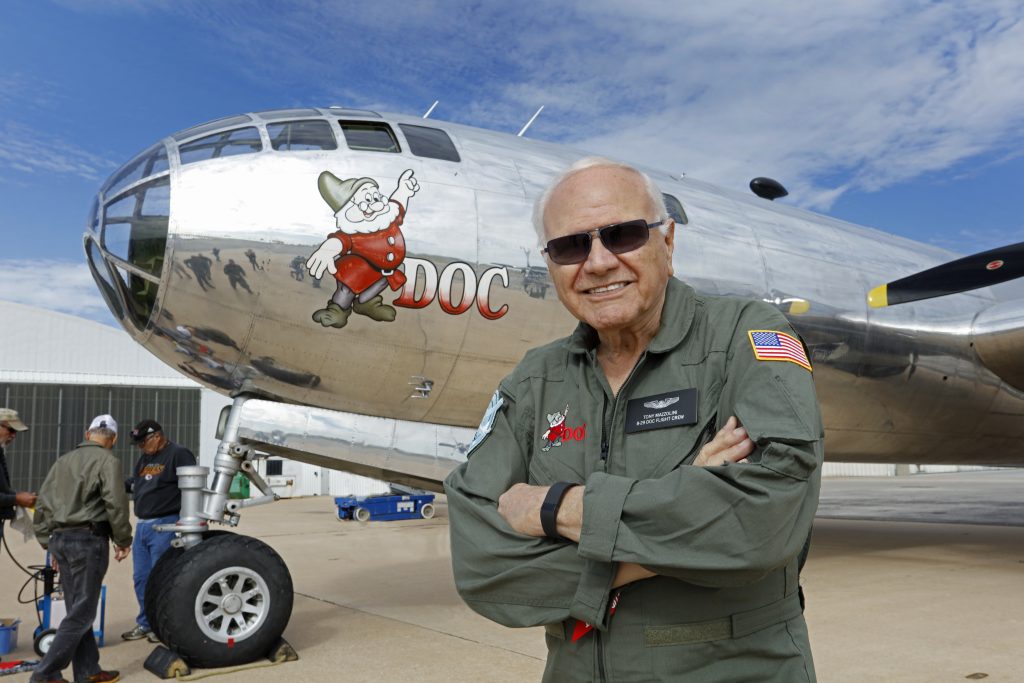
Tony Mazzolini with DOC in 2017. Photo by Brett Schauf.
Doc was later assigned to another squadron at Griffiss, the 4713rd Radar Evaluation Flight in 1954, before being reassigned to the 17th Tow Target Squadron in May 1955, then stationed in Yuma, Arizona, to tow gunnery targets. This would be Doc‘s final assignment in the United States Air Force before it was transferred to the US Navy to become a target on the weapons range of Naval Air Weapons Center China Lake, California, where it would remain for over 40 years before its recovery in 1998 that put the aircraft on the long road to its return to airworthiness. When Air Force veteran Tony Mazzolini led the team of volunteers that went to retrieve Doc from China Lake, the sun-bleached remains of the radar calibration paint scheme and the nose art of Doc were still visible when the venerable aircraft was towed out of the scorching desert. According to the crew of Doc, the aircraft was painted during its winter hiatus in the B-29 Doc Hangar, Education & Visitors Center at Wichita Dwight D. Eisenhower National Airport, and it was done to replicate the markings originally wore on the aircraft during its time with the 1st Radar Calibration Squadron, and which it wore when Tony Mazzolini led a team of volunteers to recover the B-29 from the desert at China Lake, some 30 years after Mazzolini first saw the aircraft at Griffiss AFB.
B-29 “Doc” at China Lake. The faded remains of the nose art and unit markings can be seen on the aircraft. (Photo from Doc’s Friends)
While for some this may be a new look for Doc, adopting this scheme is not just a way to represent this individual aircraft as it appeared while it served in the USAF, it also highlights the roles the Boeing B-29 Superfortress played outside of combat operations in the Second World War and the Korean War. For more information about Doc and its tour, visit www.b29doc.comBoeing B-29 Superfortress 44-69972 “Doc“
Raised in Fullerton, California, Adam has earned a Bachelor's degree in History and is now pursuing a Master's in the same field. Fascinated by aviation history from a young age, he has visited numerous air museums across the United States, including the National Air and Space Museum and the San Diego Air and Space Museum. He volunteers at the Planes of Fame Air Museum in Chino as a docent and researcher, gaining hands-on experience with aircraft maintenance. Known for his encyclopedic knowledge of aviation history, he is particularly interested in the stories of individual aircraft and their postwar journeys. Active in online aviation communities, he shares his work widely and seeks further opportunities in the field.
Doc’s new markings give him a distinctive identity, and that sets him apart from FIFI, while honoring the men, and women who served with the 1st Radar Calibration Squadron.
Vintage Aviation News now offers an ad-free reading experience. Enjoy faster-loading pages, uninterrupted stories, and the satisfaction of helping us preserve aviation history.









Doc’s new markings give him a distinctive identity, and that sets him apart from FIFI, while honoring the men, and women who served with the 1st Radar Calibration Squadron.